CNC Routing vs Saw Cutting for Bakelite Sheets
When it comes to making things out of Bakelite sheets, the main difference between CNC turning and saw cutting is how precise or simple the process is. CNC routing is better for high-precision electrical parts and automotive uses because it is computer-controlled and has clean, burr-free edges that are perfect for complex shapes and tight tolerances. Saw cutting is easy to use and costs less at first, but the quality of the edges and uniformity of the dimensions are not as good. Your choice will rely on the number of parts you need to make, how complicated they are, and the quality standards you need to meet. CNC routing works best in modern manufacturing environments that need repeatability and little waste, while traditional saw cutting is still useful for simple, low-volume tasks.
Understanding Bakelite Sheets and Their Industrial Applications
Bakelite sheets are a type of composite material made from phenolic resin. They are made by heating and pressing layers of cellulose paper or fabric cloth that have been saturated with synthetic phenolic resin. This thermoset plastic cures in a way that can't be undone, turning it into a material that is chemically resistant, non-conductive, and very tough. While thermoplastics weaken when heated, Bakelite stays structurally solid at temperatures up to 300°F (149°C), with a dielectric strength of more than 12 kV/mm.
Core Material Properties
Because phenolic laminates have a unique molecular structure, they have characteristics that help engineers solve certain problems. Heat resistance keeps things from deforming in hot places where regular plastics don't work. Low moisture absorption (less than 0.5% by weight) makes sure that the electricity works the same way even when it's wet outside. Mechanical hardness tells us how resistant moving parts and structure parts are to wear. These features come from the cross-linked polymer network that forms during the curing process. This makes a material that fills the performance gap between pricey scientific ceramics and consumer plastics that aren't strong enough.
Industrial Application Spectrum
Electrical and electronics companies use Bakelite sheets to make PCB support frames, switchgear insulation, and motor component separation. The dielectric strength and arc resistance of these sheets keep them from failing in disastrous ways. Transformer spacers, busbar isolators, and coil insulation made of these materials are used in power distribution systems. They have to be able to withstand constant temperature cycling without breaking down.
Manufacturers of industrial machinery use phenolic laminates to make wear-resistant parts, mechanical spacers, and gears that can handle heavy loads while staying stable in size. More and more, these materials are being used in the auto industry for battery pack barriers in electric cars, insulation pads in motor assemblies, and heat-resistant parts in engine areas. Manufacturers of home appliances like using Bakelite for motor brackets, thermal separation parts, and insulator frames because it is cost-effective and performs well.
Impact of Cutting Methods on Material Performance
How well Bakelite sheets work in these situations is directly related to the cutting method chosen. The quality of the edge affects the dielectric strength along cut surfaces. Rough edges with exposed fibres make paths for water to soak in and possible arc tracking sites. Accurate measurements determine how well an assembly fits together and how the mechanical load is distributed. This is especially important for stacked laminate assemblies that hold generator or motor parts. Adding thermal stress during cutting can make tiny cracks inside the material that weaken it mechanically and make it less reliable over time. Knowing these connections helps procurement teams choose the right ways to make things that keep the material's important qualities for their uses.
Traditional Saw Cutting for Bakelite Sheets: Overview and Limitations
Saw cutting has been the standard way to shape Bakelite sheet since 1907, when Bakelite was first made. Circular saws, band saws, or table saws with carbide tips are used in this method to cut through the material manually. The process is still simple: hold the sheet in place, set the depth of the blade, and move the material along the cutting line. Many metalworking shops still have the ability to cut with saws because the equipment is easy to get to and the operators are familiar with it from years of use.
Operational Characteristics
Table saws can cut straight lines at a good speed; based on the thickness of the sheet, they can usually cut at 10 to 20 linear feet per minute. Band saws are better for making curved cuts and shaping forms, but they are slower and less accurate. At the cutting interface, where the rotating teeth hit the material at high speed, both ways create a lot of mechanical stress. This mechanical action heats up the object through friction, breaks up the material into chips, and causes vibrations that move through the piece.
Performance Limitations
Edge chipping is the most obvious problem with the quality of saw cutting. The mechanical impact of saw teeth separates the layers of paper along the cut edges, revealing the inner paper layers and making surfaces that are rough and have an uneven depth of 0.5 to 2 mm. When compared to the base material specification, these weak edges lower the actual dielectric strength by 15–30%. When material tears along the exit edges instead of separating cleanly, burrs form. This means that extra deburring processes are needed, which cost more in labour and take longer to complete.
Dimensional differences happen because of a number of things that are fundamental in saw cutting. Different cuts aren't always straight because the blade bends when it's cut, usually by about 0.5 mm over a one-meter cut length. Blade wear changes the way it cuts over time, so it needs to be adjusted often to keep even basic limits. During cutting, heat builds up in the blade and the object, which causes thermal expansion. As the materials cool to room temperature, their dimensions change. All of these things make it very hard to get margins smaller than ±0.3mm when cutting with a saw.
Material Waste and Safety Concerns
Saw kerf width, which is the width of the cut made by the blade, is usually between 3 and 5 mm, which is a lot wider than CNC routing tool tracks. In production settings, this extra material loss adds up quickly, especially when cutting many parts from sheet stock at once. Saw cutting often results in scrap rates of 12 to 18% because of damaged edges that need to be trimmed and differences in size that mean the part has to be thrown away.
Safety concerns include spinning blades that are out in the open, material chips that are thrown out at high speeds, and a lot of dust that contains phenolic particles. Safety guards and protective gear for operators slow down the movement of materials. Even with these problems, saw cutting is still a good way to go for businesses that make simple rectangle parts in small quantities and can't afford the higher costs of CNC equipment.
CNC Routing for Bakelite Sheets: Precision and Efficiency
CNC cutting is a big change from using mechanical force to carefully controlling how much material is removed. Computer numerical control systems guide fast wheels with special cutting tools along pre-set paths, with a level of accuracy measured in thousandths of an inch. With this technology, making parts out of Bakelite sheets goes from being a skill that needs to be done by hand to a process that can be repeated and is driven by data. It can make thousands of parts with complex shapes and the same high quality.
Technical Operating Principles
CNC cutters made for Bakelite sheet composite materials have spindle speeds between 12,000 and 24,000 RPM and use carbide or diamond-coated cutting tools that are made to work with phenolic materials. The feed rates are carefully managed between 80 and 200 inches per minute, to find the best mix between cutting speed, heat production, and edge quality. The main benefit comes from computer control: tool paths are set only once and then carried out exactly the same way on every part, so there is no room for error.
Modern CNC systems have vacuum hold-down tables that hold sheet material in place without clamps. This lets you cut from edge to edge, which makes the best use of the material. Having dust collection systems built into the cutting head stops particles where they start, keeping the work area clean and protecting the material's surface from getting dirty. Tool offset adjustment takes into account tool wear automatically, keeping measurements accurate even when thousands of parts are being made in a run.
Precision and Quality Advantages
The quality of the edges made by CNC shaping is much better than those made by saw cutting. When routing processes are set up correctly, the edges have a surface roughness of less than 0.1 mm, which means that the material's original laminate structure is kept right up to the cut edge. This keeps the dielectric qualities and gets rid of the need for extra finishing steps. If you choose the right tool and set the right cutting settings, you can almost never get burrs. The edges that come out of the cut look just as clean as the edges that go in.
With CNC cutting, the closest measurements that can be made are usually within 0.1 mm of the actual shape of the part. In the best cases, they can be as close as 0.05 mm. This accuracy goes all the way to complex features: holes can be placed within ±0.08mm of accuracy, curves keep their same size no matter where they are on the part, and parallel edges stay parallel within 0.1mm over meter-long dimensions. These skills are very important for tasks like making precise electrical insulators, where the way they fit mechanically affects how well they work electrically.
Complex Geometry and Design Flexibility
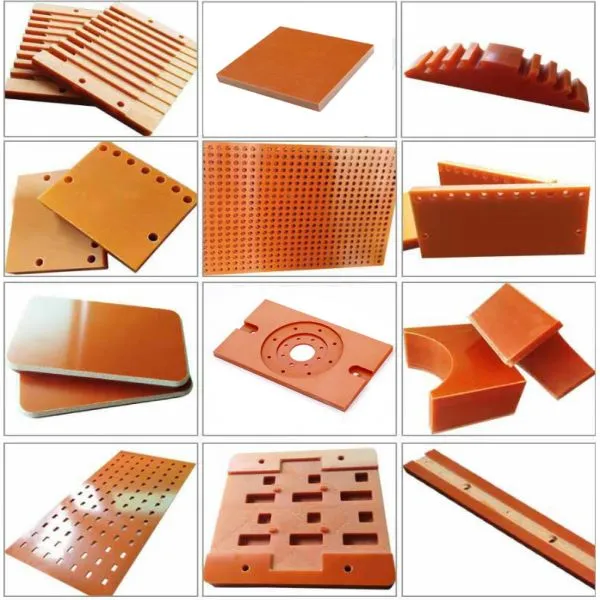
CNC routing is great for making complicated forms that can't be made with a saw. It is just as easy to make internal cutouts, curved profiles, and compound angles as it is to make simple squares. Designers don't have to worry about manufacturing limits when they ask for precisely placed mounting holes, custom edge profiles, and mechanical features that are built in. Because of this design freedom, part geometry can be optimised for function instead of designs having to be changed to fit manufacturing limits.
Being able to nest multiple part shapes on a single sheet cuts down on material waste by a huge amount. CNC programming software automatically orders parts to get the most out of each sheet. This results in material utilisation rates of 88–94%, which is higher than the average of 75–82 % for saw cutting. Routing tools have a small kerf width (usually 3–5 mm compared to 5–8 mm for saw blades), which saves even more material and adds up over large production runs.
Production Efficiency Considerations
CNC routing setup time can be quite long for single parts, but it's almost nothing when spread out over multiple production runs. Programming a new part can take anywhere from 30 to 90 minutes, depending on how complicated it is. However, once it is coded, it can be made over and over again without any other setup other than loading material. To switch between different part designs, all you have to do is load a different program file. This process only takes seconds, compared to the minutes or hours needed to make changes to the saw setup.
The complexity and size of the Bakelite sheet part have a big impact on the cycle time per part. Saw cutting may not be faster than CNC routing for simple rectangular parts, but as the geometry gets more complicated, CNC routing keeps its cutting speeds steady while saw processes slow down a lot. For smaller parts, the ability to cut multiple parts at once, with the only limit being the size of the table, increases throughput. CNC cutters can run during breaks and off-shifts as long as they have the right safety systems in place. This means that production can go on longer without the cost of labour going up by the same amount.
Comparing CNC Routing and Saw Cutting: Which is Best for Your Bakelite Procurement?
To choose the best cutting process, you need to look at more than just the cost per cut. This choice will affect the quality of your products, your ability to produce them, how well your materials are used, and ultimately, how competitive you are in markets that require accuracy and dependability to tell the difference between successful providers and those that are just getting by.
Financial Analysis Framework
The biggest difference between ways is the amount of money needed at the start. Small industrial-grade CNC machines that can be used to make things out of Bakelite sheets start at about $40,000 to $60,000. Large production-scale systems cost between $80,000 and $150,000. However, table saw and band saw sets that are good for basic phenolic cutting can be bought for $3,000 to $8,000. This is a difference of 10 to 20 times the amount of money needed up front.
An operational cost study, on the other hand, shows a more complex picture. Through automation, CNC routing cuts the amount of work that needs to be done by 40–60% per part. This is because one person can run multiple machines or do other tasks while parts are being cut. By optimising nesting and cutting down on scrap, you can save 8–15% on material, which directly lowers the cost of material by 30–45% of the normal part cost. When the right cutting tools are used, tool life is about the same for both ways. However, CNC systems are better at keeping track of tool life and replacing them when they need to be.
Rework and rejection rates dramatically favor CNC routing in quality-sensitive applications. Saw-cut parts are more likely to be rejected (2–4% of the time) in precision uses than CNC-routed parts (0.3% to 0.8% of the time). The cost of scrapped parts quickly cancels out the cost savings that lower-capital saw cutting seems to offer, especially for bigger parts or high-quality materials. For companies that make more than 500 precision-cut parts a month, the CNC investment usually pays for itself in 18 to 30 months.
Quality and Performance Comparison
Dimensional tolerances for Bakelite sheet may be the most important thing that sets one product's success apart from another. For jobs that need tolerances closer than ±0.25mm, CNC routing is the only way to go because saw cutting can't safely meet these requirements without extra machining steps that take away the cost savings. Differences in edge quality have a direct effect on how well electrical insulation works. For example, rough saw-cut edges can lower the effective dielectric strength by 15 to 30 percent, which can make high-voltage uses less safe.
Repeatability across production batches is very important for companies that serve OEM customers who have very strict quality standards. CNC routing allows parts to vary by no more than 0.05 mm, which makes sure that customer products always fit correctly. Saw cutting naturally has more variation because of worn blades, changes in operator and setup, and part-to-part dimensional variation usually ranges between 0.1 and 0.3 mm, even with skilled operators.
Surface finish factors include more than just the quality of the edges. They also include how clean and free of dirt the surface is. CNC cutting with built-in dust collection keeps the surfaces of parts cleaner, so they don't need to be cleaned as much before they are assembled or coated. Because CNC operations require less handling, oils and handling lines that can affect the adhesion of adhesives or coatings in later steps are kept to a minimum.
Application-Specific Suitability
Manufacturers of electrical parts that make insulation parts for transformers, switchgear, or motor systems usually gain a lot from being able to use CNC routing. Investing in CNC technology is a good idea because of the accuracy needed for proper fit in stacked laminate structures and the need to keep the dielectric properties at the cut edges. Automotive suppliers that have to deal with strict quality standards and complicated part geometries also need CNC routing to meet client requirements and keep rejection costs as low as possible.
On the other hand, CNC accuracy might not be useful for tasks that involve cutting simple rectangular blanks to close sizes for further machining. Suppliers of machine shops that cut oversize blanks for customers to be machined or makers that make simple spacers where ±1mm tolerances are enough may find that saw cutting is a better option because it costs less to buy the equipment. Production volume is very important. Businesses that make fewer than 200 precision-cut parts a month might not be able to afford investing in a CNC machine unless the parts are very complicated.
Environmental and worker safety issues are becoming more and more important in the manufacturing process. When compared to saw cutting, CNC routing systems with built-in dust collection produce 70–85% less airborne particulate matter. This makes the air quality in the workplace better and lowers worries about respiratory exposure. Noise levels are usually 75 to 82 dB for CNC turning and 90 to 98 dB for saw cutting. This makes working conditions more comfortable and lowers the need for hearing protection. Modern CNC routers are much safer for operators than saw blades that are out in the open because they are contained.
Conclusion
When making things out of Bakelite sheets, the choice between CNC routing and saw cutting has a big impact on the quality of the finished product, how efficiently the business runs, and how it stands in the precise manufacturing market. CNC routing gives you more precise measurements, better edge quality, and more design options, which are very important in electrical, automobile, and industrial settings where performance tolerances are tight. The technology works especially well for complicated shapes, large-scale production, and uses where leftover materials directly affect profits. Saw cutting is still useful for simple rectangular cuts, low-volume jobs, and cases where close measurements are enough. When procurement teams look at their specific needs against these capabilities, they should think about more than just the short-term costs. They should also think about how these capabilities will affect quality consistency, material use, and customer happiness in the long term.
FAQ
Is it possible for CNC cutting to damage Bakelite sheets' ability to resist heat?
When set up correctly, CNC routing keeps heat protection better than saw cutting. Controlling the cutting factors is very important. Using the right spindle speeds, feed rates, and sharp tools will keep the cutting interface as cool as possible. Too much heat from dull tools or wrong speeds can break down plastic locally within 0.5 mm of the cut edge, making that small area less able to handle heat. But this heat impact is still not nearly as bad as the mechanical damage and tiny cracks that are caused by saw cutting's high impact forces, which weaken the material across a wider edge zone.
What is the best way to cut different types of Bakelite?
Fabric-based phenolic grades work well with both ways, but CNC routing gives much better edge quality because the structure of the cloth is stronger. Paper-based grades are more likely to come apart when they are cut with a saw, so CNC shaping is the best way to go for precise jobs. Saw cutting causes too much shaking and edge damage for sheets thinner than 3 mm, so they almost always need to be routed on a CNC machine, no matter what grade they are.
How do I find trustworthy companies that sell Bakelite sheets and offer cutting services?
Look for companies that can show they can do everything, from making materials to making precise parts. Suppliers who know a lot about both the material and advanced CNC routing can find the best cutting parameters for their unique materials. This is better than using separate material suppliers and general cutting services, as the results are better. Check that they have the right certifications for your business, ask for material test results that back up the specs, and look at sample parts that show how well they cut before you place a big order.
Partner With J&Q for Premium Bakelite Sheet Solutions
J&Q has more than twenty years of experience making phenolic laminates and has advanced CNC routing capabilities that allow them to make precision-cut parts that meet the strictest industry standards. Our integrated approach makes sure that the right material is made and that the cutting parameters are just right for uses in electrical insulation, car parts, and industrial machinery. As a well-known maker and supplier of Bakelite sheets, we keep strict quality control systems that make sure performance is the same from batch to batch. OEM customers rely on these systems to keep production stable.
Because we handle all of our own logistics, we can offer a streamlined one-stop service from choosing the materials to making sure they are perfectly crafted to delivering them around the world. This makes planning easier and cuts down on overall lead times. Whether you need UL-approved materials for electrical uses, custom-cut parts for auto assemblies, or high-volume production with tight tolerances, our engineering team works with you to make sure that designs are the most cost-effective and easy to make. You can talk to our technical team at info@jhd-material.com about your special needs, ask for samples of our materials, or get detailed quotes for your next project.
References
Baekeland, L.H. (1909). "Method of Making Insoluble Products of Phenol and Formaldehyde." Journal of Industrial and Engineering Chemistry, American Chemical Society.
Morgan, P.W. (1985). "Phenolic Resins: Chemistry, Applications and Performance." Materials Science Monographs, Elsevier Science Publishers.
National Electrical Manufacturers Association (2018). "Industrial Laminated Thermosetting Products: NEMA Standards Publication LI 1-1998 (R2018)."
Society of Manufacturing Engineers (2020). "CNC Machining Handbook: Composite Materials Processing." SME Technical Publications.
American Society for Testing and Materials (2019). "ASTM D229-19: Standard Specification for Rigid Sheet and Plate Materials Used for Electrical Insulation."
Institute of Electrical and Electronics Engineers (2017). "IEEE Std 930-2017: Guide for the Statistical Analysis of Electrical Insulation Voltage Endurance Data."

Get a complete product list and quotation
J&Q New Composite Materials Company