How Automated Production Lines Improve Bakelite Sheet Fabrication?
Automated production lines have completely changed the way Bakelite sheets are made by getting rid of the mistakes that come with doing things by hand. Precision CNC cutting, automatic material handling, and real-time quality tracking systems are all part of modern automation technologies that make sure every Bakelite sheet meets exact performance and size requirements. This new technology solves important problems with buying things like consistent dielectric strength, accurate thickness, and quality that stays the same from batch to batch. This makes automated fabrication necessary for electrical manufacturers, machinery builders, and industrial OEMs who need reliable phenolic laminate materials for tough jobs.
Understanding the Challenges in Traditional Bakelite Sheet Fabrication
Labor-Intensive Manual Processes
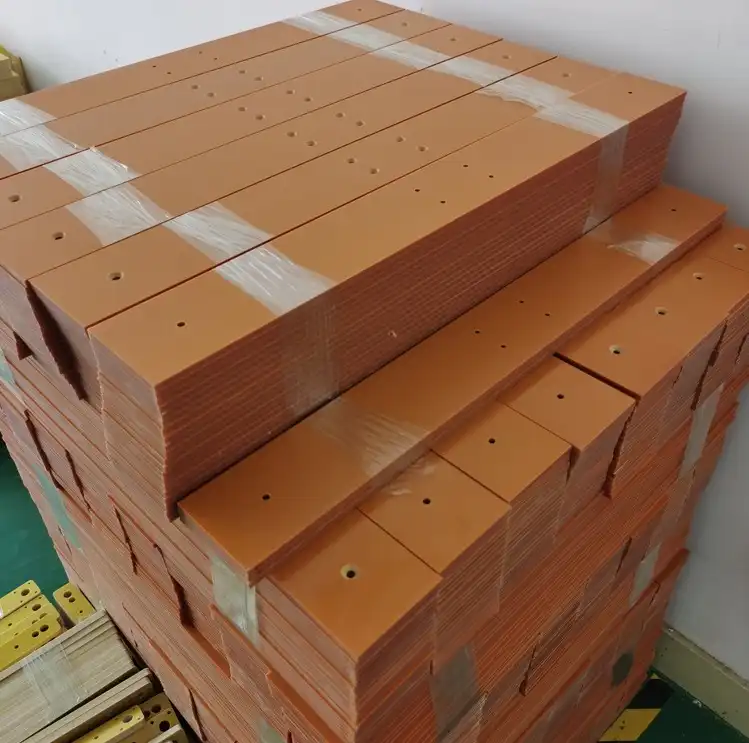
Usually, making Bakelite sheets involves applying glue by hand and stacking layers one on top of the other. Before stacking layers for compression casting, workers soak paper or fabric support by hand in liquid phenolic resin. Different people apply resin at different speeds and with different amounts of pressure, which results in sheets with uneven resin spread. These mistakes show up as weak spots that easily separate when mechanical stress or temperature cycle happens. This can cause critical breakdowns in transformer insulation or battery barriers for cars.
Quality Variability and Throughput Limitations
When processes are done by hand, keeping thickness tolerances the same across production runs is always hard. The people who work with hydraulic presses change the settings for temperature and pressure based on their experience rather than accurate monitor feedback. This can cause thickness differences of ±0.3mm or more. Electrical equipment makers that need Grade XXX phenolic boards for places with a lot of wetness can't stand these kinds of differences because they make it harder to put the boards together and keep them dry.
Production speed is also slowed down. Depending on the thickness requirements, manual layer preparation reduces the number of sheets that can be processed to between 50 and 80 per eight-hour shift. When machinery makers need more than 500 sheets for a single production run, they have to wait longer for them to arrive, which slows down projects and raises the cost of keeping supplies.
Supply Chain Impact
These old restrictions cause problems that spread through B2B supply lines. Appliance makers can't keep to their assembly schedules when orders aren't filled on time because the production of motor brackets rests on getting phenolic sheets on time. High rates of scrap—often 8–12% in manual processes—force providers to make more than needed, which drives up the cost of materials and ends up being paid for by buying budgets. Inconsistencies in quality lead to expensive repairs or fails in the field, which hurts buyer trust and puts a strain on long-term supplier relationships.
Introduction to Automated Production Lines in Bakelite Fabrication
Core Automation Technologies
Modern automatic Bakelite making uses a lot of different high-tech tools that work together to make things. Programmable logic controllers (PLCs) are used in automated resin mixing machines to exactly measure the ratios of phenol and formaldehyde. This gets rid of chemical differences between batches. Robotic impregnation systems evenly cover support materials with resin while controlling the pressure. This makes sure that the resin content is the same in all layers.
Distributed sensor arrays are used in computer-controlled press systems to keep an eye on temperature and pressure across hot plates. These methods keep the drying temperatures and pressures within ±2°C and ±5 bar ranges. This makes sheets with consistent color and mechanical properties. CNC machines that use carbide tools to cut and drill can accurately create complicated shapes (within ±0.05mm), meeting the exact needs of PCB support frames and electrical insulation parts.
Real-Time Quality Control Integration
Inline inspection methods are very different from the old way of checking quality at the end of the line. Optical measuring tools constantly check the width of the Bakelite sheet while it is being made, and when variations go beyond acceptable limits, the press makes changes automatically. The dielectric strength testing equipment takes regular samples of the production output to check the insulation performance before the materials are packed.
These automatic quality systems cut the number of defects to less than 2% and get rid of the need for people to do inspections by hand. Automatic systems make batch reports with temperature curves, pressure profiles, and inspection results that meet ISO certification checks and customer quality standards. These reports are helpful for procurement teams because they keep track of all the quality information.
Customization Capabilities
People often think that technology makes things less flexible, but modern systems are great at handling unique orders. The requirements for different Bakelite grades, sizes, and reinforcement types are saved in recipe management software. Touchscreen screens let operators choose the details of an order, and the system changes the resin formulations, press cycles, and cutting programs automatically. Because of this, suppliers can easily handle both large sales of standard materials and small amounts of unique materials, all without affecting quality standards or wait times.
Technical Analysis: Key Automation Steps in Bakelite Sheet Production
Automated Raw Material Preparation and Resin Mixing
Precision starts with how the raw materials are handled. Automated storage tanks keep phenol and formaldehyde at a controlled temperature, which stops polymerization from happening too soon. Gravimetric dosing devices accurately measure parts to within 0.1%, making sure that the stoichiometry is the same in every run. Closed-loop mixing reactors keep reaction temperatures exact with PID-controlled heating jackets and keep people away from dangerous chemicals.
Adding the catalyst is done by automatic pumping systems that measure out exact amounts based on the size of the batch. This level of control makes resin with the same viscosity and reactivity, which are important factors that affect how well resin enters support layers and how evenly it cures during shaping.
Advanced Molding and Curing Technologies
With robotic accuracy, automated press filling systems place stacks of ready materials between hot platens. Different heating zones on the press bed are made possible by multi-zone heating platens. This evens out the thickness differences that were caused by edge cooling in the past. Platens with pressure monitors built in give real-time input, which lets dynamic pressure changes make the resin move better and get rid of voids.
Curing cycle optimization programs look at production data to find the best rates for temperature ramps and hold times for different types of materials. When compared to safe human settings, these smart systems cut cycle times by 15 to 20 percent while increasing cross-link density and mechanical strength. The end result was sheets with accurate heat deflection temperatures and hardness numbers that were always between 90 and 95 Shore D.
Robotic Cutting, Drilling, and Surface Finishing
Post-cure processing machinery makes sure that the dimensions and quality of the surface are correct. CNC cutters with dust filtration systems can cut sheets to specific sizes while controlling the rough dust that phenolic materials make. Edge chipping is a common problem when working with brittle thermosetting plastics. Tool path planning tools can help reduce this problem.
Automated drilling machines make mounting holes and perforations in circuit boards with a level of positional accuracy that is a hundred times better than human work. Robots that grind and clean surfaces meet consistent standards for surface roughness, which is important for tasks that need smooth electrical insulation barriers or nice finishes.
Inline Quality Inspection and Traceability
Along the production lines, automated checking stations keep an eye on important factors all the time. Laser micrometers measure thickness at several places across the width of a Bakelite sheet, finding differences that can't be seen by hand. Using infrared cameras, uncured areas can be found that show incomplete polymerization. Vision systems look for flaws on the surface, such as delamination and color differences.
The data from each inspection point is sent to centralized software for quality control, which then connects process factors with product characteristics. This makes it possible to find the root cause of problems when they happen and gives power sector clients the proof they need for arc barrier and coil insulation uses.
Benefits of Automated Production Lines for B2B Procurement Clients
Superior Product Quality and Consistency
Automation makes it possible for phenolic laminates to always meet stated specs, without the performance drift that can happen when they are made by hand. Electrical insulation resistance values stay the same across production runs. This makes sure that safety margins for switchgear parts stay the same over their entire service life. The flexural strength of fabric-reinforced grades is usually between 80 and 120 MPa, and there isn't much difference in it. This means that mechanical engineers can build with more certainty and stricter safety factors.
Temperature stability also gets better. Automated cure creates cross-linking throughout the entire thickness of the material, which raises the glass transition temperature and lowers the amount of changes in size during thermal cycles. This consistency is especially helpful for companies that make parts for cars when they are making battery pack barriers that are heated and cooled over and over again.
Cost Efficiency Through Waste Reduction
When production is automatic, material waste goes down by a huge amount. Precise glue dosing gets rid of the need to apply too much in hand methods to make sure the job gets done right. In most cases, scrap rates drop to 2% to 3%, down from 8 to 12% in normal operations. Lower failure rates mean fewer sheets are sent back and less work needs to be done again, which immediately lowers the cost per unit.
Shorter processing times make better use of tools. Curing processes are finished 15-20% faster by automated presses than by hand, and the effects are better. This increase in throughput lets providers complete bigger orders in less time or handle a wider range of orders without having to spend money on capacity growth.
Flexible Production Scalability
Automatic systems can handle both large amounts of regular production and smaller orders that are made just for the customer just as well. With recipe-driven operation, you can quickly switch between different grades, sizes, and colors of material without having to learn how to do it by hand and risking inconsistent quality. Companies that make home appliances can use this freedom to find insulation frames in a range of sizes to fit different motor types without having to pay the higher prices that come with small-batch custom orders.
Enhanced Supply Chain Reliability
When production is automatic, wait times can be predicted. Purchasing managers can confidently plan when materials will arrive, which lowers the need for safety stock and the costs that come with it. Consistent quality cuts down on the work that needs to be done for incoming inspections and field failures that can hurt a brand's image and cost a lot in insurance costs.
Compliance and Sustainability Advantages
Environmental and safety rules are getting stricter, and automated methods make it easier to follow them. Handling resin in a closed loop reduces the release of volatile organic compounds (VOCs), meeting air quality standards in places with strict environmental control. Digital batch records make it easier to keep up with UL certifications and provide the paper trails needed to check for ROHS compliance.
An important part of many automated factories is energy recovery systems that collect leftover heat from drying presses. This lowers the amount of energy needed to make one sheet. Systems that recycle water reduce the amount of process water that is dumped. These environmentally friendly practices are in line with business responsibility goals that are becoming more and more important to the people who make purchasing decisions at global companies that make electrical equipment.
Conclusion
When it comes to making Bakelite sheets, automated production lines are the only way to solve the problems that have been around for a long time. Automation provides the uniform material properties, accurate dimensions, and dependable delivery that modern industrial buying needs. It does this by combining precise resin mixing, computer-controlled curing, robotic machining, and continuous quality monitoring. Electrical makers get shielding materials that work as expected as dielectrics. Machine makers can get phenolic parts that have tight mechanical limits. Customers in the power field get approved materials that meet strict safety standards. Moving from manual to automated manufacturing greatly enhances the dependability of the supply chain and lowers overall buying costs by getting rid of waste and speeding up production. When purchasing professionals look at phenolic laminate suppliers, they should make sure that the suppliers can automate their processes as a top priority. This will help them find good suppliers in the long run.
FAQ
What types of Bakelite sheets can automated production lines manufacture?
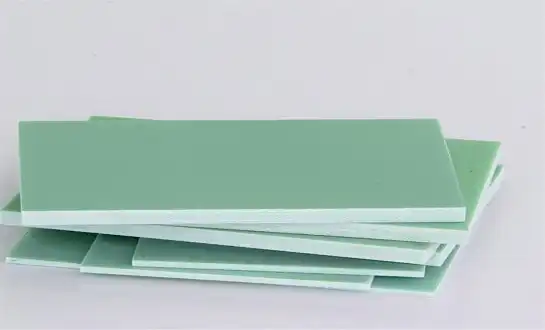
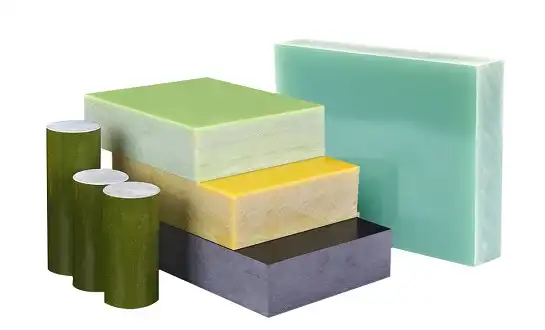
The whole range of phenolic veneer grades is made by automated processes. The surface of paper-reinforced types that can be used to hold PCBs and act as electrical insulators is very smooth. Automated resin impregnation uniformity is especially helpful for fabric-reinforced models that offer better mechanical strength for gears and bearings. Under computer-controlled press cycles, the best qualities are reached in glass-reinforced grades that need careful control of the temperature during hardening. Thickness ranges from about 0.5 mm to 50 mm, and hand means can't provide dimensional tolerances.
How does automation affect pricing for bulk Bakelite sheet orders?
In many ways, automation makes things more cost-effective. Per-unit manufacturing prices go down when there is less waste, fewer mistakes, and shorter cycle times. These savings are especially big when you buy a lot of something, because setup time amortization and buying materials in bulk make prices even better. Many automated suppliers offer bulk deals that show real cost cuts, not just price changes based on the market like many manual makers do.
Can automated production maintain critical performance standards?
Automated manufacturing always does better than the standards for resistance to heat, electrical insulation, and mechanical strength. Computer-controlled hardening makes sure that all the cross-links are formed throughout the width of the material, which increases its temperature stability and dielectric strength. Real-time tracking stops the uneven curing that can happen when operations are done by hand and the user isn't paying attention or when equipment breaks down and isn't noticed. As automatic systems make more detailed batch documents that meet UL and ROHS auditing standards, certification compliance becomes more reliable.
Partner with J&Q for Advanced Bakelite Sheet Solutions
J&Q has been making precision phenolic laminates for more than 20 years and has both cutting-edge automatic production tools and a lot of knowledge in the field of material science. Electrical equipment, industrial machinery, power distribution, and car uses all over the United States need Bakelite sheet materials that are made on automatic production lines that meet the highest standards. Computer-controlled handling makes sure that every sheet meets the required standards for thickness, dielectric performance, and mechanical strength for your tough uses.
We are a well-known seller of Bakelite sheets, and we keep a large stock of paper-reinforced, fabric-reinforced, and glass-reinforced grades in thicknesses ranging from 0.5mm to 50mm. Our unified transportation services, which include our dedicated freight operations, give you accurate arrival schedules that help you plan your production. Technical support teams work directly with engineering managers and sourcing experts to find the best material specs, provide proof of approval, and solve problems with applications.
We want you to see what makes J&Q different. Email our team at info@jhd-material.com to talk about your unique needs, get samples of our materials, or get accurate prices for your next project. Find out how our knowledge of automated production and customer-focused service model can improve the stability of your supply chain and lower the total cost of your purchases.
References
Baekeland, L. H. (1909). "The Synthesis, Constitution, and Uses of Bakelite." Industrial & Engineering Chemistry Research, Volume 1, Issue 3, pp. 149-161.
Harper, C. A. (2006). "Handbook of Plastics Technologies: The Complete Guide to Properties and Performance." McGraw-Hill Professional Publishing, Chapter 8: Phenolic Resins and Laminates.
Knop, A., & Pilato, L. A. (1985). "Phenolic Resins: Chemistry, Applications, and Performance." Springer-Verlag Berlin Heidelberg, Chapters 5-7: Manufacturing Processes and Quality Control.
Society of Plastics Engineers (2018). "Automation in Thermoset Processing: Modern Approaches to Phenolic Laminate Manufacturing." SPE Technical Papers, Annual Conference Proceedings, Detroit, Michigan.
Rothon, R. N. (2017). "Fillers for Polymer Applications: High-Performance Reinforcement in Thermosetting Systems." Polymer Science and Technology Series, Springer International Publishing.
Industrial Electrical Manufacturers Association (2020). "Material Standards for Electrical Insulation: Specification Guidelines for Phenolic Laminates in Power Distribution Equipment." IEMA Technical Bulletin 47-2020.

Get a complete product list and quotation
J&Q New Composite Materials Company