CNC Machined FR4 Sheets for PCB Test Fixtures: Accuracy and Reliability
Precision and reliability are musts when looking at materials for PCB test tools. FR4 sheet, which is a glass-reinforced epoxy laminate, is the standard in its field because it has the best mix of fire proof, electrical insulation, and mechanical strength. UL94 V-0 flame retardancy is achieved in this glass-epoxy compound by adding bromine-based chemicals. This makes it self-extinguishing, which keeps sensitive electronics safe. These epoxy laminates are turned into special test fixture parts with tight dimensional limits by CNC cutting. This lets engineers keep the contact pressure and signal integrity over thousands of testing rounds. The controlled production process fixes some of the most important problems in electronics tests, like keeping the temperature stable over long periods of time, making sure that high-frequency signals work the same way every time, and making sure that the structure lasts for a long time without breaking down.
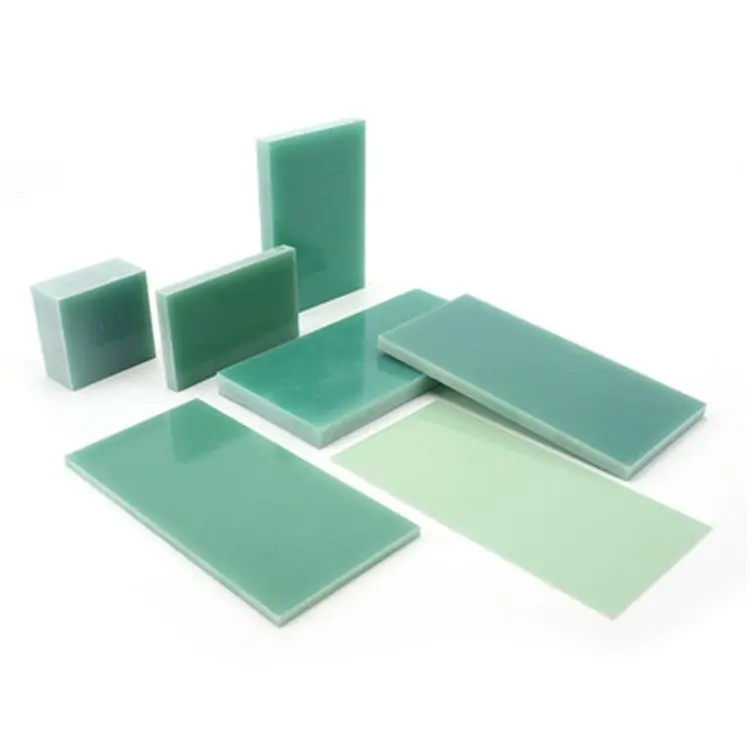
Understanding FR4 Sheets and Their Role in PCB Test Fixtures
Material Composition and Core Properties
Understanding what makes this glass-reinforced material special is the first step in building effective test tools. FR4 sheet is made of continuous filament glass cloth that has been soaked in thermosetting epoxy glue and hardened at high temperatures and pressures. The tensile strength of the glass fibers is more than 310 MPa, and the dielectric strength of the epoxy matrix is 20 kV/mm. This mix makes a base that stays the same size at temperatures ranging from -50°C to 130°C when it is used continuously.
The glass transition temperature (Tg) for standard versions is between 130°C and 140°C, which is good for testing most consumer gadgets. High-Tg versions improve thermal performance up to 170–180°C, which is useful for car and power electronics uses where thermal cycling causes stress. When tested according to ASTM D570, the moisture absorption rate stays below 0.1%. This keeps the dimensions from changing in humid production settings.
Electrical Insulation Characteristics
Maintaining impedance control and stopping signal leaks are very important for the accuracy of the test stand. At 1 MHz, the dielectric constant of FR4 sheet is between 4.2 and 4.6, which makes its electrical behavior reliable for signal routing. Volume resistivity is higher than 10^14 ohm-cm, which means that test points are completely separate, even when voltages are high. In contrast to thermoplastics, which break down under heat stress, this electrical performance stays the same across the working temperature range.
According to ASTM D495 testing, the material can withstand 180 seconds of high-voltage arcing without making conductive paths. This is an important requirement when test tools are used to work with power distribution components or car battery management systems. The low dissipation factor (0.02 at 1 MHz) keeps signal loss to a minimum during high-frequency tests, which keeps the accuracy of measurements for communication devices and RF modules.
Mechanical Strength and Durability
Materials that don't wear down easily and keep their exact dimensions are needed for testing that is done over and over again. Good epoxy laminates have a bending strength of up to 415 MPa, which means that thin pieces can hold the weight of parts without deflecting. When the compressive strength is higher than 415 MPa, it's possible to make fixtures with threaded plugs and clamping devices that won't crush the material.
When automatic test equipment handles parts at production speeds, impact resistance is very important. The 800 J/m impact power of Izod makes it resistant to drops and mechanical shocks that happen while it is being handled. Because they are tough and don't absorb much water, these test tools stay calibrated for a long time, which lowers the number of times they need to be re-calibrated and the costs of downtime.
The CNC Machining Process for FR4 Sheets: Precision and Quality Control
Cutting and Drilling Operations
Understanding the unique challenges of making glass-reinforced composites is necessary to turn raw FR4 sheets into precise test tools. Because glass threads are rough, carbide or polycrystalline diamond (PCD) tools are needed to get a good tool life. For drilling, spindle speeds are usually between 15,000 and 25,000 RPM, and feed rates are changed to keep the material from delaminating at the entry and exit places.
Being made of layers of glass cloth and plastic makes through-hole drilling for test pins very difficult. Peck drilling processes keep heat from building up, which keeps the plastic from melting and changing dimensions. Fiber pullout is kept to a minimum with entry backup boards and special drill shapes that have point angles of 118 degrees. This makes sure that the holes are clean and that the contact resistance stays the same over thousands of test cycles.
Down-shear end mills are used for routing operations on complicated fixture forms because they squeeze material layers while cutting, which stops them from delaminating. If you use climb milling instead of regular milling, you get better edge quality and need fewer extra finishing processes. With the right amount of hold-down pressure and vacuum clamps, the workpiece doesn't move during machining, and errors stay within ±0.05 mm, which is needed for precise alignment features.
Post-Machining Inspection Protocols
Quality control goes beyond checking the sizes to make sure the electrical and mechanical performance meets the requirements. Coordinate measuring tools (CMM) check important things like the placement of holes, the flatness, and the symmetry of surfaces. Statistical process control finds tool wear before it affects quality by following changes in dimensions between batches of production.
Optical profilers are used in surface finish checking to measure roughness levels. This makes sure that the surfaces that fit together are smooth enough for gasket closing or electrical continuity. Testing the dielectric breakdown voltage on produced parts makes sure that the cutting processes haven't damaged the insulation by micro-cracking it or contaminating it. Visual inspection with a magnifying glass can find edge delamination, surface pitting, or foreign material buried in the fastener that could make it less reliable.
Environmental stress screening involves putting samples through temperature changes and changes in humidity, which checks their ability to stay the same size in a controlled field environment. This testing method finds batches of materials that haven't dried properly or are contaminated with wetness before they are used in production. This keeps customers safe from failures in the field. Traceability systems connect material certifications to finished parts, which lets you figure out what went wrong if performance problems happen while the device is being set up.
Thickness Variations and Machining Outcomes
Standard FR4 sheet thicknesses range from 0.5 mm to 50 mm. The cost and difficulty of cutting depend on the thickness accuracy. Thinner materials (less than 1.6 mm) need special workholding to keep them from bending while they're being cut, and thicker parts (more than 12 mm) need more time to machine and more care to be taken with tool wear. The procurement team should set the thickness tolerances that are right for the job. For example, general-purpose fittings can handle variations of up to 0.2 mm, but precise jobs that need to control resistance need tolerances of up to 0.05 mm.
The width of the material has a direct effect on how well heat moves through the device, which in turn affects how quickly heat leaves test points. Thicker parts are stiffer mechanically but respond more slowly to changes in temperature. Fixture makers have to weigh these trade-offs against the needs of testing. The CNC programming strategy changes the cutting parameters based on the thickness. For example, to keep the quality of the edge and keep the tool from breaking, thicker cuts need more than one pass.
Procurement Considerations for CNC Machined FR4 Sheets
Supplier Qualification and Certification
When choosing skilled suppliers, you need to make sure that both the materials meet standards and the sellers can make the goods. UL recognition makes sure that flame retardancy meets safety standards, while ISO 9001 approval shows that quality control systems have been in place for a while. RoHS compliance paperwork proves that no banned chemicals are present, which is very important for electronics companies that sell in Europe under REACH rules.
Shipments should come with material test results that list qualities like flexural strength, dielectric constant, and flame rating. Certificate of Conformance (CoC) records connect the given material to the accepted specification. This makes it possible to find the source if there are problems with the performance. On-time delivery measures and non-conformance rates show a supplier's quality past. Long-term vendors show stable performance across multiple order cycles, which lowers procurement risk.
Minimum Order Quantities and Lead Time Management
Standard FR4 sheets usually have minimum order quantities that are based on the size of the whole sheet instead of the number of pieces. Common sheet sizes of 1000 x 2000 mm can produce dozens of fixture parts based on how well they nest. This means that buying teams have to balance the costs of keeping inventory with how often they need to order. Often, when you need a custom width, you have to order a minimum batch size. This makes each unit more expensive and takes longer to get, from two weeks to six weeks.
Longer wait times for materials can make just-in-time manufacturing methods difficult, so they need safety stock buffers or vendor-managed inventory arrangements. Blanket purchase orders with planned releases offer better prices while still allowing for flexible delivery, so production numbers can change without having to renegotiate terms. Building ties with several qualified providers makes the supply chain more stable, lowering the risk of problems in certain areas or lack of capacity during times of high demand.
Custom Fabrication Services and Value-Added Processing
A lot of sellers offer CNC cutting services and give you finished parts instead of raw FR4 sheet. This method adds value by giving the seller the machining knowledge and equipment investment. This lets procurement teams find parts that are ready to use. When comparing in-house machining to outsourcing manufacturing, the total landed cost should be taken into account. This includes the costs of tooling amortization, scrap rates, and the potential costs of allocating internal capacity.
Custom manufacturing services usually give feedback on design for manufacturability, which finds possible machining problems before money is spent on tools. This joint method cuts down on development times and the number of expensive design changes that need to be made. Application engineering support from suppliers lets them suggest material types and thicknesses that are best for certain testing needs. This uses experience from many industries to help buyers make better choices.
Maximizing Accuracy and Reliability in PCB Test Fixtures Using CNC Machined FR4 Sheets
Design Optimization for Dimensional Stability
When designing a fixture, it's important to think carefully about thermal expansion factors between 12 and 16 ppm/°C so that the alignment doesn't move during tests. By matching the forces inside a part that are caused by changing temperatures, symmetrical part shapes reduce warping. When placing features, you should think about the direction of the material grains that were set during production. The glass cloth weave creates anisotropic qualities that change the security of the dimensions. Using CNC-machined FR4 sheets to improve the accuracy and dependability of PCB test fixtures depends on these core principles.
Corner angles and feature spacing affect where stress is concentrated and how likely it is that a crack will spread. Large curves spread stresses over a bigger area, while sharp internal corners cause stress risers where heat cycling can start cracks. To keep the structure's stability during handling and binding, the minimum wall thickness between features should be more than 1.5 times the thickness of the material. These design principles, which were formed over many years of making circuits, directly lead to more reliable fixtures.
Machining Parameter Optimization
Cutting factors have a big effect on the quality of the edges and the accuracy of the dimensions in glass-reinforced composites. With a chip load per tooth of 0.05-0.15 mm, there is enough cutting force to cleanly split the material without too much heat buildup. Choosing the right coolant affects both the life of the tool and the finish on the surface. Water-based coolants cut down on dust production, but they may cause brief changes in the hygroscopic epoxy matrix's dimensions. Air blast cooling, on the other hand, keeps the dimensions stable during cutting.
Tool path techniques spread the cutting energy across the surface so that heat doesn't build up. Adaptive clearing processes keep the rate of material removal constant, which stops localized warmth that softens resin and throws off measurements. Exit strategies for through-features use ramping or spiral moves to stop exit burrs from forming. This gets rid of the need for extra deburring steps that can cause damage during handling.
Integration of Thermal and Electrical Considerations
Managing heat flow and electrical field distribution throughout the building is important for the performance of the test device. Using thermal modeling during design helps find "hot spots" where parts are producing too much heat and can't be cooled down properly. This lets you strategically remove materials or add heat sinks. Electrical field simulation shows possible arcing paths or parasitic capacitance that affect the accuracy of measurements. This helps with choosing where to put dielectric barriers and how to ground them.
When putting something into practice, you have to find a balance between different needs. For example, adding more material thickness makes it easier for heat to spread, but it slows down the thermal reaction, and removing too much material quickly makes things lighter, but it weakens the structure's rigidity. Iterative analysis that combines temperature, electrical, and mechanical models with real-world proof testing leads to successful fixture designs. Leading electronics companies use this systems engineering method to make sure that fixtures meet accuracy goals for the whole time they are supposed to last.
Conclusion
CNC made FR4 sheets provide the accuracy, dependability, and safety needed for tough PCB test fixture uses in the electronics industry. The material's tried-and-true mix of electrical insulation, mechanical strength, and flame retardancy meets important practical needs at a low cost for mass production. Standard epoxy boards can be turned into tools that stay calibrated even after thousands of test runs if the right source is chosen, best practices for machining are followed, and the design is optimized. As electronics get more complicated and testing standards get stricter, properly designed glass-epoxy fittings will continue to help quality assurance programs all over the world.
FAQ
What advantages does this glass-epoxy material provide for PCB test fixtures?
High dielectric strength, mechanical stiffness, and UL94 V-0 flame retardancy make this the perfect base for test setups. Electrical insulation stops signals from crossing over between test points, mechanical strength keeps measurements accurate when clamping forces are applied, and fire resistance keeps people and equipment safe from heat accidents. Low moisture absorption keeps the dimensions stable even when the humidity changes, which means that the FR4 sheet testing doesn't have to be done as often.
How can procurement teams verify CNC machined component quality?
Ask for certificates of the material that show its flame rate, dielectric strength, and mechanical qualities. Reports from dimensional inspections should show that the tolerances meet the requirements. Testing for dielectric breakdown voltage confirms the stability of the insulation after it has been machined. You should ask for samples before committing to large amounts. This way, you can test the performance in your own testing setting to make sure it meets practical needs.
What alternatives balance cost and accuracy for budget-conscious projects?
G10 grade glass-epoxy laminates have the same mechanical qualities as other grades, but they don't fight fire. They can be used in low-voltage situations where fire resistance isn't necessary. Paper and glass are mixed together in CEM-1 composite materials, which save 20 to 30 percent on costs but have worse heat performance. These options are good for sample fixtures or low-volume testing that doesn't need high-quality material qualities.
Source High-Quality FR4 Sheet from J&Q: Your Trusted Manufacturing Partner
For your PCB test device needs, J&Q has more than 20 years of experience making shielding materials and 10 years of experience trading internationally. Our large stock of FR4 sheets includes both normal and High-Tg types. They are precisely CNC machined to your exact specs, with errors as small as 0.05 mm. As both a manufacturer and a transportation provider, we offer one-stop solutions from choosing the materials to delivering the finished parts. This means that you don't have to worry about coordinating with different providers.
Our engineering team works with sourcing professionals and design engineers to make sure that the materials we choose and the ways we machine them are the best for your testing needs. Every package comes with UL and RoHS certifications and all the paperwork needed to track the materials. Whether you need small amounts of samples to test a prototype or large amounts of production with just-in-time delivery, our established supply chain and flexible minimum order numbers can handle a wide range of buying strategies.
Email our technical sales team at info@jhd-material.com to talk about what you need for a PCB test stand. We offer suggestions on materials, quotes for custom manufacturing, and trial supply to make sure the work will work before you commit to it. Work with a FR4 sheet provider that has been in business for a while and knows how important accuracy and dependability are in test settings for electronics manufacturing.
References
National Electrical Manufacturers Association (NEMA). "Industrial Laminating Thermosetting Products Standards Publication LI 1-2020." NEMA Standards Publication, 2020.
Institute of Printed Circuits (IPC). "IPC-4101D Specification for Base Materials for Rigid and Multilayer Printed Boards." IPC International Standards, 2019.
Underwriters Laboratories. "UL 94 Standard for Safety of Flammability of Plastic Materials for Parts in Devices and Appliances." UL Standards & Engagement, 2018.
ASTM International. "ASTM D709-19 Standard Specification for Laminated Thermosetting Materials." ASTM Material Standards, 2019.
Coombs, Clyde F. "Printed Circuits Handbook, Seventh Edition." McGraw-Hill Education, 2016.
Harper, Charles A. "Electronic Materials and Processes Handbook, Fourth Edition." McGraw-Hill Professional, 2015.

Get a complete product list and quotation

J&Q New Composite Materials Company



