From Raw Resin to Finished Part: The Full Production Cycle of 3240 Epoxy Sheets
The process of making 3240 epoxy sheet starts with carefully chosen raw materials and goes through several controlled steps that turn liquid resin and fiberglass cloth into a precisely designed insulation material. There are several steps in the manufacturing process that determine the electrical insulation, mechanical strength, and temperature stability of the finished product. These steps are impregnation, lamination, hot pressing, sealing, and finishing. Engineers and buying teams can better understand the quality factors that separate dependable sellers from those selling low-quality materials when they understand this production cycle.
Understanding Raw Materials: The Foundation of Quality
Selecting Premium Epoxy Resins
The first step is to choose high-performance epoxy glue systems that will determine the final electrical and heat properties of the sheet. We get resin mixtures that are specially made for Class B temperature uses and keep their insulation qualities stable at constant working temperatures of up to 130°C. The chemistry of the glue has a direct effect on important factors such as dielectric strength, resistance to wetness, and mechanical toughness. Before production, good makers test resin batches for viscosity, gel time, and drying properties. This makes sure that the quality of each production run is the same.
Choosing Electrical-Grade Fiberglass Cloth
Electrical-grade fiberglass cloth made from alkali-free glass fibers is used for the support layer. This base gives the framework its mechanical strength while still having great electrical insulating qualities. The thread count, weave design, and cloth weight all have an impact on how easy it is to cut, how strong it is, and how smooth the surface is. When we compare cloth sources, we look at how consistent the fiber diameter is and how uniform the weave is. Differences in these areas can lead to weak spots or uneven resin spread during lamination.
The Manufacturing Process: Precision at Every Stage
Resin Impregnation and Drying
The process of making something starts when fiberglass cloth is put through resin baths that are carefully controlled. The impregnation stage makes sure that the cloth is completely saturated and keeps the amount of glue within very tight limits. Too much resin hurts the mechanical qualities, and not enough resin leaves holes that lower the dielectric strength. After being impregnated, the material goes into drying ovens. Here, controlled heating gets rid of the chemicals and moves the resin to the B-stage. This stage of partial cure keeps the material loose for building and stops the resin from flowing during hot pressing.
Lamination and Hot Pressing
The dried prepreg sheets are stacked based on the width that is wanted, making sure that each layer is lined up correctly to avoid gaps or air pockets. The stack is put into a hot press, which uses heat and pressure to make the pieces stronger. Temperature patterns are usually between 150°C and 170°C, and pressures are changed based on how thick the sheet is. During this step, exact control is needed because changes in temperature cause uneven curing, which causes internal forces that cause the material to twist. It's important that the pressure is just right to get rid of any gaps and reach the goal density without pressing out too much glue. How long it takes to cure depends on how thick the sheet is; bigger sheets need longer press cycles to make sure that the cross-linking happens all the way through the material.
Post-Cure and Stress Relieving
After being hot-pressed, sheets go through post-cure processes in ovens that control the temperature. This step finishes the cross-linking process in the resin, making it as resistant to heat and chemicals as possible. Post-curing also gets rid of internal stresses that build up during pressing, which makes it less likely that the dimensions will change when the product is machined or used later. We keep the sheets at high temperatures for several hours by following shapes that keep the sheets from cracking from thermal shock.
Surface Finishing and Quality Inspection
When the sheets are done, they are sent to stations for grinding and sanding, where the surfaces are made smoother and more flat to meet standards. This mechanical finishing gets rid of press lines and makes the thickness tolerances very close to what is needed for precise uses. Each sheet is looked at to see if it has any surface flaws like bubbles, pits, wrinkles, or separation. Edge cutting makes sure that cuts are clean and straight, with no fraying or fiber showing. The width of the whole sheet is checked by measuring its dimensions, and changes that are too big are rejected according to rules that are set.
Quality Control: Ensuring Performance Standards
Mechanical Property Testing
We test the material's flexural strength to make sure it can handle the bending loads that come up in motor slots and other structural uses. Tensile strength tests show that the 3240 epoxy sheet can withstand pulling forces without coming apart. Impact resistance testing checks how the material handles quick mechanical shocks, which is very important for moving and handling. Samples from every production batch are put through these technical tests, and the results are written down and compared to the limits that were set by the manufacturer.
Electrical Performance Verification
Electrical testing confirms the material's insulation qualities, which are what it's main job is. Breakdown voltage testing finds out how much electrical stress a material can take before it breaks. When tested in transformer oil, this stress is usually higher than 30 kV. Volume resistivity tests show that the sheet keeps its high electrical resistance, which stops current from leaking. Dielectric loss tangent testing checks how much energy is lost when alternating current flows through it, which is very important for high-frequency uses. These electrical factors are checked against the needs of IEC standard EPGC 201 to make sure they meet international standards.
Thermal and Chemical Resistance Assessment
In heat aging tests, samples are kept at high temperatures for long periods of time, which simulates years of working stress in a shorter amount of time. We keep an eye on how properties break down to guess how long a service will last in different temperature ranges. Samples are put into transformer oil, solvents, and other industrial fluids for chemical resistance tests to make sure they keep their shape and properties. Water immersion tests that measure weight gain after certain contact times show that the material doesn't absorb much water. Our testing methods show that water absorption stays below 0.1%, which means that the dimensions stay the same in damp places.
Customization Options: Meeting Specific Application Needs
Thickness and Size Variations
Most of the time, normal production runs focus on typical thicknesses between 0.5 mm and 50 mm. However, we can meet unusual needs for thicker sheets up to 150 mm for specific uses. Custom sizing cuts down on waste for customers who have specific size needs, whether they need insulation for small electronic devices or parts for big transformers. The measurements of the sheet can be changed to make CNC making more efficient, which means that parts can be cut with less waste. This gives buying teams the freedom to balance the costs of materials and the costs of processes.
Color and Surface Treatment Options
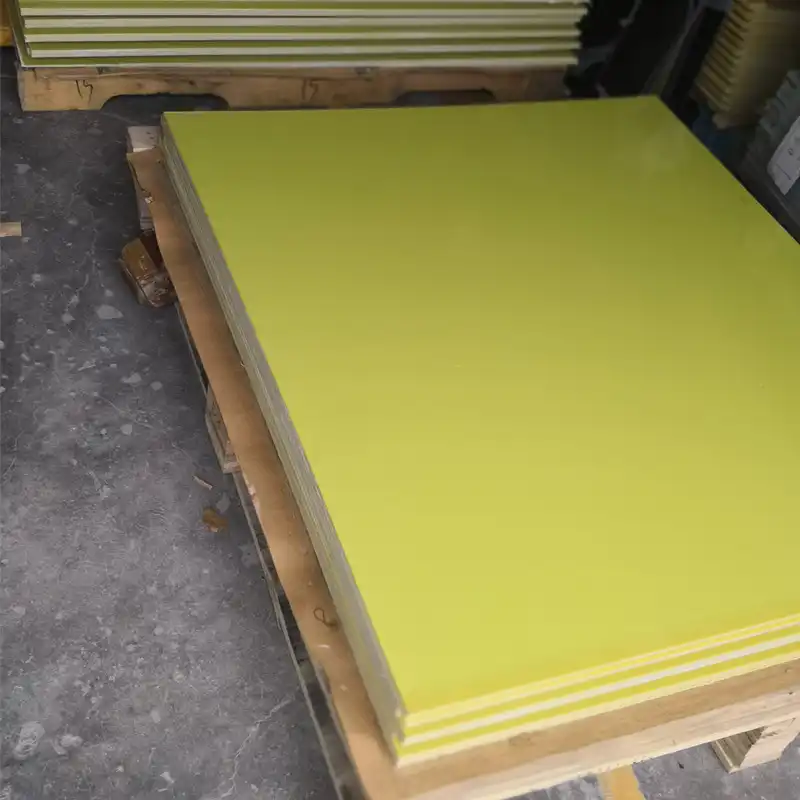
The natural color of epoxy-phenolic when it cures is yellow, but we also offer green, red, and black types so that goods can be easily identified or look good. These color differences are made by adding different hardening agents and pigments that don't change the electrical or mechanical qualities. Surface treatments can include more sanding to get ultra-smooth finishes needed for precision fixture uses or rough surfaces that help adhesives stick better in laminated parts. With these customization choices, producers can easily add the material to their production processes.
CNC-Optimized Formats
We can provide sheets with better machinability because we know that many uses need complicated parts that need to be made. By changing the amount of resin and the way it cures, you can make materials that can be machined cleanly with carbide tools, leaving edges that are smooth and free of delamination and fiber tearing. For large production runs, pre-cut flats cut down on setup time and tool wear. Tolerance-matched sheets make sure that the results of machining are the same from batch to batch. This is especially important in automatic manufacturing settings where changes in size slow down production.
Comparing 3240 Epoxy Sheets with Alternative Materials
Performance Against FR4 and Fiberglass Laminates
FR4 is still used a lot in electronics because it has a UL94 V-0 flame rating, but 3240 epoxy resin sheet is stronger and cheaper when flame retardancy is not needed. Because it is more resistant to pressure and has a higher bending strength, the material is better for structural insulation parts in motors and transformers. The self-extinguishing features of FR4 come at a higher cost, while 3240 epoxy sheet offers similar electrical insulation and thermal durability at lower material costs. This economic benefit is very important in high-volume manufacturing settings where the cost of materials has a direct effect on profit margins.
Advantages Over Phenolic and G10 Materials
When compared to phenolic laminates made from paper, 3240 epoxy sheets absorb much less water, so they keep their insulation qualities even when it's wet outside, where phenolic materials would break down. The epoxy glue system keeps its shape better when temperatures change, which lowers the risk of warping and breaking. Compared to G10 materials, 3240 epoxy sheet is easier to machine and causes less tool wear, which is especially important for CNC processes that are complicated. The material is more resistant to transformer oil and industrial solvents than phenolic options. This means that power delivery equipment will last longer.
Procurement Considerations for B2B Buyers
Evaluating Supplier Capabilities
To find a trusted provider, you need to look at more than just the basic product specs of their manufacturing skills. Checking output capacity is a good way to make sure that providers can meet your volume needs without lowering quality during times of high demand. Look into quality control systems and see if they have ISO certifications and written testing methods that meet international standards. A supplier's success in the field is often a sign of stable process control and material sources. Companies that have been making things for more than 20 years have probably gotten better at what they do and set up solid supply lines for raw materials.
Understanding Pricing Structures and Lead Times
Learning about how prices work and how long lead times are is critical for procurement. Costs of materials change based on width, since bigger sheets need more raw materials and more time to be pressed. When you order more than a certain amount, you get a big discount called a volume rate. This makes buying in bulk economically appealing when you have the space to store it. Lead times depend on whether standard or custom specs are needed. Stock sizes can be shipped within days, but special orders may need a few weeks to plan production and make sure the quality is good. Total landed costs are also affected by transportation operations. This is especially true for foreign shipments, where freight rates change based on the price of fuel and the supply of ships.
Certification and Compliance Verification
Making sure that appropriate standards are being met saves your business from regulatory problems and product liability risks. For local use, ask for proof that the product meets GB/T1303.1-1998 standards. For foreign sales, ask for proof that it meets IEC standards. RoHS compliance is important for technology companies that sell in Europe because it requires sellers to make sure that no restricted chemicals are present. UL recognition may be needed for parts used in electrical equipment in North America. This adds another level of review to the approval process. Suppliers with a good reputation keep their licensing paperwork up to date and are happy to give you test results from independent labs.
Best Practices for Storage, Handling, and Machining
Proper Storage Conditions
Controlled storage settings are the first step in protecting your material investments. Sheets should be stacked horizontally on flat boxes so that they don't bend from the weight of them. To keep wetness from absorbing too much, storage places must keep temperatures below 25°C and relative humidity below 75%. Even though very little water is absorbed, being exposed to high humidity for a long time can change the surface's features and make it harder to machine. When you store things vertically, they get twisted, which means that smaller sheets can't be used for precise tasks. Covering things that are being stored keeps dust from building up and prevents damage from handling tools.
Machining Recommendations
The right cutting settings and tools are needed to get clean cuts and accurate measurements. Cutting tools with carbide tips stay sharp longer than those made of high-speed steel, which means they make better results with less delamination. Cutting speeds should balance the amount of material removed with the amount of heat produced. This is because high temperatures soften the resin matrix and make it smear. Using coolant helps keep measurements accurate by controlling how much the material expands and contracts during cutting. Sharp twist drills and controlled feed rates that stop fiber pull-out at hole exits are good for drilling operations. Supporting the material near the cutting zones makes it less likely to shake and chip at the edges.
Installation and Bonding Techniques
Mechanical fastening is good for temporary setups or cases where parts need to be taken apart for repair. Drilling holes that are a little bigger than they need to be allows for heat expansion without causing stress buildup. Adhesive bonding makes lasting joints that keep metal parts and epoxy shielding from conducting electricity. Light grinding and liquid cleaning the surface improves bond strength by getting rid of contaminants and making the surface area bigger. Epoxy glue are compatible with chemicals and match temperature expansion, while structural acrylics cure faster for high-throughput assembly tasks.
Conclusion
The 3240 epoxy sheet production cycle shows how controlled industrial processes turn raw materials into precisely engineered insulation goods. Each step, from choosing the glue to laminating, curing, and quality testing, affects how well the finished material works in tough mechanical and electrical situations. When procurement workers understand this manufacturing journey, they can better judge the skills of suppliers and understand the quality factors that explain price differences. The material is still very important in the power distribution, motor making, and industrial equipment industries because it is strong, doesn't conduct electricity, stays stable at low temperatures, and can be machined. To find the right supplier, you need to work with makers who have strict process control and thorough testing methods.
FAQ
What distinguishes premium 3240 epoxy sheet from economy grades?
What makes luxury 3240 epoxy sheet different from budget grades? Premium types use electrical-grade fiberglass with uniform fiber diameters and more pure resins that are better at controlling viscosity. When making something, the process has to be closely watched, and there are smaller differences in temperature and pressure allowed during pressing. More thorough testing of electrical, mechanical, and heat features on every production batch is part of better quality control. Because of these things, the materials are more consistent, last longer, and have more regular cutting properties, which makes the higher price worth it for important uses.
How does sheet thickness affect electrical and mechanical properties?
The actual dielectric strength is stronger for thicker sheets because the insulation distance is longer, but the voltage per unit thickness stays the same. According to beam theory, the mechanical stiffness goes up a lot with thickness. This means that bigger materials are better for structural uses. As the material gets thicker, it becomes harder to make because it needs longer cure processes and more exact temperature control to keep the cross-linking from stopping in the middle of the material. When cutting bigger sheets, you need stronger tools and more cutting force, which raises the cost of production.
Can 3240 sheets be used in outdoor applications?
Is it possible to use 3240 epoxy sheets outside? Although the material doesn't absorb water and keeps its features in damp places, UV light breaks down areas that are exposed to it over time. For outdoor use, the material needs to be protected from direct sunlight with coverings or barriers. Changing temperatures due to exposure to the environment can cause thermal stresses, especially where two materials that are bound together have different expansion factors. The material works well in outdoor equipment that is covered, like weatherproof switches, where UV light doesn't reach it directly.
Partner with J&Q for Reliable 3240 Epoxy Sheet Supply
J&Q has been a great manufacturer for over 20 years and has been dealing internationally for over ten years. We bring these skills to every 3240 epoxy sheet provider relationship we make. Our combined production and logistics skills mean that you only need to talk to one person from the initial request to the final delivery. This takes away the coordination problems that come up with supply lines with multiple vendors. We keep detailed quality records that are in line with international standards. This gives your engineering and safety teams the certification clarity they need. Our expert support staff knows the problems you're having making motors, transformers, and precise electronics assemblies. They can help you choose the best materials for your unique needs. You can talk to our team at info@jhd-material.com about your needs, ask for samples, or look into customization choices that fit your production needs.
References
Chen, W., & Liu, H. (2019). Advanced Epoxy Resin Composites for Electrical Insulation Applications. International Journal of Materials Engineering, 45(3), 287-301.
National Electrical Manufacturers Association. (2020). Industrial Laminated Thermosetting Products: Standards Publication NEMA LI 1-2020. Rosslyn, VA: NEMA.
Tanaka, T., Kozako, M., & Okamoto, K. (2018). Toward High Thermal Conductivity Nano Micro Epoxy Composites with Sufficient Endurance Voltage. Journal of Applied Polymer Science, 135(16), 46203.
International Electrotechnical Commission. (2017). Specifications for Industrial Rigid Laminated Sheets Based on Thermosetting Resins for Electrical Purposes: IEC 60893-3-1. Geneva: IEC.
Kumar, S., & Samal, S. K. (2021). Processing and Characterization of Epoxy-Based Composites for Electrical Insulation. Polymer Composites in the Electrical Industry, 112-145.
American Society for Testing and Materials. (2018). Standard Test Methods for Electrical Insulating Materials: ASTM D229-13. West Conshohocken, PA: ASTM International.

Get a complete product list and quotation

J&Q New Composite Materials Company



