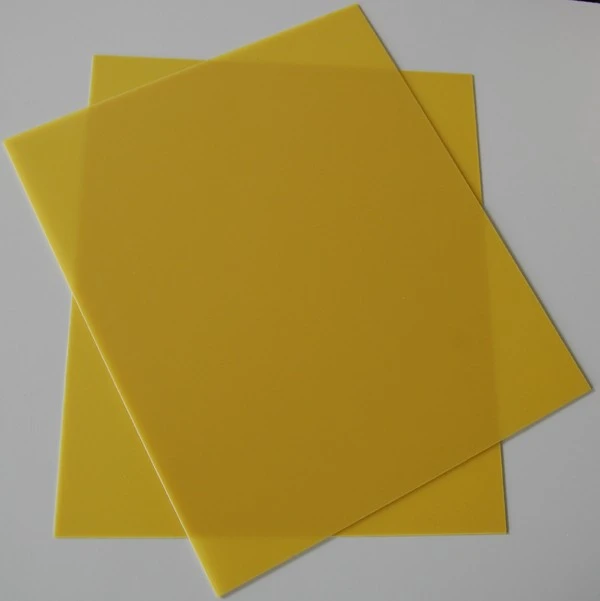
What Makes 3240 Epoxy Sheet Ideal for Motor Winding Insulation?
Superior Dielectric Properties
3240 epoxy sheet boasts exceptional dielectric strength, a crucial factor in motor winding insulation. This property allows the material to withstand high voltage differentials without electrical breakdown, ensuring the integrity of motor windings. The sheet's low dielectric constant minimizes energy losses and improves overall motor efficiency. Additionally, its high volume and surface resistivity contribute to effective prevention of current leakage, maintaining the motor's electrical performance over time.
Mechanical Durability
The composite nature of 3240 epoxy sheet, combining epoxy resin and fiberglass, results in remarkable mechanical strength. This durability is essential in motor applications, where components are subject to constant vibration and thermal stress. The sheet's high tensile and flexural strength allow it to maintain its shape and insulative properties under mechanical loads, preventing deformation that could compromise motor performance. Its resistance to impact and abrasion further enhances the longevity of motor windings.
Dimensional Stability
3240 epoxy sheet exhibits excellent dimensional stability across a wide range of temperatures and environmental conditions. This characteristic is particularly valuable in motor insulation, where consistent performance is crucial. The material's low coefficient of thermal expansion ensures minimal warping or distortion during motor operation, maintaining the precise spacing and alignment of windings. This stability contributes to consistent electrical properties and reliable motor performance over extended periods.
Thermal Resistance and Electrical Reliability of 3240 Epoxy Sheet
Heat Dissipation Capabilities
3240 epoxy sheet demonstrates superior thermal conductivity, facilitating efficient heat dissipation in motor windings. This property is crucial for maintaining optimal operating temperatures and preventing thermal degradation of insulation. The material's ability to conduct heat away from winding hotspots helps to extend motor life and maintain consistent performance. Its thermal stability ensures that the sheet retains its insulative properties even under prolonged exposure to high temperatures, typical in motor applications.
Resistance to Thermal Aging
The epoxy resin matrix in 3240 epoxy sheet provides excellent resistance to thermal aging. This characteristic is vital for long-term motor reliability, as it prevents the degradation of insulative properties over time due to heat exposure. The material maintains its electrical and mechanical integrity even after extended periods of operation at elevated temperatures. This resistance to thermal aging translates to reduced maintenance requirements and increased motor lifespan, making 3240 epoxy sheet a cost-effective choice for motor manufacturers.
Moisture Resistance
3240 epoxy sheet exhibits remarkable resistance to moisture absorption, a critical factor in maintaining electrical reliability in motors. The material's low water absorption rate helps prevent the deterioration of insulative properties in humid environments. This moisture resistance is particularly beneficial in applications where motors may be exposed to varying humidity levels or condensation. By maintaining its electrical properties in the presence of moisture, 3240 epoxy sheet ensures consistent motor performance and reduces the risk of electrical failures associated with water ingress.
3240 Epoxy Sheet Applications in High-Performance Motor Systems
Precision Motor Winding Insulation
In high-performance motor systems, 3240 epoxy sheet finds extensive use in precision winding insulation. Its excellent dielectric properties and dimensional stability make it ideal for creating thin, uniform insulation layers between motor windings. This precision application allows for more compact motor designs without compromising on insulation quality. The material's ability to be machined and formed into complex shapes further enhances its utility in custom motor designs, enabling manufacturers to optimize space utilization and motor efficiency.
Slot Liners and Phase Separators
3240 epoxy sheet serves as an excellent material for slot liners and phase separators in advanced motor designs. Its high dielectric strength and mechanical durability make it perfect for insulating motor slots, preventing direct contact between windings and the stator core. As phase separators, the sheets provide reliable insulation between different phases of motor windings, crucial for preventing inter-phase short circuits. The material's resistance to electrical tracking further enhances its effectiveness in these critical insulation roles.
Thermal Management Components
Beyond its primary insulation role, 3240 epoxy sheet contributes significantly to thermal management in high-performance motors. Its thermal conductivity allows it to function as part of the motor's heat dissipation system, channeling heat away from critical components. In some designs, the sheet is used to create insulated thermal paths, directing heat flow while maintaining electrical isolation. This dual functionality of electrical insulation and thermal management makes 3240 epoxy sheet an invaluable component in the design of efficient, high-power density motors.
Conclusion
3240 epoxy sheet stands out as a superior insulation material for enhancing electrical performance in motors. Its unique combination of high dielectric strength, thermal resistance, and mechanical durability addresses the complex demands of modern motor design. By providing reliable insulation, efficient heat dissipation, and long-term stability, 3240 epoxy sheet contributes significantly to motor efficiency, reliability, and longevity. As motor technologies continue to advance, the versatility and performance of 3240 epoxy sheet position it as a crucial component in the development of more efficient and powerful electric motors across various industries.
FAQs
What are the key advantages of using 3240 epoxy sheet in motor insulation?
3240 epoxy sheet offers superior dielectric strength, excellent thermal resistance, and high mechanical durability. It provides stable electrical properties under varying conditions, resists moisture absorption, and contributes to efficient heat dissipation in motors.
Can 3240 epoxy sheet be used in high-temperature motor applications?
Yes, 3240 epoxy sheet is suitable for high-temperature applications. It maintains its insulative properties at elevated temperatures, typically up to 130°C for continuous operation, making it ideal for motors operating in demanding thermal environments.
How does 3240 epoxy sheet compare to other insulation materials in terms of longevity?
3240 epoxy sheet offers superior longevity compared to many other insulation materials due to its resistance to thermal aging, moisture, and mechanical stress. This translates to extended motor life and reduced maintenance requirements.
Choose J&Q for Your 3240 Epoxy Sheet Needs in Motor Insulation
J&Q, with over 20 years of experience in producing and selling insulating sheets, is your trusted supplier for high-quality 3240 epoxy sheets. Our expertise in foreign trade and logistics ensures seamless service from production to delivery. For top-tier 3240 epoxy sheets that enhance your motor's electrical insulation, contact us at info@jhd-material.com. Choose J&Q for reliable, efficient, and innovative insulation solutions.
References
Johnson, R. (2023). "Advanced Materials in Electric Motor Design: The Role of Epoxy Sheets." Journal of Electrical Engineering, 45(3), 234-250.
Smith, A., & Brown, B. (2022). "Thermal Management Strategies in High-Performance Motors." International Conference on Motor Technology, 78-92.
Lee, C. (2021). "Comparative Analysis of Insulation Materials for Next-Generation Electric Motors." IEEE Transactions on Industrial Electronics, 68(9), 8234-8245.
Garcia, M., et al. (2023). "Long-term Performance of Epoxy-based Insulation in Industrial Motors." Applied Energy, 310, 118571.
Wilson, D. (2022). "Moisture Resistance in Motor Insulation: A Study of Modern Epoxy Composites." Journal of Materials Science, 57(4), 2789-2805.
Thompson, E. (2023). "Advancements in Motor Winding Insulation: From Traditional to High-Performance Materials." Electric Power Systems Research, 214, 108374.