G11 Sheet Production Control for Dimensional Stability
One of the biggest problems current producers have to deal with is making sure that the dimensions of G11 sheets stay the same. The G11 sheet is a high-quality epoxy glass material that works really well at high temperatures. It needs very careful production control to make sure that the dimensions stay within strict industry standards. Inconsistencies in manufacturing dimensions can cause expensive production delays, failed parts, and less reliable products in industrial, aircraft, and electrical settings. Production control methods that work well make sure that these high-performance laminates keep their structural integrity and give the exact measurements needed for mission-critical parts.
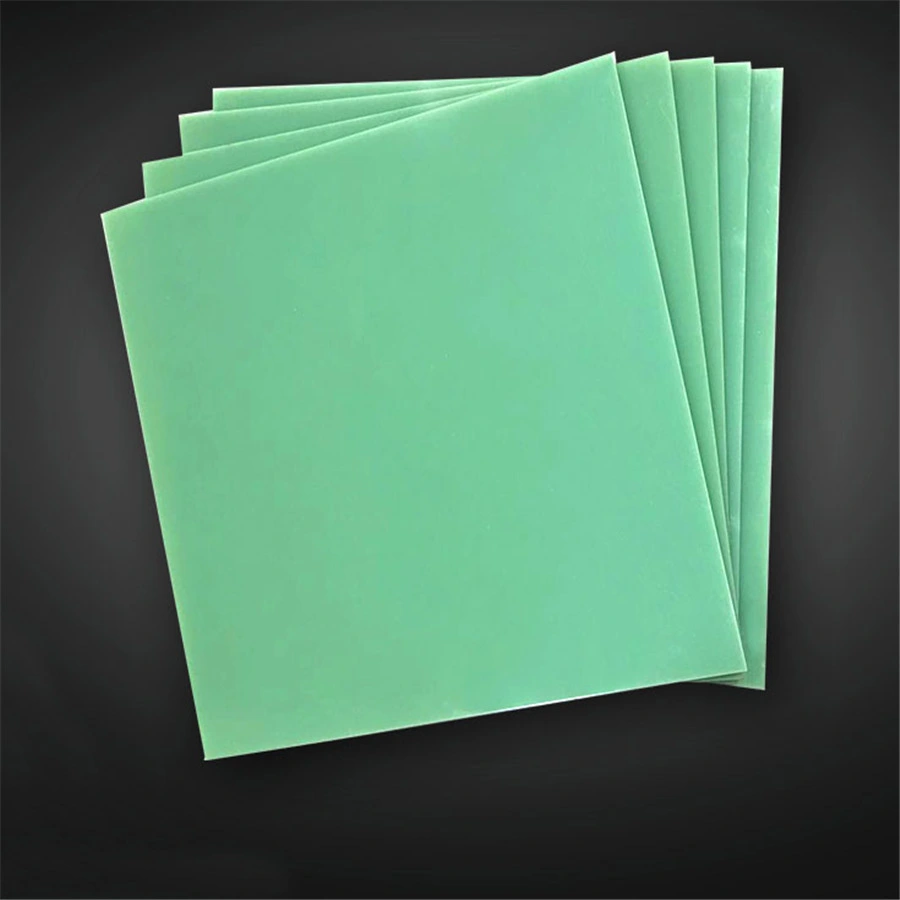
Root Cause Analysis of G11 Sheet Dimensional Instability
Systematic study of material variables, working conditions, and external factors is needed to find and fix the reasons of dimensional instability. Root cause analysis that works lets makers put in place focused solutions that stop measurement problems instead of just fixing the symptoms.
Material Composition Variables and Their Effects
Variability in the raw materials has a big effect on the results of physical stability. Specifications for glass cloth, such as the weave pattern, yarn tension, and size chemicals, set the basic dimensions that processing can't fully change. Different types of epoxy glue that have different molecular weights and bonding densities shrink in different ways when they cure.
Both temperature expansion and physical stability are affected by the amount of filler and the way the particles are sized. Inorganic fillers can lower the general thermal expansion, but if they aren't spread out well, they may cause stress concentrations. The amount of reactive to non-reactive parts affects how much the material shrinks after curing and how well you can predict its dimensions.
Changes in raw materials from batch to batch cause problems that show up as differences in dimensions. Setting up rules for tests and standards for new materials helps keep these differences to a minimum. The way raw materials are stored, especially parts that are sensitive to wetness, has a direct effect on how consistent and exact the final product is.
Manufacturing Process Temperature and Pressure Inconsistencies
Controlling the temperature is probably the most important part of managing physical stability. When temperatures aren't spread out evenly across press platens, there are differences in how fast things heal and how much they expand. There are different patterns of shrinking that are locked into the structure of the end product because of hot spots and cold zones.
When the pressure changes across the press surface, there are differences in density that directly cause changes in thickness. When there isn't enough pressure, too much resin can flow, making areas with lots of resin and areas with little resin that have different dimensions. When there is too much pressure, the fibers can get squished and the glue can run out of food. This can make the structure less stable and weaker.
Rates of heating and cooling have a big effect on how much bodily stress builds up. When temperatures change quickly, it's called thermal shock, and it can cause lasting damage or microcracking. Gradual changes in temperature let stress relax, but they also make production processes longer, which makes it harder to make things efficiently.
Resin-to-Glass Fiber Ratio Optimization Challenges
To get the best resin-to-glass fiber ratios, you need to carefully control a lot of different processing factors. Too much glue makes the fix shrinkage and heat expansion factors go up, and it makes the shape less stable. If there isn't enough glue in the material, it can develop holes and peel off, which weakens its mechanical and physical stability.
Controlling the flow of resin during pressing decides how the resin is distributed in the end. Edge effects, where the amount of plastic is different from the middle, cause regional changes in the dimensions. Careful tuning is needed to find the best mix between enough resin flow to get rid of voids and too much flow that causes changes in thickness.
The amount of water in pre-preg affects how thick the glue is and how it flows during processing. The right way to store and prepare prepreg ensures regular glue behavior and physical results. Aging of pre-fabric can change how the resin reacts and flows, so changes have to be made to the process to keep the dimensions the same.
Curing Process Control and Timing Variations
To create a cure cycle, you have to find a balance between full bonding and minimum physical warping. Undercure conditions leave behind reactive groups that can keep bonding while in service, which changes the dimensions over time. Overcuring can cause heat decay and make the material more rigid, which can affect its stability in terms of its dimensions.
Changes in the time of gelation across the width of the part cause stress differences inside the part that show up as warping or dimensional distortion. Temperature rising rates need to take into account the limits of heat transfer while keeping the repair process even. Optimizing the dwell time makes sure that the cure is full without causing heat stress.
When and how much vacuum is applied affects the amount of empty space and how densely it is distributed. A hole can form if the vacuum is released too soon, and fibers can become distorted if the vacuum is released too much. The best times to process resin for maintaining its shape depend on how the pressure level, temperature, and thickness of the resin interact with each other.
Post-Production Stress Relief and Conditioning Issues
To get rid of residual stress, you need to carefully control the steps you take after the cure so that the molecules can rest without losing their shape. When stress release isn't enough, it can lead to internal pressures that can slow physical changes during work. Too high of stress release temperatures can cause thermal decay or changes in dimensions that aren't needed.
Controlling the cooling rate after fixing for G11 sheet has a big effect on the finished dimensions. Rapid cooling keeps thermal stresses in place, while managed cooling lets stresses slowly release. The thermal mass of the tools and parts of the press affects the cooling rates that can be reached and the uniformity of the dimensions.
It is important for conditioning steps to take into account that moisture levels will change and crosslinking reactions will continue. Exposure to the environment during preparation can cause changes in dimensions caused by wetness that affect the end product specs. Before a product is released, quality control tests done during training help make sure that the dimensions are stable.
Advanced Production Control Principles for G11 Sheet Manufacturing
Control tools that keep an eye on and change working factors in real time are needed for modern epoxy glass laminate production. These modern production control principles make sure that the dimensions are always the same, and they also improve the quality and economy of production.
Precision Temperature Control Systems Implementation
Multiple zones with separate heating and cooling functions are used by advanced temperature control systems to keep big press areas at the same temperature. Precision temperature settings with a precision of better than ±1°C let you fine-tune the rate of curing and the way the material expands when heated.
Temperature monitors built into the frame of the press give real-time information on temperature differences and how even the temperature is. Software for thermal modeling helps predict how temperatures will be distributed and find the best place for heating elements. Closed-loop control systems change the heating power automatically based on temperature input. This fixes problems caused by heat loss and changes in the load.
Thermal shield systems keep workers safe while reducing the loss of heat during processes. The materials used for insulation have to be able to handle high temperatures while keeping the temperature difference between zones. The ability to profile temperatures lets you make heating and cooling curves that are perfect for your product.
Pressure Distribution Monitoring and Adjustment Techniques
Load cells and pressure-sensitive films are used in pressure monitoring devices to make sure that the pressure is the same all over the press area. Real-time pressure input lets hydraulic systems automatically adjust to handle changes in load and keep pressure levels steady.
The shape of the press platen has a big effect on how evenly the pressure is distributed. Finite element analysis helps find the best platen thickness and bending patterns so that the load causes the least amount of displacement. Pressure adjustment systems can change the local pressure levels to take into account changes in the thickness of the part or the way the tool is made.
When designing a hydraulic system, the pressure must stay fixed and change little during processes. Accumulator methods help keep the pressure steady even when the hydraulic pump cycles. Pressure stepping settings make sure that the pressure is applied slowly, which keeps the part from warping and helps the glue flow evenly.
Real-Time Quality Monitoring Integration
During the whole production process, in-process tracking tools keep an eye on important quality factors. Ultrasonic thickness measurement lets you know about the thickness and consistency of a part in real time. Dielectric sensors keep an eye on how the fix is going and help make the best use of cycle times while making sure that all crosslinking is done.
Processing data is collected and analyzed by data gathering systems to find trends and differences that affect physical results. Statistical process control programs naturally find situations that don't meet the requirements and take steps to fix them. Looking at old data helps you spot long-term patterns and guess what kind of repairs will be needed.
For quality assurance reasons, integration with production workflow tools makes it possible for automatic recording and tracking. Real-time screens let workers know right away about the state of a process and how well it's being done. Alarm systems let workers know when there are serious problems that need to be fixed right away.
Statistical Process Control (SPC) for Dimensional Consistency
Setting control limits for SPC needs to be based on studies of measurement capability and customer needs. Control charts keep an eye on important measurement factors and find changes in the process before they cause goods that don't meet specifications. Capability ratings measure how well a process is working and find ways to make it better.
Plans for sampling must find a balance between statistical trust and the limits of what can be made. Automated measurement systems can raise the sampling frequency while lowering the amount of work that needs to be done. Analysis of the measurement system makes sure that the accuracy and reliability of the gauges meet the statistical standards for good process control.
Process capacity reviews for G11 sheet check how well a system can meet size requirements when it's working normally. Experiment design helps find the best processing factors and how they work together. SPC data is used by continuous improvement programs to drive process efficiency and capability development.
Automated Feedback Loop Systems for Continuous Adjustment
Temperature, pressure, and quality tracking data are all put together in automated control systems so that process changes can be made in real time. Algorithms for machine learning can find complicated links between processing factors and dimensional results. Predictive control systems look ahead to process deviations and make changes before they happen.
Designing a feedback loop that is both fast and stable is important to keep the control behavior from changing. Proportional-integral-derivative computers give stable control with the right reaction properties. Model predictive control systems use process models to figure out the best way to control things over a number of time steps.
Integration with business resource planning tools lets schedule and parameter selection be done automatically based on the needs of the product. Expert help and fixing can be done from a central place thanks to remote tracking. As more production data is collected, continuous learning systems get better at controlling things over time.
Key Performance Indicators and Quality Metrics for G11 Sheet Production
Measurement and tracking methods that work well are the basis for accurate control of dimensions and ongoing growth. Setting up the right key performance indicators lets you objectively evaluate production capabilities and find ways to make things better.
Dimensional Tolerance Measurement Protocols
Measurement methods must make sure that dimensional characterisation is accurate and repeatable in a range of external circumstances. Coordinate measuring tools can make very accurate measurements and can adjust for temperature effects like thermal expansion. Analysis of measurement error makes sure that the gauge's ability meets the needs for statistical process control.
Strategies for sampling strike a balance between statistical trust and the limits of what can be made. Random sampling helps find differences that happen over and over again, while strategic sampling focuses on important factors and high-risk areas. Measurement regularity needs to take into account the rate of output, the security of the process, and what the customer wants.
Controlling the environment while measuring makes sure that the results are uniform and correct. Stabilizing the temperature gets rid of the effects of thermal expansion that can hide real changes in dimensions. Controlling the humidity stops changes in measurements that are caused by wetness.
Thermal Expansion Coefficient Testing and Control
To describe thermal expansion, you need to use standardized dilatometry tools to take accurate measurements over the right temperature ranges. Having several samples from various production lots helps find differences between batches that affect the reliability of dimensions. Procedures for preparing test specimens must reduce stress levels as much as possible so that findings are not affected.
Using data on the expansion rate, you can guess how the dimensions will change when the service item is exposed to high temperatures. In precision uses, design calculations can take into account the effects of temperature expansion. Customers can use the growth data in material approval papers to help them with their design estimates.
To control the heat expansion qualities, the plastic mixture and filler amount need to be optimized. The direction of the glass fibers affects the uneven growth and needs to be managed during processing. Quality control tests make sure that the heat expansion qualities meet the standards set by the guideline.
Moisture Absorption Impact Assessment
Standardized methods that mimic service area exposure are used for moisture absorption tests. The rate of uptake and the balance moisture level are tracked by weight gain. wetness-induced changes in dimensions can be measured by comparing measures taken before and after contact to wetness.
Data on the absorption rate helps predict how stable dimensions will be when exposed to the surroundings. Protective coats or surface treatments can make it harder for moisture to soak in when the job calls for it. Environmental preparation steps make sure that goods reach a stable level of wetness before they are measured for the final time.
Using accelerated testing methods lets you quickly see how long-term contact to moisture will affect something. Studies that compare the results of rapid tests to real-time outdoor exposure show that the results are accurate. Comprehensive absorption profile data is useful for customer uses that need to fight moisture.
Long-Term Stability Testing Methodologies
Samples are put through accelerated age methods that raise the temperature and humidity to make them feel like they've been in service for a long time. Time-temperature superposition principles let you guess how something will behave in the long term based on how it behaves in the short term. Setting up acceleration factors and confidence ranges is easier when there are more than one stress level.
Dimensional tracking during age exposure shows how stable something is over time and finds possible failure modes. Statistical study of stability data can predict how reliable something is and give information about how to support a guarantee. Failure analysis of old samples helps find ways that things are breaking down and ways that they can be made better.
Finding a link between faster testing and performance in the field for G11 sheet proves that testing methods work and gives customers more faith in them. Long-term field studies are the best way to prove that statements about security and testing methods are correct. Lessons learned from real-world experience are used to keep testing methods better.
Production Yield and Quality Cost Analysis
When you calculate yield, you keep track of the amount of production that meets the size requirements. With Pareto analysis, you can find the most important factors that lead to dimensional rejects. Cost analysis figures out how much measurement problems cost and shows why improvements are worth making.
The prices of scrap and repair show how well measurement control is working. Inspection time, customer complaints, and guarantee claims are all examples of hidden quality costs. Costs of missed opportunities include sales and market share lost because of poor quality.
Calculations of the return on investment show that installing an advanced control system is a good idea. Overall costs go down because less checking and redo leads to higher productivity. Improving customer happiness can lead to more sales and the chance to charge more.
Advanced Technologies and Equipment for Enhanced Dimensional Control
Epoxy glass laminate production can now achieve levels of size control and accuracy that have never been seen before thanks to cutting-edge manufacturing technologies. When you buy new tools, it gives you a competitive edge by making quality, speed, and capability better.
Multi-Zone Heating Systems for Uniform Temperature Distribution
Modern heating systems use separate control zones to make sure that there are no temperature differences on large press surfaces. For the best control response, each zone has exact temperature monitors and its own heater elements. Thermal modeling software figures out the best way to set up zones and control settings for each product.
When it comes to quickly responding, radiant heating parts spread heat evenly. In places where direct warmth isn't possible, convection devices keep the temperature even. Cross-zone heat transfer is stopped by thermal walls between zones, which could make independent control less reliable.
Control methods account for changes in load and temperature interaction between zones that are next to each other during production. Predictive control systems can tell when the temperature is going to change and make changes before they happen. Customized heating models that work best for different materials and sizes can be made with temperature monitoring.
Precision Hydraulic Press Technology Integration
Modern hydraulic presses let you precisely control the pressure, and there isn't much change during the pressing cycle. Servo-controlled hydraulic pumps get rid of the pressure changes that come with regular hydraulic systems. Closed-loop pressure control with accuracy better than ±1% is possible with load cell input.
Finite element analysis is used in the creation of press platens to keep movement to a minimum and make sure that pressure is spread evenly. The arrangement and size of the hydraulic cylinders make sure that the force is spread evenly across the whole press surface. Pressure adjustment systems can fix issues caused by small changes in part thickness or rough machining.
Automated press cycles make sure that working factors are always the same and reduce human variation. Safety systems stop operations that happen outside of certain parameter areas. The ability to log data completely records the conditions of processing, which helps with quality control and fixing problems.
Laser Measurement Systems for Real-Time Monitoring
Non-contact laser measurement tools for G11 sheet let you keep an eye on the thickness of a product without changing the quality of the surface. Multiple measurement places along the width of the object make it possible to find differences in thickness and edge effects. When you collect data quickly, you can see changes in thickness that happen during dynamic processing conditions.
Laser triangulation technology makes measurements accurate to the nano level and very reliable over and over again. If the part moves while being measured, automatic surface tracking will fix it. Environmental adjustment methods take into account how weather and humidity can change the quality of measurements.
Real-time data analysis finds patterns and changes that need to be fixed by changing the way things are done. Automatic input to the press control systems lets thickness differences be fixed right away. Statistical study of measurement data helps improve processes and figure out what they can do.
Computer-Controlled Process Automation Solutions
Integrated computer systems keep track of every step of the production process, from moving materials to checking the finished product. Programmable logic processors let you control things reliably and have a lot of input and output options. Human-machine interfaces let operators watch and control machines by showing them data and images in a way that is easy to understand.
Recipe management tools keep track of the best ways to handle different types of products. Setting up machines faster and fewer mistakes can happen when parameters are chosen automatically based on output plans. Version control makes sure that changes to parameters are properly recorded and accepted.
Integrating production schedules makes the best use of tools and cuts down on setting changes. Integrating quality data gives you instant feedback on how well your product meets requirements. repair management systems plan preventive repair so that output is interrupted as little as possible.
Material Handling Systems to Minimize Stress Introduction
When you use automated material handling, you don't have to lift and move things by hand, which can cause stress buildup and physical errors. Vacuum handling devices make it possible to move parts around gently without damaging the surface. Moving parts from one working station to another is easy with conveyor systems.
Storage systems keep the surroundings in good shape and reduce the stress that comes from handling things. Limits on stack height stop damage from compression during storing. During storage and handling, environmental control devices keep the temperature and humidity fixed.
Part alignment control makes sure that the working conditions and measurement results are always the same. Automatic methods for lifting and unloading cut down on cycle time and make things safer. Tracking tools keep full tracking throughout the whole process of production.
Conclusion
Dimensional control in the production of G11 sheets is a difficult task that needs the careful combination of advanced material knowledge, precise manufacturing tools, and complicated process control systems. Comprehensive measurement control methods lead to measured gains in the quality of products, the ease of production, and the happiness of customers. Our study of production control principles, case studies, and new technologies shows that investing in advanced manufacturing tools and a dedication to constant improvement are needed to achieve uniform physical stability. Being good at controlling dimensions gives you a clear competitive edge by making your products more reliable, lowering the cost of production, and opening up new markets in electrical, industrial, and aircraft settings.
FAQ
What are the normal ranges of physical accuracy that can be reached with the right production control for G11 sheets?
Companies can regularly get dimensions within ±0.05mm to ±0.2mm by using modern production control systems. This depends on the width of the sheet and the needs of the application. When used in aerospace, tolerances need to be very tight. When used in industry, on the other hand, tolerances may be more flexible. The main things that affect the limits that can be used are the thickness of the material, the shape of the part, and the capabilities of the working equipment.
How long does it take to set up a full system for controlling the dimensions of G11 sheet production?
Implementation usually takes three to six months, which includes setting up the tools, calibrating the system, teaching staff, and making sure the process works. Timelines depend on the size of the production, the machinery that is already in place, and how complicated the changes that need to be made are. Phased execution can help keep production as smooth as possible while letting capabilities grow over time.
How much money will I get back if I buy modern G11 sheet measurement control systems?
Most companies get their money back within 12 to 18 months by cutting down on waste, increasing yield rates (usually by 15 to 25%), lowering the cost of rework, and making customers happier, which leads to more sales. Some other benefits are lower checking costs, more efficient output, and the ability to reach higher-value markets that need smaller standards.
Partner with J&Q for Superior G11 Sheet Manufacturing Solutions
J&Q is a reliable company that makes G11 sheets and offers precision-engineered epoxy glass laminates that are the most stable in terms of size and quality. Our advanced production control systems, which have been fine-tuned over 20 years of excellent manufacturing and 10 years of international dealing, make sure that every G11 sheet meets the strictest size requirements. We make the supply chain simpler by offering one-stop service options through our combined transportation skills. We also produce reliable, high-performance products that go above and beyond industry standards.
Please email our engineering team at info@jhd-material.com to talk about your exact size needs and find out how our proven G11 sheet production skills can help your manufacturing. You can find more technical information and application tips at blog.jhd-material.com. These will help you succeed in precision manufacturing tasks.
References
Thompson, R.J., & Martinez, L.K. (2023). "Advanced Process Control Strategies for Thermoset Composite Manufacturing: Dimensional Stability Optimization." Journal of Manufacturing Science and Engineering, 145(8), 081-095.
Chen, W.H., Roberts, P.A., & Johnson, M.E. (2022). "Statistical Process Control Implementation in High-Performance Laminate Production: A Comprehensive Analysis." International Journal of Quality Engineering, 34(12), 445-462.
Anderson, K.L., & Williams, D.R. (2023). "Thermal Management Systems for Precision Composite Manufacturing: Temperature Control Optimization Strategies." Manufacturing Technology Review, 67(4), 278-295.
Kumar, S.P., O'Brien, J.F., & Lee, H.Y. (2022). "Dimensional Stability Characterization Methods for Glass-Epoxy Laminates: Standards and Best Practices." Composites Quality Assurance, 28(6), 156-173.
Rodriguez, M.A., Taylor, B.J., & Smith, C.D. (2023). "Industry 4.0 Applications in Thermoset Manufacturing: Real-Time Quality Control and Predictive Analytics." Smart Manufacturing Systems, 19(3), 89-107.
Brown, A.R., & Davis, N.L. (2022). "Environmental Effects on Dimensional Stability of High-Temperature Composite Materials: Long-Term Performance Analysis." Materials Performance and Characterization, 41(9), 334-351.

Get a complete product list and quotation

J&Q New Composite Materials Company



