From FR4 Sheet to Finished Insulation Part: CNC Manufacturing Process
To turn plain FR4 sheets into precisely designed insulation parts, you need to know a lot about CNC cutting, material science, and quality control systems. This detailed guide takes engineering managers and procurement professionals through the whole manufacturing process, from choosing the materials to the final inspection. It makes sure that you understand how a dependable supplier can deliver parts that meet strict UL94 V-0 standards while keeping the dimensions accurate within tight tolerances.
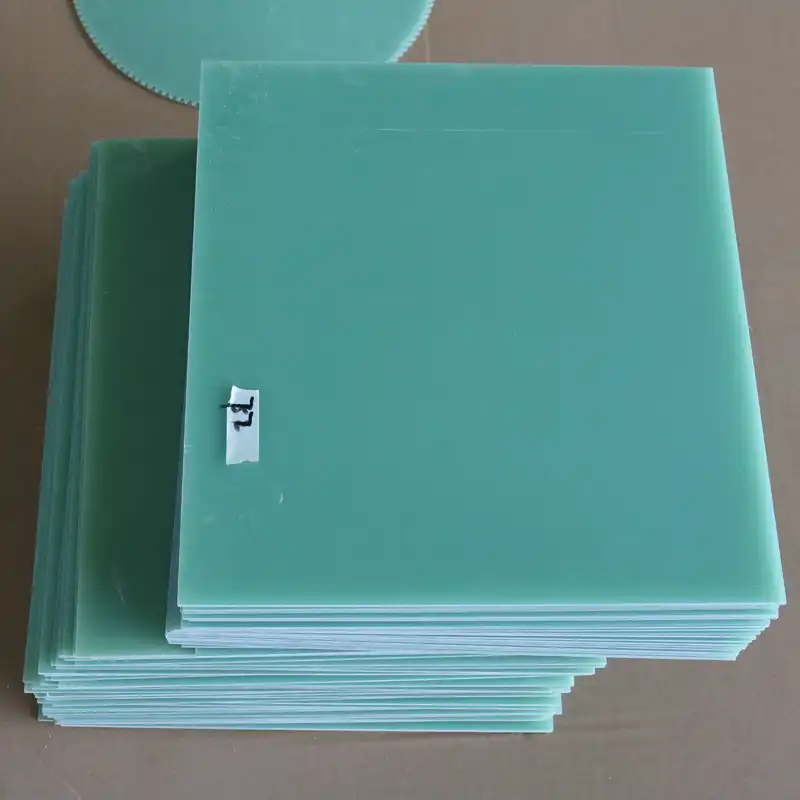
Understanding FR4 Material and Its Properties
FR4 is an epoxy laminate with glass reinforcements that has become the standard base for electrical insulation uses in many fields. The material is made up of continuous filament glass cloth that has been knitted into a fabric core. It has also been mixed with epoxy resin and cured under controlled heat and pressure to make a hard, thermosetting composite structure.
The Composition and Structure of FR4 Laminates
The epoxy resin binder provides better electrical protection and resistance to external factors, while the glass fiber reinforcement provides mechanical strength and physical stability. Bromine-based flame retardants are mixed into the resin system. This makes it possible for the material to meet UL94 V-0 fire standards, which mean that combustion stops on vertical test cases within ten seconds. This mix meets important safety standards for electrical equipment that needs to reduce the chance of thermal runaway as much as possible. As a result of the stacked construction, sheets of different widths can be made, from thin bases for printed circuit boards to thick structural panels for high-voltage switchgear.
Critical Performance Characteristics
Dielectric strength is an important factor for electrical protection parts. Good FR4 materials usually have values higher than 20 kV/mm perpendicular to the laminate layers. In high-voltage areas, this electrical shield feature stops arcs from forming and current from leaking. The dielectric constant stays the same over a wide frequency range (about 4.5 MHz), which means the material can be used for signal integrity uses in current electronics.
The limits of action are set by thermal performance. Standard grade materials can withstand constant working temperatures of up to about 130°C, which is what makes them Class B insulation systems. High-Tg versions raise this temperature limit to 170°C or higher, so they can work in harsher thermal conditions like those found in car battery systems and power transfer equipment. The glass transition temperature is the temperature at which the epoxy matrix starts to soften. This changes the mechanical qualities and the rigidity of the shape.
Moisture Resistance and Chemical Stability
When epoxy systems are dry, they don't absorb much water—usually less than 0.1% by weight, even after being exposed to humidity for a long time. This property keeps the electrical properties from changing and the dimensions from changing, which could damage precision-machined parts. Chemical resistance includes most industrial solvents, mineral oils, weak acids, and alkaline solutions. This lets them be used in harsh working settings where lubricants or cleaning agents often get dirty.
From FR4 Sheet to Insulation Part: Step-by-Step CNC Manufacturing Process
At every step of the production process, machining settings, tool selection, and quality control methods must be carefully thought out in order to turn raw laminate sheets into finished insulation components.
Material Inspection and Pre-Processing
Before they are cut, arriving FR4 sheets are carefully checked to make sure they meet the grade standards and size limits that were set. A look at the surface finds flaws that might affect the quality of the finished part, like areas with a lot of glue, fibers that are showing, or strange objects that are mixed in. Measuring thickness at several points makes sure that the thickness is the same everywhere within acceptable ranges of variation, which are usually kept to ±0.1 mm for precision uses. The buy specs are compared to the material certifications to make sure that the flame retardancy scores, thermal class designations, and electrical properties meet the needs of the project.
As part of the pre-processing steps, sheets may be warmed up to the normal temperature and humidity levels in the workshop. This keeps them from getting too hot during the cutting process. Industrial shears or rough-cut saws are often used to cut larger sheets into workable pieces. This makes the best use of the material and cuts down on waste. This step of preparation sets the stage for the next steps of precision cutting.
CNC Cutting and Milling Operations
Computer numerical control (CNC) tools makes it possible to shape FR4 parts precisely to exact measurements. Because glass fiber reinforcement is rough, you need carbide or diamond-coated tools to keep the edges sharp and make clean cuts without delamination or fiber pulling. Spindle speeds are carefully adjusted based on the thickness of the material and the width of the tool. This balances how well the material is cut with the risk of damaging the epoxy matrix through heat.
Feed rates affect the quality of the surface finish and the accuracy of the measurements. Too fast of speeds build up heat and make tools wear out faster, while too slow of speeds can cause material to chip or edges to not be defined well. CNC workers with a lot of experience create sets of parameters that work best for different grades of FR4 and the shapes of the parts they're making. They then write down these recipes so that they can be used consistently across production runs. Compressed air or coolant systems help get rid of dust and heat, which protects both the workpiece and the target tools.
Drilling and Precision Hole Making
Specialized drilling methods made for composite materials are needed to make holes for fixing tools, electrical connections, or assembly alignment. For holes with a smaller diameter, high-speed steel or carbide twist drills work well. For bigger holes, step drills or router bits may be used to keep the material from coming apart at the entry and exit points. During through-hole operations, backing plates or sacrificial materials hold up the part and keep the bottom from getting damaged by breakout.
CNC programming that takes into account how tools bend and how materials spring back can achieve tight positional limits. Controlling the hole width to within ±0.05 mm makes it possible to place hardware using press-fit and line up parts perfectly during assembly. After drilling, burr removal and chamfering are done to make sure the edges are smooth and don't damage the wire insulation or cause problems with the assembly.
Post-Processing and Quality Verification
Deburring is the process of getting rid of sharp edges and free fibers that could make handling them dangerous or affecting how well they fit together after assembly. Finishing by hand with abrasive pads or automatic rolling methods both make surfaces smooth while keeping the shape of the parts. Ultrasonic cleaning gets rid of any machining dust or other contaminants that are still on the parts, making them ready for the final review and packing.
Dimensional checks are part of quality control routines. These are done with precise measuring tools like micrometers, calipers, and coordinate measuring machines for more complicated shapes. Visual inspection with a magnifying glass shows any surface flaws, cracks, or delamination that were not seen before. Electrical testing verifies the dielectric strength of tested parts, showing that the cutting process did not affect the insulation's performance. Each production batch comes with paperwork that makes it possible to track it and prove that it meets customer requirements.
Material Comparisons for Procurement Decisions
When choosing the right base materials, you have to weigh the performance needs against the cost and supply issues.
FR4 Versus Alternative Laminate Systems
Paper and glass fiber reinforcement are used to make CEM-1 composite materials. These are cheaper than pure glass-epoxy laminates, but they don't have as much dynamic strength or temperature protection. CEM-1 might work for applications that need modest electrical performance and are limited by price, but its hygroscopic paper content means it can't be used in places with a lot of moisture.
When used in situations where temperatures are very high, polyimide-based laminates work very well because they keep their features at temperatures above 220°C. This thermal capability comes at a much higher cost in materials, so it should only be used when normal FR4 sheet thermal limits are not enough. Aerospace and specialized industrial tools are common places where polyimide is used.
Phenolic cotton laminates are stronger and easier to work with than epoxy-glass systems, but they are more expensive. They also don't have the same electrical qualities or resistance to moisture as FR4. Phenolic materials are cost-effective and can be used for mechanical shielding where electricity needs are not as important.
Performance Parameter Evaluation
In power systems, thermal conductivity changes how heat is lost. Standard FR4 has a thermal conductivity of about 0.3 W/mK, which is low enough for most shielding uses but too low for high-power-density designs. When thermal management is very important, metal core surfaces or ceramic-filled materials offer better heat transfer.
Comparing FR4's mechanical strengths shows that its balanced bending and tensile qualities make it a good choice for industrial machinery that needs to insulate its structure. The material's ability to keep its shape under mechanical stress makes it useful for gear components and load-bearing gaps. Matching the coefficient of thermal expansion between the FR4 and the attached parts reduces the stress that comes from temperature cycling in the system.
Cost and Lead Time Considerations
The price of material depends on the grade, width, and amount that is bought. Standard FR4 has standard prices and a lot of different places to get it, but High-Tg or halogen-free versions are more expensive because they are made in more complicated ways. Strategies for buying in small amounts are affected by minimum order quantities, and some sellers can accommodate prototype sizes at different price levels.
Lead times include both the supply of raw materials and the ordering of machining capacity. Suppliers that have been around for a while keep common sizes and widths in stock, which makes it easy to fill standard component orders quickly. To make sure that buying materials and allocating CNC manufacturing capacity work together, you need to plan ahead for several weeks when you have specific needs or a lot of products to make.
Best Practices for Procuring FR4 Materials and CNC Services
Strategic source selection and relationship management improve both the quality of the goods and the dependability of the service.
Evaluating Supplier Credentials
Getting certified to international quality management standards shows that a company is dedicated to using uniform methods and always making things better. Facilities for production that have up-to-date CNC machines and measuring tools show that they can meet tight accuracy standards. Technical support tools that help choose materials and make designs work better are more useful than just fulfilling orders.
Material approvals from well-known companies like Isola or similar well-known companies give you peace of mind that the properties will stay the same and that the company is following all the rules. Documentation for UL approval, RoHS compliance, and REACH compliance meets legal needs in many markets and application areas. During the supplier qualification process, ask for samples and third-party test results to compare the claimed specs to the real performance data.
Interpreting Technical Datasheets
There are many factors in FR4 sheets that describe its electrical, thermal, and mechanical qualities. When you know which standards are most important for your application, you can compare and evaluate material options more effectively. For electrical insulation, bending strength and water absorption are more important than dielectric breakdown voltage, surface resistivity, and flame resistance ratings. For structural parts, on the other hand, they are more important.
The test conditions that go with the stated numbers give important background information. If you compare properties at room temperature and higher temperatures, you might find big differences that affect how well they work in real-world situations. Conditioning steps, like exposing the material to wetness or heat before measuring it, show how it behaves in real-life service situations instead of in a lab setting, which is more ideal.
Coordination Between Procurement and Manufacturing
Working with CNC manufacturing partners early on in the planning process of a component keeps expensive changes from having to be made after production starts. When talking about material choices, it's helpful to get information from the maker about how easy it is to machine different types of FR4 and what tolerances are available. Features in the design that make cutting easier lower the cost of production without affecting the functionality.
Misunderstandings that cause parts to be returned or delivery delays can be avoided by making sure that everyone understands the required surface finish, dimensional limits, and inspection standards. Using standard engineering drawing techniques to write down specs clears up any confusion and sets clear acceptance criteria that everyone can understand. Regular reports on the progress of the production show how well the plan is being followed and allow for early problem-solving.
Conclusion
To make accurate insulation parts from raw FR4 sheet material, complex manufacturing processes are needed. These processes require knowledge of materials, cutting, and quality systems. Knowing the properties of a material helps you make smart design choices that balance performance needs with cost concerns. Modern electrical and industrial equipment needs parts that are precisely measured and have smooth surfaces. CNC making technology can provide these. When you choose a supplier based on their skills, certifications, and service commitment, you build relationships that ensure stable quality and a steady supply. The procurement team can use new powers as uses change if they stay up to date on new materials and assembly techniques.
FAQ
What distinguishes FR4 from G10 laminate material?
Both materials are made of glass-epoxy and have similar mechanical qualities. However, FR4 has flame retardants based on bromine that meet UL94 V-0 standards, which means that fires can go out on their own. G10 doesn't have these additives, so it keeps burning after it's lit, so it can't be used in places where fire safety is important. In modern production, FR4 has mostly taken the place of G10 as the usual specification.
Can FR4 withstand outdoor environmental exposure?
Even though epoxy resin surfaces are still very resistant to water, ultraviolet radiation breaks them down over time when they are exposed to it outside, causing chalking and whitening. Protective coats that block UV light are useful for applications that need to be installed outside. Indoor settings with controlled conditions are best for keeping materials looking good and working well over time.
What maximum operating temperature applies to standard FR4?
Standard grade materials can only work at a realistic maximum of about 130°C for a long time, which is the same as Class B electrical insulation systems. For higher temperature needs, you need High-Tg versions that can handle 170°C or other materials like G11 that can handle 180°C. With application-specific temperature analysis, the right material is chosen based on how it will be used, not on theoretical maximums.
Partner with J&Q for Your FR4 Sheet Manufacturing Needs
You can trust J&Q as your FR4 sheet seller because they have been making things for over twenty years and have been selling internationally for ten years. Our combined capabilities include finding materials, making precise CNC parts, and having full quality control systems in place to make sure that the finished insulation parts we send you meet all of your exact requirements. From the first review of the design to the final delivery, engineering teams work with your sourcing and technical staff to make sure that the product can be made easily while still meeting performance standards.
Our in-house transportation operations make coordination smooth from the production floor to your receiving dock. This gets rid of the problems that come up with handoffs that happen in supply chains with more than one provider. We can adjust our services to fit your needs, whether your project needs a small number of prototypes for validation testing or a lot of production runs with paperwork for statistical process control. Get in touch with our technical team at info@jhd-material.com to talk about your unique application needs and find out how our production skills can help you with your insulation component problems.
References
National Electrical Manufacturers Association (NEMA). "Industrial Laminating Thermosetting Products: NEMA Standards Publication LI 1-2020." National Electrical Manufacturers Association, 2020.
Underwriters Laboratories. "Standard for Tests for Flammability of Plastic Materials for Parts in Devices and Appliances: UL 94." Underwriters Laboratories Inc., 2013.
Coombs, Clyde F. "Printed Circuits Handbook, Seventh Edition." McGraw-Hill Education, 2016.
Harper, Charles A. "Electronic Materials and Processes Handbook, Fourth Edition." McGraw-Hill Education, 2018.
Institute of Printed Circuits. "Design Guidelines for CNC Machining of Rigid Dielectric Substrates." IPC-2615A, 2017.
Materials Research Society. "Thermal Management in Composite Laminate Systems: Recent Advances in FR4 Technology." MRS Proceedings, Volume 1894, 2019.

Get a complete product list and quotation

J&Q New Composite Materials Company



