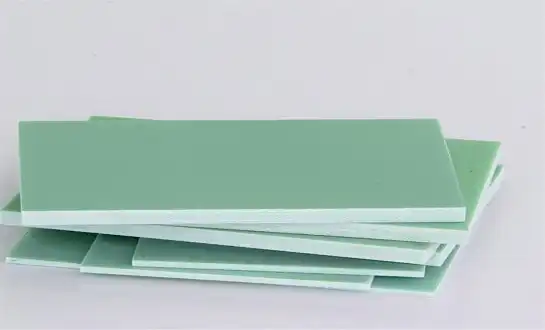
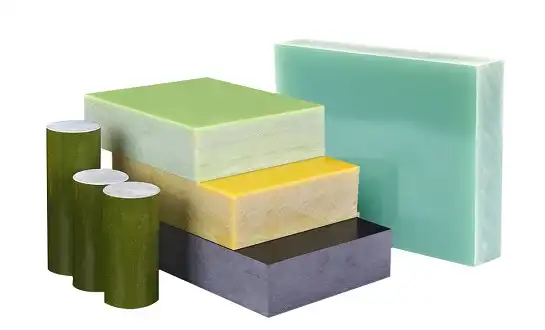
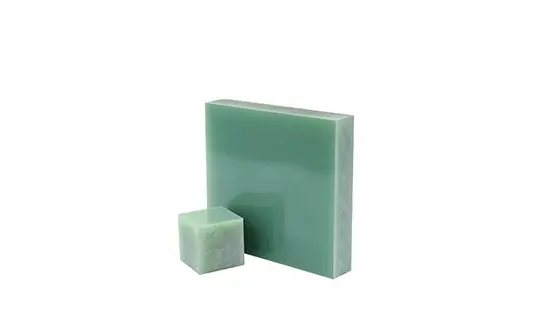
FR4 vs. G10 Epoxy Sheets: Which is Better for Your Custom CNC Machined Parts?
If you need unique CNC machined parts, the choice between FR4 epoxy sheets and G10 materials rests on the needs of your application. FR4 epoxy sheet works great in places that need to be flame retardant and follow the rules, like when making electronics and electrical parts and getting UL94 V-0 approval is important. G10 has better mechanical strength and physical stability in harsh environments without being able to catch fire itself. Both materials are easy to work with and provide good protection, but knowing the main differences between them will help you choose the laminate that best fits your project's technical needs and budget.
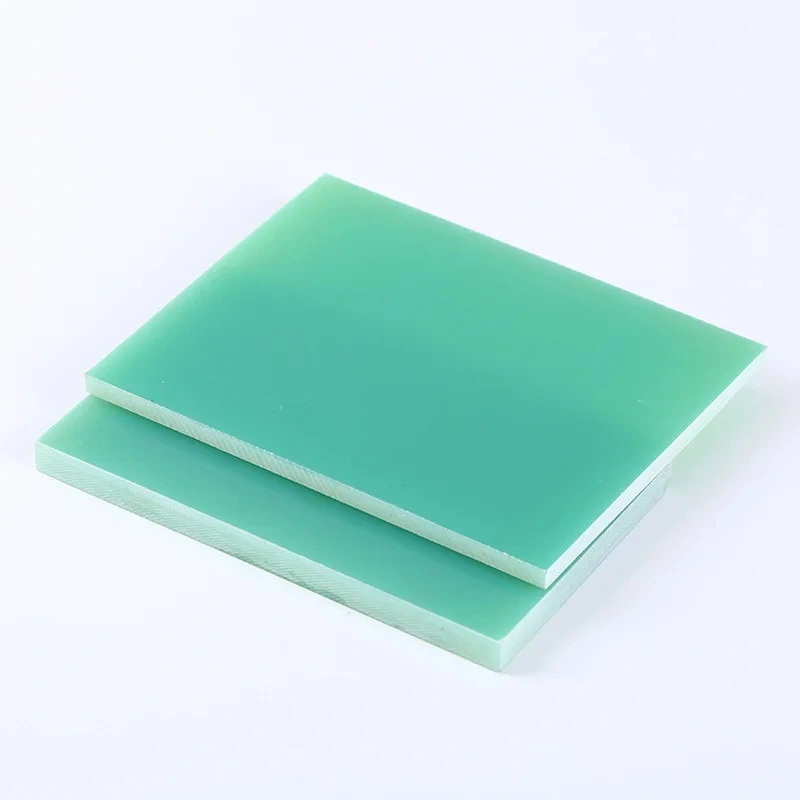
Understanding FR4 and G10 Epoxy Sheets: Key Properties and Differences
The base of both is continuous thread glass cloth that is highly soaked with thermosetting epoxy resin. NEMA standards describe the high-pressure, high-temperature lamination methods used in production. For example, FR4 epoxy sheet follows NEMA LI-1 specifications, and G10 follows NEMA G-10 grade designations. These laminates dry in autoclaves, which makes sure that there aren't any gaps and that the density is the same across all sheets.
Composition and Manufacturing Standards
The main difference is in how the chemicals are put together. FR4 epoxy sheet has tetrabromobisphenol-A or similar halogenated flame retardants in it, which lets it put out fires on its own when it comes into contact with sources of burning. This method of additives makes it possible for FR4 epoxy sheet to get UL94 V-0 scores for flammability, which means that vertical samples will put out themselves in ten seconds without flaming drips. G10 doesn't have any flame-retardant chemicals; it relies only on the qualities of epoxy and fiberglass.
When CNC cutting, manufacturing margins are very important. Both materials keep their thicknesses consistent, usually within ±10% for normal grades and ±5% for precise grades. The most typical sheet sizes are 1020 x 1200 mm to 1020 x 2040 mm, and the thicknesses run from 0.5 mm to 50 mm. There are different colors. FR4 epoxy sheet usually comes in green, black, or natural yellow tones, while G10 has the color of fiberglass without any dyes added.
Physical and Mechanical Characteristics
There are small but important changes in the mechanical strength patterns. Typically, G10 has a slightly higher bending strength (380–450 MPa) than FR4 epoxy sheet, which is 360–420 MPa. This means that it will work better in high-stress mechanical uses like supports for buildings or gears. Both materials have great tensile strength, which is more than 300 MPa and means they can hold a lot of weight.
Different grades have different temperature behavior. Standard FR4 epoxy sheet works reliably up to 130°C of constant contact, which is called a Class B thermal grade. High-temperature FR4 epoxy sheet versions can handle temperatures up to or above 180°C. G10 keeps its shape over a wide range of temperatures, but it doesn't have the heat safety that comes with flame-retardant materials. Both materials still have a low coefficient of thermal expansion, around 14 to 17 ppm/°C in the XY plane.
Dielectric qualities have a big effect on electrical uses. The dielectric constant (Dk) for FR4 epoxy sheet stays between 4.4 and 5.2 at 1 MHz, and its dielectric strength stays around 20 kV/mm. G10 has an insulation resistance of more than 500 MΩ, which means that both can be used for high-voltage barriers and switchgear parts. The main difference shows up when it's wet outside: FR4 epoxy sheet absorbs about 0.10% of its weight in water in 24 hours, which is a little more than G10's better moisture protection.
Comparative Performance Data
The hardness of a material affects how it cuts and how fast tools wear out. Both laminates have Rockwell M scale values between 110 and 120, which means they are very easy to machine with carbide tools. When the right cutting settings are used, the surface finish quality stays the same, and hardness values below 1.6 Ra are possible. Part of the stability of the dimensions during machining operations relies on how well the internal stresses are relieved. Sheets that are properly made from experienced sources are less likely to warp or deform during CNC processing.
The traits of chemical protection are very similar. At room temperature, mineral oils, weak acids, and alkaline liquids can't hurt either material. Epoxy structures slowly break down when they are exposed to strong liquids or concentrated acids for a long time. Because of this resistance, both can be used in industrial settings with coolants, oils, and cleaning agents that are common in machines.
Performance Analysis: FR4 vs. G10 in CNC Machining Applications
When you know how these materials react to operating stresses in the real world, you can make better decisions about what to buy. Machining traits have a direct effect on how fast and accurately parts are made and how much it costs to make them.
Temperature Resistance and Thermal Management
Performance life in difficult situations depends on how stable the system is at high temperatures. The flame-retardant chemicals in FR4 epoxy sheet are very important for electrical casings where an arc flash or a broken component could set materials on fire. The ability to put out itself stops fires from spreading, which meets safety standards for power distribution equipment and generator insulation systems.
G10 works reliably across a range of temperatures and doesn't put out flames. Its pure epoxy matrix keeps its mechanical qualities even when heated over and over again. This makes it good for shields around car battery packs and industrial heating equipment where structural integrity is more important than flame spread. Both materials have low outgassing, which keeps sensitive electrical parts from getting contaminated.
The glass transition temperature (Tg) affects how stable the dimensions are when heated. Normal FR4 epoxy sheet has a Tg rating of 130 to 140°C, but high-Tg versions can hit 170 to 180°C. Depending on the epoxy mixture, G10 has similar Tg values. Working close to or above Tg weakens and loses its properties. Knowing the right Tg is important for high-temperature uses like motor parts and heat-resistant fittings.
Mechanical Properties Affecting Machining Precision
Machinability has a direct effect on how fast and cheaply tools can be made. When the right feed rates and spindle speeds are kept, both materials can be machined cleanly with carbide or diamond-coated tools that cause little delamination. Cutting speeds range from 3000 to 6000 RPM, and feed rates range from 100 to 300 mm/min, based on the diameter of the tool and the thickness of the object being cut.
Because fiberglass support is rough, tool wear patterns aren't exactly the same. For both materials, you need sharp tools and enough chip drainage to keep the heat from building up. Peck drilling helps clear out glass fibers and keeps the hole wall from delaminating during drilling operations. When exit conditions are managed, edge quality stays high, which is very important for tight-tolerance mechanical spacers and precision insulator frames.
How stable the dimensions are during and after cutting depends on how the leftover stress is distributed. Material from reliable makers goes through the right post-cure stress relief, which keeps it from warping when it is taken off. When high-quality sheets are used to make parts, the tolerances on those parts stay within ±0.05mm over standard measurements. This meets the needs of precise electrical parts and structural insulation assemblies.
Moisture Absorption and Environmental Durability
Both electrical qualities and physical stability are changed by the absorption of moisture. After being submerged in water for 24 hours, FR4 epoxy sheet absorbs about 0.10% to 0.15% of its weight in water, while G10 takes about 0.08 to 0.12%. This difference is important for outdoor uses or high-humidity work areas where changes in size need to be kept to a minimum.
The dielectric strength goes down when moisture is absorbed, and the dielectric loss line goes up. When high-voltage insulation is needed in damp places, it's important to choose the right material and maybe even use a conformal layer or covering. Both materials get back a lot of their qualities when they dry, though extreme cases of repeated wetness cycling can cause micro-cracking.
Long-term tests in different environments show that both materials are very durable. Laminates that are properly made don't break down in UV light, but after years of direct sunlight contact, the surface may start to chalk. Chemical fumes in industrial atmospheres don't usually break down these materials too much, which supports their use in tough production settings.
Decision-Making Guide: Choosing Between FR4 and G10 for Your Custom CNC Parts
The choice of material should be based on the needs of the application, not just on supply or knowledge. We've seen engineering teams default to FR4 epoxy sheet simply because it's the "standard," even when G10 would provide better performance for their specific use case.
Application-Specific Material Selection
FR4 epoxy sheet's ability to resist flames is useful in almost all electrical and computer uses. For safety approvals, PCB support structures, switchgear insulation, and motor slot covers must meet UL94 V-0 standards. The fact that FR4 epoxy sheet is accepted by regulators across all global markets makes it easier to get goods approved for sale around the world.
When mechanical loads are the most important factor in performance standards, G10 epoxy sheet is often the best choice for industrial machines. Gears that don't wear out, high-load bearing blocks, and structure supports all use G10's excellent mechanical qualities. Since flame-retardant additives are not present, there are no worries about halogenated chemicals in situations where there is a low chance of fire.
FR4 epoxy sheet is often used for arc barriers and coil shielding in power distribution and transformer production, where stopping the spread of flame is very important. When there is a fault, the mix of electrical protection and self-extinguishing behavior is very important for safety. G10 might work for structural parts in the same systems that aren't exposed to arcs.
Suppliers of automotive parts choose materials based on where and how the parts will be used. Because of worries about thermal runaway, battery pack barriers are increasingly specifying FR4 epoxy sheet. On the other hand, G10 may be used for cost-effectiveness in mechanical mounting mounts. When choosing materials for cars, you have to think about things like temperature needs, strength to shaking, and following the rules.
Cost Analysis and Procurement Considerations
Material prices take into account both the cost of raw materials and the difficulty of making the product. The price of FR4 epoxy sheet is usually a little higher because it has flame-retardant chemicals and more quality control checks. When you order more than 100 sheets, the price changes to be more fair, and it gets even better when you order more than 500 sheets.
Lead times depend on what the provider can do and how much product they have. Standard FR4 epoxy sheet types in popular thicknesses usually ship within one to two weeks from reputable sources who keep stock on hand. It could take three to six weeks to make something with custom layers or precision-grade materials. G10 lead times are usually about the same, but availability can be more different based on how the supply lines work in different areas.
Planning for purchases is affected by minimum order numbers, especially for smaller OEMs or prototype development. Flexible providers offer smaller minimums of 10 to 25 sheets, but the price per piece goes up a lot. It takes careful planning, especially for custom-machined configurations, to balance inventory carrying costs against bulk prices.
Quality Assurance and Supplier Reliability
Certification standards have a big effect on how suppliers are chosen. RoHS compliance paperwork shows that dangerous chemicals are limited, and ISO 9001 quality management certification makes sure that production methods are always the same. UL approval for FR4 epoxy sheet materials is important proof for proving that a product is safe.
The professional help that a supplier offers is more important than many procurement teams realize at first. Having access to statistics on material properties, suggestions for cutting, and help from application engineers speeds up the development of new products. Suppliers that have been around for a while keep scientific datasheets that list the electrical, mechanical, and thermal qualities of their products across a range of temperatures and environments.
Premium providers are different from commodity sources because they offer after-sales support like material tracking, lot approval, and helpful customer service. We've had the same suppliers for decades because constant quality and good communication keep output from stopping, which costs a lot of money. Material replacements or grade changes that aren't communicated can lead to disastrous product fails, so suppliers must be trusted at all costs.
Conclusion
Which material to use—FR4 epoxy sheet or G10 laminates—depends on the needs of the product. FR4 epoxy sheet is needed for electrical uses because it is flame retardant and meets legal requirements, while G10 epoxy sheet is better for structural needs because it is stronger. Both materials are easy to machine, don't conduct electricity, and stay the same size, making them perfect for accurate CNC-machined parts.
A good procurement process combines technical performance needs with factors like cost, availability, and source dependability. When choosing materials, engineering teams should think about how the system will actually work, what certifications are needed, and how it will be exposed to the world. To make sure there is a steady supply, procurement experts have to think about volume prices, managing wait times, and source quality systems.
Over the past 20 years, we've helped a huge number of makers make these kinds of choices by giving them technical advice and our material knowledge. Choosing the right materials and working with a dependable supplier are the building blocks for great making and reliable products.
FAQ
Can FR4 and G10 be used interchangeably in PCB manufacturing?
Because electronic systems need to be flame retardant, FR4 epoxy sheet is still the standard medium for printed circuit boards. G10 can be used as a mechanical and electrical PCB substrate, but it doesn't have the UL94 V-0 approval that most safety standards require. Putting G10 on PCBs instead of FR4 goes against safety standards and leaves you open to risk. G10 can be used in places that don't need flame retardancy, but the cost saves rarely make the specification change from the industry standard FR4.
What thickness options work best for CNC machining applications?
CNC cutting can handle widths from 0.5mm to 50mm, but 1.6mm, 3.0mm, and 6.0mm are the most common gauges that are cut. Thinner materials (less than 2.0 mm) need to be carefully fixed in place so they don't bend during cutting. For parts that are thicker than 20 mm, you might need special tools and slower pass rates to keep the heat from building up. The type of material used should fit the needs of the structure. For example, smaller sizes should be used for spacers and gaskets, while larger sections should be used for load-bearing parts and structural supports.
How does moisture absorption affect outdoor application performance?
When moisture gets into FR4 epoxy sheet and G10, it changes their sizes and weakens their insulating strength. When used outside in places where it rains or is very wet, the property may wear down over time. Protective conformal coats or casings make it much harder for wetness to get in. G10 slightly absorbs less water than FR4 epoxy sheet, but that difference isn't usually enough to justify switching materials on its own. No matter what base material is chosen, applications that will be outside for a long time should think about protection solutions.
Partner with J&Q for Premium FR4 Epoxy Sheet Solutions
J&Q can help you get the materials you need because they have been making high-quality products for over twenty years and have been selling internationally for ten years. As a provider of FR4 epoxy sheets for sale, we have a large stock of both standard and high-temperature grades, and we can also make special sizes that will help your CNC machines work more efficiently. We keep our ISO 9001 and RoHS certifications up to date to make sure we always meet quality standards and legal requirements.
Our integrated transportation company offers a smooth one-stop service from placing an order to delivering the goods, so you don't have to deal with the problems that come with coordinating with different providers. Technical support teams can help you with application engineering, which means they can help you choose the best materials for your needs and your budget. Our product line covers a wide range of industrial needs, from flame-resistant materials for electrical systems to high-strength laminates for mechanical parts.
Email our team at info@jhd-material.com to talk about the needs of your project. We give you thorough quotes, material certifications, and shipping schedules that are tailored to your production schedule. This way, your manufacturing operations won't be interrupted by supply problems.
References
National Electrical Manufacturers Association. (2019). Industrial Laminating Thermosetting Products - NEMA LI 1-2019. Rosslyn: NEMA Standards Publication.
Underwriters Laboratories. (2018). UL 94: Standard for Safety of Flammability of Plastic Materials for Parts in Devices and Appliances. Northbrook: UL Standards.
Coombs, C.F. (2021). Printed Circuits Handbook, Seventh Edition. New York: McGraw-Hill Education.
Sergent, J.E. & Harper, C.A. (2020). Hybrid Microelectronics Handbook: Materials and Processes. New York: McGraw-Hill Professional.
Tummala, R.R. (2017). Fundamentals of Microsystems Packaging. New York: McGraw-Hill Education.
Gilleo, K. (2019). HDPUG Handbook of Polymer Applications in Electronics and Electronic Packaging. Warwick: International Microelectronics Assembly and Packaging Society.

Get a complete product list and quotation

J&Q New Composite Materials Company