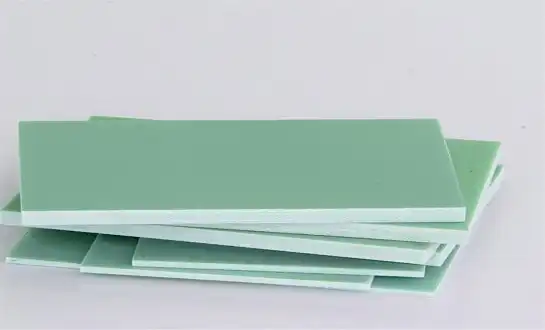
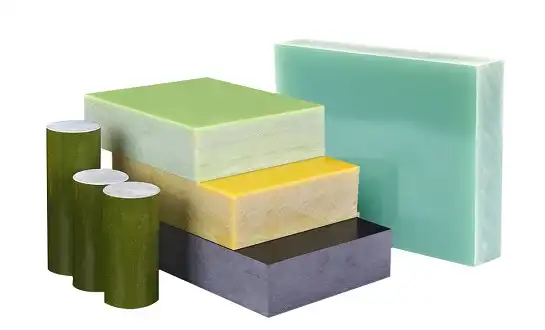
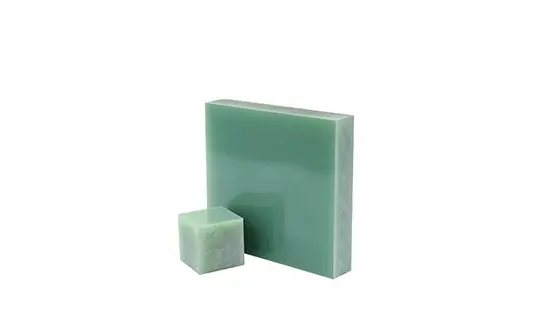
FR4 Epoxy Sheet Production Lines and CNC Cutting Solutions for PCB Applications
FR4 Epoxy Sheet stands as the cornerstone material in printed circuit board manufacturing, recognized globally for its exceptional electrical insulation capabilities, remarkable mechanical strength, and proven thermal resistance. This flame-retardant composite, composed of woven fiberglass cloth impregnated with epoxy resin, has revolutionized how electrical and electronics manufacturers approach PCB substrate selection. Advanced production lines coupled with precision CNC cutting technologies ensure these sheets consistently meet rigorous quality standards while maintaining the dimensional accuracy demanded by modern applications. We understand that purchasing managers, engineering teams, and procurement specialists face mounting pressure to optimize manufacturing workflows while controlling costs. This comprehensive guide explores how integrated material production and machining solutions can transform your operational efficiency, reduce material waste, and enhance product reliability across diverse applications from power distribution systems to automotive electronics.
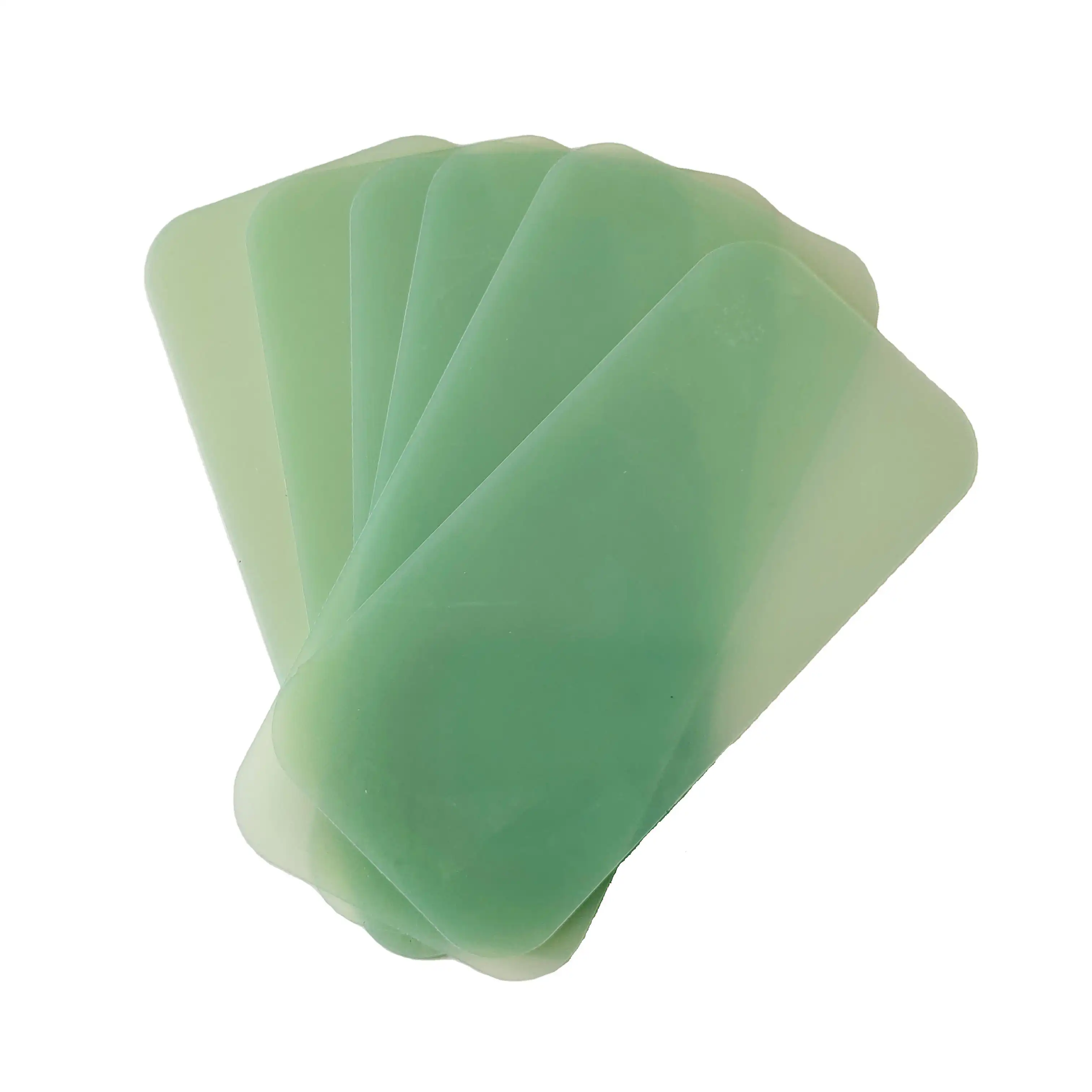
Understanding FR4 Epoxy Sheets and Their Role in PCB Manufacturing
What Makes FR4 the Industry Standard
Because of how it is made, FR4 Epoxy Sheet is a unique material that balances a number of important properties at the same time. The structure is made of woven alkali-free fiberglass fabric, and the flame resistance meets UL94 V-0 standards thanks to brominated epoxy resin. This mix gives a density of 1.85 to 2.10 grams per cubic centimeter and a water absorption rate below 0.2 percent. This means that the dielectric performance stays the same even in damp working conditions. The mechanical qualities are also very good, with a bending strength of more than 340 MPa and a strength-to-weight ratio that is better than many other options.
Superior Electrical and Thermal Performance
The breakdown voltage is more than 40kV perpendicular to the laminations, and the dielectric strength is usually 500 V/mil. Standard grades have a glass transition temperature (Tg) of 130°C to 140°C, while high-temperature versions can work at 170°C or higher. This thermal stability keeps the layers from coming apart during lead-free soldering processes and keeps the dimensions stable even after many thermal cycles. For high-voltage uses in switchgear and transformer insulation, arc resistance that lasts longer than 60 seconds adds extra safety margins.
Comparative Advantages Over Alternative Materials
When engineering managers look at different substrate options, FR4 Epoxy Sheet always stands out as the best value. Unlike phenolic paper laminates (FR1), which lose their electrical properties when they get wet, FR4 Epoxy Sheet keeps its insulation resistance fixed even when the humidity level changes. FR4 Epoxy Sheet has qualities that are the same all the way through, unlike CEM-1 alloys with paper cores. Rogers materials work really well in high-frequency RF applications, but FR4 Epoxy Sheet works well in a wide range of PCB applications, from consumer electronics to industrial controls, at a low cost. Aluminum surfaces are good at moving heat, but they don't provide the electrical separation that is needed for multiple circuit designs.
FR4 Epoxy Sheet Production Line: From Raw Material to Finished Sheet
Raw Material Processing and Prepreg Formation
The first step in our production process is melting raw glass in furnaces that are carefully controlled. This makes long filaments that are then woven into fabric. An organosilane binding agent is used to make it easier for the inorganic glass support and organic epoxy matrix to stick together. At the same time, curing agents, flame retardants, and functional fillers are mixed into petrochemical-derived resin. The glass cloth is put through resin pools where the temperature and tension are managed. This makes FR4 Epoxy Sheet prepregs with exact amounts of resin. Before they are laminated, these layers that are almost dry are brought to certain gel conditions.
Multi-Stage Lamination and Curing Process
Copper foil is stacked on top of several prepreg layers in ways that are specific to each customer. The part is put into high-pressure hydraulic presses that are hotter than 170°C and have pressures of several hundred PSI. This thermosetting process firmly joins the epoxy resin's cross-links and fuses all the layers together to form a single structure. Automated monitoring systems keep an eye on temperature profiles, pressure distribution, and cure cycles to make sure that the thickness is always the same, within a 0.05mm range. Post-cure thermal treatment lowers internal stresses and improves the material's mechanical properties.
Quality Control and Finishing Operations
Industry 4.0 sensors are built into modern production lines. These sensors constantly check important parameters and make changes automatically to keep specs. Each FR4 Epoxy Sheet is measured, looked at to see if there are any flaws on the surface, and a sample is taken for electrical testing. Precision shearing equipment is used to cut sheets to standard sizes or custom sizes. For tasks that need to be precise, surface grinding can help you reach certain width goals. We keep full traceability systems that connect each output batch to lots of raw materials and process factors.
CNC Cutting Solutions for FR4 Epoxy Sheets: Precision and Efficiency
Challenges of Machining Glass-Reinforced Composites
Because glass fibers are rough, they speed up the wear on cutting tools during normal operations. When the wrong feed rates are used, brittle fractures can lead to edge chipping or delamination of the FR4 Epoxy Sheet. When you cut things by hand, the measurements aren't always accurate, and the glass dust is dangerous and needs special air. When making complex geometries or large amounts of components in large quantities, these limitations become major bottlenecks.
Router-Based CNC Machining Parameters
Computer-controlled routers with carbide or diamond-tipped bits can make complex profiles with repeatable accuracy. Cutting speeds between 18,000 and 24,000 RPM and feed rates between 100 and 300 inches per minute are best for keeping the edges clean and preventing thermal buildup. Down-cutting spiral bits stop the top surface from tearing off, and compression bits protect both surfaces at the same time during through-cutting. HEPA-equipped dust collection systems catch particles at the point of cutting, keeping workers safe and tools in good shape for longer.
Laser Cutting Technology for Specialized Applications
Both CO2 and fiber laser devices can cut without touching the material, so there is no mechanical force on it. Laser cutting is great for making features that are less than 0.5 mm wide and for making complicated designs without having to change tools. To keep the heat-affected zone from charring the glue or breaking down the fibers, the parameters must be carefully optimized. Assist gas devices get rid of ablated material and keep the cutting area cool. Laser equipment costs more up front, but the flexibility and speed benefits make it worth it in high-mix production environments.
Integration with Workflows for Design and Production
These days, CNC controllers can directly read CAD files, which means that programming is done automatically, and setup time is cut down. Nesting software places parts in the best way across all FR4 Epoxy Sheet sizes, making the best use of materials and reducing waste. Automated tool changes make it possible to make complicated structures that need more than one operation while the lights are off. Real-time tracking systems keep an eye on how machines are doing and schedule repairs before they break down. This keeps throughput steady.
Selecting and Procuring FR4 Epoxy Sheets and CNC Equipment: Decision-Making Guide
Evaluating Supplier Quality Credentials
Procurement teams should check that manufacturers have ISO 9001 quality management systems in place and, if possible, hold certifications specific to the electronics industry, such as IATF 16949 for auto suppliers. UL certification for flame-retardant properties and RoHS compliance paperwork make sure that FR4 Epoxy Sheets meet all world safety standards. Ask for test results that show how well the product meets the standards for NEMA LI 1-1998, IEC 60893, and MIL-I-24768/27 in terms of mechanical strength, dielectric qualities, and thermal performance. Long-term consistency is guaranteed by supplier audits that show in-house testing capabilities and maintenance programs for production equipment.
Understanding Pricing Structures and Order Flexibility
Volume-based pricing levels usually offer 15–25% discounts for larger orders, but the minimum order requirements may be higher than what you need right now. Instead of just looking at unit price, you should also look at the total cost of ownership, which includes freight, store holding costs, and the risk of failure. When suppliers offer prototype amounts, it's possible to test the idea before committing to production volumes. Lead time consistency is just as important as lead time duration—predictable delivery schedules help lean manufacturing efforts more than sometimes fast but variable fulfillment.
CNC Equipment Selection Considerations
Make sure that the machine bed size, Z-axis spacing, and spindle power levels are all right for the sizes and thicknesses of the parts you usually make. If you are making three-dimensional parts, check out the controller's abilities for complex contouring and multi-axis interpolation. Equipment uptime is directly affected by how close the service network is and how many parts are available. Training programs and good technical support are what set suppliers who help people quickly develop their skills apart from those who just sell equipment. As production volumes rise, scalability potential lets you add automation like robotic loading or inline inspection.
We've worked with a lot of companies that make electrical equipment and industrial tools, and by matching their material purchases with suitable machining solutions, they were able to make their production much more efficient. By using this unified method, one transformer maker cut component lead times by 40% and improved the accuracy of the dimensions. Their purchasing team worked closely with technical experts who knew both the properties of the materials and how they needed to be machined. This led to better specifications that made ordering and making them easier.
Future Trends and Opportunities in FR4 Epoxy Sheet Production and CNC Cutting
Advanced Material Formulations
Researchers are working on making flame retardant systems that don't use halogens and still meet UL94 V-0 standards. This is to address environmental concerns about brominated compounds. Higher Tg versions that get close to 200°C let parts work in very hot places like under the hood of an automobile and in power electronics. Low-loss resin systems make it possible for FR4 Epoxy Sheet to be used in places where it used to need special supports because they lower signal loss in high-frequency digital circuits. Filled versions with ceramic bits improve heat transfer while keeping electrical shielding, which helps with high-power LED and semiconductor uses.
Sustainable Manufacturing Practices
Closed-loop liquid recovery systems keep volatile organic compound pollution to a minimum while glue is being applied. Energy-efficient curing ovens that recover heat make manufacturing much less harmful to the environment. Recycling programs are looking into ways to get glass fibers and epoxy structures back from old equipment and production waste. More and more, socially aware procurement organizations prefer to work with suppliers that record their environmental management systems and carbon reduction roadmaps.
Intelligent Manufacturing Technologies
AI algorithms look at past output data to figure out what the best process factors will be for new material requirements. At production speeds, machine vision systems look at all sides of a sheet and automatically grade and sort them by quality level. CNC machines have sensors that can predict when parts will break days in advance. This way, replacements can be planned for planned downtime instead of having to deal with sudden breakdowns. Digital twin simulations speed up process optimization cycles by letting you try out new cutting strategies virtually before committing physical resources.
Implications for B2B Procurement Strategy
When purchasing managers and engineering teams form early partnerships with suppliers of new materials, they get early access to new technologies that give them a competitive edge. Working together allows for the creation of custom grades that meet the specific needs of each application. Long-term supply deals with qualified makers keep prices stable and guarantee capacity during industry booms when spot market availability drops. Companies that train their employees on new materials and manufacturing methods can take advantage of market possibilities that their competitors can't.
Conclusion
Competitive PCB manufacturing operations are built on a base of high-quality FR4 Epoxy Sheet production and precise CNC cutting technologies. Through carefully controlled manufacturing processes, we have looked into how these materials achieve their high levels of electrical insulation, mechanical strength, and thermal stability. Modern machining techniques get around the problems that glass-reinforced composites have by giving them the accuracy in dimensions and quality of surface that modern applications need. Making smart choices about which suppliers to buy from based on their records, prices, and the tools they have will have a direct effect on how well your business runs and how reliable your products are. Sustainable materials, smart manufacturing, and custom formulations are all changing the game. This gives forward-thinking companies chances to set their products apart and get a bigger share of the market in high-demand areas like electronics, industry, cars, and power.
FAQ
What factors influence lead times for custom FR4 sheet orders?
The main variable is the supply of the material, especially for special grades that have different Tg needs or thicknesses that aren't normal. Standard green FR4 Epoxy Sheet in standard sizes usually ships in one to two weeks. Custom recipes, on the other hand, may take three to four weeks while resin systems are made and prepreg is made to order. The position in the production queue affects when things happen during times of high demand, when limited capacity makes all lead times longer. Choosing between ocean freight and plane express as a shipping method can add or take away weeks from the total arrival time.
Can CNC machines handle various FR4 thicknesses effectively?
These days, CNC routers can work with materials as thin as 0.5 mm sheets, which are used in flexible circuit stiffeners, and as thick as 50 mm plates, which are used to protect against high voltage. To keep thinner materials from bending, vacuum hold-down fixtures and lower cutting forces are needed. For thicker sections, on the other hand, enough spindle power and rigidity are needed. For certain uses with very thick materials, it may be better to use multiple-pass methods that cut to full depth in steps instead of trying to finish in one pass. To get the best performance and tool life, the machine you choose should be in the same thickness range as your usual sheets.
How does FR4 compare to Rogers materials in high-frequency PCB applications?
Rogers laminates have lower dielectric loss tangent values, which makes them better for RF circuits that work above 1 GHz and need to keep the signal integrity. FR4 Epoxy Sheet, on the other hand, works well enough for digital devices that operate at modest frequencies and costs a lot less. A lot of mixed-signal systems only use Rogers material in the most important RF parts and switch to FR4 Epoxy Sheet for the digital processing parts. Figuring out your exact frequency needs and signal loss limits will help you choose the right materials that match performance with cost.
Partner with J&Q for Superior FR4 Epoxy Sheet Manufacturing Solutions
J&Q has more than twenty years of experience making high-quality FR4 Epoxy Sheet and insulation materials. They also have more than ten years of experience working with electronics makers and industrial equipment builders around the world. Whether you're making precision PCB substrates, transformer insulation, or battery barriers for cars, our integrated production facilities and in-house CNC capabilities give you the consistency and accuracy you need. We have been a seller of FR4 Epoxy Sheet for a long time and have all the necessary quality certifications. To make sure that every sheet meets the required electrical, mechanical, and thermal features, we follow strict testing procedures. Our dedicated logistics company offers a smooth, one-stop service from the initial quote to the final delivery, which takes away the need for complicated coordination. Our technical team can be reached at info@jhd-material.com by engineering managers and procurement specialists who want to talk about your specific needs. You can find detailed technical tools on blog.jhd-material.com. There you can also learn how our customized solutions can help you make your manufacturing more efficient while keeping costs low.
References
1. National Electrical Manufacturers Association. "Industrial Laminating Thermosetting Products - NEMA LI 1-1998 Standards Publication." NEMA Standards, 1998.
2. Institute of Electrical and Electronics Engineers. "High-Pressure Decorative Laminates and Glass-Epoxy Copper-Clad Laminates for Printed Boards - IEC 60893 International Standard." IEEE Technical Publications, 2019.
3. American Society for Testing and Materials. "Standard Test Methods for Water Absorption of Plastics - ASTM D570." ASTM International Standards, 2018.
4. Underwriters Laboratories. "Tests for Flammability of Plastic Materials for Parts in Devices and Appliances - UL94 Standard." UL Safety Standards, 2013.
5. Military Specifications and Standards. "Glass Cloth, Epoxy Resin, Copper-Clad Laminates - MIL-I-24768/27 Military Specification." Department of Defense Standards, 1991.
6. Coombs, Clyde F. "Printed Circuits Handbook: Manufacturing Technologies and Materials Engineering." McGraw-Hill Professional Publishing, seventh edition, 2016.

Get a complete product list and quotation
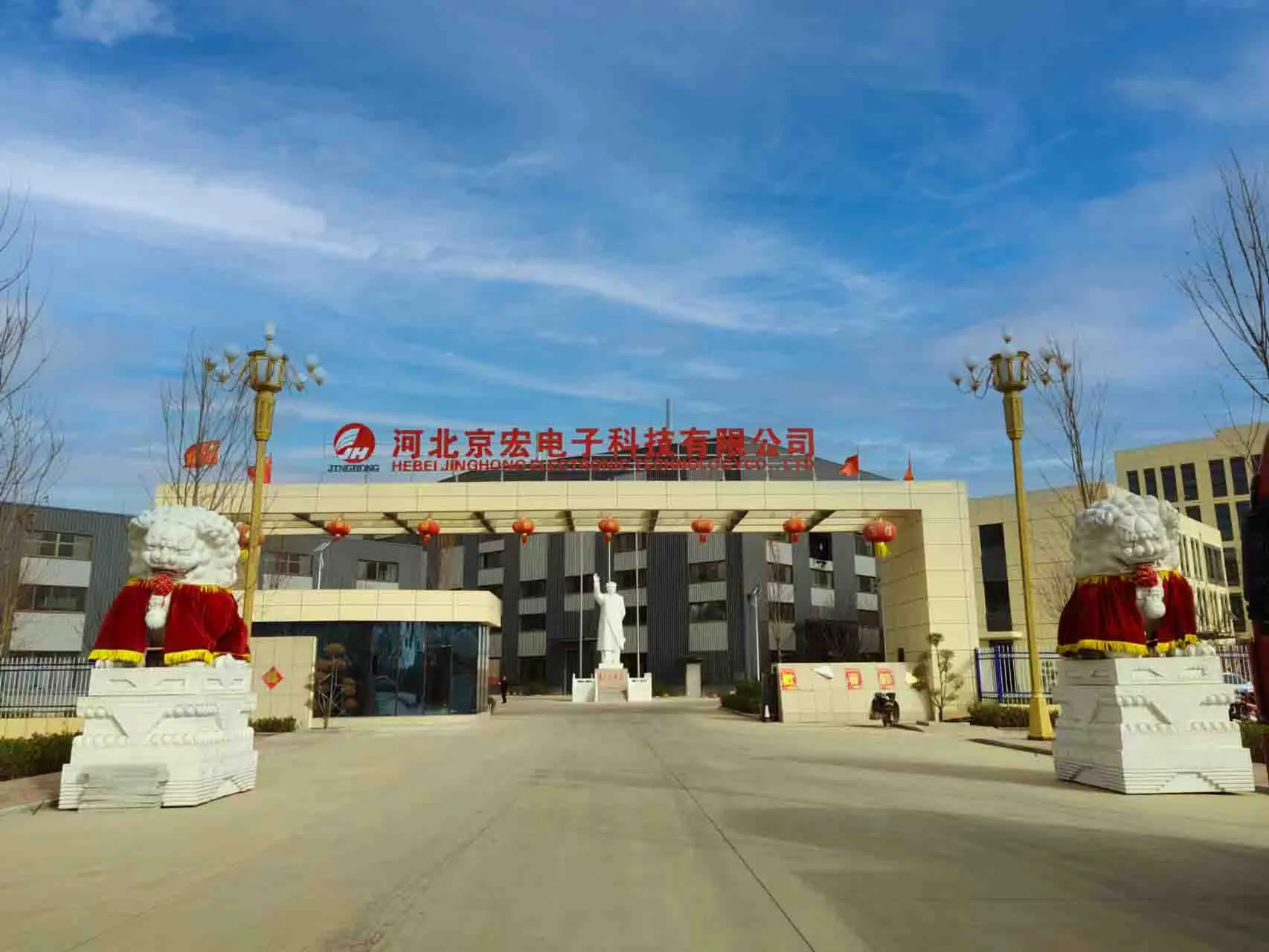
J&Q New Composite Materials Company