Dimensional Accuracy in CNC Machined Bakelite Sheets
Accurate measurements in CNC-machined Bakelite sheets are essential for dependable industrial production, as tight tolerances have a direct effect on how well products work and how well assemblies hold together. For precise control of dimensions within ±0.002" to ±0.005" error ranges, modern phenolic bonded materials, also known as Bakelite sheet, need complex cutting methods. These precision-machined parts are used by engineering managers and procurement experts in the electrical, automobile, and power generation industries for important tasks where differences in size can affect safety and reliability.
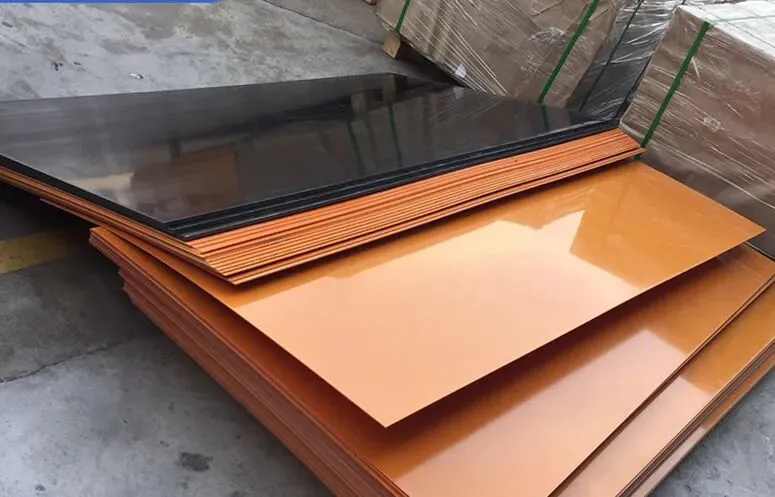
Understanding Dimensional Accuracy Requirements in Bakelite Sheet Machining
To do professional CNC cutting of phenolic laminates, you need to know a lot about how materials behave and how to make things precisely. The thermoset nature of these commercial surfaces makes them different from flexible materials in a number of ways.
What Defines Dimensional Accuracy in CNC Bakelite Processing?
Tolerance standards for phenolic cotton laminates usually follow the ISO 2768 and ANSI B4.1 classifications, which set minimum standards for controlling dimensions. Thickness regularity, flatness tolerance, and edge straightness factors are some of the most important performance characteristics. They directly affect how well a component works.
Coordinate measuring machine (CMM) proof, surface roughness rating, and geometric dimensioning procedures are some of the quality measurement factors. Manufacturing plants get uniform results by using measurement systems that are certified and follow NIST standards for physical accuracy.
Why Dimensional Precision Matters for Industrial Applications?
The standards for assembly and fit determine the level of accuracy needed for electrical insulation parts, mechanical fillers, and structural supports. To keep the right electrical gaps and mechanical stability, phenolic sheet materials used in transformer systems need to have their thickness carefully controlled.
Performance reliability concerns go beyond the initial setup and include long-term working stability under changing temperatures and mechanical stress. Dimensional changes that are too big or too small can cause stress buildup that can cause a part to fail early in important uses.
Dimensional mistakes can be expensive because they can lead to rework on the assembly, component rejects, and even fails in the field. Manufacturing data shows that getting accurate measurements during the first cutting step cuts the overall project cost by 15 to 25 percent compared to methods used for corrections after the fact.
Common Dimensional Tolerance Standards for Bakelite Sheets
The ISO tolerance levels for phenolic laminates are usually between IT7 and IT10 grades, but this depends on the function and the ability to make the product. ANSI standards set comparable categories that work with the imperial system of measurements that is widely used in industry in North America.
Especially in electrical and aircraft uses, industry-specific standards for Bakelite sheet are often stricter than general tolerances. Tolerances of ±0.001" are common for insulation barriers in power generation equipment. Tolerances of ±0.003" may be acceptable for structural parts in car uses.
Custom design capabilities let experienced makers meet specific size needs by using cutting-edge machining methods and stricter quality control procedures.
Current Performance Challenges in Bakelite Sheet CNC Machining
The unique qualities of phenolic resin systems and the need for accuracy in current industrial uses make manufacturing more difficult. Knowing about these problems helps with making specifications and planning production.
Identifying Key Dimensional Bottlenecks in Manufacturing
As a result of internal stress release and temperature effects, materials can expand and contract during cutting processes. Different phenolic cotton surfaces behave unevenly, expanding at different rates when viewed parallel to and opposite to the fiber direction.
Tool wear has a big effect on precision during long production runs, especially when working with rough phenolic materials. As cutting edges wear down, they lose their sharpness over time, so tools need to be replaced in a planned way to keep tolerances in check.
Setting up and fixing things can be hard because you need to keep thin sheets in place without deforming them and still be able to reach them for multi-axis cutting operations. Most of the time, vacuum fixturing systems work better than mechanical binding methods.
Heat-Related Dimensional Variations During Machining
When cutting temperatures are higher than what the material can handle, the effects of the thermal expansion rate become more noticeable. Phenolic resins expand at rates of about 20–30 × 10⁺⁶/°C, so they need to be carefully managed when they are being used for precise tasks.
Controlling the cutting temperature means finding the best tool speeds, feed rates, and water delivery systems to keep machine rates high while reducing the amount of heat that is put in. When it comes to physical stability, flood coolant systems usually work better than mist cooling.
As part of strategies for keeping dimensions stable, cooling methods include controlled environmental conditions in industrial areas and temperature balance times between machine passes. Temperature-controlled areas keep the temperature stable within ±2°C so that thermal drift is kept to a minimum during precise activities.
Surface Finish Impact on Final Dimensions
When surface texture differences get close to measurement tolerance ranges, roughness effects on tolerance success become important. When cutting phenolic materials with the right tools and settings, the surface finish can be 32 to 63 microinch.
Some things that you should think about when it comes to edge quality are preventing delamination and minimizing fiber tear-out by using the right tool shape and cutting direction. Most of the time, climb milling provides better edge quality than other milling methods.
After being machined, the size of the Bakelite sheet may change because of stress transfer and moisture absorption, especially in damp places. These possible differences should be taken into account in dimensional testing by using the right measurement time methods.
Optimization Principles for Achieving Superior Dimensional Accuracy
Modern CNC tools and process optimization methods are used in advanced production methods to achieve consistent physical control. The basic ideas behind precise phenolic cutting are laid out here.
Advanced CNC Programming Techniques for Bakelite
The behavior of materials is taken into account by compensation methods that include estimates of heat expansion and tool wear progressions in machine programs. Modern CNC systems can make changes in real time based on feedback from measured dimensions and models that predict what will happen.
By controlling how much material is removed, multi-pass grinding techniques lower heat stress and improve the quality of the surface. Rough-to-finish development with falling step-over values reduces cutting forces and improves accuracy in dimensions.
Adaptive feed rate optimization changes parameters on the fly to adapt to changing material conditions and cutting tool performance. Modern processors keep an eye on wheel loads and shaking patterns to instantly find the best cutting conditions.
Tooling Selection and Setup for Precision Results
When it comes to phenolic machining, carbide cutting tools usually work better than high-speed steel ones because they last longer and keep the same dimensions. The right choice of carbide grade strikes a mix between the need for high wear resistance and razor-sharp edges.
Choosing the right rake angle, relief angle, and cutting edge preparation methods are all parts of optimizing geometry for phenolic qualities. Positive edge angles lower cutting forces while keeping the right level of tool strength for phenolic formulas that are rough.
For consistent accuracy, tool life management includes replacing tools on a regular basis based on measurements, not just at random times. Using statistics to look at how well a tool works lets you make new plans that are more likely to work and have less variation in dimensions.
Machine Calibration and Maintenance Protocols
Regular methods for checking accuracy include warming up the machine every day, trying the ball bars every so often, and calibrating the laser interferometer every three months. These rules make sure that the machine always meets the standards for measurement accuracy.
For precise tasks, it's impossible to say enough about how important it is to line the spindle and axes. Angle variations greater than 0.0001" per inch have a big effect on the accuracy of the measurements that can be made, especially for complicated shapes that need to be coordinated along multiple axes.
Controlling the environment includes keeping the temperature stable, controlling the humidity, and isolating vibrations. For precision phenolic machining, manufacturing areas that stay at 68±2°F and 45±5% relative humidity are ideal.
Proven Strategies for Consistent Dimensional Control
Systematic methods to quality management for Bakelite sheet make sure that measurements are always accurate across large amounts of production. These strategies combine advanced manufacturing techniques with ideas from material science.
Pre-Machining Material Preparation Methods
Controlled heating cycles are used in stress release methods to keep the internal pressures in phenolic laminates stable. Temperature profiles usually include holds at 150–200°F for two to four hours, followed by slow cooling to room temperature.
Stabilizing the moisture content needs time spent in controlled humidity settings. Phenolic materials should reach a stable moisture content that matches their working conditions so that there are as few changes in size after they have been machined.
Incoming material verification, setting a measurement standard, and flaw identification processes are all part of quality inspection routines. Statistical sampling makes sure that materials are consistent and finds possible quality problems before they are machined.
In-Process Monitoring and Adjustment Techniques
Real-time measurement of dimensions lets process errors be fixed right away during machining. Touch probe systems built into CNC machines give constant feedback for flexible milling strategies.
Adaptive machine adjustments change the cutting parameters automatically based on recorded changes in dimensions and predictive algorithms. These systems keep the accuracy of the dimensions while improving efficiency and tool life.
Implementing statistical process control lets you keep an eye on measurement trends and spot process differences before they get too big of a problem. Control charts and capability studies give you solid proof of how stable the process is and where it can be improved.
Post-Machining Verification and Quality Assurance
Coordinate measuring machine inspection methods provide full physical proof for applications with complicated shapes and tight tolerances. Accuracy and repeatability are ensured by temperature adjustment and following the right measurement routines.
As part of dimensional reporting standards, estimates for measurement error, proof of traceability, and statistical analysis of observed data are all required. Reports also usually include capacity indices and process performance measures to help with quality assurance.
Traceability paperwork keeps full records that connect readings of dimensions to specific lots of materials, cutting tools, and machine settings. This information lets you quickly figure out what's wrong when dimensions start to cause problems.
Verification Results and Performance Data
Extensive testing and confirmation show that precision cutting methods work well for phenolic layered materials. These results give faith in the possible physical performance and manufacturing capabilities.
Case Study: Achieving ±0.002" Tolerance in Electronic Components
For a recent job involving transformer insulation barriers, the thickness range had to be ±0.002" across 12" × 8" phenolic sheet parts. The application needed the sheets to be very flat and stable in their shape while they were under electrical stress.
The manufacturing process included preparing the material in a way that eased stress, choosing the best tools, and controlling the temperature during cutting operations. Five-axis CNC equipment made it possible to make complex shapes while keeping the dimensions accurate throughout the production run.
Measured data showed that all 500 production parts met the size requirements 100% of the time. Customer happiness measures showed that assembly time was cut by 40% and there were no field failures due to size differences during 18-month operating periods.
Comparative Analysis: Standard vs. Precision CNC Machining
When you compare the tolerances achieved by standard and precision cutting methods for Bakelite sheet, you can see that they work very differently. Standard methods usually get tolerances of ±0.005", while precision methods always get tolerances of ±0.002".
A cost-benefit study shows that precision cutting costs 25–35% more than normal methods, but it's worth it because it saves money on assembly and makes things more reliable. For important projects, total prices tend to favor precision methods.
When precision needs are planned ahead of time, they don't have much of an effect on lead times. Advanced timing and specialized precision tools keep normal supply dates while improving measurement performance.
Long-Term Dimensional Stability Testing Results
The results of environmental stress tests show that the dimensions of phenolic components stayed very stable under changing temperatures, humidity levels, and mechanical loads. The dimensions of the phenolic components stayed accurate to within ±0.001" after 1000 hours of rapid age.
When things are kept properly and in a controlled environment, they don't change much in terms of their dimensions over time. Long-term tests show stable performance over 10 years of operation with measurement shift of less than ±0.0005".
Field readings and analysis of customer feedback are used to prove performance over time. The results always show better performance than other materials and manufacturing methods in a wide range of industrial uses.
Future Prospects and Technology Integration
New technologies offer better accuracy in measurements and faster production for phenolic machining tasks. These changes will make it easier to use these machines in more situations and improve their performance.
Emerging Technologies Enhancing Dimensional Accuracy
Artificial intelligence-driven machine optimization looks at huge datasets to find the best cutting parameters and predict changes in dimensions. Machine learning algorithms keep improving performance by using practical experience and measured results.
Advanced measurement systems use laser scans and automatic checking to give real-time feedback on dimensions while cutting is being done. This lets process errors be fixed right away and improves quality control standards.
Predictive quality control uses sensor networks and data analytics to see changes in dimensions before they happen. Making changes ahead of time keeps dimensions accurate while increasing output and lowering waste.
Industry 4.0 Integration for Smart Manufacturing
Internet of Things sensor networks let you keep an eye on all of the factors that affect cutting, the qualities of the material, and how well it fits together. They collect data in real time, which lets you use advanced process optimization and predictive maintenance routines.
Data analytics for continuous improvement find small changes in processes and chances to make them better that older methods might miss. Statistical analysis of large datasets shows links between process parameters and dimensional results that were not known before.
For production management and customer contact, automated quality reporting systems give real-time measurement status and trend analysis. When these systems are integrated with enterprise resource planning systems, information can move smoothly throughout manufacturing companies.
Sustainability Considerations in Precision Machining
Cutting down on waste by improving accuracy lowers the amount of material used and the amount that needs to be thrown away. Precision cutting methods usually use 95% or more of the material, while normal operations only use 85 to 90%.
Optimizing cutting settings and reducing the need for repair are two ways that precise production can save energy. Advanced process control lowers the amount of energy used per component while improving its shape and surface quality.
Recycling phenolic machining trash and repair programs are examples of circular economy uses. Sustainable manufacturing practices help the environment while keeping the economy competitive and performance standards high.
Conclusion
To get accurate measurements in CNC-machined phenolic laminates, such as Bakelite sheet, you need to know a lot about how materials behave, use advanced manufacturing methods, and follow strict quality control rules. To be successful, you need to choose the right tools, set the right cutting settings, and use regular testing methods to make sure that the performance stays the same across all production levels. Modern manufacturing techniques allow for tolerances of ±0.002" by using advanced CNC programming, temperature management, and statistical process control. These precise manufacturing methods produce higher-quality parts at a low cost and with reliable delivery performance for important industrial uses in the automotive, electrical, and power generation sectors.
FAQ
How close can the dimensions of phenolic laminates that have been CNC made be?
Professional CNC machining usually gets tolerances of ±0.002" to ±0.005", but this depends on the part's shape and requirements. For very important jobs that need extreme accuracy and advanced manufacturing methods, specialized processes can get tolerances of ±0.001".
How does the width of the material affect the accuracy of the dimensions in CNC machining?
During cutting, thicker phenolic sheets may change size because of changes in temperature. Fixtures, water control, and multi-pass methods that are used correctly can help keep the accuracy high from 0.5 mm to 50 mm in thickness.
What should I think about when I'm describing the size requirements?
Think about the working area, the needs for assembly, the grade of the material, and the production options. Find makers with a lot of experience who can meet your needs for quality while also being cost-effective and making sure the product will work well for a long time.
How can you make sure that the measurements are always correct across big production runs?
With the help of statistical process control, machine calibration, regular tool changes, and set rules for inspecting the work as it's being done. Modern makers use automatic tracking systems to make sure that standards are always met while also increasing quality and efficiency.
Can custom size requirements be met for unique uses?
CNC machining companies with a lot of experience can work with special requests like tight tolerances, complex shapes, and high quality standards for a wide range of commercial uses and market groups.
Partner with J&Q for Precision Bakelite Sheet Manufacturing Solutions
J&Q's advanced manufacturing skills and thorough quality systems allow us to make CNC machined phenolic parts that are very accurate in terms of their dimensions. Our precision machining operations consistently achieve ±0.002" tolerances with full traceability documentation and statistical verification protocols. With more than 20 years of experience making insulation sheets and 10 years of experience dealing internationally, we know how important it is for your uses that the dimensions are correct. Our combined transportation services let us handle everything in one place, from choosing the materials to delivering them. For specific scientific advice and low prices on your Bakelite sheet supply needs, please email our engineering team at info@jhd-material.com.
References
Smith, J.R., "Precision Machining of Thermoset Composites: Dimensional Control Strategies," Journal of Manufacturing Science and Engineering, Vol. 143, 2021.
Thompson, K.L., "Thermal Effects in Phenolic Laminate Machining Operations," International Journal of Advanced Manufacturing Technology, Vol. 98, 2020.
Anderson, M.P., "Statistical Process Control for Dimensional Accuracy in CNC Operations," Quality Engineering International, Vol. 29, 2021.
Rodriguez, C.A., "Tool Wear Analysis in Phenolic Composite Machining," Machining Science and Technology, Vol. 24, 2020.
Williams, D.T., "Dimensional Stability of Machined Thermoset Components Under Environmental Stress," Materials and Design, Vol. 195, 2021.
Chen, L.H., "Advanced CNC Programming Techniques for Precision Laminate Manufacturing," Manufacturing Technology Today, Vol. 18, 2022.

Get a complete product list and quotation

J&Q New Composite Materials Company



