Custom Sizing: How We Cut Epoxy Sheets Without Creating Micro-Cracks
At J&Q, we know that one of the hardest things about industrial laminate processes is making sure that custom cuts on epoxy sheet materials don't crack. Controlled cutting parameters, specialized tools, and strict temperature management are all parts of our method for stopping micro-cracks from forming during measuring operations. We've been making things for over 20 years and have come up with our own special ways to keep the dielectric strength and mechanical stability that are needed for high-voltage electrical insulation, PCB substrates, and aircraft uses. This level of accuracy saves your investment and makes sure that it works reliably in mission-critical settings.
Understanding the Challenges of Cutting Epoxy Sheets Without Micro-Cracks
The inherent brittleness of the epoxy sheet makes them difficult to work with when they are being made. While thermoplastics weaken when heated, epoxy glass laminates cure in a way that can't be undone. This means that they can be damaged below the surface during mechanical processing.
Why Micro-Cracks Form During Cutting Operations
When isolated pressures are higher than the material's tensile strength, micro-cracks form. When you choose the wrong tools, there is too much friction, which raises the temperature above the glass transition point and breaks down the resin. When the feed rate is too fast, it causes vibrations that spread cracks through the layers of glass fiber support. These flaws that can't be seen hurt the structure's ability to hold weight, lowering the load-bearing capacity of busbar supports and setting up places where transformer standoff insulators could fail, which is unacceptable.
Material Properties That Influence Cut Quality
Anisotropic strength is created by combining continuous thread glass cloth with epoxy resin binding. How cutting forces are spread out in a laminate structure depends on how the warp and weft fibers are arranged. Because modulus changes with temperature, materials react differently to cutting when they are at room temperature compared to when they are heated. Understanding these qualities lets us change how we work different grades, from normal G10 to high-temperature FR5 formulations, which need different ways to be handled to keep their shape.
Industry Standards and Quality Expectations
Manufacturers of electrical equipment expect custom-cut laminates to meet NEMA LI-1 standards without cracking or delaminating along the edges. For power distribution uses, materials must keep their dielectric breakdown voltage rates after they are made. Documentation must be provided for aerospace parts to show that cuts have not affected their cold performance. Because of these strict standards, we've invested in nondestructive testing tools and process validation methods that make sure that all of our production batches are the same.
Proven Techniques and Best Practices for Cutting Epoxy Sheets Smoothly
Modern ways of cutting allow for precise size while keeping the epoxy sheet's qualities that are needed for tough jobs. Our factory uses a number of different technologies that are each designed to work with different thickness ranges and accuracy needs.
CNC Routing with Optimized Parameters
When it comes to complicated geometries, computer-controlled routing gives you reliable accuracy. We set the spinning speed to be between 18,000 and 24,000 RPM, based on the thickness and grade of the material. This is done to find a balance between how well chips are removed and how much heat is produced. Diamond-coated carbide tools make clean cuts through rough glass reinforcement without getting dull too quickly. Vacuum extraction systems constantly remove debris, which keeps finished edges from getting dirty again. Feed rate optimization stops both tool distortion at too high of speeds and heating from friction at too slow of progress rates. This balance is very important when working with FR4 boards because keeping the copper foil's bonding strong is what makes a PCB reliable.
Water Jet Cutting for Thermal-Sensitive Applications
High-pressure water jet devices get rid of all heat-affected areas, so the qualities of the material are kept right up to the edge of the cut. Material is worn away by the mechanical action of garnet particles in the water stream instead of heat stress. This cold-cutting method works well in situations where normal grinding isn't possible because of the glass transition temperature. This method works great for thick laminates that are used in phase barriers and terminal boards, where keeping the full cross-sectional strength is more important than having a smooth edge finish. We have shown that water jet cutting keeps the dielectric strength within 98% of the parent material values, while mechanical cutting only keeps 85–90% of the values.
Laser Cutting for Precision Electronics Applications
Fiber laser devices can make complex designs in thin-gauge materials with accuracy down to the micron level. With precise energy transfer, glue and fiber are vaporized with little heat spreading to other materials. Nitrogen assist gas stops rust darkening and gets rid of ablated particles at the same time. This method works really well for PCB blanks with tight tolerances that need to stay the same size through lead-free soldering heat cycles. Our laser settings are perfected to keep the heat-affected zone to less than 0.15 mm. This keeps high-layer-count circuit board structures from delaminating.
Selecting the Right Epoxy Sheet Type for Custom Sizing Needs
The choice of material has a direct effect on how well the cutting goes and how well the end application works. During the production process, different types of resin and support structures react in different ways.
Standard Grade Versus High-Performance Variants
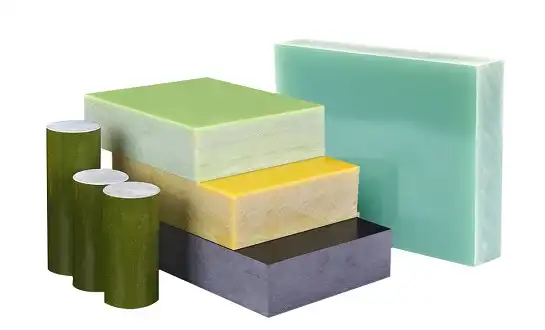
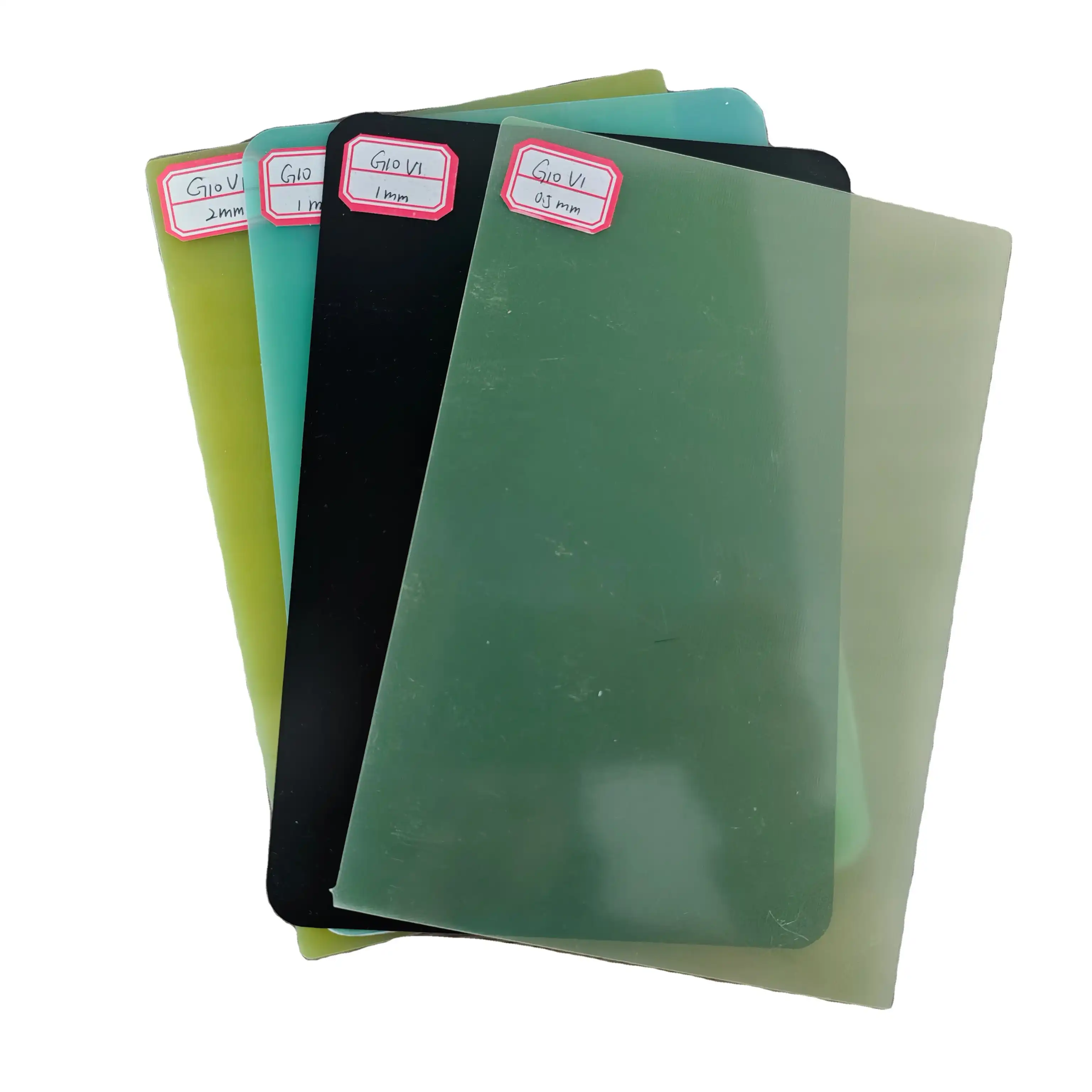
General-purpose G10 grades are inexpensive options for electrical insulation tasks that will be done at low temperatures. FR4 models that don't catch fire meet UL94 V-0 standards that are needed for electronics and machines. High-temperature G11 formulations keep their mechanical qualities even when they are used at high temperatures, like in motor parts and industrial equipment. The different resin chemistry affects both how easy it is to machine and the quality of the edges. For example, FR4's brominated flame retardants make it more brittle than empty G10, so the cutting settings need to be changed to keep the edges from chipping.
Specialized Formulations for Niche Applications
Marine-grade laminates have glue systems that don't need to be dried out, so they keep their shielding properties even in damp places. Because the cure profiles have been changed, these formulas machine differently because the hardness properties have been changed. Chemical-resistant versions can handle acidic work environments, but they need special tools because they are more resistant to wear and tear. Knowing these differences helps buying teams choose materials that balance the needs of the application with the difficulty and cost of production.
Reinforcement Architecture Effects on Processing
Woven glass cloth is strong in both directions, making it perfect for use as structure insulation. Unidirectional reinforcement has the best qualities along the fiber plane, but it needs to be cut in a way that is specific to the orientation. Mat strengthening makes the features isotropic, but the cut edges are rougher and need more finishing. During the original material review, we look at the fiber architecture to figure out the best tooling and feed direction techniques that reduce the risk of delamination.
Ensuring Quality and Reliability Post-Cutting – Inspection and Finishing
When fabrication is finished, quality assurance processes start to check that the epoxy sheets are correct and that the measurements are correct.
Nondestructive Testing for Hidden Defects
Ultrasonic C-scan screening finds delamination below the surface that can't be seen with the naked eye. High-frequency sensors pick up changes in resistance at the points where glass and resin meet, where tiny cracks stop sound from traveling. Dye penetrant testing shows flaws that break the surface along cut edges, where capillary action pulls contrast agents into cracks. These methods give objective proof that the cutting processes haven't damaged the structure, which is proof that is being asked for more and more by car tier-one suppliers and aircraft OEMs that follow zero-defect manufacturing philosophies.
Edge Treatment and Sealing Protocols
Precision grinding gets rid of micron-level sharpness on cut edges, which gets rid of stress concentration places that cause cracks to spread. When you chamfer, you get rid of sharp points that could get damaged by impacts during assembly. Using resin binding treatments on uncovered glass fibers keeps water out, which lowers the insulation's effectiveness over time. We found that edges that are properly sealed keep their dielectric strength after 5,000 hours of humidity exposure tests, while samples that weren't treated lost 60% of their strength.
Dimensional Verification and Documentation
Coordinate measuring machine inspection makes sure that the tolerances meet the standards of the design. Statistical process control charts show how dimensions change over time during production runs. This lets you change parameters before they get out of range. Material certificates are important for controlled businesses because they show test results and information on how to track down products. This paperwork is especially helpful for transformer makers who need to be able to track materials for 10 years for power grid parts.
Procuring Custom Cut Epoxy Sheets: What B2B Buyers Should Know
Successful buying includes more than just specifying the materials. It also includes knowing what the suppliers can do and being clear about the process.
Evaluating Supplier Technical Capabilities
Cutting technology variety means that the method can be changed to meet the needs of different applications. Instead of relying on third-party approval alone, in-house testing centers show a dedication to quality validation. Technical support teams that can help with material choices are useful in more ways than just supplying commodities. We've been helping companies make electrical equipment and industrial machinery for 20 years, and we've learned that joint engineering talks during the quote phase stop specification mismatches that cost a lot of money and cause production schedules to slip.
Cost Structure and Lead Time Considerations
For custom sizes, there are setup fees for fixtures and code that are spread out over the number of orders. Commitments to buy a lot of something allow for better planning of production schedules that lower costs per piece while keeping quality standards high. You can quickly make prototypes so that you can test your designs without having to commit to full production numbers. We keep a ready supply of common grades, so standard-size blanks can be sent out within 48 hours. More complicated custom patterns, on the other hand, usually take 7–10 business days, based on the testing needs and finish requirements.
Quality System Certification and Traceability
ISO certification sets up systematic systems for quality management, but it doesn't ensure that a company has the technical know-how to work with specific materials. Industry-specific certificates, such as IATF 16949 for car providers, show that a company knows how to meet the needs of that particular sector. Lot tracking tools make it possible to find out what went wrong if something fails in the field years after it was delivered. Our quality records include inspection reports, process parameter records, and certificates for raw materials. These help customers with their audit needs and build trust for a long-term relationship.
Conclusion
To custom-size epoxy sheets without micro-cracks, you need to know a lot about material science, precision cutting, and quality assurance. We get rid of the damage below the surface that affects the performance of electrical insulation and the stability of the machine by carefully controlling the cutting parameters, choosing the right fabrication methods, and enforcing strict inspection routines. Our unified method, which combines advanced CNC routing, water jet, and laser technologies with nondestructive testing tools, produces precisely cut laminates that meet the high standards of makers in aircraft, electronics, and power distribution. This technical skill, developed over 20 years of production experience, turns difficult material qualities into consistent, specification-compliant parts that help your mission-critical applications.
FAQ
How long do epoxy sheets require for curing after custom cutting?
When custom-cut laminates are made, controlled heat and pressure cause the epoxy glue to polymerize, which means they come fully cured. This thermoset fix can't be undone by cutting. If edge sealing treatments are used after cutting, however, the sealant needs to cure for 24 to 48 hours at room temperature before assembly can begin. For aerospace uses, post-bake processes at higher temperatures are sometimes needed for two to four hours at certain temperatures to make sure that all the moisture is gone and the shape stays the same.
What safety precautions are necessary when cutting epoxy laminates?
When cutting, glass fiber dust is released into the air, which can be harmful to your lungs and needs to be properly ventilated and protected with personal protective equipment. Operators should protect their eyes from flying particles and wear dust masks with a rating of N95 or higher. When you use the right tool guards, you can avoid touching the spinning cuts. Material safety data sheets tell you how to handle certain glue systems safely. This is especially important for mixtures that contain brominated flame retardants. Industrial hygiene tracking systems are kept up to date at our location to make sure that the rules for occupational exposure are being followed.
How do epoxy sheets compare to polyester laminates for cutting and durability?
When compared to polyester options, epoxy glue systems are stronger mechanically and don't absorb water as easily. This means that the cuts will be better and the edges will fray less during manufacturing. Because epoxy's electrical qualities stay the same across a wider range of temperatures, it is better for use in accurate electronics. Polyester laminates are less expensive, but they shrink more and have lower glass transition temperatures. The choice relies on how well performance needs are balanced with budget constraints. During material selection talks, we help our customers think about these tradeoffs.
Partner with J&Q for Precision Epoxy Sheet Manufacturing
J&Q offers custom-cut epoxy sheet options that are designed to get rid of micro-cracks and meet all of your exact performance and size requirements. Our building has cutting edge CNC shaping, water jet, and laser systems, as well as strict quality control procedures that make sure the materials are safe. We've been making thermoset laminates for more than 20 years and have worked with foreign markets for ten of those years, so we know the technical needs that are influencing your buying choices. Our integrated logistics skills make delivery easier, and our cheap price models can handle both small batches of prototypes and large production runs. Get in touch with our technical team at info@jhd-material.com to talk about your needs and get specific quotes from an experienced epoxy sheet supplier who wants your manufacturing to go well.
References
Harper, Charles A. Handbook of Plastics, Elastomers, and Composites. McGraw-Hill Professional, 2002.
National Electrical Manufacturers Association. NEMA Standards Publication LI 1-1998: Industrial Laminated Thermosetting Products. National Electrical Manufacturers Association, 1998.
Mazumdar, Sanjay K. Composites Manufacturing: Materials, Product, and Process Engineering. CRC Press, 2001.
Bigg, D.M. "Effect of Compounding on the Properties of Short Fiber Reinforced Injection Moldable Thermoplastic Composites." Polymer Composites 6.1 (1985): 20-28.
Lee, Henry and Kris Neville. Handbook of Epoxy Resins. McGraw-Hill Book Company, 1967.
Chawla, Krishan K. Composite Materials: Science and Engineering. Springer Science & Business Media, 2012.

Get a complete product list and quotation

J&Q New Composite Materials Company