Custom Battery Insulation Plates: Using CNC Machined FR4 Sheets for EV Safety
Electric car battery systems have to work in harsh situations where a single loss of insulation can cause a catastrophic thermal runaway. Modern electric vehicle battery packs need custom battery insulator plates made from FR4 sheets that have been precisely CNC machined. These plates must provide electrical isolation, temperature stability, and flame resistance. The FR4 sheet material is a glass-reinforced epoxy laminate that meets UL94 V-0 standards. It gives engineers a tried-and-true way to match performance needs with the ability to make the material in large quantities for the auto industry.
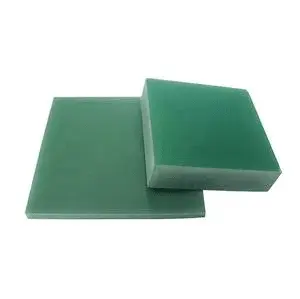
Understanding FR4 Material and Its Relevance for EV Battery Insulation
Composition and Manufacturing Process
FR4 sheet is an industrial thermosetting laminate made by mixing epoxy glue with continuous filament glass cloth at a controlled temperature and pressure. The "FR" designation means that the flame-retardant qualities were achieved with bromine-based additives, and the "4" name tells you the grade of woven glass support. During production, several layers of glass cloth are saturated with epoxy resin and then laminated under high pressure at temperatures above 170°C. This makes a uniform composite structure with known electrical and mechanical properties.
Critical Material Properties for Battery Safety
The material has a very high dielectric strength of 20 to 25 kV/mm, which keeps electricity from breaking down between battery cells that are working at levels above 400V in current electric vehicle designs. Glass transition temperatures range from 130°C for normal grades to 180°C for high-Tg types. This keeps the dimensions stable during thermal cycles in batteries. Moisture absorption stays below 0.1% after 24 hours of soaking, which protects the insulation's structure in humid working conditions where other organic materials would break down.
UL94 V-0 Flame Retardancy Performance
When the risk of fire poses a threat to passenger safety, automotive battery padding must meet strict flammability standards. The UL94 V-0 certification shows that vertical test models put out their own fires within 10 seconds of being lit, without making burning drips that could spread the fire to nearby parts. This works because of halogenated flame retardants that stop chain reactions of combustion. This makes a very important safety shield between high-energy battery cells and the inside of the car.
Comparison of FR4 with Other PCB/Substrate Materials for EV Applications
FR4 Versus Polyimide Laminates
Polyimide materials have better thermal performance and can withstand constant temperatures of up to 260°C, but they are usually 300–400% more expensive to buy than FR4 sheet. The amazing ability to withstand high temperatures isn't needed for most battery insulator tasks where the temperature stays below 150°C. FR4 sheet is thermally stable enough and has excellent mechanical stiffness and CNC machinability, which cuts down on manufacturing time and tool wear during large-scale production runs.
Metal Core Substrates: Trade-offs in Thermal Management
Metal core laminates have aluminum or copper base layers that keep heat away from important parts very well, but they can be dangerous for battery separation uses because they can conduct electricity. Power technology needs these materials to get rid of heat, but they make it harder for battery cells to keep their electricity separate. FR4 sheet completely blocks electricity flow and has a thermal conductivity of 0.3 to 0.4 W/mK, which is enough to handle small amounts of heat production in insulation barrier uses.
CEM-1 and CEM-3: Cost-Performance Alternatives
When compared to FR4 sheet, composite epoxy materials (CEM) use paper or non-woven glass layers instead of continuous glass fabric, which cuts the cost of materials by 20–30%. This design lowers both mechanical strength and resistance to moisture, which raises worries about its durability in vehicle settings where vibration, temperature cycling, and humidity change are common. When looking at field failure rates and guarantee risk in safety-critical battery applications, procurement teams should be aware that initial cost savings are often a mirage.
Custom CNC Machining of FR4 Sheets: Enhancing Battery Insulation Plate Production
Precision Machining Techniques and Tool Requirements
With CNC machining, raw glass-epoxy laminates can be turned into complicated insulation shapes that meet or beat the ±0.05mm tolerances required by the car industry. Because the glass fibers are rough, you need carbide or diamond-coated cutting tools to keep them from wearing out quickly, which can affect the accuracy of your measurements. High-speed machining at 15,000 to 25,000 RPM with flood coolant reduces temperature stress that could lead to delamination, and controlled feed rates stop edge chipping that could create places where electrical stress builds up.
Thickness Variation and Electrical Clearance Impact
To keep certain electrical clearance lengths between conductive parts working at high voltages, battery insulation plates need to be precisely controlled in thickness. For 400V systems, a plate that is 2 mm thick is enough space, while a plate that is 3–4 mm thick can handle the increasingly popular 800V designs in high-end EV platforms. Changes in thickness greater than ±0.10mm can make voltage isolation in important areas less reliable. This is why statistical process control standards must be included in purchase specifications to make sure that 99.7% of parts fall within tolerance bands.
Quality Assurance and Dimensional Verification
Professional manufacturing uses multiple checking steps, such as using a Coordinate Measuring Machine (CMM) to make sure that important measurements are correct, looking at the edges under a microscope to check for quality, and testing the dielectric breakdown voltage electrically. It is common for batch sampling to follow AQL standards and have inspection levels that meet the safety needs of cars. For example, acceptance sampling plans might set major defect limits of 0.4% and critical defect limits that are very close to zero tolerance.
Procurement Considerations for FR4 Battery Insulation Plates
Supplier Evaluation and Certification Requirements
When making sourcing choices for FR4 sheet, companies that can show they have ISO 9001:2015 quality management certification and, if applicable to battery component supply chains, IATF 16949 compliance should be given top priority. Verification of UL approval for flame-retardant performance makes sure that the material is the same from one production lot to the next, and RoHS compliance makes sure that there are no banned substances that are required in global car markets. For each production batch, suppliers should give full material test results that list the electrical, mechanical, and thermal qualities of the material.
Logistics and Lead Time Planning
Standard epoxy laminates stay on the shelf for common sizes, but custom CNC machining adds manufacturing time that can be anywhere from two to four weeks, based on the complexity of the shape and the amount needed. To balance the costs of keeping inventory with the risks of having to shut down production lines, procurement strategies should set up blanket purchase agreements with planned delivery drops that are in line with EV production forecasts. Suppliers who give regional storing cut down on shipping time and provide extra stock in case demand changes.
Sustainability and Environmental Considerations
As automakers try to meet their carbon neutrality goals, environmental laws have a bigger impact on the materials they use. When compared to thermoplastic options, epoxy-glass composites are harder to recycle at the end of their useful life. However, their durability and long life make them less harmful to the environment generally. Progressive suppliers are investing in making their factories use less energy and are looking into bio-based glue formulas that keep the same performance levels while reducing their reliance on oil.
Troubleshooting and Maintaining FR4 Battery Insulation Plates
Identifying and Addressing Delamination Issues
Delamination happens when layers of glass cloth separate. This can happen because of stress from thermal cycling, mechanical contact, or manufacturing flaws in the epoxy matrix. Visual inspection shows edge lifting or surface burning. During quality checks, thermal shock testing at 288°C for 10 seconds (per IPC standards) proves that the product is resistant to delamination. To stop this from happening, materials need to be stored in places with controlled humidity and handled in a way that keeps mechanical stress from building up during assembly.
Moisture Absorption and Mitigation Strategies
Even though it doesn't absorb much water, being in high-humidity places for a long time can raise the water content to 0.15 to 0.20% by weight, which could lower the dielectric strength by 10-15%. Pre-baking at 105°C for two to four hours removes moisture from materials before they are put together into battery packs. Proper packing with desiccant protection keeps materials in good condition while they are being stored and shipped. Suppliers should list wetness sensitivity level rates that tell you how to handle things properly.
Electrical Testing and Performance Verification
During dielectric breakdown voltage testing, the voltage between the electrical test points is raised until the insulation breaks. This checks for errors above the working voltages. Insulation plates for 400V batteries should show breakdown voltages higher than 8–10 kV, giving safety factors of 20:1 or more. Comparative Tracking Index (CTI) testing checks how resistant a surface is to electrical tracking when it is dirty. Values above 600V show that the surface is suitable for use in vehicle settings where dust and fluids are present.
Conclusion
CNC-machined FR4 sheets are the building blocks for safe, dependable EV battery insulation systems that keep people safe and allow for fast electric movement. The material meets strict car needs without the high cost of more unusual options because it has a good mix of electrical isolation, thermal stability, mechanical strength, and flame resistance. To successfully purchase things, you need to work with experienced providers who know the quality standards for cars, keep the material properties the same across production batches, and offer full technical support during the entire product development cycle. As the use of electric vehicles grows around the world, strong battery insulation options based on tried-and-true FR4 sheet technology will continue to make it possible for transportation to become electric, which is important for a sustainable mobility future.
FAQ
What thermal tolerance does FR4 provide in EV battery environments?
It is possible for standard FR4 sheet to keep its structural stability and electrical qualities at temperatures up to 130°C, and high-Tg versions can do this up to 180°C. These values are higher than the normal working temperatures for a battery pack, which are between 60°C and 80°C, with enough room for error. However, material selection must take into account the worst-case temperatures that could happen during fast charging or high-power discharge. The glass transition temperature is the temperature at which epoxy resin starts to soften, which changes its mechanical qualities but doesn't break it right away.
How does FR4 cost compare to metal core substrates?
On a per-square-meter basis, glass-epoxy laminates usually cost 40–60% less than metal core frames made of aluminum. This means that large-format battery insulation uses can save a lot of money on materials. This difference in cost gets bigger when you look at CNC machine economics. The softer FR4 sheet material keeps tools from wearing out faster and lets you cut at higher speeds than with metal surfaces, which need special tools and slower feed rates. When figuring out the total cost of ownership, you should include the cost of raw materials and how well the machine works.
Which supplier certifications matter most for battery insulation procurement?
UL certification for flammability performance (UL94 V-0) is the basic certification that proves flame-retardant ability, which is very important for battery safety uses. RoHS compliance makes sure that materials are compatible with global rules for cars, and ISO 9001:2015 approval shows that quality management is done in a planned way. Automotive providers should also try to get IATF 16949 certification, which covers industry-specific needs like approval processes for production parts, analysis of measurement systems, and inclusion of failure mode effects analysis throughout the supply chain.
Partner with J&Q for Advanced Battery Insulation Solutions
More than 20 years of specialized knowledge have helped J&Q make precision-engineered FR4 sheet products for use as insulation in gadgets, cars, and factories. As a vertically integrated business, we offer both expert CNC machining and full transportation services. This lets us make custom battery insulation plates that meet the strict tolerance and certification requirements for the car industry. We have strong technical relationships with top EV makers and suppliers, which lets us turn field experience into production-ready solutions that are best for making a lot of them quickly and efficiently. Our quality systems include ISO 9001 approval and strict batch testing methods that make sure that every shipment has the same dielectric strength, flame resistance, and size accuracy. Get in touch with our technical team right away at info@jhd-material.com to talk about your unique battery insulation needs and get material specs that are made just for you. As a reliable FR4 sheet provider, we offer low prices for large orders, help with fast prototyping, and flexible shipping times that work with your production plan.
References
National Electrical Manufacturers Association, "NEMA LI 1-1998: Industrial Laminating Thermosetting Products," Standards Publication, 1998.
Underwriters Laboratories, "UL 94: Standard for Safety of Flammability of Plastic Materials for Parts in Devices and Appliances," 8th Edition, 2013.
Zhang, L., Wang, Y., and Chen, X., "Thermal Management and Insulation Design for High-Voltage Lithium-Ion Battery Packs in Electric Vehicles," Journal of Power Sources, Vol. 478, 2020.
IPC Association Connecting Electronics Industries, "IPC-4101E: Specification for Base Materials for Rigid and Multilayer Printed Boards," Revision E, 2017.
European Commission, "Directive 2011/65/EU on the Restriction of the Use of Certain Hazardous Substances in Electrical and Electronic Equipment (RoHS)," Official Journal of the European Union, 2011.
Automotive Industry Action Group, "IATF 16949:2016 Quality Management System Requirements for Automotive Production and Relevant Service Parts Organizations," International Standard, 2016.

Get a complete product list and quotation

J&Q New Composite Materials Company



