CNC Turning Phenolic Cotton Cloth Laminated Tubes for Insulation Parts
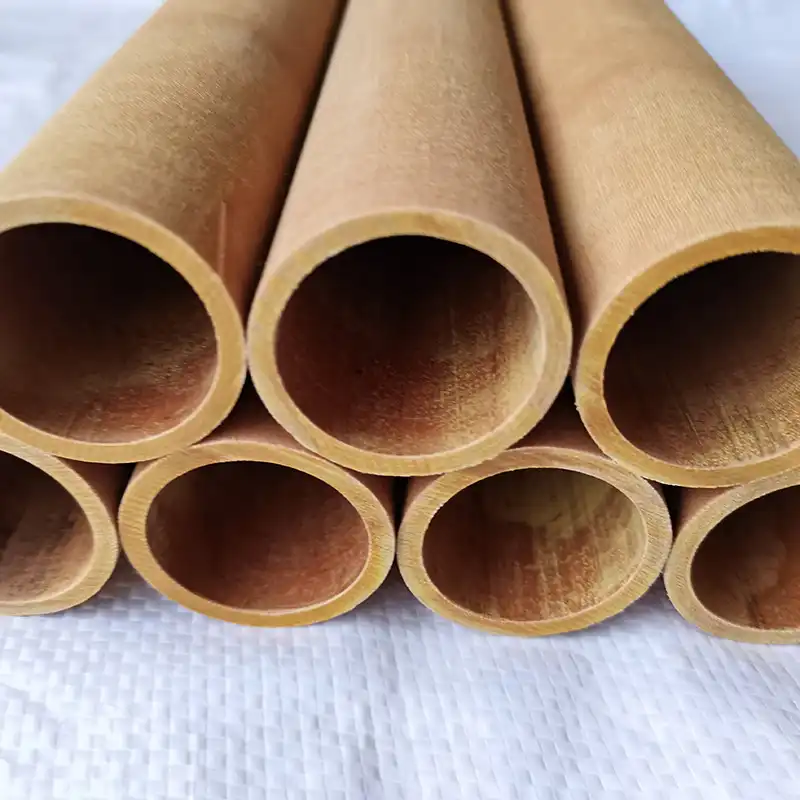
CNC turning phenolic cotton cloth laminated tubes produces precision insulation parts used across electrical, industrial, and mechanical applications. A phenolic cotton cloth laminated tube is a thermosetting composite made by winding cotton fabric layers impregnated with phenolic resin, then hot-rolling and curing the assembly into a dense, rigid tube. The result carries a natural red color, density ≥1.2 g/cm³, bending strength ≥250 MPa, and a Class E heat rating of 120°C — properties that make it a dependable choice for bearing cages, sealing gaskets, and structural insulation components.
Understanding Phenolic Cotton Cloth Laminated Tubes
Before they choose any insulation material, procurement teams need to have a good idea of what they're getting. This part breaks down how these layered tubes are put together, what their main parts are, and how they really work.
How the Material Is Constructed?
First, a phenolic resin is mixed with cotton fabric. Next, the fabric is wound on a frame layer by layer while heat and pressure are kept in check. When you hot-roll something, you get rid of any air pockets and join all the layers together to make a flat body. The tube should be red, have a smooth, bubble-free surface, and stitches that are no wider than 3 mm when it's done. The thinnest part of the wall is 0.5 mm, the largest part is up to 2,000 mm, and the smallest part is 5 mm. You can make each tube up to 2 m long.
Core Mechanical and Electrical Properties
We found that the material is 1.25–1.40 g/cm³ dense and has a radial tensile strength of 50 MPa or more when tested with Q/JBQP8. At 35 MPa, it can pull apart; at 80 MPa, it is compressed; and at 250 MPa, it can be bent. It's important that the water absorption stays at 1.5% when parts are in wet switchgear boxes or machinery that runs in oil baths. For 24 hours at 105°C, the tubes don't delaminate, bulge, or lose glue, which shows that they are thermally stable.
Where It Performs in the Field?
As bearing cages in fast-moving machinery, sealing rings in diesel and water pumps, and structural spacers in transformer coil assemblies, these tubes are used in a lot of different ways. The 9372 grade is made from thin white muslin cloth and has a stress-strain level of at least 220 MPa across the cloth layer. For making airplane parts, this meets the mechanical needs. Gear and bushing systems also make less noise from metal touching metal because they have a low friction coefficient and can dampen vibrations.
CNC Turning and Its Advantages for Phenolic Laminated Tubes
It is not possible to skimp on accuracy when a tube needs to fit perfectly inside a bearing housing or slide through a motor bracket. CNC turning meets that need right away.
Why CNC Turning Suits This Material?
Why are Phenolic Cotton Cloth Laminated Tube easier to make than glass-fiber epoxy laminates? It's because the tools don't get worn down as quickly. The cotton base of sharp carbide tools keeps them from breaking when they cut, so they can make fine-pitch threads, bored holes, and stepped profiles all at the same time. Unlike clay or mica options, which are more likely to break, this feature makes a lot less waste.
Tolerance and Surface Finish Control
It is possible for CNC turning to keep the outer diameter within +2.0/−1.0 mm on normal grades. You can ask for tighter tolerances. As part of the post-machining review, the sizes are measured, the surface is checked for smoothness, and the curve (≤0.5%) is checked. Before putting a part in a box to ship, these steps make sure that it fits the picture on the part that was turned.
Reducing Rework and Production Risk
As long as the raw material's mass stays the same (1.25–1.40 g/cm³), the CNC programmer can guess how each bar will be cut. The total cost of ownership goes down, output measurements stay stable, and fewer parts break. Stable input materials help buying teams because of this. When engineering managers in electrical and machinery OEM settings choose which companies to work with, they pay close attention to these three things.
Comparison and Selection of Laminated Tubes for Insulation
Not every insulation tube fits every job. Here is a straightforward comparison to help buyers match material to application.
Phenolic cotton cloth tubes compete primarily against fiberglass epoxy tubes (G10/FR4), epoxy glass laminates, and mica tubes. Here are the core selection factors buyers should weigh:
- Mechanical toughness vs. fiberglass epoxy: Cotton-reinforced phenolic achieves higher impact strength (≥1.5 KJ/m²) and lower brittleness, making it the preferred grade where vibration and shock loads are present.
- Cost vs. mica tubes: Mica laminated tubes carry a significant price premium for extreme-temperature applications above 180°C. Below 120°C, phenolic cotton cloth tubes deliver equivalent insulation at a lower material cost.
- Machinability vs. epoxy glass: The fine linen weave in the 9372 grade allows gear teeth, precision bores, and threaded ends to be machined without the surface splintering common in coarser glass-fiber grades.
These differences translate directly into procurement decisions. If your operating temperature stays within Class E limits and mechanical toughness or machinability is the dominant design criterion, phenolic cotton cloth laminated tube is typically the most cost-effective path. Buyers with high-volume OEM programs also benefit from the available size range — inner diameter φ5 mm through φ1,500 mm — which covers most standard bearing and motor shaft configurations without special tooling.
Manufacturing and Procurement Insights for Buyers
Understanding who makes the tube and how they control quality is just as important as reading the datasheet.
Production Capacity and Quality Systems
J&Q operates with an annual production capacity of 100 tons of Phenolic Cotton Cloth Laminated Tube, supports custom inner and outer diameters, and tests finished tubes against GB/T 5132 for density, bending strength, water absorption, and thermal stability. Each tube surface is inspected for bubbles, impurities, wrinkles, and end cracks before shipment. Products are packed in regular export packaging and shipped via ocean, land, or air freight — giving buyers in North America flexible lead-time options.
Storage and Handling Guidelines
After machining, phenolic laminated tubes absorb moisture readily. Applying insulating varnish to cut surfaces provides adequate moisture protection for most indoor applications. Unprocessed stock should remain in original packaging and stored in a dry, cool, ventilated space away from open flame. Shelf life from the factory delivery date is 12 months.
Verifying a Supplier Before Ordering
With more than 20 years of production experience and over 10 years of direct export trading, J&Q works with domestic and international trading partners across the United States, Europe, and Asia. Buyers should request material certifications, GB/T 5132 test reports, and dimension inspection records before placing bulk orders. J&Q also provides samples for dimensional and functional verification, which reduces qualification risk for new product introductions.
Future Trends in Phenolic Laminated Insulation Tubes
People who buy thermosetting composite tubes should keep an eye on the market because it is moving in three different ways.
Tighter Tolerances Driven by Automation
Factory automation means that motor and actuator speeds need to go up, which means that bearing cage tolerances need to get tighter. So, companies that make CNC-turned Phenolic Cotton Cloth Laminated Tube need to make sure that the density of the raw materials stays the same and that the resin is spread out evenly. These are the things that make makers of quality different from makers of goods.
Sustainability and Green Certification Pressure
More and more, business buyers in the US are asking sellers for things like material declarations, proof that the product doesn't contain banned substances, and lifetime data. There are always changes being made to phenolic resin systems to make them better for the earth. When it comes to buying, companies that keep track of their process chemistry will be at an edge.
Expanding Applications in EV and Power Infrastructure
More people want precision-turned insulation tubes for things like high-voltage switchgear spacers, battery pack thermal barriers, and transformer coil supports. For these new uses, cotton-reinforced phenolic tube is a good choice because it has a Class E temperature grade, has been tested for oil protection at 105°C/4h, and has a compressive strength of at least 220 MPa.
Conclusion
Phenolic Cotton Cloth Laminated Tubes are made of a single material that is tough, stable in Class E heat, doesn't absorb much water, and can be machined cleanly. Making precise bearing cages, sealing rings, and insulation spacers out of that raw stock is what CNC turning does. These parts meet the size and performance standards needed by OEMs in the electrical, machinery, power, automotive, and appliance industries. Businesses that need to buy insulation parts can find these tubes to be a good choice because they can be made to order in many sizes, have consistent technical properties, and can be sent anywhere in the world.
FAQ
What is the maximum continuous service temperature for these tubes?
A grade E heat shield is used, and 120°C is the normal temperature. When the temperature is kept at 105°C for 24 hours, tests show that there is no delamination, resin loss, or bulging. If you want to use it above 120°C, you might want to look into a higher-grade laminate like an epoxy glass system.
Can I order non-standard inner and outer diameters?
Yes. The inside diameters can be customized and range from φ5 mm to φ1,500 mm. The outside diameters can be customized and range from φ6 mm to φ2,000 mm. There is a 2-m limit on each piece of tube. Send a drawing or list of measurements to J&Q to get a quote.
Do CNC-turned parts need any post-processing?
On polished surfaces, the cotton-resin covering is exposed to air that is damp. Parts that will be used in outdoor switchgear, pumps, or enclosures with a lot of moisture should have insulating varnish put on all of their cut faces and holes.
What certifications cover the material testing?
GB/T 5132 is used to check the physical and technical parts. This is something that J&Q can do for you if you ask. If a buyer needs more legal records for the US or European market, they should be clear about what they need when they ask for it.
Partner with J&Q for Your Phenolic Cotton Cloth Laminated Tube Needs
You can trust J&Q. They've been making Phenolic Cotton Cloth Laminated Tubes for over 20 years and have a strong export team. We have different sizes, samples, and discounts for buying in bulk. We can also ship from door to door by sea, land, or air. You can email your specs or drawings to info@jhd-material.com, and our engineers will get back to you the next business day.
References
1. Plastics Technology — "Machining Thermoset Laminates: Best Practices for CNC Operations," 2021.
2. IEEE Electrical Insulation Magazine — "Thermal Classification and Performance of Class E Insulating Materials," 2019.
3. Journal of Applied Polymer Science — "Mechanical Properties of Phenolic Resin–Cotton Fabric Composites Under Compressive Loading," 2020.
4. Materials & Design — "Wear Behavior of Thermoset Composite Bearings in Oil-Lubricated Environments," 2018.
5. IEC 60893-3:2003 — "Specification for Industrial Rigid Laminated Sheets Based on Thermosetting Resins for Electrical Purposes," International Electrotechnical Commission, 2003.
6. NEMA Standards Publication LI 1 — "Industrial Laminated Thermosetting Products," National Electrical Manufacturers Association, 2020.

Get a complete product list and quotation
J&Q New Composite Materials Company