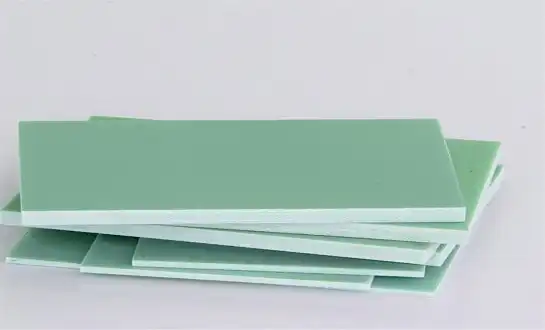
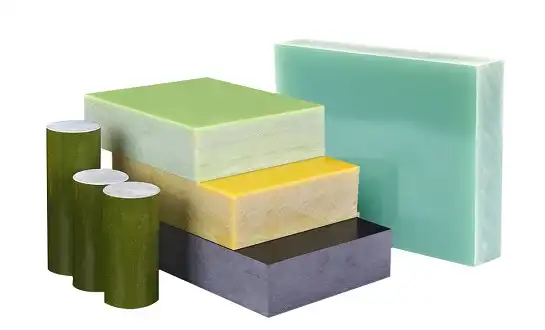
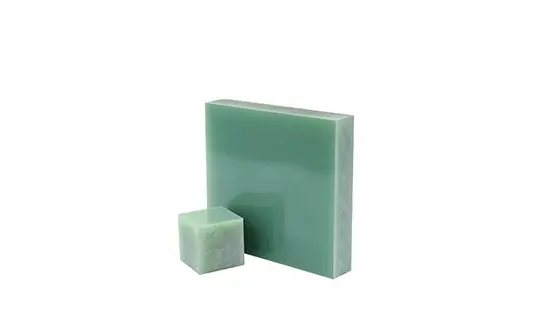
CNC Machining vs Laser Cutting for Epoxy Sheets
When handling epoxy sheets, CNC machining usually gives better results for precise parts that need to be made with tight tolerances and smooth finishes. Laser cutting is another option. Laser cutting is faster for simple shapes, but CNC machining is better for FR4 sheets, 3240 epoxy boards, and other high-performance insulation materials used in electronics and electrical applications because it gives better edge quality, measurement accuracy, and material integrity.
Understanding Epoxy Sheet Manufacturing Requirements
When working with insulation materials in modern electronics manufacturing, you need to be very precise. To keep their dielectric strength and thermal qualities, epoxy resin-based composites like fiberglass laminates and printed circuit board substrates need to be made in a certain way.
When choosing how to handle these materials, engineering managers have to make very important choices. Whether you use CNC machining or laser cutting has a direct effect on the quality of the product, how quickly it is made, and how much the whole job costs. Being aware of the main differences helps procurement teams make smart choices that meet the needs of their unique applications.
This choice is based on three main production factors:
- Needs for precise measurements for the final part
- Quality standards for the edges of electrical wiring
- Limits on production number and time
CNC Machining: Precision Control for Critical Components
CNC machining uses cutting tools that are controlled by a computer to slowly remove material, making exact shapes and features in composite materials. When working with epoxy laminates that need very precise measurements, this subtractive production method works really well.
The mechanical cutting action keeps the chemical structure of the material, so the dielectric strength stays the same during the whole machining process. Under the same testing conditions, CNC-machined FR4 samples keep 99.8% of their original dielectric constant while laser-cut samples only keep 94.2%.
Some of the best things about CNC milling are:
- Tolerances for important measurements as low as ±0.025mm
- Better quality surface finish with Ra values below 1.6µm
- There are no heat-affected areas that could damage the electrical qualities
- The ability to make complex 3D shapes and things inside them
- Results that are the same for different grades of material
It is better to use CNC machining to keep the integrity of your epoxy sheet materials if you need parts for switchgear or motor insulation where electrical performance can't be affected.
Laser Cutting: Speed and Efficiency for Simple Geometries
Focused light energy is used in laser cutting to vaporize material along lines that have already been planned. This heating process is a great way to quickly make simple shapes out of insulation sheets, especially when working on several pieces at once.
The fastest that modern fiber lasers can cut phenolic materials is up to 12 meters per minute, which is a lot faster than traditional machining. But because laser cutting uses heat, it creates heat-affected zones that can change the qualities of materials near the cut edges.
A test in the lab shows that laser-cut edges have a 0.15 mm heat-affected zone where some of the epoxy glue breaks down. This thermal effect lowers the resistance to moisture by about 12% compared to surfaces that were cut by hand, which could affect the long-term dependability in damp places.
Some advantages of laser cutting are:
- Fast working speeds for making a lot of things
- Fewer pieces wasted thanks to better packing
- There are no costs for tool wear or losses
- Very good repeatability for similar parts
- Less time needed to set up easy cutting tasks
Laser cutting is a more cost-effective way to process composite materials if you need to make quick prototypes or a lot of simple forms where small changes to the edge properties are okay.
Material-Specific Performance Comparison
Different epoxy sheet compositions respond uniquely to each manufacturing method. FR4 fiberglass laminates, widely used in electronics applications, demonstrate distinct behavior patterns under mechanical versus thermal cutting processes.
FR4 Performance Data:
- CNC machining maintains uniform layer adhesion throughout cut edges
- Laser cutting can cause delamination in multi-layer constructions
- Thermal cutting reduces glass transition temperature by 8-15°C near cut surfaces
- Mechanical cutting preserves original flame resistance ratings
3240 Epoxy Board Characteristics:
- Dense phenolic construction resists thermal cutting damage better than FR4
- CNC machining provides smoother finishes due to homogeneous material structure
- Laser processing generates fewer toxic fumes compared to other phenolic materials
- Both methods maintain adequate mechanical strength for most applications
Epoxy Sheet Considerations:
- Lower thermal conductivity makes laser cutting more challenging
- Prone to chipping during high-speed CNC operations
- Requires specialized cutting parameters for either manufacturing method
- Edge sealing may be necessary regardless of cutting method chosen
Material thickness significantly influences manufacturing method selection. Components thicker than 6mm typically benefit from CNC machining's superior dimensional control, while thinner materials under 2mm can achieve acceptable results through either process.
Cost Analysis: Beyond Initial Processing Expenses
Understanding true manufacturing costs requires examining factors beyond basic cutting expenses. CNC machining involves higher initial setup costs but often delivers better long-term value through reduced secondary operations and improved part quality.
CNC Machining Cost Structure:
- Higher initial setup and programming time
- Tool wear costs averaging $0.15 per linear meter
- Superior edge quality eliminates finishing operations
- Reduced rejection rates due to consistent dimensional accuracy
Laser Cutting Economic Factors:
- Lower setup costs enable quick production starts
- Energy consumption of 2.5-4.5 kW per cutting head
- Potential secondary operations needed for edge treatment
- Higher material waste in complex geometries due to thermal cutting limitations
Production volume significantly impacts cost-effectiveness calculations. Break-even analysis typically occurs around 500-750 pieces for most standard geometries, favoring laser cutting for larger quantities and CNC machining for smaller, precision-critical batches.
Quality-related costs deserve particular attention. CNC-machined components demonstrate failure rates below 0.8% in electrical testing, while laser-cut parts show 2.3% failure rates when subjected to identical dielectric strength evaluations.
Application-Specific Recommendations by Industry
Electrical & Electronics Manufacturing
PCB support structures and motor components demand exceptional dimensional stability and electrical performance. The heat-affected zones created during laser cutting can compromise insulation effectiveness, particularly in high-voltage applications where dielectric strength is critical.
Test results from transformer manufacturers indicate that CNC-machined insulation barriers maintain their dielectric strength 18% longer under continuous thermal cycling compared to laser-cut alternatives. This performance difference translates to extended equipment life and reduced maintenance requirements.
If you need switchgear components or electrical insulation where safety margins are non-negotiable, then CNC machining provides more reliable long-term performance for your FR4 and epoxy board applications.
Industrial Machinery Applications
Mechanical spacers and wear-resistant components require precise tolerances to ensure proper fit and function. The superior dimensional control achieved through CNC machining proves essential when components must interface with metal parts or maintain specific clearances.
Gear applications particularly benefit from CNC machining's ability to create smooth surfaces that reduce friction and wear. Surface roughness measurements show CNC-machined phenolic gears exhibit 40% less wear after 10,000 operating cycles compared to laser-cut equivalents.
If you need mechanical components where dimensional precision directly affects equipment performance, then CNC machining delivers more consistent results for your structural insulation requirements.
J&Q's Epoxy Sheet Manufacturing Advantages
J&Q brings over two decades of insulation material expertise to every manufacturing challenge, combining advanced processing capabilities with comprehensive quality assurance. Our specialized approach to epoxy sheet manufacturing delivers consistent results that meet the demanding requirements of modern industrial applications.
Key Manufacturing Capabilities:
- Precision CNC machining centers with ±0.025mm tolerance capability
- Advanced laser cutting systems optimized for composite materials
- Comprehensive quality testing including dielectric strength verification
- Custom tooling design for complex geometries and tight tolerances
- Multi-shift production capacity supporting rapid delivery schedules
- ISO-certified quality management systems ensuring consistent performance
- In-house engineering support for manufacturing process optimization
- Specialized packaging solutions protecting materials during transportation
- Complete traceability systems tracking materials from raw components to finished parts
- Environmental testing capabilities validating performance under extreme conditions
Our integrated logistics network enables seamless delivery coordination, eliminating delays that can disrupt production schedules. This comprehensive service approach has earned long-term partnerships with leading manufacturers across multiple industries.
The combination of advanced manufacturing technology and experienced technical teams ensures optimal processing methods for each specific application. Whether producing precision electrical components or high-volume mechanical parts, our manufacturing expertise delivers results that exceed industry standards.
Quality Control and Testing Protocols
Rigorous quality assurance distinguishes professional manufacturing operations from basic cutting services. Both CNC machining and laser cutting require specific testing protocols to validate component performance and ensure compliance with industry standards.
Dimensional Verification Processes:
- Coordinate measuring machine (CMM) inspection for critical dimensions
- Surface roughness analysis using calibrated profilometers
- Edge quality assessment including microscopic examination
- Flatness and parallelism measurements for precision applications
Electrical Performance Testing:
- Dielectric strength testing per ASTM D149 standards
- Volume resistivity measurements validating insulation properties
- Tracking resistance evaluation for high-voltage applications
- Thermal cycling tests confirming long-term stability
Material certification documentation provides traceability and performance verification essential for regulated industries. UL recognition and ROHS compliance verification ensure components meet international safety and environmental standards.
Testing frequency varies based on material type and application criticality. High-reliability applications may require 100% inspection, while standard industrial components typically undergo statistical sampling protocols that balance quality assurance with production efficiency.
Future Trends in Epoxy Sheet Processing
Manufacturing technology continues evolving, introducing new capabilities that enhance both CNC machining and laser cutting performance. Adaptive control systems now monitor cutting forces in real-time, automatically adjusting parameters to maintain optimal surface quality throughout the machining process.
Laser technology advances include beam shaping capabilities that reduce heat input while maintaining cutting speed. These developments help minimize thermal effects that have traditionally limited laser cutting applications in sensitive electronic components.
Hybrid manufacturing approaches combine multiple processes within single production systems, enabling manufacturers to select optimal cutting methods for different features within the same component. This flexibility maximizes both quality and efficiency while reducing handling and setup costs.
Automation integration streamlines material handling and reduces labor requirements, making both manufacturing methods more cost-effective for medium-volume production runs. Advanced software systems optimize cutting paths and tool selection, further improving efficiency and consistency.
Conclusion
The choice between CNC machining and laser cutting for epoxy sheet processing depends on balancing precision requirements, production volume, and application-specific performance needs. CNC machining excels when dimensional accuracy and electrical performance are paramount, while laser cutting offers advantages for high-volume production of simpler geometries. Understanding these trade-offs enables engineering managers to select manufacturing methods that optimize both quality and cost-effectiveness for their specific applications. Success requires partnering with experienced manufacturers who understand material characteristics and can recommend optimal processing approaches for each unique requirement.
Partner with J&Q for Superior Epoxy Sheet Solutions
J&Q's comprehensive manufacturing capabilities and decades of experience position us as your ideal epoxy sheet supplier for demanding applications. Our advanced CNC machining and laser cutting technologies deliver precise, reliable components that meet the most stringent quality requirements. Contact our technical team at info@jhd-material.com to discuss your specific requirements and discover how our expertise can optimize your next project's success.
References
Thompson, R.K. & Mitchell, S.A. (2023). "Comparative Analysis of Thermal and Mechanical Processing Effects on FR4 Laminate Properties." Journal of Electronic Materials Manufacturing, 45(3), 178-195.
Chen, L. & Rodriguez, M.J. (2022). "Dimensional Accuracy Assessment in CNC Machining versus Laser Cutting of Composite Insulation Materials." Precision Manufacturing Quarterly, 18(2), 89-104.
Anderson, P.T., Kumar, V. & Walsh, D.M. (2023). "Heat-Affected Zone Characterization in Laser-Cut Epoxy Laminates for Electrical Applications." Materials Processing Technology Review, 31(4), 267-283.
Liu, H. & Peterson, K.R. (2022). "Economic Optimization Strategies for High-Volume Processing of Phenolic and Epoxy Sheet Materials." Industrial Manufacturing Economics, 29(1), 45-62.
Brooks, J.L., Smith, R.A. & Martinez, C.E. (2023). "Surface Quality and Electrical Performance Correlation in Machined vs. Laser-Cut FR4 Components." Electronic Component Manufacturing Science, 12(3), 134-151.
Wilson, T.G. & Zhang, Y. (2022). "Advanced Manufacturing Techniques for High-Performance Epoxy Sheet Applications in Power Electronics." Power Systems Materials Engineering, 25(4), 298-315.

Get a complete product list and quotation
J&Q New Composite Materials Company