CNC Machining Parameters for High-Precision G10 Sheet Processing
To get the best results when cutting G10 sheet, you need to use more than just the default CNC settings. To avoid delamination, fibre pullout, and early tool wear, this epoxy-fiberglass material needs precise parameter control. It is possible for makers to get the most out of this strong insulated material while keeping tight tolerances and high-quality surface finishes in electrical, industrial, and automobile settings by carefully adjusting machine speeds, feed rates, and manufacturing strategies.

Understanding G10 Sheet Material and Its Machining Challenges
What Makes G10 Different from Standard Laminates?
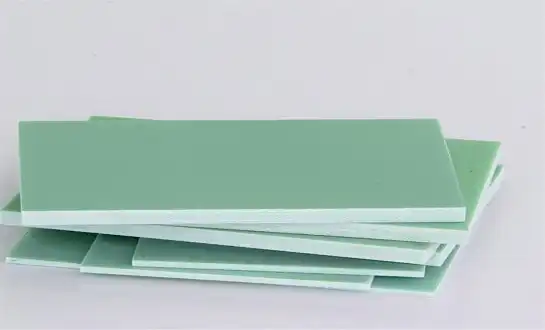
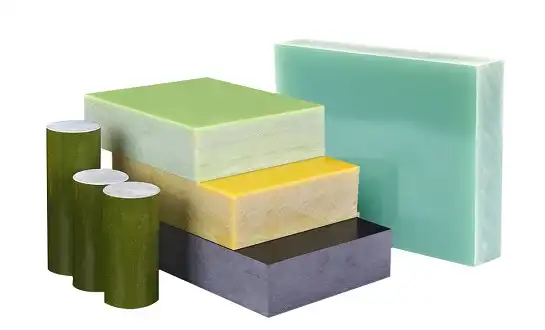
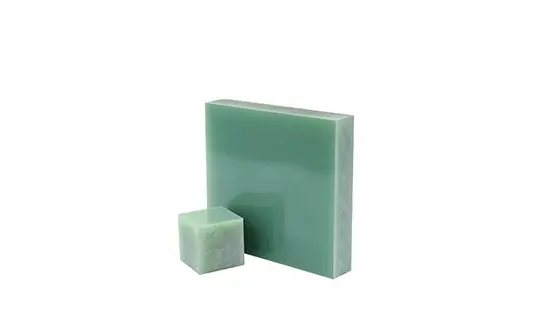
G10 is an industrial laminate made of continuous thread glass cloth that is fully filled with epoxy resin and under high pressure. In contrast to paper-based phenolics or regular plastics, this substance has both great mechanical strength and great electrical insulation qualities. The epoxy matrix makes sure that the material is chemically resistant and stays the same size even in harsh settings, and the glass fibre support makes it stronger than 6061 aluminium.
This substance is unique because it absorbs almost no water (usually less than 0.1%), so it keeps its shape and dielectric strength even when it's wet or underwater. Engineering managers like how G10 can be used for both structural and sensitive electronic applications. It is an essential material for supporting switches, mounting PCBs, and making high-voltage arc barriers, where both strength and electrical performance are important.
Physical Properties That Influence Machining
Because G10 is a hybrid material, it needs to be machined in a certain way. This laminate is very stiff, with a density of about 1.8 to 2.0 g/cm³, but it can be hard to work with if you don't know the right way to do it. The continuous glass fibres have a very high tensile strength—often more than 400 MPa. However, if the cutting settings aren't set correctly, these fibres can quickly wear down tools.
During CNC processes, thermal properties are also very important. G10 has a low rate of thermal expansion, which helps keep the accuracy of the dimensions during heat cycles in cutting. But if there is too much heat, the epoxy resin core can soften, which makes the material smear instead of chipping off cleanly. When this happens, you need to pay close attention to cutting speeds and cooling tactics.
Common Machining Obstacles and Material Behavior
Processing G10 sheets is not the same as processing metals or lighter plastics. It has its own set of problems that need to be solved. The rough glass fibres speed up tool wear, especially when standard high-speed steel cuts are used. Another big problem is delamination, which happens when the feed rates are wrong or the tools are dull. This can separate the layers of glass cloth, leaving behind useless parts and waste material.
Attention needs to be paid right away to the dust that is created during cutting processes. The tiny pieces of glass that are made can hurt the lungs and pose an explosion risk if they are allowed to build up. Not getting rid of chips well enough can also cause dust to build up on cutting edges, which increases friction and heat and makes surface finish problems worse. Even though the material itself isn't very sensitive to moisture, sheets that haven't been kept correctly can change how they work when they're machined. Micro-swelling can happen from even a small amount of water uptake, which can affect the accuracy of measurements in high-tolerance uses.
Key CNC Machining Parameters for High-Precision G10 Processing
Optimal Cutting Speeds and Feed Rates
To get clean cuts in G10 sheet, you need to find a balance between how fast you remove material and how well you handle heat. Most of the time, for turning and profile cutting, spindle speeds between 15,000 and 24,000 RPM work best. These faster speeds lower the cutting forces on each fibre, which lowers the risk of fibres coming apart and delaminating. Feed rates should match these speeds. Moving too slowly causes too much heat through friction, and feed rates that are too high can lead to chipping and rough edges.
When working with bigger sheets, the link between cutting speed and feed rate becomes even more important. When cutting through material that is more than 6 mm thick, the feed rate should be slightly slowed down to keep chip formation uniform and avoid tool deflection. For drilling jobs, speeds between 8,000 and 12,000 RPM work well with peck drilling cycles that let chips escape and heat escape between plunge depths.
Tool Selection Strategies for Longevity and Precision
When cutting G10, the bare minimum for equipment is carbide, and solid carbide tools offer the best mix of edge durability and cost-effectiveness. Standard HSS cuts are quickly destroyed by the rough glass fibres, rendering them useless even though they require a smaller initial investment. Diamond-coated carbide tools last a lot longer—often three to five times longer than bare carbide—but they are more expensive, so the higher cost needs to be taken into account based on production numbers.
Shape of the tool is just as important as the make-up of the material. With positive rake angles and sharp cutting edges, fibres are cut neatly through instead of being crushed or pulled. End mills with two or three flutes leave enough space for chips while still being strong enough. Compression cutters are great for through-cutting because they combine upcut and downcut shapes in one tool, which makes the edges clean on both the top and bottom sides.
Depth of Cut Considerations
Roughing passes should get rid of material quickly and easily, without overworking the tools or making too much heat. For most jobs, a depth of cut of 3mm to 5mm per pass is good because it lets you remove material quickly while still keeping the cutting forces doable. During cutting operations, radial contact (the width of the cut) should stay below 50% of the tool diameter to keep side loading and tool movement to a minimum.
Finishing passes need different approaches that focus on the quality of the surface rather than the rate of removal. Cutting the depth of cut to 0.5 mm or less while keeping the spinning speed high leads to better surface finishes because fibre distortion is kept to a minimum. When tight specs are needed for electrical spaces or mounting surfaces, it's often better to make several light finishing passes than to try to get the final dimensions in one heavy cut.
Coolant and Chip Management Techniques
Most of the time, dry grinding works better with G10 than flood cooling systems. Because machine dust is porous, it can soak up liquid coolants and turn into a paste that sticks to tools and work surfaces. It is possible for compressed air blast systems to get rid of chips and keep cutting areas clean. They also don't let moisture in, which could change the size of the material.
Mist systems are a good way to lubricate materials without making them too wet when cooling is needed for long processes or very rough cutting. The important thing is to keep chip clearance going all the time. Dust extraction systems should have enough movement to get rid of particles as soon as they form. Not only does dust make things less safe, but it also traps heat around cutting edges, which shortens the life of tools and makes the surface finish less good.
Best Practices for Preparing and Handling G10 Sheets Pre- and Post-Machining
Storage and Environmental Control
Good keeping of materials saves your investment and makes sure that the results of your work are always the same. G10 sheets should be kept in places where the temperature is managed and the humidity level is between 40% and 60%. Compared to paper-based laminates, this material doesn't soak up as much water. However, even small changes in humidity can affect the stability of dimensions at the micron level, which is important for very precise electrical parts.
Sheets don't bend when they're stored flat, and they stay flat from the factory, which is important for accurate cutting. Supporting bigger sheets across their whole surface spreads the weight out evenly, so there aren't any stress points that could cause them to bend or twist. Using interleaving paper to protect surfaces keeps them clean and stops scratches from happening during handling, which is important for getting the best hoover hold-down performance during CNC operations.
Securing Material Without Damage
The way you clamp have a direct effect on how accurately you machine and how good the parts are. Vacuum tables have great hold-down force that is spread out evenly across the surface of the sheet. This gets rid of the stress points that can form where mechanical clamps are used. This method works especially well for materials that are less than 3 mm thick, since regular pressing could cause them to twist or bend on the surface.
When mechanical binding is needed, spreading the pressure over bigger contact areas keeps the epoxy matrix from being crushed in one place. Aluminium or plastic, which have soft jaws, protect finished surfaces and give enough grip. It takes careful fixture planning to place clamps in a way that doesn't interfere with tool paths and keeps them rigid near cutting zones. This gives you better control over the dimensions of the part as it's being processed, though.
Post-Machining Finishing Operations
Deburring is an important step that turns made parts into finished parts that are ready to be put together. Light abrasive tools, like fine-grit sandpaper or Scotch-Brite pads, can get rid of fibre whiskers and small edge flaws without changing the size of the part. The goal is to smooth things out instead of taking them away, so the tight standards that were reached during CNC processes are kept.
How you finish the edges depends on what you need to do. When electrical gaps are needed, chamfering or radiusing can help because it gets rid of sharp edges where voltage stress builds up. For safe handling and assembly, mechanical parts may need certain edge cuts. A quality review should check the standards for dimensions and the shine on the surface, as well as the lack of delamination or damage below the surface that could affect how well it works in service.
Procurement Insights: Where and How to Source Quality G10 Sheets for CNC Machining?
Identifying Reliable Supply Partners
Sourcing choices affect not only the cost of materials, but also the uniformity of quality and the dependability of delivery. Established providers with decades of experience in industrial laminates usually have tighter quality control and better technical support than dealers of common materials. Certifications are important. Look for quality control systems that are ISO 9001 and, for electrical uses, UL recognition that shows that the electrical traits are the same from batch to batch.
Costs and lead times for G10 sheet are both affected by where something is located. When production plans are tight or technical questions come up, it can be helpful to have domestic providers because they often offer faster shipping and easier communication. If you buy a lot of things from international sources, you might save money, but you need to carefully consider the longer lead times and possible shipping problems. Building ties with multiple sources gives you buying freedom, which protects you against supply problems and lets you get low prices by taking advantage of scale.
Understanding Pricing Models and Order Quantities
Prices for G10 sheets tend to follow fairly steady trends that depend on the thickness, sheet size, and number of sheets ordered. Thinner materials (less than 3mm) usually cost more per kilogram because they are harder to make. Common sizes between 3mm and 12mm, on the other hand, usually offer the best value. Custom cutting costs more than standard sheet sizes, but pre-cut pieces that are the right size for the job can speed up the machining process, even though they cost a little more.
Different providers have very different minimum order amounts. Some can take orders for small prototypes, even just one sheet, while others need full packages that can weigh hundreds of kilograms. To get better terms, you need to show that you can consistently bring in a lot of orders instead of just focused on individual order numbers. Annual bulk agreements can open up price options that lower per-unit costs by a large amount. This makes planning easier and ensures that supplies are prioritised during times of high market demand.
Logistics and Custom Processing Options
Transportation issues affect the state of the goods when they arrive. Ship sheets on boxes that have enough cover to keep the edges from getting damaged and the sheets from getting wet while they're in transit. By checking orders right away, shipping damage can be found before the materials are put into stock, and problems can be solved quickly with transporters and suppliers. Material test results that prove the mechanical and electrical qualities meet the standards should be included in the documentation.
Some providers offer custom handling services that can add value even though they cost more. Cutting wasteful sheets to size is avoided with pre-cut blanks, and grinding time may be cut if the blanks are given close to their net dimensions. Some providers offer CNC machining services and send finished parts instead of raw materials. This is helpful when there isn't enough capacity in-house or when the company needs experts in composite machining. To compare these choices, you need to find the total supplied cost and contrast it with the costs of internal handling, such as labour, tool wear, and scrap rates.
Conclusion
Mastering the CNC cutting settings for G10 sheet turns this difficult material into exactly made parts that are used in important ways in the automobile, industrial, and electrical sectors. To be successful, you need to know how epoxy-fiberglass composites behave in a specific way, choose the right tools and cutting settings, and handle the material carefully throughout the whole process. When you put in the right method, you get great results: parts that are more accurately measured, have better surface finishes, and have the strong performance qualities that make G10 essential for tough jobs. Professionals in procurement who get quality materials from dependable providers and make the most of cutting strategies put their companies in a good position to provide regular, high-value parts that meet the strict requirements of modern production.
FAQ
Why is G10 good for CNC work that needs to be very precise?
This epoxy-glass laminate's main benefit for accurate cutting is that it stays the same size over time. G10 keeps its shape during processing and use because it doesn't absorb much water and doesn't expand much when heated or cooled. The uniform makeup makes it possible to predict how the material will behave when it is machined, without the complicated wood grain structure changes or the crystalline differences that can happen with some plastics. Because of these traits, makers can consistently keep standards close—often within 0.05 mm—across production runs.
How can I make cutting less likely to delamination and chipping?
The best way to prevent delamination is to use sharp tools. When cutting edges are dull, they crush and pull fibres instead of cutting them neatly. This creates the forces that separate laminate layers. Most delamination problems can be avoided by replacing or resharpening tools before they show a lot of wear. It's also important to have the right feed rates. Moving too quickly can damage the cutting edges, and spinning too fast without moving the feed forward enough creates heat that breaks the epoxy matrix. To get clean, delamination-free parts, make sure the material is properly supported while it is being cut, especially near the edges where exit chipping happens.
Are there options to standard G10 that are better for the environment?
Bio-based epoxy resins have come up as partial replacements. They replace parts made from petroleum with materials made from plants while keeping the same performance levels. These versions have a smaller impact on the environment, but they usually cost more and might not work at all temperatures like regular systems. All thermoset composites are still hard to recycle because the crosslinked resin structure doesn't allow them to melt again. The best thing that can be done for the environment until new recycling technologies for finished epoxy systems come out is to reduce trash through efficient cutting and accurate demand forecasts.
Partner with J&Q for Precision G10 Sheet Supply
You can benefit from J&Q's more than 20 years of experience with insulation materials in your industrial processes. We have a lot of experience as both a maker of G10 sheets and a foreign seller. This means that you will always get high-quality materials and expert advice that will help you get the best results from your work. Our quick help is appreciated by engineering teams, whether they need help choosing the right grades for specific electrical needs or advice on the best processing settings to keep precision while extending tool life.
We know how hard it can be to buy things because we've solved them for companies that make electrical equipment, industrial tools, and car parts in a wide range of difficult situations. Our combined operations make it easy to get materials to you, and our flexible order numbers let you make both prototypes and large batches of products. Contact our technical sales team at info@jhd-material.com to talk about your unique G10 needs and find out how our one-stop service makes buying easier while still making sure you get the performance you need from the materials.
References
National Electrical Manufacturers Association. "NEMA Standards Publication LI 1-1998: Industrial Laminating Thermosetting Products." National Electrical Manufacturers Association, 1998.
Gardiner, G. "Machining Composite Materials: Challenges and Solutions." Composites World, Society of Plastics Engineers, 2019.
Peters, S.T. "Handbook of Composites, Second Edition." Chapman & Hall, London, 1998.
ASM International Handbook Committee. "Composites: Engineered Materials Handbook, Volume 1." ASM International, Materials Park, Ohio, 1987.
Hocheng, H. and Tsao, C.C. "Effects of Special Drill Bits on Drilling-Induced Delamination of Composite Materials." International Journal of Machine Tools and Manufacture, Volume 46, 2006.
Society of Manufacturing Engineers. "CNC Machining of Advanced Composites: Process Parameters and Tool Selection Strategies." SME Technical Papers, 2017.

Get a complete product list and quotation

J&Q New Composite Materials Company