How to Optimize CNC Machining for FR4 Epoxy Sheets?
For CNC milling to work best with FR4 epoxy sheet, you need to pay close attention to the tools you choose, how you change the parameters, and how you move the material. This composite material is made up of knitted fibreglass cloth that has been mixed with flame-retardant epoxy glue. To keep it from delaminating, reduce tool wear, and keep precise limits, certain steps must be taken. Manufacturers can combine production efficiency with surface quality by knowing about machine speeds, feed rates, and cooling methods. When you optimise things correctly, you cut down on waste, make tools last longer, and make sure they are the right size, all of which are important for electrical insulation uses in electronics, power distribution, and industrial machinery parts.
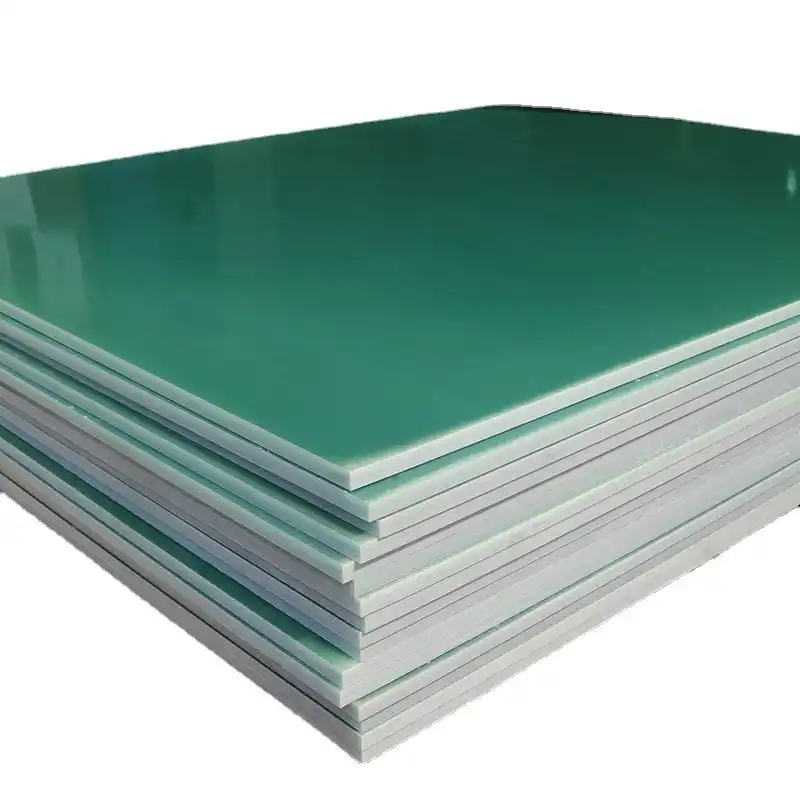
Understanding FR4 Epoxy Sheets for CNC Machining
Chemical Composition and Manufacturing Process
The NEMA LI-1 standards describe FR4 epoxy sheet as a high-pressure thermosetting compound. Under controlled heat and pressure, continuous thread glass cloth is used to strengthen the material, and epoxy glue is used as a sealant. When raw glass melts in kilns, it turns into fibreglass threads. These are then made into fabric and covered with organosilane binding agents. This process makes it easier for organic glue and artificial glass fibres to stick together. To make laminates, manufacturers mix epoxy glue with hardening agents, flame retardants, and fillers to make prepreg layers. These layers are then stacked and heated together to form laminates. Copper-clad laminates are made by layering of copper foil and are used a lot in the production of printed circuit boards.
Key Datasheet Properties and Thickness Ranges
Sheets that are 1020x2040mm and 1020x1200mm are common sizes, but the material's mechanical strength stays high at thicknesses from 0.2mm to 50mm. Even when there is a lot of wetness, the electrical insulation resistance is higher than 500 M©, and the rate of moisture absorption stays below 0.01% after 24 hours of soaking. There are different types of thermal grades, such as B-grade (130°C) and A-grade (200–250°C), which meet different temperature needs. It is flame-retardant and meets UL 94 V-0 standards. It also has self-extinguishing qualities that G10 predecessors did not have. Because of these features, epoxy glass laminates are necessary for uses that need to keep their shape under heat stress and keep their dielectric integrity in damp places.
Performance Advantages Over Comparable Materials
Epoxy-based composites are better at withstanding mechanical stress and water than phenolic laminates. The ratio of strength to weight is better than that of metal options, and the dielectric loss qualities are good at both room temperature and high temperatures. Chemical protection stays the same in a variety of settings, and the material doesn't change much in size when it goes through temperature cycles. Because of these benefits, fiberglass-reinforced epoxy sheets are the best base materials for high-voltage electrical insulation, circuit parts, and precise electrical tasks that can't risk reliability.
Identifying CNC Machining Challenges with FR4 Epoxy Sheets
Common Defects and Root Causes
Due to their complex structure, stacked FR4 epoxy sheet composite materials are hard to machine in specific ways. Delamination happens when the layers of glass cloth separate because the tool isn't sharp enough or the pass rate is too fast. Edge chipping happens when exit methods aren't right or when the item isn't supported properly during cutting operations. Because glass fibres are rough, they make tool wear go much faster than when working with metal, especially on carbide cutting edges. Knowing how these things fail helps engineering managers predict quality risks and take steps to stop them before production runs.
Thermal Damage During Machining Operations
The creation of heat during CNC cutting is especially dangerous for thermosetting materials. Too much pressure from worn-out tools or the wrong spinning speed can break down, discolour, and lose its mechanical qualities in certain areas of the resin. When temperatures go above the design limits, the epoxy matrix softens, which makes it impossible to cut cleanly. Damage from heat usually shows up as burnt edges, rough surface finishing, and areas with lower dielectric strength. To get rid of heat and keep the material's structure during cutting processes, it's important to use the right cooling methods.
Tool Wear Patterns and Machine Limitations
Cutting tools wear out faster because of the rough glass support, especially at the tips and edges. Standard high-speed steel tools aren't good enough for large-scale production, so they need to be replaced with carbide or diamond-coated tools. Vibrations during operations can make delamination and measurement errors worse, so machine stiffness affects the quality of the cut. The dust that is made from glass fibres is bad for your health and can damage machine parts if you don't have the right cleaning systems. When buying teams are aware of these limits, they can choose the right tools and supplies to keep production quality high.
Best Practices to Optimize CNC Machining for FR4 Epoxy Sheets
Parameter Selection for Different Sheet Thicknesses
For the best results, you need to adjust the cutting settings to fit the thickness of the material and the needs of the application. How spindle speed, feed rate, and cutting depth work together affects both the quality of the surface and how quickly it can be made.
For thin pieces less than 3 mm thick, spindle speeds between 15,000 and 24,000 RPM work well. For thicker laminates, speeds slightly lower than that, between 12,000 and 18,000 RPM, help keep heat from building up. Feed rates should be kept low, usually between 500 and 1500 mm/min, based on the difficulty of the cut and the width of the tool. Cutting levels between 0.5 and 1.5 mm per pass keep the material from being loaded too much and lower the risk of delamination. When cutting fiberglass-epoxy materials, multiple light passes always work better than strong single-depth cuts.
Using climb milling instead of regular milling cuts down on edge breakout and makes exits that are smoother. It is more cost-effective to keep tools sharp during activities than to try to make them last longer than the manufacturer recommends. Instead of plunge cuts, programmers should use rising and spiral entry movements to keep shock loads on both the tools and the layers of material to a minimum.
Tooling Selection and Geometry Considerations
Carbide equipment is the basic requirement for mass production of epoxy glass laminates, and it lasts a lot longer than high-speed steel options. Diamond-coated end mills work better for high-volume tasks and last five to ten times longer between services than bare carbide end mills. The shape of the tool is very important for the quality of the cut. Compression spiral bits work especially well because they apply downward and upward forces at the same time, which keeps the top layers stable while cutting.
Sharp cutting edges on FR4 epoxy sheet tools with smooth gaps cut down on friction and heat production while making it easier for chips to move away. Manufacturers of tools offer special shapes with optimised rake angles and helix configurations that are made just for composite materials. Two-flute designs that combine chip clearance with edge strength work well for routing uses. By replacing and inspecting things on a regular basis, you can keep the quality from going down due to worn cutting edges that cause delamination and heat damage.
Cooling Methods and Dust Management Systems
When cutting, good temperature control keeps the qualities of the material and extends the life of the tools. Air blast cooling gets rid of enough heat for many uses while keeping things clean and easy to set up. By directing streams of compressed air at the cutting edge, heat is removed and glass dust is cleared from the work area. Mist coolant systems work better at cooling than flood coolant, which can cover the edges of layered materials that are porous.
When working with fibreglass materials, dust cleaning is no longer a choice but a necessity. Particles of glass fibre can get into your lungs and contaminate fine machine parts. Industrial hoover systems with HEPA filters should be able to connect directly to CNC casings and keep the negative pressure going to catch flying particles where they start. Regular repair on the filters keeps the extraction working well during production shifts.
Quality Control and Surface Finish Inspections
Protocols for verifying dimensions must take into account the mechanical qualities of the material and the margins that are needed for the application. Callipers and micrometres are used to check basic dimensions and thicknesses, while coordinate measuring machines are used to confirm complicated shapes with great accuracy. Using profilometers to measure surface roughness helps figure out what the process can do and what changes need to be made to the parameters to meet the requirements of the standard.
A close-up look through a magnifying glass shows the quality of the edges, the presence of delamination, and surface flaws that could affect how well the electrical insulation works. Operators can find problems before they affect many parts by looking for glue smearing, fibre pullout, and layer separation. Setting up statistical process control charts for important dimensions lets you find tool wear or parameter change early on, so you can take appropriate action before it's too late. This is better than managing scrap after the fact.
Procurement Insights: How to Source High-Quality FR4 Epoxy Sheets?
Supplier Qualifications and Certifications
To get reliable FR4 epoxy sheet material, you must first make sure that the supplier follows the rules set by the business. UL approval makes sure that flame-retardant features meet safety standards, and RoHS compliance makes sure that electrical uses don't contain any harmful chemicals. Having an ISO 9001 quality management certification means that the process is controlled in a way that makes sure the features of the material are the same from batch to batch. Manufacturers should give test records on materials that show how well they work electrically, mechanically, and thermally.
Reputation in the industry is often linked to how reliable a product is and how quickly customer service responds. Suppliers that have been around for a while usually keep their production methods and raw material supply lines stable. This lowers the risk of quality changes or shipping problems that come up out of the blue. Case studies and comments from customers show how providers handle technical help, requests for customisation, and fixing problems when they happen.
Customization Capabilities and Lead Times
In many situations, non-standard sizes or pre-machined parts are needed instead of full sheets. Suppliers who have their own CNC machines can cut parts to specific sizes, which saves customers time and money on wasted materials and time spent cutting. Some makers offer services like precise drilling, cutting, and edge finishing that take advantage of their knowledge of the materials to get the best results. These extra services are especially helpful for testing and small-scale production runs where the cost of setup would be too high otherwise.
When it comes to lead times, normal stock things and special orders are very different. Thicknesses and sizes that are used a lot can usually be shipped within days from storage stock, but custom orders may take a few weeks to schedule production and make sure the quality is good. Minimum order amounts affect both prices and shipping times. For regular needs, setting up blanket purchase deals often gets you better terms than buying things one at a time.
Partnering with Experienced Manufacturers
J&Q brings more than two decades of production expertise and a full decade of international trade experience to the insulation materials market. Because we've been making and selling industrial laminates for a long time, we know both the technical needs of difficult uses and the problems that engineering managers face when they need to buy things. Working with trade partners in both the United States and other countries has improved our ability to provide fast service in a range of markets and legal settings.
We can provide true one-stop service from choosing materials to delivering them because we have our own transportation business. This combination makes it easier to communicate, cuts down on delays during handoffs, and gives you a single point of responsibility when time is critical. Before deciding to make a lot of something, engineering teams can talk to our technical experts about the best way to choose materials and do the work. Because we have worked on many CNC machining projects before, we know what problems people usually run into and can suggest tried-and-true methods that cut down on development time and production risk.
Conclusion
For CNC cutting of FR4 epoxy sheet to go well, you need to know how the material works, be ready for typical problems, and use tried-and-true optimisation techniques. Choosing the right parameters, tools, and temperature management all have a direct effect on the quality and cost-effectiveness of production. Comparing different options for materials helps buying teams make smart choices that meet the needs of the application and stay within the budget. Working with experienced providers who can help you with technical issues, make changes to the product, and deliver it on time will improve your production and lower business risks.
FAQ
What kind of width works best for CNC machining?
Choosing the right thickness depends on the needs of your product, not just on how it will be machined. Sheets that are between 1.2 mm and 3.0 mm thick can be machined easily and provide enough support for most electrical insulation parts. For mechanical uses that need more strength, laminates that are up to 10 mm thick are used, but they need stricter cutting settings and longer cycle times.
Can the material handle being machined at high temperatures?
Standard B-grade materials can withstand temperatures of up to 130°C for long periods of time. A-grade formulas can handle temperatures of up to 200–250°C. When you machine something, it generates localised heat that needs to be cooled down properly to avoid thermal damage. No matter what grade is chosen, working the material should be done with sharp tools, at the right feed rates, and with enough cooling flow.
How can I keep delamination from happening while I'm machining?
To stop delamination, you need to use sharp cutting tools, make sure the item is properly supported, and set the right cutting settings. Layer separation is kept to a minimum by using compression spiral bits that put equal amounts of force on both sides. Low feed rates, small depths of cut, and climb milling methods all help to protect the layers of material from mechanical stress. A main cause of delamination can be stopped by replacing tools on a regular basis before they wear out too much.
Partner with J&Q for Superior FR4 Epoxy Sheet Solutions
Purchasing and engineering managers looking for dependable FR4 epoxy sheet sources will find that J&Q's wide range of services are great for tough CNC cutting tasks. Our excellent manufacturing skills, combined with more than twenty years of production experience, guarantee stable material quality. This directly leads to lower scrap rates and predictable cutting results. We can guess what you need and suggest solutions that are both high-performing and low-cost because we've been trading internationally for ten years and have gained a lot of technical knowledge.
Contact our team at info@jhd-material.com to talk about your unique application needs and find out how our ability to customise, low prices, and combined shipping support can help your supply chain. Our one-stop service model makes it easier to get what you need while still meeting the quality standards your production needs. This is true whether you need standard measures for quick delivery or precisely cut pieces for specialised builds.
References
National Electrical Manufacturers Association. (2019). NEMA LI 1-2019: Industrial Laminating Thermosetting Products. Rosslyn: NEMA Publications.
Harper, C.A. (2015). Handbook of Materials for Product Design, Third Edition. New York: McGraw-Hill Professional.
Mazumdar, S.K. (2021). Composites Manufacturing: Materials, Product, and Process Engineering. Boca Raton: CRC Press.
Society of Manufacturing Engineers. (2018). Machining of Composite Materials: Fundamentals and Applications. Dearborn: SME Publications.
Underwriters Laboratories. (2020). UL 94: Standard for Safety of Flammability of Plastic Materials for Parts in Devices and Appliances. Northbrook: UL Standards.
Chawla, K.K. (2019). Composite Materials: Science and Engineering, Fourth Edition. New York: Springer-Verlag.

Get a complete product list and quotation

J&Q New Composite Materials Company



