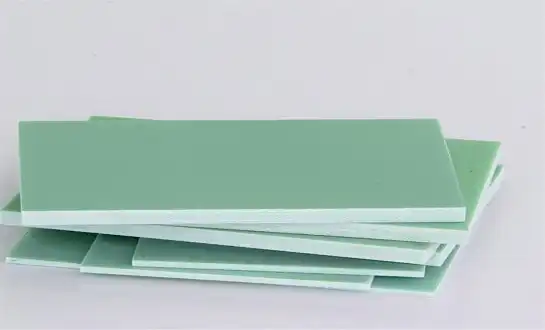
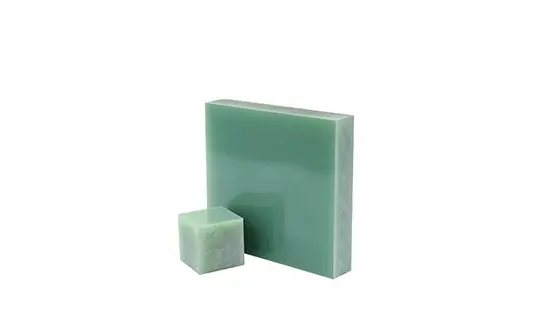
CNC Machining 3D Patterns & Molds from Epoxy Board
When making needs to be precise and last a long time, epoxy board is the best choice. When heated and cured under high pressure with thermosetting resins, this glass fiber-reinforced composite material has amazing electrical insulating and shape-stability qualities that regular materials just can't match. Epoxy board provides the mechanical strength required for high-load applications without warping or delaminating, allowing engineering managers and procurement specialists to design complex 3D patterns and precise molds while maintaining tight tolerances under thermal cycling and chemical degradation during repeated production runs.
Understanding Epoxy Board for CNC Machining
Composition and Core Properties
Epoxy board is a high-tech mix of woven glass cloth and thermosetting epoxy resin systems. During production, carefully mixed resins are poured into many layers of alkali-free glass fiber fabric. The fabric is then cured under controlled heat and pressure conditions that hit around 150–160°C at 10–14 MPa. This process makes a hybrid structure that is all the same and has a density between 1.70 and 1.90 g/cm³. It is very stiff and has consistent dimensions.
The material has a great dielectric strength of more than 10.0 MV/m when tested in oil at high temperatures. This makes it perfect for uses that need to separate electrical signals. It has a tensile strength of more than 340 MPa opposite to the laminations, which means it can handle heavy loads without breaking. Epoxy boards don't change shape when heated up to 155°C like polymer-based options do. They stay structurally sound even at temperatures ranging from -40°C to 155°C.
Material Variants for Precision Machining
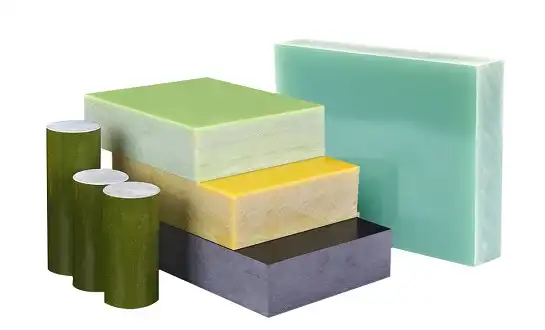
Different formulas meet the needs of different industries. Glass epoxy boards that meet international standards like IEC 60893 EPGC 201 have different thermal endurance rates. For example, Class B materials can work continuously at 130°C, while Class F versions can do so up to 155°C. When making tools for high-temperature manufacturing processes or machining models that will be heated over and over again, these thermal properties are very important.
Resistance to moisture is another important factor. Good epoxy boards keep their insulation resistance levels above 10³ MΩ even after being submerged in water for a long time. This stops electricity from tracking and makes sure they work well in damp production settings. In places where moisture could cause catastrophic breakdowns, like in power transfer equipment and transformers, this trait becomes very useful.
Thickness Standards and Selection Criteria
Manufacturers usually keep these epoxy boards in stock in sizes from 0.5mm to 100mm, and common sheets are 1020mm x 1220mm or 1020mm x 2040mm. Thinner boards (0.5–3 mm) are good for uses that need to remove little material and have tight nesting tolerances, like PCB cutting backup plates or testing jigs. Thicknesses in the middle (6–20 mm) are good for thermal insulation parts, motor frames, and medium-duty molds. Heavy pieces (25–100 mm) are needed for mechanical spacers that hold a lot of weight, large-format mold bases, and parts that are compressed a lot.
To choose the right width, you have to weigh the technical needs against the efficiency of the machine. Thicker boards need more active cutting settings and longer cycle times, but they are more rigid and the tools last longer between resharpenings. When deciding on material measurements, procurement teams should think about the shape of the finished part, the amount of production that is expected, and the ability of the CNC equipment that is available.
How to Use Epoxy Board in CNC Machining for 3D Patterns & Molds
Material Selection and Pre-Machining Assessment
For CNC processes to go well, the epoxy board grade must be matched to the needs of the product. Projects that need flame retardancy should use materials that meet UL94 V-0 standards. On the other hand, cost-conscious projects that don't need fire ratings can use normal formulas with HB classifications. Whether normal or premium-grade materials with tighter thickness standards are needed depends on how stable the dimensions need to be.
Before putting things on CNC machines, use precision straightedges or coordinate measuring tools to make sure the boards are flat. When stock is warped, it causes uneven cutting levels and lowers the accuracy of the final part. Keep materials in climate-controlled spaces with 40–60% relative humidity to keep them from absorbing water, which could change how they machine and their end measurements.
Tooling and Cutting Parameter Optimization
Because they are reinforced with glass fiber, epoxy boards are rough, and they need carbide or diamond-coated tools for cost-effective production runs. Standard high-speed steel cuts lose their sharpness quickly, leaving behind rough surfaces and changes in size as the cutting edges wear down. For general profiling work, we suggest tungsten carbide end mills with two or three teeth. On the other hand, diamond-tipped router bits give you better edge quality on complex curves.
Calibration of cutting factors needs to be done carefully. Spindle speeds of 12,000 to 18,000 RPM and modest feed rates of 1500 to 2500 mm/min make clean cuts without building up too much heat that could separate layers. Cutting depths should stay low—about 2 to 4 mm per pass for roughing and 0.5 to 1 mm per pass for finishing. Enough chip drainage keeps material from building up on cutting edges and keeps the surface quality uniform over long production runs.
Drilling activities present specific challenges. When standard twist drills break through the bottom, they often cause blowouts on the exit side. Specialized brad-point or diamond core drills can help with this problem, and putting spare material behind the part stops delamination totally. Peck drilling rounds with frequent retracting get rid of built-up swarf and keep the bit from getting stuck in deep holes.
Post-Machining Finishing and Quality Control
Depending on the cutting conditions, areas that have been machined may have small amounts of fuzz or fibers sticking out. These flaws can be fixed with light sanding using abrasives with 220-320 grit. However, it is important to avoid removing too much material to keep the measurements accurate. Ultrasonic cleaning or compressed air blasting can get rid of dust that is still stuck in threaded holes and delicate parts.
Using calibrated micrometers, calipers, or CMM tools to check the sizes of finished parts makes sure they match the drawing specs. Pay close attention to where the holes are, how flat the big areas are, and how straight the mating faces are. Thermal cycling tests can confirm that molds designed to be used at high temperatures are dimension-stable. This makes sure that the final tooling will keep its tolerances throughout its useful life.
Comparing Epoxy Board with Alternative Materials for 3D Patterns & Molds
Performance Characteristics Across Material Classes
When engineering teams look at material options, they have a lot of choices, and each one has its own pros and cons. When you know about these trade-offs, you can choose materials that are right for your purpose and your budget. Medium-density fiberboard and plywood are both inexpensive options for test molds and low-volume production tools, but they easily absorb water, which makes them lose their shape.
Acrylic sheets are often used for show models because they are clear, but they do not hold up well to heat. Fiberglass-reinforced polyester boards are less expensive than superior epoxy board options and are resistant to chemicals, but their surface finish quality isn't as good as it can be with epoxy systems.
The efficiency of glass epoxy boards is just right in a lot of different ways. Their thermal durability scores allow them to be exposed to temperatures for long periods of time, where other materials would break structurally. Chemical protection includes mineral oils, weak acids, alkalis, and common industrial solvents. The mechanical strength stays the same at all temperatures, and the steadiness of the dimensions is better than any non-ceramic option.
Lifecycle Cost Analysis and Procurement Strategy
The initial cost of materials is only one part of the total economics of ownership. When compared to common materials like boards or standard plastics, epoxy board laminate sheets usually cost more. But because they last longer, need less upkeep, and keep their shape better, they often have lower per-part costs over the course of a production period.
Molds made from materials that are sensitive to moisture need to be reconditioned or replaced every so often because humidity causes them to bend. When used at high temperatures, tools made from materials that are thermally unstable break down quickly. Glass epoxy molds stay accurate over thousands of rounds, which spreads out the cost of their original purchase over a lot more products.
Strategies for buying in bulk have a big effect on the economics of a project. By building relationships with well-known suppliers, you can get access to volume price tiers that cut the cost per sheet by 15–25% for big orders. Using the same sizes and thicknesses of materials for all projects makes managing inventory easier and lets buying teams get better deals based on how much material is used each year.
Procurement Guide: Buying Epoxy Boards for CNC Machining
Quality Verification and Certification Requirements
For responsible buying to happen, suppliers must be carefully screened. Ask for certificates that show you meet international standards like IEC 60893, NEMA LI-1, or state standards that are similar. Standardized testing methods are used in these papers to make sure that the epoxy boards meet written standards for electrical, mechanical, and thermal performance.
Thickness tolerances have a direct effect on how well a part is machined and how well it turns out. Premium materials keep limits of ±0.2mm on sheets up to 10mm thick, and they get tighter to ±0.3mm on thicker pieces. Standard grades may vary by up to 0.5 mm, which means that more stock needs to be removed during cutting. Check to see if these changes are okay for your application or if it needs more precise control.
Chemical makeup analysis papers give you peace of mind about the specs for resin systems and glass fabrics. When it comes to RoHS compliance, materials meant for electrical uses should have halogen-free formulas. Variations from batch to batch can affect how the parts are machined and how well they work when they're finished.
Supplier Evaluation and Relationship Development
Established companies that have been making products for decades usually offer more consistent materials than younger companies. Companies with quality management systems that are ISO 9001-certified show that they are dedicated to controlling processes. It's very important that sellers have strong technical support—suppliers who can help with machining, material selection, and application engineering add a lot of value beyond just selling materials.
Before making big purchases, ask for samples of the items you want to use. Your machining team can check the cutting traits, surface finish quality, and dimensional stability through physical measurement in your unique processing conditions. You can find changes in performance that might not be clear from data sheets alone if you compare samples from different sources.
To handle lead times, you need to know how suppliers plan their production. Some makers keep a lot of stock on hand so they can ship the same week, while others make materials to order, which takes 4 to 6 weeks. Integrated logistics skills make delivery easier. For example, companies that offer cut-to-size services and combined shipping cut down on the amount of dealing that needs to be done and speed up project timelines.
Customization Services and Value-Added Processing
A lot of providers offer pre-machining services that help you get the most out of your materials and make production easier. Custom cutting to rough blank measurements cuts down on waste and gets rid of the need for basic sawing. CNC waterjet or router cutting can produce nearly net-shape pieces that only need finishing, which cuts cycle times and tool wear by a large amount.
Edge sealing techniques keep cut edges from getting wet while they are being stored or moved. When things are stored for a long time, vacuum packing keeps their state. Some sellers offer kitting services, which group materials with matching parts like fasteners, adhesives, or assembly tools into project-specific packages that make keeping track of goods easier and lower the costs of buying things.
Case Studies & Applications of CNC Machining Epoxy Boards in Industry
Electrical and Electronics Manufacturing Solutions
A medium-sized switchgear maker had trouble with their units breaking down often because an arc tracked across the molded plastic insulators. An engineering study showed that the plastic's surface resistance decreased when it was exposed to humidity. When these units were switched to epoxy board arc shields, the problems went away completely. The material didn't absorb much water, so the insulation resistance stayed above the required levels even in coastal sites with high humidity.
Precision-ground epoxy boards are used as drilling backup boards by PCB manufacturing shops to support thin circuit panels. The material's physical stability stops mistakes in drilling position, and the fact that it lubricates itself makes drill bits last longer. After moving from phenolic paper laminates to glass epoxy boards, facilities report 30–40% lower drill breakage rates.
Power Distribution and Uses for Transformers
A company that makes transformers needed coil insulation barriers that could work continuously at 130°C while being submerged in mineral oil. At working temperatures, traditional materials either broke down chemically or became softer physically. CNC-machined epoxy board barriers met all performance standards. Tests confirmed that they stayed the same size and had the same dielectric strength after 5,000 rounds of rapid aging. Because the material was compatible with transformer oils, pollution problems were avoided.
Automotive and Transportation Component Production
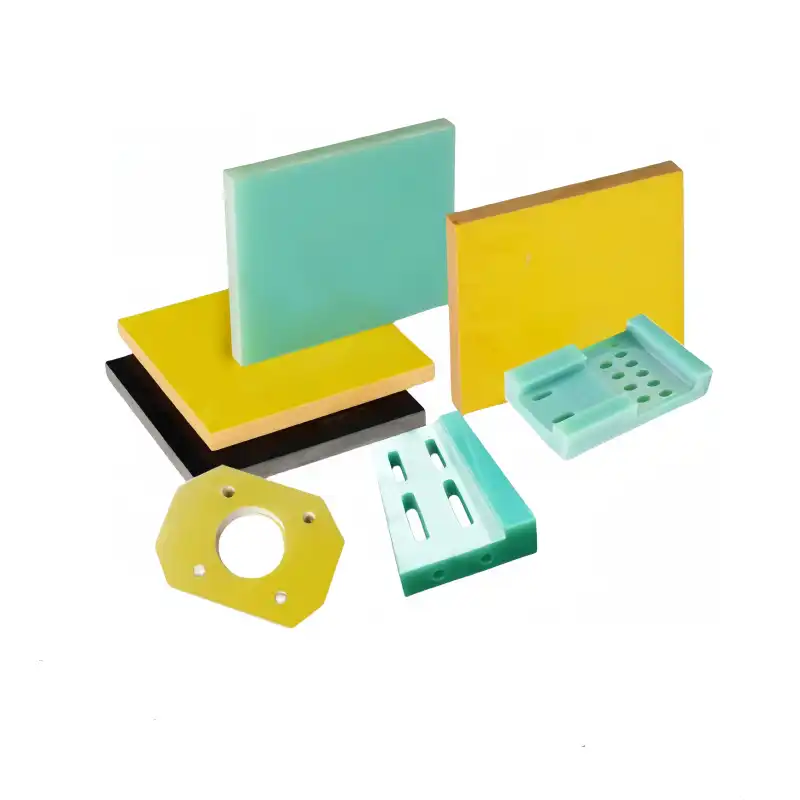
A company that makes battery packs for electric vehicles needed shielding frames to keep high-voltage cell modules from touching each other. The design brief called for materials that could work in temperatures ranging from -40°C to 85°C and still be electrically isolated and structurally strong. Glass epoxy boards met all the requirements, and CNC machining made it possible to make complicated shapes with mounting bosses and wire routing channels. The assemblies that were made were more consistent than injection-molded options, which cut down on assembly work.
Conclusion
Glass fiber-reinforced epoxy boards work better than any other material for making precise molds and patterns for a wide range of tough industrial uses. Because they are stable at high temperatures, can insulate against electricity, are strong, and stay the same size, these materials meet important needs that regular ones can't. To make execution work, you need to know how to choose the right materials, how to make the CNC settings work best with those materials, and how to work with skilled suppliers who can provide consistent quality and technical support. The initial investment in high-quality materials pays off in a big way through longer tool life, less upkeep, and better quality final parts.
Frequently Asked Questions
What thickness should I specify for my mold application?
How thick your mold needs to be is based on how much weight it needs to hold and how complicated the features are. 10–20 mm epoxy board stock is usually used for general-purpose tasks because it is stiff enough for most pattern work without costing too much. For heavy-duty molds, 25–50 mm pieces are needed. Thin precision parts work well at widths of 3 to 6 mm. Talk to your CNC machining team about the tool's reach and stiffness needs, as narrow slots may require thicker base material to keep tolerances.
Can standard CNC milling machines process these materials effectively?
If the right tools and settings are used, most industrial-grade CNC mills can work with epoxy boards without any changes. Most pattern and cast work can be done on three-axis vertical machining machines. Machines with wheels that spin at 12,000 RPM or higher give the best surface polish. Make sure you have enough ways to collect dust, because working with glass fibers creates small particles that need to be properly ventilated. Hobby-level machines might have trouble removing heavy stock due to insufficient spindle power.
How do the factors of the surroundings affect how well a material works?
When used in normal workplace settings, good epoxy boards are very stable in the environment. Even after being exposed to high humidity for a long time, the material doesn't absorb more than 0.5% of its weight in water. This keeps it from changing sizes like hygroscopic materials do. When the temperature changes from -40°C to the highest working temperature, there is almost no change in the dimensions. Most industrial fluids are chemically resistant, but strong reactive acids are not. Materials used outside should have UV protectors added.
Partner with J&Q for Your Epoxy Board Requirements
J&Q is the best place to get epoxy board because we've been making high-quality products for 20 years and have been trading internationally for 10 years. We know that making accurate molds requires materials that are exactly what is needed and don't change from one production lot to the next. Our expert team is here to help you with every step of the material selection process, offering advice on choosing the right grade, optimizing the thickness, and the best ways to machine the material to meet your unique needs.
We keep a large stock of popular grades and sizes, so we can quickly meet the needs of urgent projects. Our custom cutting services also provide CNC-ready blanks that are exactly what your design calls for. Our combined logistics services guarantee on-time deliveries, backed by quality certifications and material test records that show they meet foreign standards. Bulk purchasing programs let customers who buy a lot of goods get low prices without giving up the quality or technical help that makes premium sellers stand out.
Email our applications engineering team at info@jhd-material.com to talk about the needs of your project, get examples of materials, or get full quotes. We'd love the chance to show you how our materials, professional know-how, and customer-focused service can help you improve the quality of your finished products and make your production methods more efficient.
References
National Electrical Manufacturers Association. "Industrial Laminating Thermosetting Products - NEMA Standards Publication LI 1-1998." National Electrical Manufacturers Association, 1998.
International Electrotechnical Commission. "Insulating Materials - Industrial Rigid Laminated Sheets Based on Thermosetting Resins for Electrical Purposes - IEC 60893 Series." International Electrotechnical Commission Technical Committee 15.
Handbook of Reinforced Plastics: Designing, Materials, and Processing. Society of Plastics Engineers, 2004.
Lubin, George. Handbook of Composites. Van Nostrand Reinhold Company, 1982.
Chawla, Krishan K. Composite Materials: Science and Engineering. Springer-Verlag, 2012.
Peters, S.T. Handbook of Composites: Manufacturing Methods and Materials Selection for High-Performance Applications. Chapman & Hall, 1998.

Get a complete product list and quotation

J&Q New Composite Materials Company