The Ultimate Guide to G10 & FR4 CNC Machining
When your engineering team has to make important choices about electrical insulation and building parts, they need to know a lot about G10 sheet materials and their FR4 peers. Electrical makers, machinery builders, and workers in the power sector have trusted these high-performance epoxy laminates for decades because they have great dielectric strength, mechanical durability, and thermal stability. We've seen how choosing the right materials can make a big difference in how reliable a product is and how quickly it can be machined after working with hundreds of sourcing teams in the automotive, electronics, and industrial sectors.
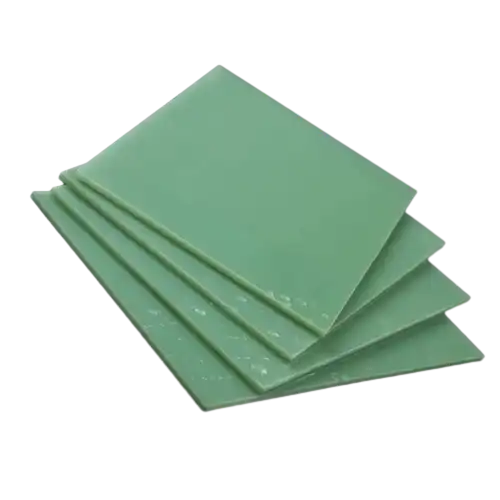
Understanding G10 & FR4 Materials in CNC Machining
What Makes G10 and FR4 Different
Multiple layers of woven fiberglass cloth that have been soaked with epoxy resin and then pressed together under extreme heat and pressure make up G10 sheet. With this thermosetting process, a hard laminate is made that has great mechanical qualities and electrical protection. FR4 is made using almost the same ways, but it has brominated flame retardants that meet UL94 V-0 standards for flammability. Many sellers use these terms interchangeably, but the flame-retardant one is important if your device needs to work in high-temperature areas or meet government standards.
Both materials have unique properties that solve long-standing problems in the manufacturing world. They don't absorb much water—usually less than 0.1%—so they keep their shape even in wet places where paper-based phenolics would fail. The constant fiberglass support gives these laminates a strength-to-weight ratio that is higher than 6061 aluminum. This makes them perfect for parts that need to be strong and safe from electricity. Volume resistivity stays high across a wide range of humidity levels, which stops leaking currents that could damage sensitive electronics.
Chemical Composition and Mechanical Excellence
Epoxy resin and E-glass fibers stick together strongly, making a hybrid structure that can withstand attacks from oils, weak acids, and common industrial solvents. This chemical stability is very useful in places like transformer housings, relay units, and motor parts that are often exposed to dielectric fluids. Precision-machined parts must be able to keep their tight tolerances even when the temperature changes. This is especially important for jigs, clamps, and battery pack barriers used in automotive applications.
Tensile strength is usually between 380 and 450 MPa, and bending strength can reach 480 to 550 MPa, based on the thickness and quality controls at the factory. Because of these mechanical qualities, epoxy laminates can be used as load-bearing structural parts instead of just insulating walls. Its compressive strength is higher than that of most thermoplastics, which lets thin-walled designs be used that are lighter without losing toughness.
Industry Applications Driving Demand
These materials are used by electrical and electronics companies to make PCB bases, terminal blocks, and arc barriers. If the dielectric breaks down, these parts could fail in very bad ways. Flame resistance and arc-tracking resistance are used a lot in the power industry in switchgear boxes and distribution transformers to protect against electrical problems. Gears, washers, and wear plates for industrial machinery are made from phenolic laminates and epoxy composites because they are self-lubricating and don't change shape when mechanical stress is applied continuously.
Automotive suppliers are asking for FR4 materials more and more for the housings of battery management systems and the insulation pads that separate high-voltage battery cells. Because the material is thermally stable up to 130°C and has great impact resistance, it can be used in electric vehicle uses without worrying about safety. When making motor brackets, insulation frames, and heat barriers for large production runs, home device makers like how cost-effective and easy to CNC-machine the materials are.
Best Practices for CNC Machining with G10 & FR4
Material Handling and Storage Protocols
When you store G10 and FR4 sheet correctly, they don't absorb water or get dirty, which can lower the quality of your work. We suggest keeping sheets in climate-controlled spaces that are between 18°C and 24°C and have a relative humidity below 60%. To keep dust from building up and damaging the edges, keep laminates in their original protective wrapping until right before you machine them. When working with bigger sheets, use padded supports that spread the weight out evenly. Stress points can form under concentrated pressure, which can show up as cracks during cutting.
Most engineers don't understand how important adaptation is. Before you machine the cloth, let it sit at room temperature for at least 24 hours. When you cut, temperature differences within the laminate structure can cause changes in size, and when the parts settle, they may not meet tolerance requirements.
Optimized Cutting Parameters
Because glass threads are rough, they need carbide or polycrystalline diamond (PCD) tooling. High-speed steel bits get dull quickly, making sides that aren't smooth and causing too much heat to build up. For routing, speeds between 180 and 240 m/min work well. For drilling, speeds between 80 and 120 m/min are needed to keep the material from delaminating at breaking places. Feed rates should be just right for both output and surface finish. If they are too high, fibers will pull out, and if they are too low, too much heat will be generated, which will soften the epoxy matrix.
When working with fiberglass laminates, climb milling makes edges that are smoother than regular milling. Cutting forces fibers to stick to the part instead of lifting them, which stops them from fuzzing and delaminating. It is important to have tooling that is very sharp; edges that are only slightly worn tear threads instead of cutting them neatly. Monitoring methods for tool life help repair teams plan replacements before the quality starts to drop.
Safety Measures and Dust Management
Fine glass fiber dust is made during machining and can hurt the skin and lungs. Industrial-grade dust collection systems with HEPA filtration are necessary—simple shop vacuums don't have the filtering power to get rid of particles smaller than a micron. Operators should wear protective clothing that keeps fiberglass dust from touching their skin and respirators that are rated for fiberglass dust. The dust can also explode in small areas that don't have enough air flow, so making sure the airflow is designed correctly is very important for safety.
Using coolant helps stop the production of dust while lowering the temperature of the tool. Water-soluble coolants work well, but some shops like air blast systems because they keep finished parts from getting wet. No matter what kind of cooling is used, chip evacuation must happen all the time. If debris builds up, it jams cutting edges and causes hot spots that damage the surface finish.
Comparing G10 & FR4 with Alternative Materials
Performance Benchmarking Against Competitors
Phenolic cotton laminates are cheaper, but they don't fight water as well and don't have as much dielectric power. When it comes to settings with a lot of humidity or needs to withstand voltages above 15 kV/mm, epoxy-glass systems work much better. Polyetherimide (PEI) thermoplastics have similar electrical qualities, but they don't stay the same size or fight heat as well as thermoset laminates do when the temperature changes.
A big industrial transformer maker moved from phenolic barriers made of paper to epoxy laminates after getting installations along the coast go wrong too soon. The almost complete lack of moisture absorption stopped the growth and breaking down that made it hard for high-voltage parts to fit together. Over the course of three years of tracking, failure rates dropped by 73%, and maintenance times were raised from 18 months to 36 months.
Cost-Efficiency Analysis
G10 sheet usually costs 40 to 60 percent more to buy than regular phenolic grades, but epoxy laminates usually have a lower total cost of ownership. Their longer service life and lower rate of scrap during cutting make up for the higher price. Tier-one automotive makers that machine battery pack parts say that trash rates are less than 2% for epoxy-glass materials and 8–12% for filled thermoplastics that break when they are drilled.
Differences in machinability have a big effect on the economics of production. Because good epoxy laminates have a uniform density and can be cut in a predictable way, they can be used for lights-out production with little help from an operator. Materials whose make-up changes all the time need regular changes to the speed and feed, which slows down production and costs more in work.
Application-Specific Selection Criteria
FR4 types that meet UL recognition standards are needed for power distribution uses that need to be resistant to arcs and flames. The brominated additives have self-extinguishing qualities that keep electrical covers from failing in a chain reaction. In industrial machinery uses that value mechanical strength and wear resistance, natural G10 without flame retardants may be chosen because it has slightly better impact resistance.
When working in cryogenic conditions, the rate of thermal expansion becomes the most important factor in choosing what to use. Epoxy-glass laminates keep their shape at temperatures of liquid nitrogen, which is below the melting point of most industrial plastics. Manufacturers of deep-sea tools like underwater housings and structural parts that can withstand pressure and stay the same size.
Procurement Guide: Buying G10 & FR4 Sheets for CNC Machining
Supplier Evaluation and Selection
Building ties with laminate manufacturers with a lot of experience will help you get regular quality and expert help when you run into problems with your application. Suppliers who are ISO 9001 certified and UL recognized show that they are dedicated to quality systems and tracking. Ask possible suppliers where they get their resin, what kind of glass fabric they use, and how they control the press cycle. These are all manufacturing factors that have a direct effect on the mechanical properties and how the parts are machined.
Different providers have very different minimum order sizes, which can be anything from a single sheet to a full pallet. Larger orders usually get savings of 15 to 25 percent, but the cost of keeping goods must be taken into account in the economic analysis. Getting to know wholesalers who keep common thicknesses in stock gives you options for trial runs and pressing replacement needs without having to buy in bulk, which can be expensive.
Understanding Pricing Factors
Base prices are based on the thickness of the sheet, the grade standard, and the amount of approval. Custom sizes that need special press sets cost more than standard thicknesses from known production runs. Certification fees for UL-approved materials add 8–12% to the base cost of laminate, but this investment is necessary when product lists or government rules rely on using approved materials.
The specs for the surface finish also affect the price. Standard commercial grades are good enough for most industry needs, but sheets that are precisely ground and have tighter thickness tolerances sell for 20–30% more. Applications that need big sheets to be parallel to within 0.05 mm are worth the extra cost because they lessen the need for secondary processes and improve the fit of the assembly.
International Logistics Considerations
Shipping grouped container loads instead of less-than-container packages greatly lowers the cost of shipping each unit. Asian producers usually have lead times of 6 to 8 weeks, which includes production and ocean freight. North American sources, on the other hand, can deliver in 2 to 4 weeks. Smart buying teams weigh the benefits of saving money on costs against the risks of stock and the effects on working capital.
Accurate customs classification and paperwork keep delays at ports of entry from costing a lot of money. Harmonized System codes for glass-epoxy laminates need to be properly declared to avoid fines and delays in clearing. Working with sources who know how to ship and freight forwarders who know about the rules for composite materials makes the process of importing go more smoothly.
Optimizing Performance and Long-Term Value of G10 & FR4 CNC Machined Parts
Advanced Machining Techniques
When turning FR4 sheet and G10 sheet, multi-flute tools with the right helix angles lower cutting forces and improve chip removal. When cutting through, compression end mills with upcut and downcut flute sections get rid of top and bottom surface delamination. These specialized tools are more expensive than normal geometries, but they make edges that are better, so you don't have to do as many extra finishing steps.
Nesting optimization software makes the best use of materials by putting parts on sheet stock in the best way possible. Placement that takes into account the direction of the grain and reduces the number of small pieces left over can increase yield by 12 to 18%. Fiberglass scrap can't be recycled because it's too rough, so design and planning efforts that cut down on waste directly boost profits.
Post-Machining Quality Control
After the parts have reached temperature balance with the quality control environment, they should be inspected for dimensions. Differences in temperature of only 5°C can cause measurable changes in the dimensions of precision parts. Coordinate measuring machines (CMM) that are set up correctly can give accurate data for statistical process control, which can find trends before they lead to parts that don't meet standards.
A check of the edge quality shows how well the cutting process is working. If the edges are clean and sharp, with no fiber loss or fuzz, the cutting settings and tools are correct. Breakthrough problems need to be fixed by changing the drill's shape or slowing down the feed rate if delamination can be seen at the hole's edges. By writing down these signs, process knowledge is created that helps with efforts to keep improving.
Emerging Material Innovations
Using hybrid resin systems that mix epoxy and cyanate ester gives better heat performance up to 180°C constant working temperature. These high-tech composites are used in high-performance automotive and aircraft applications where normal grades can't handle the heat. Surface treatments that make the bond stronger for overmolding uses let you make more designs with units made of more than one material.
Concerns about the environment and health caused by brominated chemicals can be eased with halogen-free flame suppressant systems. Even though they cost 30–40% more now, legal changes in the technology industry are pushing brands to use them because they are more environmentally friendly. Early adoption of these technologies puts forward-thinking makers in a good situation as rules about the environment get stricter.
Conclusion
G10 sheet materials and their FR4 versions offer the electrical protection, mechanical strength, and heat stability that are needed in tough industrial settings. By learning about their make-up, finding the best machining settings, and working with dependable sources, these advanced laminates can become competitive benefits. Epoxy-glass laminates have been shown to be effective at solving important engineering problems and supporting efficient manufacturing processes, whether you're making switchgear parts, precision machinery parts, or automotive insulation systems.
Frequently Asked Questions About G10 & FR4 CNC Machining
What distinguishes G10 from FR4 materials?
Flame retardancy is the main difference between the two. FR4 has brominated ingredients that meet UL94 V-0 standards for flammability, but normal G10 does not. Both are made of epoxy-glass and have the same tensile features. Most modern materials have two grades, G10 and FR4, which means they are resistant to flames without affecting their other performance properties.
How can manufacturers reduce tool wear when machining these materials?
Compared to high-speed steel, carbide or PCD tooling has a much longer tool life. Abrasive wear can be lowered by keeping cutting edges sharp, using climb milling methods, and setting up the right cooling systems. Monitoring the tool's life helps plan repairs before edge wear lowers the quality of the part, which lowers the cost of the tools and makes the surface finish more consistent.
Which certifications should procurement teams verify?
When materials are recognized by UL, it means they meet important safety standards for electrical goods. When a supplier is certified by ISO 9001, it means that they have quality control methods that help ensure regular production. ROHS compliance paperwork shows that materials don't contain harmful substances that aren't allowed. This is necessary for gadgets that are shipped to countries that have environmental rules. To make sure the specs are correct, ask for test results that show the dielectric strength, water absorption, and mechanical qualities.
Partner with J&Q for Premium G10 Sheet Materials
For your epoxy laminate needs, J&Q has more than 20 years of experience making things and 10 years of experience trading internationally. Our long-term partnerships with trade partners in both the United States and other countries ensure reliable supply chains, and our in-house transportation operations offer streamlined shipping options that make purchasing easier. When engineering managers and procurement experts work with our technical team, they can get certified materials that meet UL and ROHS standards. These materials come with full testing paperwork and quick customer service.
Our wide range of products meets a wide range of industrial needs, from precision-ground sheets for mass production to custom sizes for unique uses. We know how hard it is for electrical makers, machinery builders, and automotive suppliers to find important insulation materials. Get in touch with our knowledgeable staff to talk about the details of your project and find out how our G10 sheet supply services can help you reach your manufacturing goals. Email info@jhd-material.com to learn more about the benefits of ordering in bulk and to get expert advice that is specific to your CNC cutting needs.
References
National Electrical Manufacturers Association. "NEMA Standards Publication LI 1-2018: Industrial Laminating Thermosetting Products." Rosslyn, VA: NEMA, 2018.
Mallick, P.K. "Fiber-Reinforced Composites: Materials, Manufacturing, and Design, Third Edition." Boca Raton: CRC Press, 2007.
Society of Manufacturing Engineers. "Machining Composite Materials: Technical Manual." Dearborn, MI: SME, 2019.
Institute of Electrical and Electronics Engineers. "IEEE Std 98-2002: Standard for the Preparation of Test Procedures for the Thermal Evaluation of Solid Electrical Insulating Materials." New York: IEEE, 2002.
Campbell, F.C. "Structural Composite Materials: Manufacturing Processes and Applications in Aerospace Engineering." Materials Park, OH: ASM International, 2010.
Underwriters Laboratories. "UL 746E: Polymeric Materials - Industrial Laminates, Filament Wound Tubing, Vulcanized Fibre, and Materials Used in Printed-Wiring Boards." Northbrook, IL: UL Standards, 2017.

Get a complete product list and quotation

J&Q New Composite Materials Company



