Choosing the Right CNC Machine for FR4 Sheet Fabrication
When selecting CNC machinery for FR4 sheet processing, understanding the material's unique characteristics becomes paramount. FR4 sheets, composed of glass-reinforced epoxy laminate, demand specialized cutting approaches due to their abrasive nature and layered construction. The right CNC machine balances precision with durability, accommodating the material's hardness while maintaining tight tolerances essential for electrical insulation applications. Throughout our two decades serving the electronics and industrial sectors, we've observed that equipment choice directly impacts production efficiency, component quality, and ultimately, your competitive positioning in demanding markets like automotive electronics and power distribution systems.
Understanding FR4 Material and Its Fabrication Requirements
What Makes FR4 Unique Among Laminate Materials?
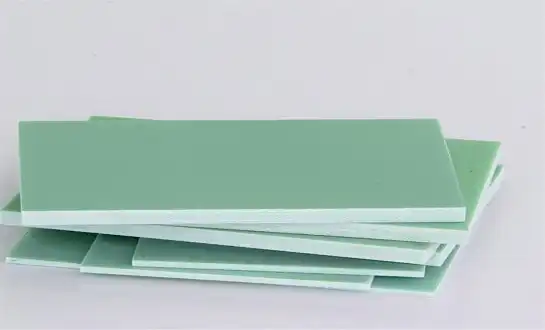
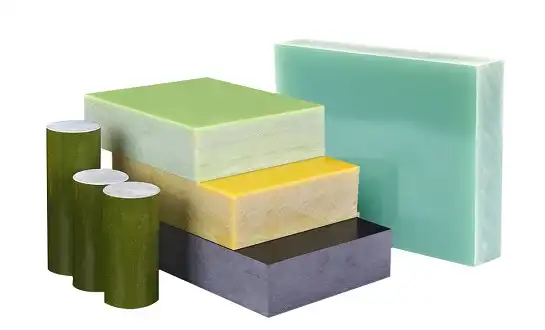
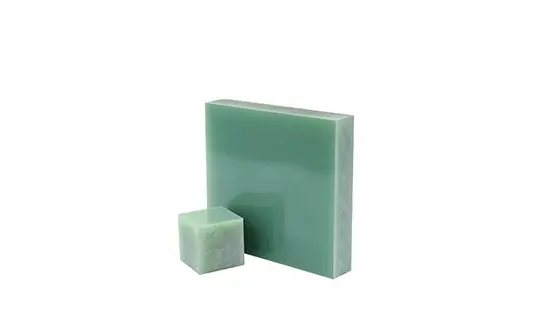
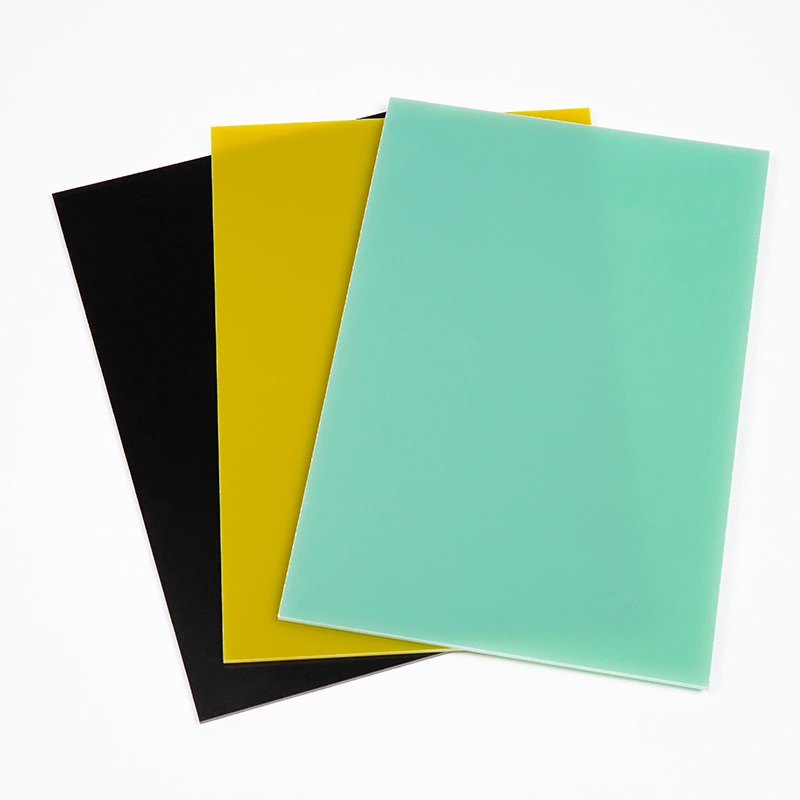
FR4 represents a glass-reinforced epoxy laminate engineered specifically for applications requiring exceptional dielectric strength and mechanical stability. This composite material consists of continuous filament glass cloth saturated with flame-retardant epoxy resin, cured under controlled temperature and pressure conditions. The resulting structure exhibits a dielectric constant between 4.2 and 4.8, making signal propagation predictable across circuit designs. Unlike phenolic alternatives, FR4 maintains dimensional stability across temperature ranges from -50°C to 130°C, with a glass transition temperature around 135°C. The material's low dissipation factor minimizes energy loss during high-frequency operations, explaining its dominance in telecommunications infrastructure and aerospace electronics.
Machining Challenges Specific to Epoxy Laminates
The glass fiber reinforcement within FR4 creates significant tool wear during machining operations. These fibers possess hardness levels approaching 6.5 on the Mohs scale, rapidly dulling conventional steel cutting edges. Delamination risks emerge when insufficient spindle speeds or improper feed rates generate excessive heat at the cut interface. The layered construction amplifies these concerns—epoxy resin softens under thermal stress while glass fibers remain rigid, creating differential expansion that compromises structural integrity. Dust generation during processing presents both health hazards and equipment maintenance challenges, as fine particulates infiltrate sensitive machine components. Environmental regulations increasingly mandate contained dust extraction systems meeting OSHA standards for respirable crystalline silica exposure limits.
Industry Standards and Compliance Requirements
Manufacturing operations involving FR4 fabrication must align with multiple certification frameworks. UL94 V-0 flame rating verification ensures self-extinguishing properties critical for electrical safety applications. RoHS compliance restricts hazardous substances, particularly important when processing materials destined for European markets. IPC-4101 specifications define standardized material grades, with /21 indicating the most common glass-epoxy configuration. Thickness tolerances typically hold to ±10% for commercial-grade sheets, though precision applications may require ±0.05mm consistency. Certification documentation accompanies reputable material suppliers, enabling traceability through manufacturing chains—a requirement for aerospace and medical device sectors where material pedigree affects regulatory approval.
Key Criteria for Choosing a CNC Machine for FR4 Sheet Fabrication
Matching Production Scale to Equipment Capabilities
Production volume fundamentally shapes equipment selection for machining FR4 sheet. Prototype shops producing 50-200 parts monthly achieve efficiency with compact three-axis routers featuring 600x900mm work envelopes. These systems balance initial investment against operational flexibility, accommodating design iterations common during development phases. Conversely, mass production environments processing thousands of components weekly benefit from industrial gantry-style machines with automated material handling. Batch consistency becomes critical at this scale—thermal stability systems maintaining ±1°C spindle temperature prevent dimensional drift across eight-hour production runs. Our experience supplying manufacturers across multiple sectors reveals that undersizing equipment capacity creates bottlenecks during seasonal demand surges, while excessive capability inflates operational costs through underutilization.
Essential Spindle Characteristics for Glass-Reinforced Materials
Spindle specifications determine cutting effectiveness and tool longevity. FR4 processing demands constant power output across 12,000-24,000 RPM ranges, with 2-5 kW motors providing sufficient torque for 6mm diameter carbide end mills. Air-cooled spindles suit light-duty applications, though water-cooled variants deliver superior thermal management for continuous operation. Runout tolerances under 0.01mm TIR (Total Indicated Runout) preserve tool geometry during aggressive cutting, directly affecting edge quality and dimensional accuracy. Variable frequency drives enabling programmatic speed adjustment accommodate different material thicknesses—thin 0.5mm sheets require gentler approaches than robust 6mm plates. Tool holding systems utilizing ER collets or HSK interfaces provide quick-change capability, reducing setup times between operations.
Dust Extraction and Environmental Controls
Effective dust management protects both personnel health and equipment longevity. Integrated extraction systems generating 800-1200 CFM airflow at cutting points capture particulates before atmospheric dispersion. HEPA filtration stages remove particles down to 0.3 microns, addressing respirable dust fractions posing silicosis risks during prolonged exposure. Enclosure designs with interlocked access panels prevent operation during door openings, automatically engaging extraction systems during cutting cycles. Settling chambers or cyclonic pre-separators extend filter service intervals by removing bulk material before fine filtration stages. Regular filter replacement schedules—typically every 200-400 machine hours depending on production intensity—maintain consistent negative pressure at cutting zones.
Precision Requirements and Positioning Accuracy
Electrical component applications impose stringent dimensional requirements. Linear positioning accuracy within ±0.05mm ensures proper fit for PCB mounting brackets and insulation barriers. Repeatability specifications under ±0.02mm enable batch-to-batch consistency, critical when producing serialized components requiring interchangeability. Ball screw drive systems with 5mm pitch deliver superior accuracy compared to rack-and-pinion alternatives, though belt-driven configurations suit larger work envelopes where slight accuracy trade-offs prove acceptable. Closed-loop servo control with linear encoder feedback compensates for thermal expansion and mechanical backlash, maintaining precision during extended production runs. Angular tolerances under 0.1° become important for milled features requiring perpendicularity to mounting surfaces.
Comparison of Different CNC Machines and Technologies for FR4 Fabrication
Traditional Three-Axis Milling Systems
Three-axis routers remain the workhorse solution for FR4 fabrication, offering proven reliability and straightforward operation. These machines execute X, Y, and Z movements through independently controlled axes, suitable for 85% of typical insulation component geometries. Gantry configurations with moving bridges accommodate sheet sizes up to 1500x3000mm, enabling efficient material utilization through nested part layouts. Fixed-bridge designs provide enhanced rigidity for precision work, though material dimensions become constrained by table travel limits. Toolpath simplicity reduces programming complexity—CAM software generates code directly from 2D profiles or 3D surface models. Maintenance requirements remain modest, with regular lubrication and occasional belt tensioning comprising routine service tasks.
Advanced Multi-Axis Configurations
Five-axis simultaneous machining of FR4 sheet unlocks complex geometries impossible through conventional approaches. Rotary axes supplement linear movements, enabling tool orientation adjustments during cutting operations. This capability proves valuable for beveled edges, chamfered holes, and three-dimensional contoured surfaces appearing in custom insulation components. Automotive battery barriers featuring compound curves benefit from continuous five-axis interpolation, eliminating secondary fixturing operations. However, programming complexity increases substantially—specialized CAM modules and experienced operators become prerequisites. Capital costs escalate 150-200% compared to three-axis equivalents, justifying investment only when component complexity warrants advanced capability. Aerospace applications frequently demand this sophistication, where weight optimization through organic shapes outweighs equipment expenses.
Laser Cutting Alternatives
Laser systems offer contactless cutting, eliminating mechanical tool wear inherent to milling operations. CO2 lasers operating at 10.6μm wavelengths efficiently ablate epoxy resins, though glass fibers reflect energy, creating rough edge conditions. Fiber lasers at 1.06μm wavelengths improve glass cutting but risk delamination through excessive heat input. Edge quality typically requires secondary finishing for precision applications, offsetting laser speed advantages. Heat-affected zones extending 0.2-0.5mm from cut paths may compromise dielectric properties in critical electrical applications. Laser technology excels at rapid prototyping and intricate cutout patterns where edge finish remains secondary to geometric flexibility. Our observations across customer installations suggest hybrid approaches—laser rough cutting followed by CNC edge milling—optimize both speed and quality.
Automation Integration and Production Scaling
Robotic loading systems transform CNC routers into unattended manufacturing cells. Articulated arms retrieve raw sheets from pallet stacks, position material on vacuum tables, and extract finished components to outbound queues. Vision systems verify material orientation before cutting, preventing costly errors during lights-out operation. Workflow software coordinates multiple machines, balancing workload across production resources while tracking job status through MES (Manufacturing Execution System) integration. These configurations suit high-volume manufacturers where labor costs exceed automation investment recovery periods—typically 18-24 months under continuous operation. Power sector manufacturers producing standardized transformer insulation components achieve remarkable efficiency through such integration, with per-part costs declining 30-40% versus manual operations.
Best Practices for Optimizing FR4 CNC Machining Performance
Tool Selection and Cutting Parameter Optimization
Carbide tooling represents the minimum viable standard for FR4 processing, with diamond-coated variants extending service life 300-500% in production environments. Compression spiral flutes control fiber tear-out at entry and exit points, delivering clean edges on both laminate faces. Chip evacuation becomes critical—insufficient flute depth causes material packing, generating friction heat that accelerates tool failure. Cutting speeds between 3000-5000 mm/min paired with 0.1-0.2mm depth of cut balance production rate against tool longevity. Adaptive feeds adjusting feed rate based on tool load extend cutter life while maintaining consistent material removal rates. Coolant misting reduces cutting temperatures, though overapplication creates cleanup challenges and potential contamination of finished parts.
Understanding these variables allows operators to develop process windows balancing multiple objectives. Automotive suppliers producing battery insulation barriers prioritize edge quality and dimensional consistency, accepting somewhat slower production rates. Consumer appliance manufacturers emphasize throughput, tolerating modest edge roughness correctable through secondary deburring operations. Tool manufacturers increasingly provide application-specific recommendations based on material grade and machine characteristics, shortening development cycles when transitioning to new component designs.
Workholding and Fixturing Strategies
Vacuum table systems for processing FR4 sheet provide uniform clamping force across large sheet areas, preventing movement during cutting without mechanical fasteners that mar finished surfaces. Zone control enables selective activation, accommodating partial sheet usage while maintaining adequate hold-down force. Porous stone surfaces distribute suction evenly, though require periodic cleaning to maintain airflow. Mechanical fixtures suit smaller components or applications where vacuum systems prove impractical. Low-profile clamps positioned outside tool paths secure workpieces without interference, though setup times increase compared to vacuum solutions. Sacrificial backing boards beneath cut paths prevent tool breakthrough damage to machine tables while supporting material at cut exit points, reducing fiber pullout and delamination.
Quality Assurance and Inspection Protocols
Dimensional verification begins with statistical sampling—measuring 5-10% of production batches using calibrated calipers or coordinate measuring machines (CMM). Critical dimensions receive 100% inspection through go/no-go gauges integrated at machine offload points, enabling immediate feedback when processes drift out of specification. Dielectric strength testing applies voltage gradients verifying electrical insulation properties remain intact post-machining. Visual inspection under magnification identifies microcracking or delamination invisible to unaided observation. These protocols catch process deviations before defective components reach assembly operations, where rework costs escalate dramatically. Documentation systems tracking inspection results enable root cause analysis when quality issues emerge, supporting continuous improvement initiatives.
Procurement Guide and Supplier Recommendations for CNC Machines and FR4 Materials
Evaluating CNC Equipment Suppliers
Supplier assessment extends beyond initial purchase price to encompass total lifecycle costs. Service network proximity affects downtime duration when repairs become necessary—local representation enables same-day response versus international shipping delays. Warranty coverage typically spans 12-24 months on mechanical components, though spindles and electronics may carry separate terms. Technician training programs ensure your maintenance staff develops competency maintaining equipment, reducing reliance on external service contracts. Customer references from similar applications provide insights into long-term reliability and hidden operational costs. Demo programs allowing on-site evaluation with your actual materials eliminate uncertainty about machine capability before capital commitment. Control system architecture affects software compatibility—mainstream platforms like Fanuc or Siemens simplify operator training through industry-standard interfaces.
Sourcing Quality FR4 Materials
Material procurement parallels equipment selection in complexity and long-term impact. Established suppliers maintain lot traceability linking material batches to manufacturing dates and raw material sources—essential documentation for regulated industries. Sample testing programs verify claimed electrical and mechanical properties match specification sheets, particularly important when qualifying new suppliers. Bulk purchasing agreements secure favorable pricing while ensuring supply continuity during demand fluctuations. Lead times vary seasonally, with 4-6 weeks typical though extending during industry upturns. Inventory management balances carrying costs against stockout risks—safety stock levels covering 30-45 days consumption provide buffer against supply chain disruptions. Custom thicknesses and grades require minimum order quantities, though standard configurations ship in smaller lots accommodating prototype quantities.
Building Strategic Supplier Partnerships
Long-term supplier relationships deliver advantages transcending transactional interactions. Technical support teams familiar with your applications provide troubleshooting assistance and process optimization recommendations. Priority allocation during material shortages protects production continuity when market conditions tighten. Collaborative development programs for new materials or applications leverage supplier expertise, accelerating time-to-market for innovative products. Consolidated sourcing simplifies logistics coordination—receiving FR4 materials and machining consumables from integrated suppliers reduces administrative overhead while potentially qualifying for volume discounts. These partnerships prove particularly valuable when navigating regulatory changes or specification updates affecting material certifications.
Conclusion
Selecting appropriate CNC equipment for FR4 sheet fabrication requires balancing technical requirements against operational realities and budget constraints. The material's abrasive nature and electrical performance demands create specific machine criteria—adequate spindle power, effective dust management, and precision positioning capabilities form the foundation. Production volume and component complexity guide equipment sophistication choices, from straightforward three-axis routers through advanced multi-axis systems. Successful implementation extends beyond equipment acquisition to encompass tooling strategies, process optimization, and quality assurance protocols. Strategic supplier partnerships for both machinery and materials provide ongoing support essential for maintaining competitive manufacturing operations in electronics, automotive, power distribution, and appliance sectors where FR4 components play critical roles.
FAQ
What spindle speed works best for machining FR4 sheets?
Optimal spindle speeds range between 18,000-24,000 RPM for small diameter tools (3-6mm), dropping to 12,000-15,000 RPM for larger cutters exceeding 10mm diameter. Higher speeds reduce cutting forces per fiber, minimizing delamination risks. However, excessive speeds generate frictional heat causing epoxy softening. Matching spindle speed to tool diameter and material thickness through test cuts establishes ideal parameters for specific applications.
Can the same CNC machine process different PCB substrate materials?
Modern CNC routers handle various substrate materials including FR4, CEM-1, Rogers laminates, and even aluminum-backed boards through parameter adjustments. Tool selection and cutting speeds require modification—softer materials like CEM-1 machine 30-40% faster than FR4, while ceramic-filled Rogers variants demand diamond tooling. Machine versatility depends on control system flexibility and adequate spindle power headroom accommodating different material densities.
How do you prevent delamination during CNC processing?
Delamination prevention combines proper tooling with optimized parameters. Sharp tools minimize cutting forces separating laminate layers. Moderate feed rates (3000-4500 mm/min) and shallow depth of cuts (0.15-0.25mm) reduce thermal buildup. Climb milling orients cutting forces downward, compressing layers rather than lifting them. Adequate backing support beneath cut paths prevents fiber pullout at tool exit points where delamination most commonly initiates.
Partner with J&Q for Your FR4 Sheet Manufacturing Needs
J&Q brings over 20 years of specialized experience producing premium FR4 sheet materials and insulation laminates for demanding industrial applications. Our technical team understands the intricate relationship between material properties and CNC processing requirements, offering guidance that optimizes both component quality and production efficiency. As an established FR4 sheet supplier with integrated logistics capabilities, we deliver complete solutions—from material selection through delivery coordination—eliminating the complexity of managing multiple vendors. Our commitment extends beyond initial orders through ongoing technical support, helping you refine machining processes as production requirements evolve. Contact our engineering specialists at info@jhd-material.com to discuss your specific application requirements, request material samples, or explore how our manufacturing expertise can enhance your operational capabilities in electronics, power distribution, automotive, or industrial equipment sectors.
References
Harper, C.A. (2006). Electronic Materials and Processes Handbook, Third Edition. McGraw-Hill Professional, New York.
Coombs, C.F. (2008). Printed Circuits Handbook, Sixth Edition. McGraw-Hill Education, New York.
Kalpakjian, S. & Schmid, S.R. (2014). Manufacturing Engineering and Technology, Seventh Edition. Pearson Education, Upper Saddle River.
IPC Association Connecting Electronics Industries (2016). IPC-4101D: Specification for Base Materials for Rigid and Multilayer Printed Boards. IPC, Bannockburn.
Rao, P.N. (2017). Manufacturing Technology: Metal Cutting and Machine Tools, Third Edition. McGraw-Hill Education, New York.
Society of Manufacturing Engineers (2015). Fundamentals of Tool Design, Sixth Edition. SME, Dearborn.

Get a complete product list and quotation

J&Q New Composite Materials Company