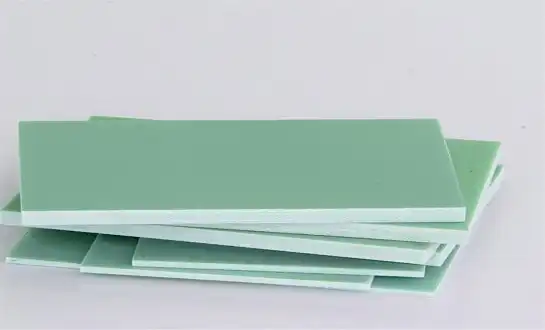
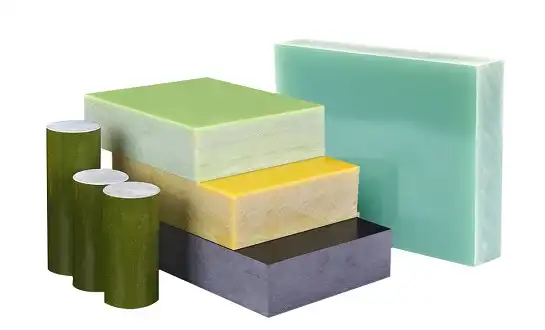
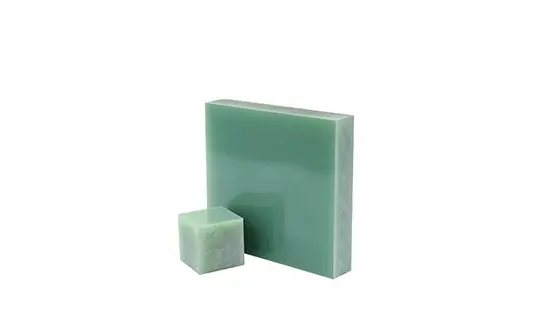
Bakelite Sheet CNC Machining: Tools, Speed, and Techniques
To machine Bakelite sheet, you need to know a lot about special tools, cutting factors, and method changes that are very different from how to machine metal or regular plastic. This material is a thermoset phenolic laminate made of cellulose paper and phenolic resin. It is very good at resisting heat and electricity, but it can be tricky to work with on a CNC machine. To keep standards tight while keeping the material's structural integrity across production runs, it's important to use the right carbide tools, keep spinning speeds between 15,000 and 25,000 RPM, and keep dust under control.
Understanding Bakelite Sheets for CNC Machining
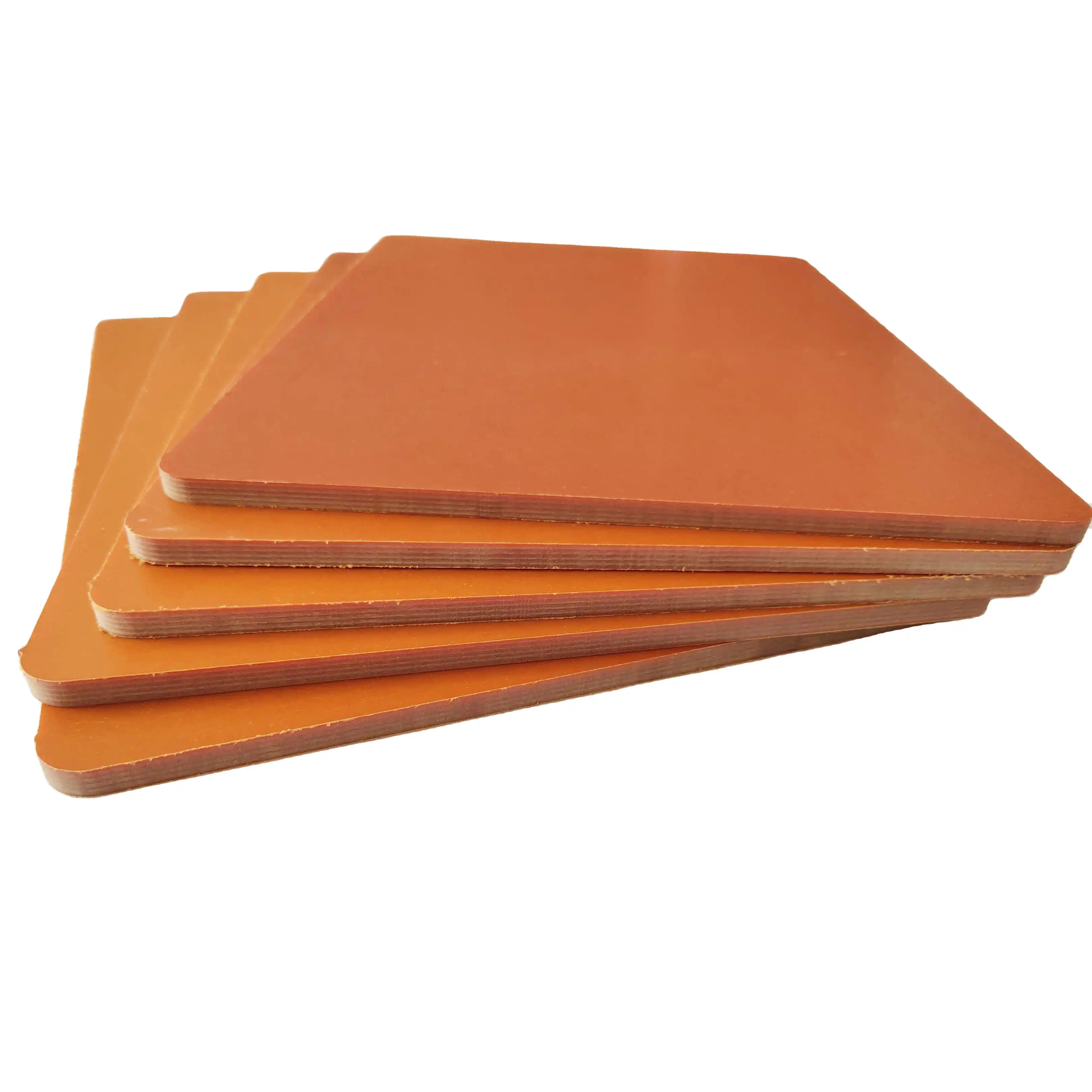
The way bakelite is made gives it qualities that engineering managers and buying teams really value in mechanical and electrical uses. Paper layers that are soaked with phenolic glue are pressed and heated until they harden into a stiff compound that can withstand temperatures of up to 300°F (149°C) and still has a dielectric strength of more than 12 kV/mm. Because of these features, phenolic laminates are necessary for parts of switches, motor insulation frames, and PCB support structures that need to be thermally stable and electrically isolated.
Core Physical Properties That Influence Machining
Because it is made up of layers, the material behaves in an uneven way. The tensile strength is about 8,000 psi perpendicular to the laminate plane and lower when measured parallel to it. This change in direction changes how cutting forces are distributed when grinding and drilling. Even in wet places, moisture absorption stays below 1%, which keeps the dimensions stable during manufacturing processes. The phenolic matrix naturally resists flames and meets UL94 V-0 standards. This is important when cutting parts that will be used in power transfer equipment or battery barriers for cars.
Available Types and Thickness Ranges
Industrial grades are different depending on the type of paper and glue used. Standard industrial grades are used in most mechanical uses, while precision electrical grades are made with more stringent rules to make sure that they all have the same insulation qualities. The thickness runs from 0.5 mm to 50 mm, but most CNC operations focus on the 1.5 mm to 25 mm ranges because they are where machining stability and material cost meet in a good way. Custom thickness specs can be made to fit the needs of each OEM, but lead times get longer when non-standard sizes need special production runs. The colour is usually somewhere between dark brown and black, and changes in shade show small differences in how the resin cures without changing its mechanical performance.
Quality Verification and Material Authentication
Checking for licensing compliance and doing simple field tests are the only ways to tell the difference between real phenolic laminate and cheaper imitations. Real items have marks that refer to MIL-I-24768 or other foreign standards that are similar. A hot needle test shows that the material is thermoset because the real thing chars without melting, while polyester fakes melt. Specific gravity should be between 1.30 and 1.45 g/cm³; lower numbers mean there isn't enough glue or the mixture isn't clumping together well. When material comes in, we follow strict checking procedures and make sure that each batch meets the stated standards before putting it on the production lines. This way, we can be sure that clients get the same high quality every time they place an order.
Essential CNC Tools and Equipment for Bakelite Sheet Machining
When cutting Bakelite sheet, the choice of tool has a direct effect on both the quality of the surface finish and the speed of production. Because paper fibres are rough, they wear down tools faster than softer plastics. This makes the material structure of cutting edges an important factor in the decision process. When designing equipment, stiffness and vibration control must be balanced. Auxiliary systems are used to control the large amount of dust that is created when this composite material is machined.
Recommended Cutting Tool Materials and Geometries
Carbide equipment is the standard for phenolic laminate cutting because it is resistant to wear well enough for medium production numbers. Solid carbide end mills with two or three teeth work well for cutting and shaping tasks where chip removal is still easy to handle. When used in high-volume production settings, diamond-coated tooling lasts 300–50% longer than untreated carbide, which makes the higher original investment worth it because it means less frequent tool changes. The shape of the tool should have sharp cutting edges and positive rake angles between 10 and 15 degrees so that fibres are sheared neatly instead of torn, which leaves fuzzy edges that need to be finished again.
Bits with a brad point or a spiral upcut are good for drilling because they pull chips away from the cutting zone. Most standard twist drills push the material down, which separates it on the exit side. Compression bits, which use both upcut and downcut shapes, give you clean lines on both the entry and exit surfaces, but they cost more and need careful depth setting. When working with phenolic laminates, tool sharpness is more important than when working with metals. Even slightly dull edges cause too much heat and make cuts that aren't smooth.
CNC Machine Specifications and Configuration
To get the best surface speed while keeping feed rates reasonable, the spindle should be able to handle speeds between 15,000 and 30,000 RPM. While machines made for aluminium or lighter metals usually have enough stiffness, lightweight gantry systems may chatter when forcefully removing material. Collet runout must stay below 0.0005 inches; too much runout causes vibrations to travel through the object and creates tiny cracks along the lamination planes that hurt the dielectric performance.
Integrating dust filtration methods needs to be done with care. If you let phenolic dust build up, it can be harmful to your health and make cleaning harder. We put extraction tubes right next to cutting zones and keep the negative pressure high enough to catch particles where they are made. There needs to be regular upkeep on filter systems because fine phenolic dust jams media more quickly than metal chips. Coolant systems are still not required—most jobs can be done without them as long as there is enough air flow–but misting systems can help when working on thick pieces that tend to get hot quickly.
Setup and Maintenance Best Practices
To keep sheets from bending while they're being cut, workholding techniques must make sure that pressing pressure is spread out properly. Vacuum tables are good for thin sheets less than 6 mm thick, while mechanical clamps are better for bigger sheets. During through-cutting processes, protective backing boards stop blowout on the exit side. Tool inspections should happen more often than when metal is being machined. Every two to three hours, checking the state of the edge stops wear before it shows up as a drop in quality.
For Bakelite sheet machining, linear guides and ball screws need to be cleaned every day as part of machine care because phenolic dust mixed with oils makes a gritty paste that speeds up wear. When phenolic materials are being used constantly, spindle bearings need to be greased more often. These methods keep the setting accuracy needed to hold ±0.005-inch standards that electrical component makers expect for longer and make the equipment last longer.
Optimal Machining Speeds and Parameters for Bakelite Sheets
Parameter optimisation finds the best mix between part quality, tool life, and productivity. Phenolic laminates can handle faster surface speeds than soft plastics, but they need low chip rates to keep from getting too hot. The best choices depend on the thickness of the material, the density of the grade, and the complexity of the features. To get consistent results across production runs, it is important to record the parameters and validate the process.
Speed and Feed Rate Guidelines
Spindle speeds between 18,000 and 24,000 RPM are good for most cutting and shaping tasks on sheets that are 3 mm to 12 mm thick. Higher speeds up to 28,000 RPM are fine for thinner materials, but speeds may need to be slowed down to 15,000 RPM for thicker parts over 20 mm to keep heat from building up. Feed rates are usually between 80 and 150 inches per minute, but they depend on the width and number of flutes on the tool. At 20,000 RPM and 100 IPM, a 6mm two-flute end mill makes a chip load of about 0.0025 inches per tooth, which is a modest figure that keeps cycle times reasonable while reducing heat.
For cutting operations, the depth of cut should not be more than half of the tool's width. For surface operations, it should not be more than 0.080 inches. When aggressive depth is paired with fast feed rates, it creates too much friction, which softens the phenolic matrix and makes it impossible to cut material cleanly. During pocketing processes, step-over rates of 40 to 50 percent are used to combine speed with the need for a smooth surface.
Managing Heat Build-Up and Preventing Material Damage
Heat buildup shows up as changes in colour, changes in shape, or separation of layers of paper. When temperature problems happen, lowering the RPM is the easiest way to fix them because cutting speed causes more heat than feed rate. Climb milling, in which the cutter rotates in the same direction as the feed, makes better cuts with less heat than regular milling, but it needs tools with very little backlash.
Cutting tactics that happen in between lets the heat escape between passes. Programming toolpaths that leave the cut zone every so often lets the material cool down while making complex pockets. When compressed air is directed at the cutting point, it removes heat without adding moisture that could change the stability of the dimensions. Using infrared thermometers to check the temperature of the material during the first setting runs makes sure that the parameters keep temperatures below 200°F, which is the point at which phenolic glue starts to soften.
Process Optimization Through Parameter Adjustment
We work with a transformer maker that had trouble with the quality of the edges on 8mm insulation gaps until we helped them make their settings better. Their first spindle speed of 25,000 RPM and feed rate of 120 IPM burnt the edges and needed a lot of hand finishing. Increasing the feed rate to 140 IPM while lowering the spindle speed to 19,000 RPM—which seems illogical but works—kept output the same while reducing heat production by about 30%. The faster feed rate cut down on the rest time per cutting edge, and the slower surface speed cut down on friction. The cycle time stayed pretty much the same, but the amount of scrap dropped from 8% to less than 2%, and there were no longer any extra finishing steps. This example shows how careful parameter testing, driven by knowledge of how materials behave, changes the economics of cutting.
Advanced CNC Machining Techniques for Complex Bakelite Components
For Bakelite sheet machining, tough limits and complicated shapes take basic 2.5-axis operations into the realm of advanced programming and fixturing. Multi-axis cutting, precise hole designs, and post-processing integration all help make sure that the parts meet the high standards that OEM engineers set for mechanical and electrical performance.
Multi-Axis Contouring and Precision Drilling
Three-axis simultaneous shaping makes it possible to make custom motor housings and appliance insulation frames with curved surfaces and compound angles. Programming techniques should try to avoid sudden changes in direction that cause shaking. Cutting stability is maintained by smooth toolpaths with steady arc transitions. Five-axis skills are good for really complicated shapes, but the extra work needed to set them up only makes economic sense for niche uses like custom battery barriers for cars or aerospace insulators.
Phosphoric material tends to chip at breaking points, which makes it hard to make precise hole patterns. Packing and burning can be avoided by peck drilling processes that return every so often to clear chips. Single-pass drilling doesn't get as close to the diameter limits as making pilot holes and then reaming. This is important when parts need press-fit metal inserts. Most electrical assembly needs hole position accuracy within ±0.003 inches, which can be achieved with well-maintained CNC equipment and checked fixtures.
Toolpath Planning for Dimensional Accuracy
Strategically arranging the steps of a toolpath reduces the buildup of stress that could lead to bending after material removal. It is best for roughing passes to remove bulk material evenly, so that neither side has to carry a lot more material than the other during the middle stages. Finishing passes always go in the same direction as the climb milling to make the cutting forces and surface roughness the same all over the part.
When cutting thin walls or deep pockets, it's important to account for tool displacement. A 6mm end mill cutting 15mm deep bends when it's under cutting loads, which can lead to mistakes in the dimensions if the toolpath gaps aren't fixed. Deflection can be reduced by using shorter tools and more careful depth-of-cut values. CAM software deflection correction features can fix regular mistakes after test cuts are done to make sure they work.
Post-Processing and Quality Assurance
Using 220-320 grit abrasives to sand gets rid of small tool marks and smooths out edges to make them safer to handle. When tiny powders are used for polishing, the visible parts look better, and the surface dielectric performance is slightly improved by covering any exposed fibres. Some things that might be done to prepare an assembly are chamfering holes to make it easier to place parts or adding conformal coatings when chemicals will be present in the working area.
Critical measurements, surface finish, and dielectric stability should all be checked by quality control methods. Coordinate measuring tools measure lengths and widths, and surface roughness testers measure the quality of the finish. High-voltage testing shows that microcracks caused by cutting have not affected the insulation's performance. For new designs, we use first-article review processes, writing down all measures and getting approval from the customer before moving forward with production amounts. At a sample rate of 10%, in-process inspection can find tool wear or parameter shift before large amounts of the product go off track.
Procurement Insights and Supplier Selection for CNC Machined Bakelite Sheets
Comparing unit prices for Bakelite sheet isn't the only way to find good providers. Partners who improve your supply chain are distinguished from sellers who add risk by their technical know-how, quality systems, and logistical dependability. Procurement professionals can make choices that protect both cost goals and production plans when they understand evaluation standards, price structures, and transportation processes.
Supplier Evaluation Criteria and Credentials
Portfolios of certifications show that you are dedicated to quality management. ISO 9001 certification shows that processes are recorded and that there is a mindset of ongoing growth. Industry-specific certifications, such as IATF 16949 for car providers, show that the company has specific skills. References from clients in the same industry as you can give you an idea of how well the company really does in the real world, including how often deliveries are made on time, how quickly they answer technical questions, and how flexible they are when requirements change or volume changes.
As part of a technical capability review, tool lists, testing skills, and expert help should all be looked at. Shops that use manual machines don't get as reliable results as suppliers who use modern CNC equipment with automatic tool management and in-process tracking. They can check for compatibility before shipping because they have their own measurement checking and electrical testing equipment. Customers don't have to do that. When changing designs to make them easier to make, engineering help is important. Experienced suppliers can suggest physical changes that increase yield without affecting usefulness.
Pricing Trends and Negotiation Strategies
35–50% of the price of a made component comes from the cost of materials. The rest comes from the cost of labour and fees. The price of phenolic laminate changes based on the cost of phenol and formaldehyde material, but the changes are usually small, about 10 to 15 percent per year. Parts that are simple, like rectangles with basic holes, cost a lot less to machine than parts that need to be shaped in complicated ways and fit together tightly.
By lowering the cost of setup and buying materials in bulk, volume agreements make it possible for prices to go down. Due to the spread of setup time, a 500-piece order might have 40% higher unit costs than a 5,000-piece commitment. Blanket purchase orders with planned releases keep the costs of keeping stockpiles in check and the benefits of price pressure in balance. By focusing volume, design standardisation across product lines—using the same thickness and material grades—makes the selling situation better.
Logistics and Delivery Optimization
Phenolic material is shipped as class 55 goods; it is not dangerous but needs to be kept safe from water and contact. Proper packing uses moisture barrier wraps and hard outer cases to keep the edges from getting damaged while being handled. Less-than-truckload shipments within the United States usually arrive within 5–7 business days. Full truckload packages, on the other hand, are best for large orders that need to get there in 3–4 days. International packages take longer to get to their destinations. Ocean freight takes 20–30 days to get there plus time for customs clearance. Air freight cuts this time down to 5–7 days, but it costs a lot more.
Using backup stocking techniques and finding suitable alternative sources can make the supply chain more reliable. Important parts may need to be kept in safety stock for 4 to 6 weeks of consumption to cover sudden increases in demand or problems with suppliers. Dual sourcing adds redundancy, but it needs careful quality checking to make sure that the machining processes from different sources can be used interchangeably.
Conclusion
For Bakelite sheet cutting to go well, you need to know about the material, have the right tools, use the best settings, and keep a close eye on the process. Because they are electrically insulating, thermally stable, and mechanically strong, phenolic laminates can't be replaced in electrical, automobile, and industrial settings. However, because of these qualities, they need to be made using specific CNC methods. Quality output starts with tools that are covered in carbide or diamond, controlled speeds between 15,000 and 25,000 RPM, slow feed rates, and good dust management. Advanced methods, like multi-axis shaping and strategic toolpath planning, make it possible to make complicated shapes that fit within very small gaps. Working with suppliers who have been in the business for a while and know how materials behave and what applications need makes sure that you always have access to fine parts that work well in tough conditions.
FAQ
What are the best tools for cutting phenolic laminates?
End mills made of solid carbide that have two or three teeth work well for modest production amounts. As long as the cutting edges are sharp and the rake angles are positive, they will split paper fibres neatly instead of breaking them. In high-volume settings, diamond-coated tooling increases operating life by 300–50%, which makes up for higher starting costs by lowering the number of times that the tools need to be changed. When drilling holes, brad-point or spiral upcut drill bits keep the material from delaminating.
How can I keep heat from damaging thick pieces when I'm cutting them?
Slow down the spindle to between 15,000 and 18,000 RPM and keep the feed rates between 100 and 120 IPM. Cut no deeper than half of the tool's width each time so that heat can escape between cuts. Climb milling doesn't make as much heat as regular milling. Send compressed air to the area where the meat is being cut to get rid of the heat. Use infrared thermometers to keep an eye on the temperature of the material and keep it below 200°F, which is the point at which resin starts to soften.
What kinds of limits can be used when CNC-machining Bakelite sheets?
When CNC machines are well taken care of and have good fixtures, they can consistently hold ±0.005-inch measurement limits on important features. Most electrical construction needs holes that are within ±0.003 inches of where they should be. The quality of the surface finish relies on how sharp the tools are and other factors, but the Ra values are usually between 63 and 125 microinch. The thickness limit is set by the base material and is generally ±0.010 inches for industrial grades.
Partner with J&Q for Precision Bakelite Sheet Machining Solutions
J&Q has been making Bakelite sheet for more than 20 years and has also been trading internationally for ten years, mostly with clients in the electrical, industrial machinery, and power sectors. Our combined operations include producing raw materials, using precision CNC machines, and directly coordinating transportation. This means that there are no handoff places where quality or time problems can happen. When engineering managers and procurement experts work with our team, they can get technical advice that makes designs easier to make and meets the UL and ROHS compliance needs of your uses.
Our machining center has precise CNC equipment that can keep tolerances of ±0.005 inches across production runs. We also do coordinate measurement and high-voltage testing in-house to make sure that every batch meets the requirements for electrical insulation. Our process controls give you the stability that OEM relationships need, whether you need FR4 alternatives for high-temperature uses, custom-thickness laminate for unique assembly needs, or mass production of standard parts. Get in touch with our technical team at info@jhd-material.com to talk about your specific needs with a reliable Bakelite sheet provider who is dedicated to fixing your structural and insulation problems through high-quality materials and precise manufacturing.
References
Baekeland, L. H. (1909). "Method of Making Insoluble Products of Phenol and Formaldehyde." Journal of Industrial and Engineering Chemistry, Vol. 1, No. 3, pp. 149-161.
Technical Association of the Pulp and Paper Industry. (2018). "Machining Parameters for Phenolic Composite Materials." TAPPI Press, Atlanta, Georgia.
Society of Manufacturing Engineers. (2020). "CNC Machining Handbook for Thermoset Plastics." SME Publications, Dearborn, Michigan.
American Society for Testing and Materials. (2019). "ASTM D709-19: Standard Specification for Laminated Thermosetting Materials." ASTM International, West Conshohocken, Pennsylvania.
National Electrical Manufacturers Association. (2017). "Industrial Laminated Thermosetting Products: Material Properties and Machining Guidelines." NEMA Standards Publication LI 1-2017.
Institute of Electrical and Electronics Engineers. (2021). "Insulation Systems for Rotating Electrical Machinery: Material Selection and Fabrication Techniques." IEEE Press, Piscataway, New Jersey.

Get a complete product list and quotation

J&Q New Composite Materials Company