Can Phenolic Cotton Tube Improve Insulation Performance in High-Load Equipment?
Yes — a phenolic cotton tube can meaningfully improve insulation performance in high-load equipment. Made from cotton fabric wound with phenolic resin and cured under heat and pressure, this composite material delivers a rare balance of dielectric strength, mechanical load resistance, and thermal stability up to 120°C. Unlike standard polymer tubes, the layered cotton-resin matrix resists both electrical breakdown and physical deformation under sustained stress. For engineers running motors, transformers, or heavy industrial machinery, choosing the right phenolic laminated tube often translates directly into fewer failures and longer service intervals.
Understanding Phenolic Cotton Tube and Its Insulation Properties
What It Is Made Of
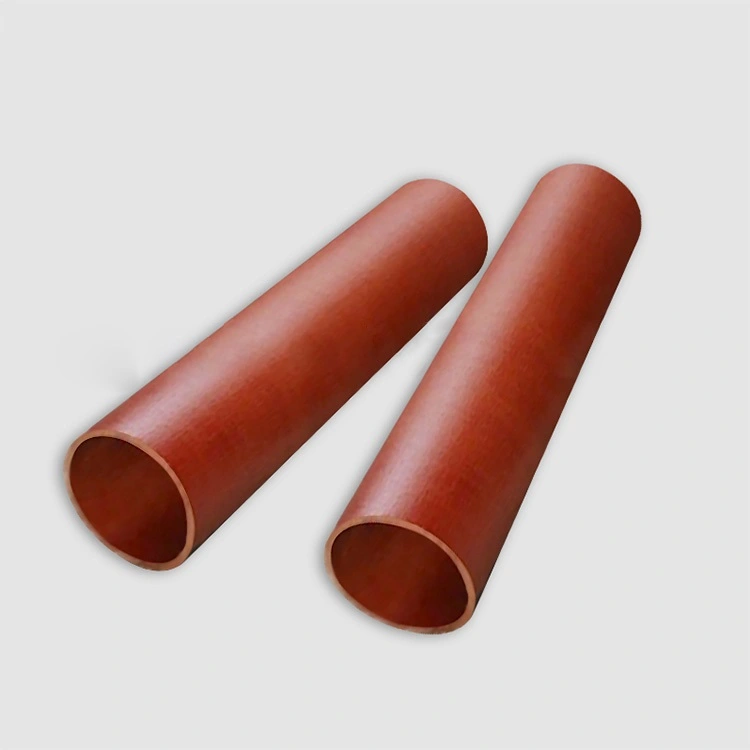
To make a phenolic cotton cloth tube, which is also known as a PFCC or phenolic fabric laminated tube, cotton fabric that has already been saturated with phenolic resin is wound and then cured under controlled heat and rolling pressure. This process makes a wall structure that is thick and free of holes. The end result is a thermosetting material that stays the same shape even when it comes into touch with chemicals, high temperatures, or mechanical shock. The inside diameters of our tubes range from φ5 mm to φ1500 mm, and the outside diameters range from φ5 mm to φ2000 mm. They are brown and black.
Key Electrical and Thermal Properties
Most of the time, phenolic cotton laminates have a dielectric strength that meets Class E insulation grades (continuous working temperature of about 120°C). Because of this, the material can be used to support motor coils, separate transformers, and block switchgear. Additionally, the cotton weave inside the resin matrix is better at keeping water out than plain phenolic boards, which is useful in damp workplaces.
Dimensional Stability Under Stress
One feature that is often forgotten is how well this type of tube keeps its dimensions when it is compressed. The cotton support spreads stress across the wall, so the tube doesn't creep, which is a slow deformation that happens to plastic tubes over time. Wall thickness starts at 0.5 mm (minimum 2 mm for normal supply), and custom lengths of up to 2 m are possible. This lets design engineers get a perfect fit without having to do extra work on the machine.
Performance Comparison: Phenolic Cotton Tube vs Alternative Insulation Tubes
How It Compares to Fiberglass and Epoxy Tubes
Fiberglass-epoxy tubes, like those made from FR4 laminates, have better electrical performance and higher temperature class ratings, but they are harder to cut and cost more per unit. Phenolic Cotton Tubes are easier to machine — carbide or PCD tooling works well — and the cotton weave absorbs vibration during cutting, producing cleaner edges. In situations where Class F or H insulation is not needed, phenolic cotton provides good electrical performance at a lower cost.
How It Compares to PVC and Metal Tubes
PVC tube isn't stiff enough to be used as structural spacers or load-bearing plates in heavy machinery. Metal tubes add weight and let electricity flow through them, so they can't be used when electrical isolation is needed between parts. The practical middle ground is phenolic cotton, which supports structural load, really insulates against electricity, and weighs a lot less than steel or aluminum alternatives with the same wall thickness.
Cost and Durability Balance
It is known that phenolic cotton laminated tubes work well in hydraulic cylinder guide rings, gear pinions in textile machinery, and electrical bolt sleeves in switchgear. The part lasts longer between maintenance cycles because it has a low friction coefficient and good creep resistance. When purchasing teams look at the total cost of ownership instead of just the unit price, phenolic cotton is often the more cost-effective option over a three- to five-year equipment repair window.
These comparisons of materials help engineering managers and OEM sourcing teams choose the right insulation tube so they don't specify too much or too little for the situations they will be using it in.
How Phenolic Cotton Tubes Enhance Insulation in High-Load Equipment
Thermal Degradation Resistance
When equipment is under a lot of stress, it keeps the touch points warm. Regular polymer sleeves get soft and deformed, but phenolic cotton doesn't because the thermoset resin cross-links permanently when it cures. The tested working temperature goes up to 120°C and stays there for a short time, up to about 130°C, before the risk of carbonization increases. This range covers most of the working profiles for industrial motors and transformers without the need for special high-temperature laminates.
Mechanical and Chemical Resilience
Insulation sleeves in hydraulic cylinders and heavy press machines are loaded from the side, which can break materials that are easily broken. The braided cotton support in Phenolic Cotton Tubes makes the wall stronger than pure resin or glass-filled materials that cost about the same. The substance also works well in oily conditions, which are common in gears and hydraulic systems, and it can handle weak acids and bases well enough for most industrial chemical exposures.
Verified Industrial Applications
Phenolic cotton laminated tubes are used to make wear bands for hydraulic cylinders, textile machine gear pinions, and supports for electrical motor coils. When used in gear applications, the material lowers noise levels compared to steel-on-steel contact and gets rid of the need for constant external greasing at low speed-load pairs. These are not just hypothetical benefits; they have been used in industry around the world for decades and have been proven to work.
Procurement Guide: Acquiring the Right Phenolic Cotton Tube for Your Needs
Size and Specification Selection
The inside diameters of our phenolic cotton cloth tubes range from φ5 mm to φ1500 mm, and the outside diameters range from φ6 mm to φ2000 mm. The lengths we offer go up to 2 m. Wall thickness starts at 0.5 mm, and 2 mm is the standard thickness. Custom sizing is possible for precise assemblies. Before placing an order, buyers should make sure that the wall thickness tolerance and surface finish requirements are met. This is especially important when the tubes will be machined to the final dimensions in-house.
Certification and Quality Standards
Our tubes are made with a quality management system that is ISO 9001-certified and meets ISO, UL, and ASTM standards. Electrical insulation tests, mechanical strength checks, and physical checks are all done on each batch. For purchasing teams in the energy and power sector or controlled car supply chains, these written quality controls cut down on the time it takes to qualify suppliers and help them meet the requirements for compliance paperwork.
Supplier Evaluation and Lead Time
There's more to picking a Phenolic Cotton Tube provider than just looking at prices. All of the factors that matter—production capacity, lead time dependability, and OEM customization—are important. With the ability to produce 100 tons per year and shipping choices that include ocean, land, and air freight, we can meet the needs of both large orders and projects that need to be finished quickly. As part of our OEM service, we can make custom inner diameters, wall profiles, and packaging rules.
When you work with a supplier who keeps clear pricing, good communication, and quality records that can be tracked, you don't have to worry about procurement risk. This is especially true for long-term production programs.
Future Trends and Innovations in Phenolic Cotton Tube Insulation
Advances in Phenolic Resin Chemistry
Formulators of phenolic resins are working hard to make binding systems with lower emissions and higher purity that stop formaldehyde from escaping during processing. These improvements help Phenolic Cotton Tubes directly by making work safer for workers and letting companies meet stricter environmental rules in the US and EU without having to switch to more expensive materials.
Regulatory and Energy Efficiency Drivers
As a result of US energy-saving guidelines for motors and transformers, working temperature limits are being raised, and more reliable insulation materials are being pushed for longer service lives. Phenolic Cotton Tubes are a good choice in this direction because they don't change temperature, last a long time, and have a history of doing well. This makes them a low-risk material choice as equipment ratings go up.
Integration with Predictive Maintenance Systems
In Industry 4.0 settings, sensor panels are being put in closer and closer to insulation parts to keep an eye on temperature and shaking in real time. Because of their consistent dielectric qualities and dimensional reliability from batch to batch, Phenolic Cotton Tubes give these tracking systems a reliable starting point. Engineers can set precise limits for temperature and vibration when the material underneath behaves consistently. A phenolic cotton laminate that is well controlled gives engineers just that.
Conclusion
Phenolic Cotton Tubes offer a practical combination of electrical insulation, mechanical load resistance, and thermal stability that standard polymer or metal tubes cannot match in high-load industrial environments. They work well at constant temperatures up to 120°C, have consistent dimensions, and can be machined using common methods. This makes them a reliable choice for motors, transformers, hydraulic equipment, and switchgear. When engineering managers and procurement specialists look at insulation materials for tough jobs, phenolic cotton laminated tubes are a tried-and-true option that has been used in industry for decades and has international quality certifications to back it up.
FAQ
What is the maximum continuous operating temperature for phenolic cotton tubes?
The standard continuous operating temperature is approximately 115°C to 120°C, consistent with Class E insulation. Short-term exposure up to around 130°C is tolerable, but sustained temperatures above this threshold can cause resin carbonization and reduced mechanical integrity.
What inner and outer diameter sizes are available?
Inner diameters range from φ5 mm to φ1500 mm, and outer diameters range from φ6 mm to φ2000 mm. The longest standard tube length is 2 m. Custom wall thickness and dimensional profiles are available for OEM applications.
How does phenolic cotton compare to fiberglass-epoxy tubing for electrical insulation?
Fiberglass-epoxy (FR4-type) tubes carry higher thermal class ratings and superior dielectric strength. Phenolic cotton tubes are easier to machine, less abrasive to tooling, and more cost-effective where maximum high-voltage insulation is not the primary requirement. The right choice depends on the specific operating voltage, temperature, and mechanical load profile.
Can these tubes be used in oil-contaminated environments?
Yes. Phenolic cotton tubes perform reliably in oil-splash and oil-contaminated conditions commonly found in gearboxes and hydraulic equipment. Continuous full submersion in water is not recommended, as the cotton reinforcement can absorb moisture over time.
Are OEM and custom sizes supported?
Yes. We provide OEM services covering custom inner diameters, wall thicknesses, lengths up to 2 m, and packaging configurations to match specific production requirements.
Get Your Custom Phenolic Cotton Tube Quote from J&Q Today
J&Q has been making insulation materials for more than 20 years and has been doing business internationally for more than 10 years. We handle ocean, land, and air freight directly because we have our own logistics department. There are no delays caused by third parties. As a reliable Phenolic Cotton Tube maker, we sell certified, uniformly sized laminated tubes to customers in the power, automobile, electrical, and industrial sectors all over the US. You can email our expert team at info@jhd-material.com or go to blog.jhd-material.com to get a price or talk about the details of your project right away.
References
1. NEMA Standards Publication LI 1 — Industrial Laminated Thermosetting Products, National Electrical Manufacturers Association, 2020.
2. Handbook of Thermoset Plastics, Dodiuk, H. & Goodman, S.H. (Eds.), Elsevier, 2014.
3. Electrical Insulation for Rotating Machines, Stone, G.C. et al., IEEE Press / Wiley, 2014.
4. Polymer Composites for Electrical Engineering, Zhang, X. (Ed.), IET Publishing, 2021.
5. ASTM D709 — Standard Specification for Laminated Thermosetting Materials, ASTM International, 2017.
6. Industrial Insulation: Principles, Materials and Applications, CIBSE / Thermal Insulation Contractors Association, 2008.

Get a complete product list and quotation

J&Q New Composite Materials Company



