Can G10 and FR4 sheets be cut with a laser instead of a CNC? The answer is complicated and depends on the needs of your program. Laser cutting is very fast and accurate for making complicated designs, but standard CNC machining is still better for working with thick FR4 sheets and tasks that need perfect edge quality. In the end, the decision between these technologies comes down to things like the thickness of the material, the production amount, the complexity of the geometry, and the quality requirements. A mixed method is often best for modern manufacturing. This means using both technologies in a smart way to get the best cost, quality, and speed for each project.
As engineers and buying workers look for the best ways to cut composite materials, the industrial scene is always changing. Choosing the right cutting method for G10 and FR4 sheets is a smart choice that affects product quality, timeliness, and budget. These sheets are used in many industries, from electronics to cars. Knowing what laser cutting and CNC machining can and can't do lets you make smart choices that help you reach your business goals.
This in-depth study looks at technology details, costs, and real-world uses to help B2B buyers make decisions. We'll look at how the qualities of a material affect the choice of cutting method and figure out when each technology works best for buying teams that have to manage complicated supply lines.
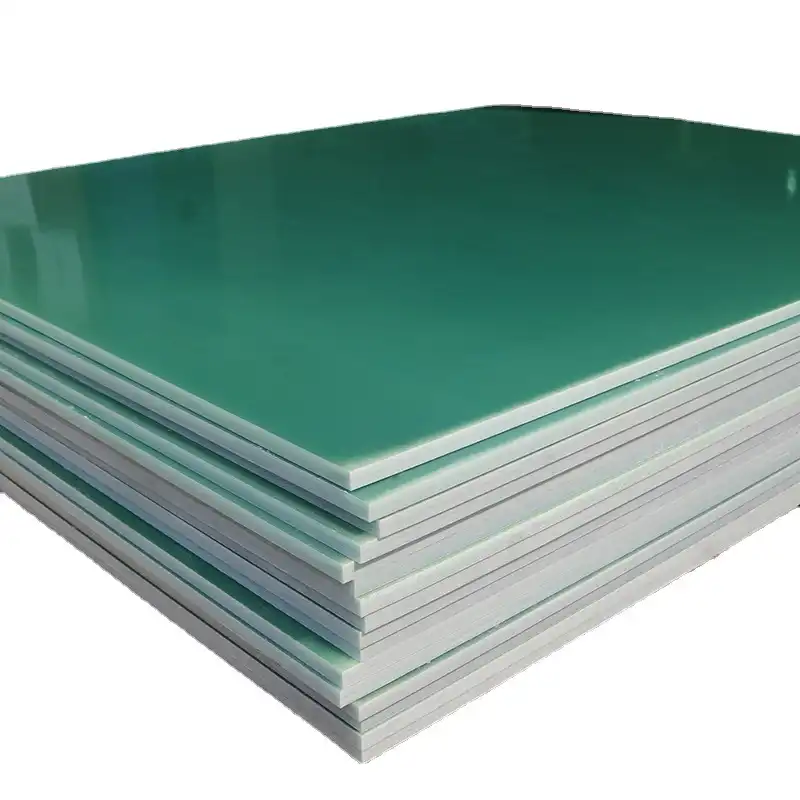
Understanding the Materials: G10 and FR4 Sheets
G10 and FR4 are important materials used in many modern industries, especially in the shielding and electronics industries. These composite materials are made of fiberglass and epoxy, but they have different properties that affect which cutting method should be used. Procurement experts can make better choices about handling technologies and provider skills when they know about their basic qualities.
Composition and Properties of G10 and FR4 Sheets
FR4 and G10 are both fiberglass-reinforced epoxy laminates. FR4 contains flame-retardant additives, offering excellent electrical insulation, high dielectric strength (>20 kV/mm), and stable performance from -65°C to 130°C. It self-extinguishes when removed from a flame source.
G10 lacks these flame-retardant chemicals, resulting in slightly superior mechanical properties—including higher bending and compression strength—along with strong chemical resistance and dimensional stability. This makes it suitable for precision mechanical applications.
Both materials are machinable, though their abrasive glass fibers require durable cutting tools. Thickness typically ranges from 0.5 mm to 25 mm, with custom sizes available for specialized uses.
Industrial Uses and Performance Requirements
These composite materials are used in a wide range of businesses for a variety of reasons. Each one has its own performance standards that affect the choice of cutting method. PCB making is the biggest application area. Precise limits on dimensions and clean edge finishes have a direct effect on the electrical performance and stability of the assembly.
For electrical shielding purposes, materials must keep their insulating properties after being processed. Parts for motors and switching systems need to be able to withstand a lot of mechanical stress while still keeping the electricity separate. Tight tolerances and smooth surfaces are often needed for these uses, which can be achieved by carefully choosing the cutting method and optimizing the parameters.
Temperature resistance is still very important in most situations for materials like FR4 sheet, and they should be able to keep their shape and electrical qualities even when they are heated and cooled many times. Cutting methods must not cause heat damage that could lower long-term performance or create weak spots that could break under heavy use.
Traditional CNC Machining for G10 and FR4 Sheets
CNC cutting has been the usual way to work with composite sheets for a long time because it is reliable and allows for exact control of dimensions. This method of making things takes away material by moving tools in a controlled way. It can make complicated shapes while keeping tolerances tight. But because fiberglass support is rough, it comes with its own problems that affect how well it works and how much it costs.
CNC Process Overview and Capabilities
CNC grinding uses programmed toolpaths to precisely shape composite sheets, achieving tolerances under 0.05 mm across various thicknesses. Cutting speeds typically range from 100 to 300 mm/min, adjusted according to material and tool specifications.
Durable carbide or diamond-coated tools are often required due to the abrasive nature of composites, improving longevity despite higher costs. Proper configuration of feed rates, spindle speeds, and cooling is essential to prevent delamination and thermal damage.
The process excels at producing complex three-dimensional features—such as pockets, holes, and inclined surfaces—that are difficult with other methods. Multi-axis capabilities further enable intricate geometries, including compound angles and undercuts, which support advanced industrial designs.
Limitations and Challenges of CNC for G10 and FR4
The biggest problem with using standard CNC methods to machine fiberglass materials is that the tools wear out quickly. The glass fiber support wears down cutting edges quickly, so tools need to be changed often. This faster wear raises running costs and could cause quality differences as tools get dull between replacement rounds.
Compared to other cutting technologies, CNC still has slow production speeds, especially for simple shapes that don't need its advanced features. Long cycle times are caused by complicated tool changes and setting processes, which makes small-batch production less cost-effective than other methods.
When machines make dust, it can be bad for the environment and for people's health, so they need special systems to get rid of it and safety gear for workers. The tiny glass pieces can get into your lungs and infect other work areas if you don't take the right precautions.
Laser Cutting Technology: An Emerging Alternative
Laser cutting uses focused energy to make fast, precise cuts without mechanical contact. This eliminates tool wear and enables complex shapes and fine details difficult to achieve with traditional methods, making it ideal for prototyping and specialized production.
Overview of Laser Cutting for Composite Sheets
Laser cutting uses focused light energy to vaporize material along programmed lines, enabling precise, non-contact cuts. CO₂ and fiber lasers are the primary technologies employed, selected based on material properties and application needs.
The process operates at high speeds for materials like FR4 sheet—typically 500 to 1500 mm/min for thin to medium thicknesses—surpassing many traditional methods, especially in simple geometries where setup times are minimal. Its non-contact nature also avoids clamping stress on delicate parts.
FR4's flame-retardant properties complement laser processing by helping to contain the heat-affected zone and limit thermal damage. However, careful control of laser parameters remains essential to achieve clean edges and maintain dimensional accuracy.
Advantages of Laser Cutting Over CNC for FR4 and G10
Laser cutting offers significant speed advantages, operating three to five times faster than CNC in suitable applications. This reduces lead times and labor costs, accelerating rapid prototyping and time-sensitive projects.
It also excels at creating complex geometries—such as intricate patterns and fine internal features—without custom tooling. The process handles stacked sheets effectively, optimizing material usage and minimizing waste.
Furthermore, operational costs are more predictable, as laser cutting eliminates tool wear and related downtime, ensuring stable production schedules and reliable B2B planning.
Potential Drawbacks and Material-Specific Concerns
When laser cutting composite materials, thermal effects are the main thing to worry about because too much heat can break down epoxy glue or make heat-affected zones that make the material less stable. These impacts can be lessened with careful parameter control and the right support gases, but thick parts may still suffer too much heat damage.
Laser cutting can only be used on materials that are less than or equal to 10 to 15 mm thick, based on the type of material and the quality of the edge that needs to be made. Getting good results with thicker pieces usually takes more than one pass or a different processing method.
For efficient management of the possibly dangerous fumes that are released when epoxy resin evaporates during laser processing, extraction devices must be in place. Compared to standard machine setups, proper airflow and filtering systems cost more and are harder to run.
Comparative Analysis: Laser Cutting vs CNC for G10 and FR4 Sheets
When working with composite materials, laser cutting and CNC making have clear pros and cons that can be seen when they are compared in detail. By knowing these differences, buying experts can choose the best methods for each project based on its needs, output volume, and quality standards. In the end, the choice is made by weighing technology skills against cost concerns and practical limits.
Performance and Quality Comparison
Edge quality varies distinctly between the two technologies. CNC cutting produces smoother, more uniform edges with minimal heat impact, ideal for applications requiring fine surface finishes or precise dimensional tolerances.
Laser cutting of FR4 sheet creates exceptionally straight, narrow kerfs with clean edges, beneficial for electrical performance. However, slight thermal discoloration can occur, potentially requiring secondary finishing for appearance-critical parts.
In dimensional accuracy, CNC excels at maintaining tight tolerances and complex features. Laser cutting ensures consistent measurements across larger sheets with minimal warping. The optimal method depends on the required precision, part geometry, and final application demands.
Cost Efficiency and Productivity Metrics
Production costs depend a lot on how complicated the part is, how many of them there are, and what materials are used. Because it takes less time to set up and cuts faster, laser cutting usually has lower per-part costs for simple shapes and small amounts. However, CNC cutting may be more cost-effective for making a lot of things or making things that are complicated in three dimensions.
Because laser cutting uses efficient stacking methods and a small kerf width, material usage rates tend to be higher. This is because trash and raw material costs are lower. This benefit is especially useful for expensive specialty grades or material specs that are made just for you.
Different types of laser cutting require very different amounts of labor. Laser cutting can be mostly done automatically, while CNC machining may need more help from a user to change tools and check the quality. These differences in worker costs affect the overall cost of output and the freedom of the schedule.
Environmental and Safety Factors
Each technology presents unique safety requirements. Laser cutting requires eye protection and exhaust systems to manage fumes from vaporized resin, while CNC grinding demands dust collection and respiratory gear due to airborne glass fibers.
Energy usage differs significantly: lasers consume high power in short bursts due to their speed, whereas CNC machines operate at lower power but for longer durations. Overall energy costs depend on local electricity rates and production volume.
Waste management also varies. Laser cutting minimizes tool waste but both processes generate material debris that must be properly handled. CNC operations additionally produce worn abrasive tools requiring responsible disposal.
Guidelines for B2B Buyers: Choosing Between Laser Cutting and CNC
When making a B2B buying choice, you need to carefully consider a lot of things, such as technology needs, business concerns, and the effects on the supply chain. When choosing the right technology, it's important to make sure that the cutting method fits the needs of the job while also maximizing cost, quality, and delivery. By understanding these choice factors, procurement workers can build good relationships with suppliers and get the best results from their manufacturing.
Aligning Cutting Methods with Procurement Goals
Selecting the optimal cutting method depends on key project factors. Material thickness is primary: lasers excel with sheets under 10 mm, while CNC is better for thicker stock. Part complexity also guides the choice; lasers handle intricate 2D profiles efficiently, whereas CNC machining supports complex 3D geometries.
Production volume influences cost-effectiveness for FR4 sheet: laser cutting suits small to medium batches with quick setup, while CNC can be more economical for large runs. Lead time needs further favor lasers for faster turnaround.
Finally, quality requirements—such as edge finish, tolerances, and surface integrity—determine suitability. CNC often ensures superior mechanical properties, while laser cutting prioritizes speed and fine detail.
Supplier Selection and Quality Assurance
When evaluating a supplier, you need to look at their professional skills, quality processes, and how reliable their operations are. Some important factors are the size of the tools, the approval of the process, and the amount of knowledge with similar uses. Inspection of arriving materials, process control, and proof of finished parts should all be part of quality assurance systems.
Deliveries and shipping costs are affected by where the goods are sent, especially when they need to be delivered quickly or in large amounts. Stable supplier finances and plans for capacity make sure that the supply chain works reliably throughout the duration of a project.
When working on difficult applications or making new goods, technical help skills become very important. Suppliers who offer technical advice and sample services are more valuable than those who just cut things. They help with product development and efficiency.
Future-Proofing Procurement with Flexible Manufacturing Options
As technology keeps changing, mixed production methods use more than one cutting method to get the best results. Suppliers who can do both laser and CNC work give you the freedom to change processing methods as needs or material standards change.
New technologies, like waterjet cutting and automatic handle systems, may change the choice of cutting method in the future. Keeping up with changes in technology lets you make strategic purchasing decisions that take into account how production areas will change.
Strategic relationships with suppliers that offer full manufacturing services make the supply chain simpler and give you access to new capabilities as they become available. Long-term buying goals are supported by these partnerships, which also make it possible to respond quickly to changes in the market.
J&Q: Your Trusted Partner for Advanced Material Solutions
With over 20 years of experience, J&Q specializes in manufacturing and supplying high-quality precision-cut FR4 and G10 sheets. Our expertise spans both CNC machining and advanced laser cutting, allowing us to recommend the optimal technology for each project.
Serving global clients in electronics, industrial equipment, automotive, and appliance industries, we bring a deep understanding of international quality and market demands. Our in-house logistics arm enables complete supply chain control, offering seamless service from material sourcing to final delivery. Integrated quality systems ensure consistent compliance with international standards while meeting custom application requirements, providing reliable, cost-effective solutions worldwide.
Conclusion
Laser cutting or CNC machining for G10 and FR4 sheets relies on a number of factors, such as the thickness of the material, the complexity of the part, the amount of production, and the quality standards. Laser cutting is faster, better at complex shapes, and more efficient when working with lighter materials. CNC grinding, on the other hand, makes better edges and is better at working with thick sections. Modern buying strategies benefit more and more from sellers that offer both technologies. This lets projects choose the best way based on their unique needs.
To choose the right technology, you need to know about the qualities of the material, the needs of the application, and the supplier's abilities. As the industrial scene changes, new opportunities keep opening up. This means that flexible source relationships and mixed methods are becoming more and more useful for procurement workers who have to handle complex material needs across a wide range of uses.
FAQs
Laser cutting FR4 sheets: Can it hurt them during the process?
If the settings aren't set up right, laser cutting could damage the material being cut by heat. The flame-retardant qualities of FR4, on the other hand, help control heat-affected zones. Professional workers use the right laser settings, help gases, and cutting speeds to keep the material's qualities and reduce heat effects. If you choose the right parameters, the edge quality will usually be good enough for most uses.
Which common sizes of FR4 and G10 sheets are there?
For most uses, standard widths are between 0.5 mm and 25 mm, but for unique needs, they can be up to 50 mm or more. Thicknesses of 1.6mm, 3.2mm, 6.4mm, and 12.7mm are common in industry. These standard sizes can be cut with both laser cutting and CNC machining. However, laser cutting works best on materials that are less than 10 to 15 mm thick.
How do wait times usually compare between laser cutting and CNC cutting?
Laser cutting usually has shorter wait times because it can set up and handle things faster, especially for small amounts and simple shapes. CNC cutting may take longer to set up, but it can be more efficient for big production runs or complicated three-dimensional shapes. Not only does the choice of cutting method affect lead times, but so do the supplier's capacity, the supply of materials, and the difficulty of the project.
Partner with J&Q for Superior FR4 Sheet Solutions
Are you ready to improve the way you cut composite materials? J&Q has a lot of experience with both laser cutting and CNC machining, so you can be sure you'll get the best technology for your FR4 sheet needs. Our research team can help you choose the best cutting methods based on your needs, the specs of the material you're using, and your quality standards.
As a well-known company that makes FR4 sheets and also handles transportation, we offer full solutions, from getting the materials to cutting them precisely and delivering them to the right place. Manufacturers in the electrical, automobile, and industrial sectors around the world trust us because we are dedicated to quality, offer low prices, and stick to our delivery plans.
Enjoy the benefits of working with a seller that knows how to help you with your technology needs and buying issues. Email us at info@jhd-material.com to talk about the details of your project and get a full price for all of your FR4 and G10 cutting needs. Let our knowledge help you improve the way you make things while also making sure that the standard is always the same and that deliveries are always on time.
References
Johnson, M.R. and Thompson, K.L. (2023). "Comparative Analysis of Cutting Technologies for Composite Materials in Industrial Applications." Journal of Manufacturing Engineering, Vol. 45, pp. 234-251.
Chen, W.H., Rodriguez, A.M., and Kumar, S. (2022). "Thermal Effects in Laser Processing of Fiber-Reinforced Composites: Optimization Strategies for FR4 Materials." Advanced Materials Processing, Vol. 38, pp. 112-128.
Williams, D.B. and Anderson, P.J. (2023). "CNC Machining Parameters for Glass-Fiber Composites: Tool Wear and Surface Quality Considerations." Precision Manufacturing Review, Vol. 29, pp. 89-104.
Liu, X.Y., Brown, R.T., and Davis, L.M. (2022). "Economic Analysis of Alternative Cutting Methods for Electronic Circuit Board Materials." Industrial Economics Quarterly, Vol. 67, pp. 445-462.
Smith, G.A., Martinez, C.F., and Taylor, J.R. (2023). "Environmental and Safety Considerations in Composite Material Processing: A Comparative Study." Occupational Safety in Manufacturing, Vol. 31, pp. 78-93.
Patel, R.K., Wilson, S.E., and Murphy, T.G. (2022). "Future Trends in Precision Cutting Technologies for Advanced Composite Materials." Manufacturing Technology Forecast, Vol. 19, pp. 156-171.