Can Antistatic Durostone Sheet Reduce Static-Related Risks During PCB Assembly?
Yes — antistatic durostone sheet can meaningfully reduce static-related risks during PCB assembly. This glass fiber-reinforced composite material carries surface resistivity values between 10⁶ and 10⁹ ohms/square, allowing it to dissipate electrostatic charges in a controlled, gradual manner rather than releasing them as a sudden damaging spike. In high-volume electronics production, where ESD damage accounts for a significant share of component failures, swapping standard fixtures and work surfaces for ESD-rated durostone material is one of the most direct interventions an engineering team can make.

Understanding Static-Related Risks in PCB Assembly
Where ESD Originates on the Production Floor?
When two materials separate, like when conveyor lines pull away from boards or when workers pick up parts or tools slide across trays, a static charge builds up. Many times every minute, these things happen on a busy SMT line. Every time the contacts and separations happen, a charge is created that can build up on surfaces and fixtures that aren't shielded until it finds a way to ground, which is usually through a sensitive IC or MOSFET.
The Hidden Cost of Latent ESD Damage
Not every ESD event destroys a part right away. Latent failures are more dangerous because a part that is slightly damaged might pass the first quality check, get sent to a customer, and then fail weeks later in the field. The ESD Association says that up to 35% of field returns caused by ESD in electronics manufacturing are due to residual damage. This number shows how important it is to control static at the source.
How Uncontrolled Static Affects Production Throughput?
ESD events not only damage components, but they also bring floating particles to charged surfaces, which contaminate solder joints and clean rooms. They also cause automatic optical inspection (AOI) systems to give wrong results. These problems cause repair hours and scrap rates to go up, which is noticeable for companies with high-mix, high-volume lines.
What Is an Antistatic Durostone Sheet and How Does It Work?
Material Composition and Structure
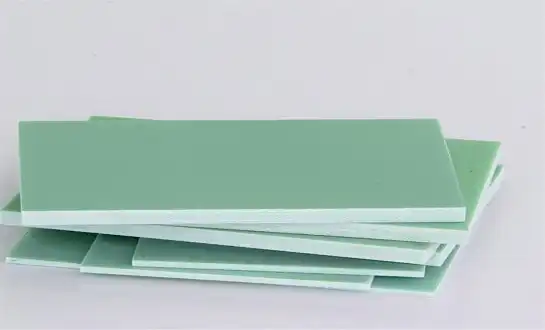
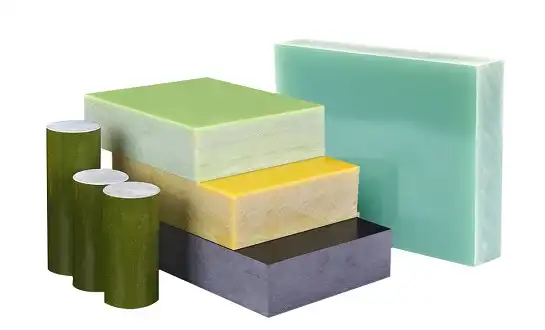
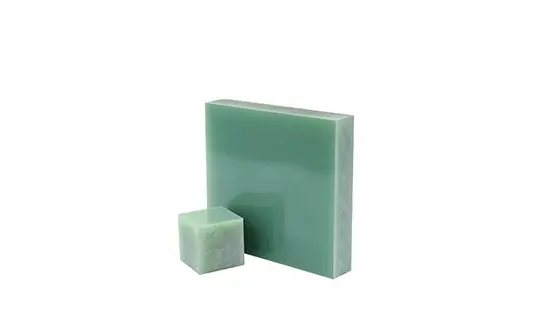
A glass fiber-reinforced epoxy material called an Antistatic Durostone Sheet is made with conductive additives that are evenly spread throughout it. The way the material is put together gives it the mechanical strength of a solid structure and the ability to release charges like an ESD-safe surface. J&Q sells JingHong name sheets in black, gray, and blue, with widths ranging from 3 mm to 50 mm. These sheets can be used for a lot of different fixture and work area needs.
The Static Dissipation Mechanism
The electrical fillers make a web of low-resistance paths through the sheet. There is a network of charges that spreads when a charged object touches the surface. The charges bleed away slowly enough to escape a damaging discharge pulse. What makes a fully conductive surface different from a fully insulating surface? A fully conductive surface lets go of the charge too fast. The goal is controlled cooling, which is described by ANSI/ESD S20.20 and IEC 61340. Antistatic Durostone Sheet material consistently meets this g
Performance Compared to Standard Fixture Materials
Standard FR4 or resin fittings don't naturally dissipate charge, so they build up static. Over time, cleaning cycles can break down antistatic epoxy coatings, making them less effective at stopping ESD. Antistatic Durostone Sheet, on the other hand, has a resistance that stays the same throughout its entire thickness. This is because the electrical network goes through the whole material, not just the surface. This means that the electrical performance will stay the same over thousands of soldering cycles, giving the part a long life.
Advantages of Using Antistatic Durostone Sheets in PCB Manufacturing
Before going over these benefits, it's helpful to know why the mechanical and electrical features of a material work together so well in a PCB assembly setting. A fastener that stops static electricity but bends at reflow temperatures creates a different kind of flaw. A material that can handle heat but breaks down in flux chemistry can be a source of contamination. All three problems are solved at the same time by JingHong durostone sheet.
Here are the main benefits this material brings to lines that put together PCBs:
- Good antistatic property with stable resistivity: Surface and volume resistivity values stay within the 10⁶ to 10⁹ ohm range consistently, protecting ESD-sensitive components throughout the product life of each fixture.
- High temperature resistance: With a heat deflection temperature above 200°C and short-term tolerance up to approximately 280–300°C, the sheet withstands wave soldering and SMT reflow without deformation or delamination.
- High strength and tight machining tolerance: Tensile strength above 300 MPa and flexural strength above 400 MPa allow CNC machining of thin walls and complex pallet geometries without breakage. Dimensional accuracy is maintained across batch production.
- Chemical resistance and low water absorption: Water absorption below 0.1% and resistance to solder fluxes, saponifiers, and cleaning agents mean the sheet retains its properties after repeated wash cycles.
- Long life cycle: Properly maintained pallets and fixtures can withstand 10,000 to 20,000 production cycles, which significantly lowers the per-unit cost of ESD protection over time.
All of these traits work together to lower the number of defects caused by ESD, lower the number of times fixtures need to be replaced, and keep automatic lines going without stopping.
Comparison: Antistatic Durostone Sheet vs. Alternative Work Surface Materials
When purchasing materials that are safe for ESD, teams usually look at antistatic epoxy laminates, antistatic vinyl surfaces, and durostone composites. Every one of them has a place in the market, but when it comes to performance, the differences are clear.
Epoxy laminates that are antistatic are less expensive and can be used for light-duty bar tops. But their coatings on the outside wear off when they are scratched or exposed to chemicals, and they can't handle the heat that comes from being in direct contact with soldering tools. Antistatic vinyl is simple to put down on workbenches, but it can't be used in places where there is heat, mechanical load, or CNC cutting.
Antistatic Durostone Sheet is at a different level of performance. Because it conducts electricity through its whole body, its ESD performance doesn't change as the surface breaks down. Its flexural strength lets it hold up against precisely machined box designs that weaker laminates can't. When fixture lifespan and reliable ESD compliance are taken into account, durostone material offers a better total cost of ownership for facilities that use SMT reflow, wave soldering, or automatic conformal coating lines.
Procurement and Application Insights for B2B Buyers
Customization and Order Flexibility
JingHong Antistatic Durostone Sheets come in thicknesses ranging from 3 mm to 50 mm, and the sheets can be made to fit the layout of a pallet or work surface. J&Q can handle both small orders (sample orders) for engineering testing and large orders (bulk purchases) for large production runs. Lead times are set to work with normal supply chain plans.
Quality Certifications and Incoming Inspection
If someone wants to buy this material, they should make sure that the supplier tests the surface resistivity at several points across each sheet to make sure that it is uniform. They should also check the flatness deviation, which should be less than 0.2 to 0.5% over the diagonal, and the thermal shock resistance through simulated solder dip testing. All of these things are taken into account in J&Q's production and quality process, which is based on more than 20 years of experience with insulating composite materials.
Machining and Integration Recommendations
For CNC cutting, tungsten carbide or polycrystalline diamond (PCD) tools are needed because the glass fiber support is rough. High-speed steel tools get dull quickly and make edges that aren't smooth, which can make it hard to keep accurate measurements. Planning the toolpath correctly also stops heat from building up in the cut area, which protects the antistatic layer close to the edges of the machined part.
Conclusion
There are real, measured, and avoidable risks linked to static electricity in PCB assembly. Antistatic Durostone Sheet protects against ESD damage, attachment bending, and chemical breakdown, which are three of the most common reasons why things go wrong in SMT and wave soldering settings. It works better than other materials in tough production settings because it has stable resistivity across the whole thickness of the material, high thermal resistance, and enough mechanical strength to hold up precision CNC-machined fixtures. This information should be carefully reviewed by engineering managers and technical buying teams that want to make sure that high-volume lines are always protected from ESD.
FAQ
How long do antistatic durostone pallets typically last?
Under normal operating conditions with proper cleaning and storage, pallets machined from quality durostone sheet can complete 10,000 to 20,000 production cycles. Aggressive flux chemistry or inadequate cleaning between cycles reduces that figure. Monitoring the surface for whitish, fibrous discoloration is a practical indicator that the resin has begun to degrade.
What is the correct way to clean these sheets?
Use neutral saponifiers or dedicated flux cleaning agents. Avoid highly alkaline cleaners and abrasive scrubbing pads, both of which can damage the surface layer and reduce ESD performance over time.
Can the sheets be machined in-house?
Yes, provided your CNC equipment uses tungsten carbide or PCD tooling. Standard high-speed steel tools wear almost immediately against the glass fiber reinforcement and produce poor edge quality.
Does antistatic performance change with temperature exposure?
The bulk conductivity of a well-made antistatic durostone sheet remains stable through repeated thermal cycling within the material's rated operating range. Surface discoloration from flux oxidation is normal and does not by itself indicate loss of ESD function.
What thicknesses and colors does J&Q supply?
JingHong brand sheets are available from 3 mm to 50 mm in black, grey, and blue, with custom dimensions available on request.
Get ESD-Safe Fixtures From a Trusted Antistatic Durostone Sheet Manufacturer
J&Q New Composite Materials Company sells JingHong Antistatic Durostone Sheet in thicknesses ranging from 3 mm to 50 mm. We have been making these sheets for over 20 years and have our own shipping system to make sure they are delivered on time and reliably. Our expert team is ready to help you with your purchase, whether you need sample sheets for engineering tests or large orders for full-scale production. You can email your requirements to info@jhd-material.com or go to blog.jhd-material.com to find out more.
References
1. ESD Association (ESDA). ESD TR53: Compliance Verification of ESD Protective Equipment and Materials. ESD Association, 2019.
2. Montrose, M. I. EMC and the Printed Circuit Board: Design, Theory, and Layout Made Simple. IEEE Press, 1999.
3. International Electrotechnical Commission. IEC 61340-5-1: Protection of Electronic Devices from Electrostatic Phenomena — General Requirements. IEC, 2016.
4. ANSI/ESD S20.20. Protection of Electrical and Electronic Parts, Assemblies and Equipment. ESD Association, 2021.
5. Whitlock, B. "Understanding and Controlling ESD in Electronics Manufacturing." CircuiTree Magazine, 2018.
6. Harper, C. A. Electronic Packaging and Interconnection Handbook. McGraw-Hill, 2005.

Get a complete product list and quotation
J&Q New Composite Materials Company