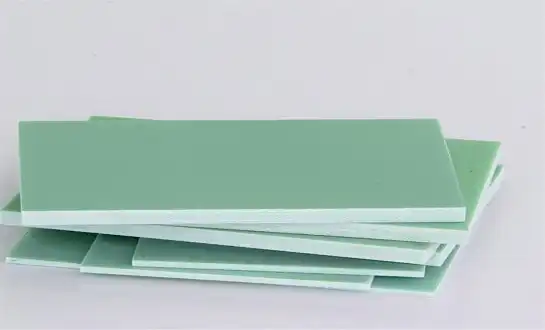
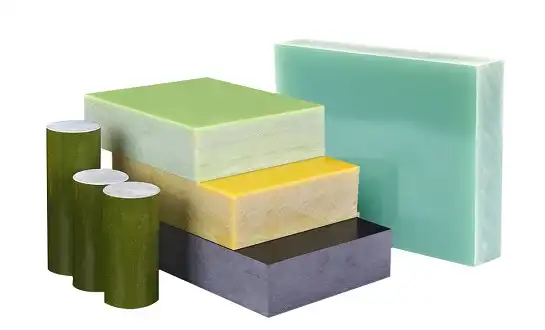
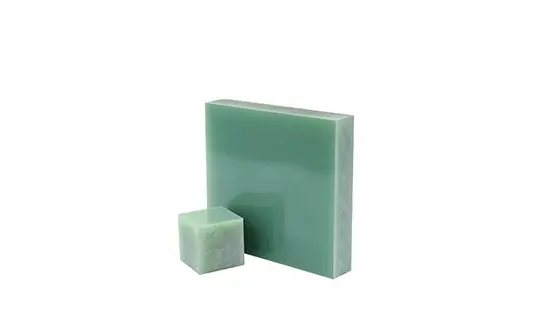
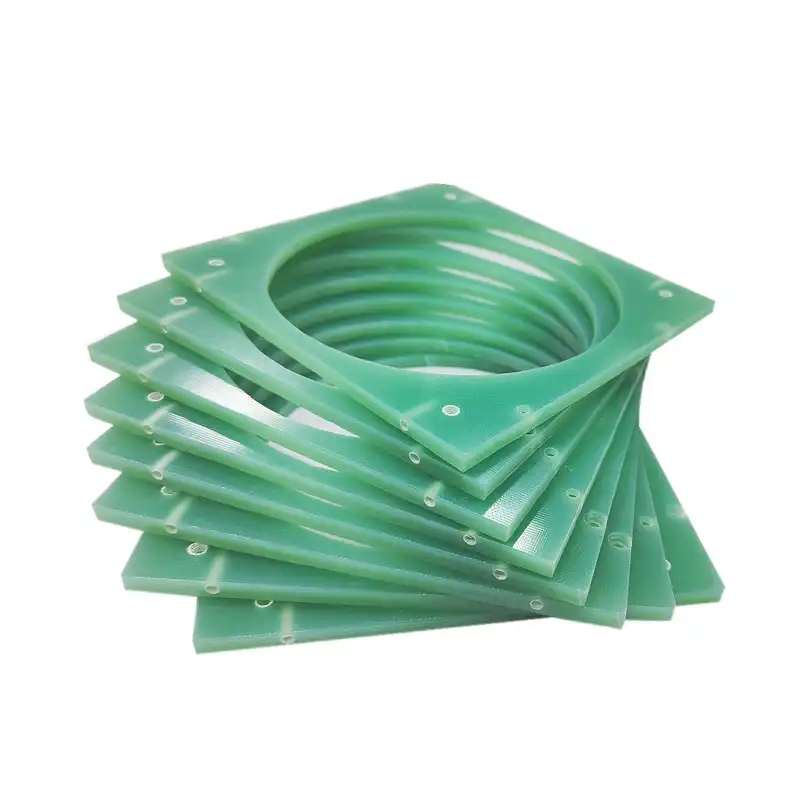
US contract makers are looking for the best FR4 epoxy sheet that is highly dielectric, stable at high temperatures, and easy to machine with a CNC machine. The best FR4 epoxy sheets are flame resistant and have good mechanical strength, which makes them perfect for printed circuit board substrates and electrical insulation tasks in the electronics industry.
Why FR4 Epoxy Sheets Matter for Contract Manufacturing Success?
Contract makers work in a unique setting where they have to meet the needs of many clients while keeping quality high across a wide range of products. The FR4 epoxy sheet you choose has a direct effect on how much you can make, how reliable it is in the long term, and how profitable the project is overall. Contract manufacturers need materials that can be used successfully in a wide range of situations, unlike in-house manufacturing teams that focus on specific types of products.
Modern electronics have to work in settings that are getting harsher. For example, under-the-hood applications in cars have to deal with changing temperatures, and power electronics have to handle high-voltage switching. The epoxy fiberglass matrix in good FR4 sheets gives them the mechanical strength they need to handle stresses caused by thermal growth while keeping their stable electrical properties. This dependability means that contract makers can save money on warranties and make customers happier.
Material uniformity is also a big factor in how well a product is made. Changes in the thickness, resin content, or glass fiber weave of a FR4 sheet can make it hard to drill, delaminate, or make the solder mask not work with the board during the manufacturing process. Contract makers with a lot of experience know that buying high-quality materials can often lower the overall cost of a project by increasing yields and lowering the need for rework.
Essential Selection Criteria for Premium FR4 Epoxy Sheets
To find the best FR4 epoxy sheet, you have to look at a number of performance factors that have a direct effect on how well the making goes. The dielectric strength is the most important thing to think about because bad insulating qualities can cause catastrophic failures in high-voltage situations. Good materials usually have a dielectric strength of more than 20 kV/mm, which means they will work reliably for a wide range of electrical needs.
The thermal performance qualities should also be looked at, especially for uses that need to work at high temperatures. The glass transition temperature (Tg) tells us how the material reacts to heat stress, and the thermal expansion coefficients tell us how stable the dimensions are during the building process. For demanding uses, materials with Tg values above 170°C are more reliable.
Mechanical qualities have a big effect on both the making process and the performance of the finished product. Flexural strength tells you how well something will hold up against bending forces during use and handling, while impact strength tells you how long something will last in places where shocks are common. The design of the glass fiber reinforcement also affects the quality of drilling and the dependability of multilayer structures.
In today's world market, regulatory compliance is important and can't be ignored. UL certification makes sure that fire safety standards are met, and ROHS certification makes sure that the product is safe for the environment. There are also many uses that need special certifications, such as meeting the IPC-4101 specification for military or aerospace projects.
Top FR4 Epoxy Sheet Recommendations for Contract Manufacturers
High-Performance Standard Grade FR4
It is recommended that standard grade FR4 epoxy sheets be used for basic electronics manufacturing because they are very good at both performance and cost-effectiveness. Most of the time, these materials have Tg values between 130°C and 140°C and decomposition temperatures above 300°C. This means they can be used in most consumer electronics and industrial control uses.
Standard grade materials use balanced weave patterns for the glass fiber reinforcement, which makes the mechanical qualities the same in both machine and cross directions. This isotropy is very important for keeping the board from warping when processing big panels, and it also makes sure that the quality of the drilling is the same across the whole board. At 1 MHz, dielectric constant values are usually between 4.2 and 4.8, which means that most circuit designs can be sure of how well the electricity will work.
One benefit for manufacturing is that it is very easy to cut with a CNC machine. This lets complex mechanical parts be made precisely without fiber pullout or edge chipping. When the epoxy glue system dries, it leaves a smooth surface that helps solder masks stick and allows for fine-pitch component mounting. Usually, thickness limits stay within ±10% of each other, which helps controlled impedance designs work reliably.
Standard grade materials are good for high-volume production where quality performance isn't necessary because they are cheaper. However, contract makers should check the performance of temperature cycling for uses that will be subject to a lot of thermal stress, since standard grades may not be as reliable as high-Tg options.
High-Temperature FR4 Epoxy Composite
High-temperature FR4 versions meet the tough needs of electronics in cars, power conversion equipment, and industrial motor drives that have to work at high temperatures, which is hard for regular materials. The melting point of these high-tech composite laminates is higher than 170°C, and their traits stay stable at temperatures up to 155°C.
The better thermal stability comes from changing the chemistry of the epoxy glue so that it doesn't break down in heat and keeps its shape when the temperature changes. This better thermal performance means that copper trace stress is lower, and multilayer constructions that are subject to thermal shock are more reliable.
The electrical qualities stay the same over a wide range of temperatures, and even at high temperatures, the dielectric loss factors stay below 0.02. This stability is very important for power electronics uses where losses have a direct effect on how well the system works and how much heat it needs to handle.
Standard fabrication methods need to be slightly changed to accommodate the enhanced resin system's processing features. For example, the system may need longer cure cycles or different drilling parameters. But for contract manufacturers who work with the automotive or industrial markets, these small changes to the process are usually worth it because they improve reliability in demanding uses.
Long-term aging tests show that these grades keep their performance better than standard grades, with few changes in properties even after thousands of thermal cycles. This edge in reliability often makes the difference in applications that need to last a long time or work in harsh conditions.
Low-Loss RF/Microwave FR4 Variants
Specialized FR4 epoxy sheets with low loss are used in high-frequency uses that need to keep the signal integrity and save power. These materials have changed glue systems and better ways of treating glass fibers that keep the processing benefits of regular FR4 while reducing dielectric losses.
Controlling the dielectric constant is very important for RF applications, and the best materials can give tolerances of ±0.05 or better. The stable dielectric qualities across frequency ranges up to several gigahertz make it possible to predict how well a circuit will work and make designing an impedance matching network easier.
Optimizing the surface roughness lowers the loss of conductors in microstrip and stripline designs. Keeping resin bleed under control makes sure that the trace geometry stays the same after etching processes. A lot of the time, these materials have special glass fabrics that don't have as many weave effects that can change the resistance of sensitive RF circuits.
Concerns about manufacturing include stricter cleaning standards during processing, since contamination can have a big effect on how well high-frequency devices work. However, the fabrication methods are still compatible with normal PCB manufacturing equipment. This means that experienced contract manufacturers can use these materials.
Low-loss materials improve signal integrity and lower power consumption, which makes them useful in many areas, such as wireless communication, radar systems, and test equipment. The higher cost is often worth it because the end result works better.
Market Characteristics and Regulatory Landscape
The global FR4 epoxy sheet market shows how different the needs of foreign electronics manufacturers are. Regional preferences are affected by laws, costs, and the focus of the application. In North America, customers care most about UL certification and environmental compliance. In Europe, on the other hand, customers care most about REACH compliance and lifecycle factors.
More and more, regulations are focusing on how things affect the environment and how materials can be tracked. For example, ROHS compliance is now required for most uses. New rules about PFAS (per- and polyfluoroalkyl chemicals) could change how flame retardants are made in the future, which will keep epoxy resin chemistry coming up with new ideas.
Recent global problems have made supply chain issues more important, and many contract makers are looking for supplier networks that are spread out across multiple regions to make sure they can get the materials they need. As a result of this trend, domestic manufacturing has grown faster and supply lines for important materials have gotten shorter.
The standards for quality certification are always changing. For example, many customers now want ISO 9001 certification, documentation for statistical process control, and full material traceability. These requirements favor suppliers with well-developed quality systems and a lot of knowledge in the field.
Purchasing Recommendations and Key Considerations
To buy FR4 epoxy sheet successfully, you need to think about more than just the original cost of the material. You need to think about how reliable the supplier is, how well they can help with technical issues, and how stable the supply chain will be in the long term. Contract manufacturers should look at how well possible suppliers can provide consistent quality, technical documentation, and helpful customer service.
When a material is being qualified, it should be tested thoroughly under all of its expected working conditions. This should include testing it under different temperatures, levels of humidity, and mechanical stress. By collecting standard performance data, you can keep an eye on quality over time and find problems before they affect production.
Inventory management plans need to take into account how long materials last and how they should be kept, since epoxy-based materials can break down if they are not stored properly. Many successful contract manufacturers set up vendor-managed inventory systems that make sure they always have fresh materials on hand while keeping costs as low as possible.
When choosing suppliers, technical help skills are often very important because complicated applications may need customized materials or expert processing instructions. Suppliers with a lot of knowledge in application engineering can give you useful information that will help you make your products more reliably and more efficiently.
Industry Trends and Summary
As time goes on, the FR4 epoxy sheet business keeps moving toward higher performance materials that can handle more difficult applications while still keeping costs low. Resin chemistry and glass fiber reinforcement technologies are always getting better because of demands for smaller sizes, higher rates, and better environmental conditions.
In this competitive market, contract makers who put in the time to learn about the properties of materials and build strong relationships with suppliers set themselves up for continued success. Leaders in an industry are set apart from basic players by their technical know-how, focus on quality, and reliable supply chains.
Conclusion
To choose the best FR4 epoxy sheet, you need to know what your application needs and match those needs with the right material properties. Investing in high-quality materials usually pays off in the form of higher industrial yields, more reliable products, and lower warranty costs.
When contract makers put quality materials and good relationships with suppliers at the top of their list of priorities, they build long-lasting competitive advantages that help their businesses and their customers. Finding the right balance between efficiency needs, cost concerns, and reliable supply chain support is the key.
To be successful in today's tough electronics market, you need partners who know about both materials technology and manufacturing realities. These partners can provide the technical help and reliable supply chain that make it possible to consistently produce high-quality goods.
FAQs
What kind of width range should I expect from good FR4 epoxy sheets?
For standard grades, premium FR4 materials usually keep thickness tolerances of ±10%. Tighter tolerances are offered for important applications. Some specialized goods have controllable tolerances of ±5% for uses that need precise impedance matching or mechanical fit requirements.
How do I figure out what the glass transition temperature should be for my use?
To make sure that the dimensions stay the same, choose Tg numbers that are at least 20 to 30°C higher than your highest operating temperature. When using lead-free soldering, pick materials with a Tg of at least 170°C so they can handle the higher processing temps without breaking down.
What kinds of licenses do I need to work with technology in cars?
UL recognition, ROHS compliance, and often specific automotive certifications like TS16949 quality system compliance are needed for automotive uses. For some uses, you may also need flammability ratings according to UL94 V-0 standards and temperature cycling qualification according to standards in the automotive business.
Ready to Source Premium FR4 Epoxy Sheets? Partner with J&Q
With more than twenty years of experience making insulating sheets and more than ten years of experience dealing internationally, J&Q is the best company to get FR4 epoxy sheets from for tough contract manufacturing jobs. We can give you consistent, high-performance materials that meet your exact needs because we have a deep knowledge of global quality standards and work with many trading companies in both the United States and other countries.
Our integrated logistics capabilities allow us to provide a real one-stop service, from choosing the materials to delivering them to your manufacturing site. This simplified method gets rid of coordination problems and guarantees a reliable supply chain that keeps up with your production schedules and customer promises.
Our technical team can help you choose the right materials and be there for you throughout the whole production process, whether you need standard grade materials for high-volume consumer electronics or high-temperature variants that are specifically made for automotive uses. Get in touch with us at info@jhd-material.com to talk about your unique needs and enjoy the peace of mind that comes from working with a well-known company in the field.