Best CNC Machines for Processing Industrial Phenolic Sheet
When looking for the best CNC machines for working with industrial phenolic sheet, you need machines that are precise, good at controlling dust, and compatible with the material. When working with phenolic sheet, whether it's made of paper, cotton cloth, or canvas strengthened, you need to use specific cutting techniques to keep the tolerances tight and avoid breaking. High-performance CNC machines with strong vacuum systems, stable gantry designs, and carbide cutting support can make electrical insulation parts, mechanical spacers, and structural parts all the same. This guide helps engineers and buying managers find tools that make the least amount of waste while still getting the most work done in fields like making electronics, distributing electricity, and making cars.
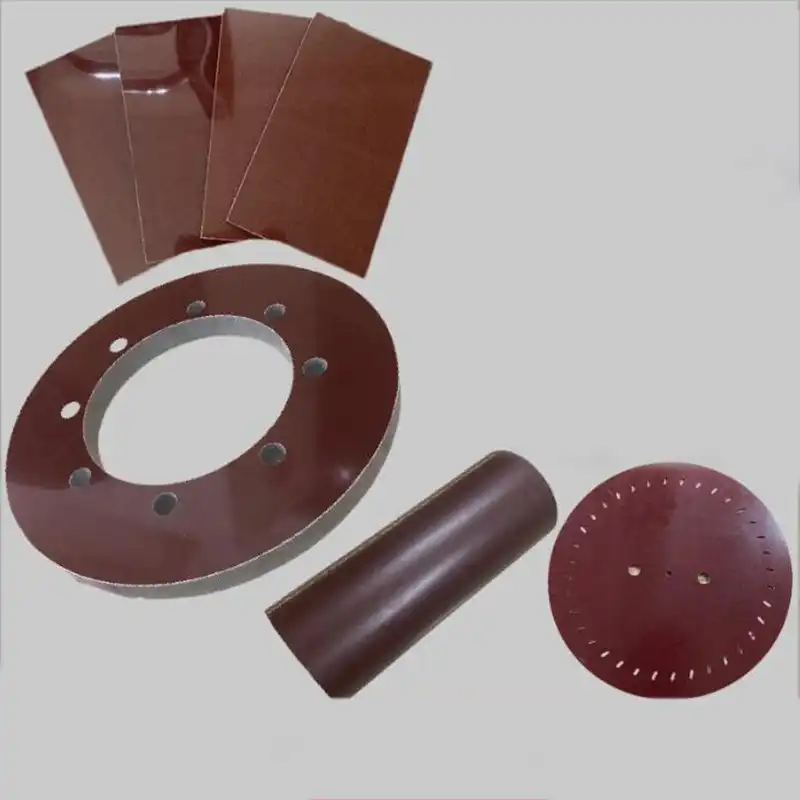
Understanding Industrial Phenolic Sheets and Processing Challenges
Industrial phenolic sheets are a type of high-pressure material that is made for harsh conditions. Phenolic Paper Sheet, which comes in NEMA types X, XX, and XXX, is made with cellulose paper as a reinforcement. It is easy to machine and cheap, making it a great choice for mounting boards, PCB support structures, and low-voltage insulation barriers. This material solves the problem of tool wear in sacrificial machining—since it is not abrasive, it makes cutting tools last longer than fibreglass options while still offering safe electrical insulation at a reasonable price.
Medium-weave cotton cloth reinforcements in phenolic cotton sheet make it stronger mechanically. This makes it a material that is valuable in switches, transformers, and aircraft parts. The cotton base is very stable in terms of size and has good electrical insulating qualities, so it can be used in situations where reliable performance under mechanical stress is important. Because it is denser than paper types, it can hold more weight in structure and electrical uses.
Heavy cloth fabric (usually over 4 oz per square yard) is used in CE Phenolic Sheet to make it more resistant to impact and shaking. This grade is designed to protect metal-on-metal parts from wear by having self-lubricating, non-galling surfaces that lower noise in gear trains and offer moderate dielectric insulation along with mechanical toughness. For better longevity, the rougher weave gives up surface finish, which makes it perfect for heavy-duty mechanical parts and explosion-proof shelters.
Processing these materials presents unique problems that affect the choice of machine. Phenolic laminates are flimsy, and if you use dull tools or the wrong cutting settings, the edges can chip. During cutting, the thermosetting glue produces heat, which could lead to surface burning or micro-cracking if proper cooling methods are not used. Most importantly, phenolic dust is bad for your health and the environment. The small particles that are made during routing, drilling, and grinding need good catch systems to keep workers safe and the work area clean. Material hardness speeds up tool wear, so strong frames and high-quality cuts coated in carbide or diamond are needed to keep production costs low.
Criteria for Selecting the Best CNC Machines for Phenolic Sheet Processing
When choosing the right CNC machinery for phenolic sheet processing, you need to look at a number of performance factors that have a direct effect on the results. Machine stability is very important. A heavy-duty frame and precise linear guides keep the machine from shaking during high-speed cutting, which keeps the dimensions of each production run accurate and reduces chipping along the cut edges. When working with thicker phenolic grades, a rigid gantry design keeps it from bending, which ensures consistent depth control and cuts that are straight.
Here are the main technology requirements for phenolic production equipment that works well:
- Spindle power and speed range: Motors with 3.5 to 7.5 kW and varying speed control (8,000 to 24,000 RPM) can handle different types of materials and equipment needs, so workers can find the best cutting settings for laminates made of paper, cotton, or canvas.
- Industrial vacuum systems with a minimum 3,000 CFM capacity can be directly attached to spindle shrouds and vacuum tables to collect phenolic dust at its source. This protects the health of the user and keeps resin from building up on machine parts, which could affect accuracy.
- Tool compatibility: Standard ER collet systems that work with carbide compression bits, diamond-coated spiral flutes, and specialised phenolic cutters let users fit the shape of the tool to the job at hand, which increases tool life and makes the surface finish better.
- Control system features: More advanced CNC processors with look-ahead buffers and acceleration management lower stuttering during complicated shapes and keep feed rates steady to avoid burning and make sure edges are clean.
All of these professional skills work together to meet the needs of phenolic products. Structural strength and dust management work together to make production stable. Tooling flexibility and clever motion control improve surface quality and operating efficiency.
Safety rules in the job must be followed at all times. Machines made for composite processing usually have protected work areas, automatic tool changes to keep operators as safe as possible, and built-in tracking systems that let operators know when the dust collection system stops working. These safety features keep your workers secure while still meeting the high standards of output needed in modern factories.
Top 5 CNC Machines Recommended for Industrial Phenolic Sheet Processing
Several types of machines regularly perform well for phenolic uses based on their operating skills, user comments, and cost-effectiveness in B2B industrial settings. The best choice for your operation will rely on the number of parts you need to make, how complicated they are, and your budget.
Heavy-Duty Gantry CNC Routers
Heavy-duty industrial gantry cutters with welded steel frames are perfect for handling a lot of phenolics. The dual-zone vacuum tables in these machines keep the sheet stock in place while they cut, so the material doesn't move and affect the accuracy of the measurements. Servo motor drive systems allow for repeatable moving accuracy of less than 0.001 inches, which is very important when making electrical insulation parts with tight tolerances. Full-size phenolic sheets (usually 48 x 96 inches) can fit in the open bed form, which cuts down on material handling and trash from offcuts. Advanced dust collection holes placed around the spinning assembly successfully collect particles, keeping the work area clear and cutting down on the time needed to clean up between jobs.
Compact CNC Milling Centers
OEMs and job shops that make a modest number of phenolic sheet parts can use milling centers with smaller footprints. These machines have the stiffness of a vertical machining center and the ability to cut composite materials. They also have automatic tool changes that let workers set the order of roughing and finishing processes without having to do it themselves. Enclosed work boxes keep dust and noise inside, so they can be used in places with strict environmental rules. The smaller working area (usually 24 x 36 inches) makes it harder to move the materials around, but it gives complex shapes like gear flats and precision spacers a better surface finish.
5-Axis CNC Routers
5-axis simultaneous cutting is useful for making complex composite parts that need to be drilled at an angle, have edges chamfered, or have surfaces shaped. By keeping the best cutting angles throughout the process, continuous toolpath control gets rid of moving mistakes and shortens cycle time. This feature comes in handy when making custom electrical barriers with complex shapes or parts for car battery packs that need precise angled features. The extra money spent on 4-axis equipment is worth it in situations where the complexity of the part allows for more efficient machine use and fewer secondary processes.
Entry-Level CNC Routers with Upgrade Paths
Companies that want to start handling phenolics or trying out new product lines often find that flexible systems are helpful because they balance the original investment with the ability to grow. At prices that most people can afford, these machines do the basics: they have enough spinning power, basic hoover hold-down and stable motion control. As production rates rise, makers can expand their machines' powers by adding things like automatic tool changes, better dust collection, and longer Z-axis motion. This method lowers the financial risk while building process knowledge that will help with choosing tools in the future.
Specialized Laminate Processing Systems
Machines that were made to work with non-metallic materials have features that make phenolic processing more efficient. Down-shear compression moulding systems, mist cooling delivery, and vision-based edge recognition are all improvements that raise yield and lower the level of skill needed by operators. These specialised systems are very expensive, but they make cutting more efficient and improve the quality of the products. This is especially helpful when working with expensive materials or making parts that have to meet strict quality standards.
To choose from these groups, you need to make sure that the machine's skills match your output needs. High-mix, low-volume processes gain from being flexible and being able to switch between tasks quickly. Dedicated phenolic processing lines, on the other hand, put output and dust control first. To find the best investment, we suggest doing thorough cost-per-part studies that take into account how the machine is used, how much tooling is used, and how much labour is needed.
Optimizing CNC Machining Processes for Phenolic Sheet
Choosing the right machine is only half of good phenolic sheet processing. The working factors have a big impact on the quality of the surface, the life of the tools, and the cost of production. The links between spindle speed and feed rate depend on the type of material and the shape of the tool, so they need to be tested in a planned way to find the best ones.
Paper-based phenolic grades usually work well when machined at higher speeds (16,000 to 20,000 RPM) and modest feed rates (150 to 250 inches per minute). This makes small chips that hoover systems can easily collect. Cotton cloth laminates can handle slightly slower speeds (12,000 to 16,000 RPM) and higher feed rates (200 to 300 IPM), which keeps heat production and output in check. To keep the harder base from burning, canvas-reinforced types like CE need strong cutting settings, such as modest speeds (10,000 to 14,000 RPM) and aggressive feeds (180 to 250 IPM).
Choosing the right tools has a huge impact on the results. Compression spiral bits with alternating up-cut and down-cut flutes keep the top and bottom surfaces from tearing out. This is very important when making electrical insulation parts because the quality of the edges affects how well the dielectric works. When working with rough composite materials, diamond-coated carbide tools last three to five times longer than bare carbide tools. This lowers the cost of tools used in large-scale production. Single-flute designs are better at removing chips than multi-flute designs because they don't let plastic build up, which can lead to burning and changes in the size of the parts.
Strategies for cooling need to be carefully thought out. By adding water to the resin matrix, flood coolants are often used in machining to cause phenolic delamination. For most uses, air blast cooling is enough to get rid of heat without damaging the material. Mist systems that use little oil offer better cooling for hard tasks like constant edge cutting or deep drills where heat buildup is a problem.
The health risks of phenolic dust and formaldehyde fumes that come from grinding must be included in safety rules. Enough air flow keeps the air quality in the workplace below the acceptable exposure levels. Personal safety equipment, such as respirators and skin shields, keeps workers from coming into direct touch with harmful substances. Regularly checking the performance of the dust collection system makes sure that it always works well, avoiding dust buildup that could be hard to clean or even cause fires.
Maintenance methods have a direct effect on how accurate and up-to-date a machine is over time. Linear guides and ball screws get rid of phenolic dust every day, before sharp particles cause them to wear out too quickly. When you check the spindle bearings once a week, you can find signs of approaching failure, like excessive heat buildup or strange vibrations, so you can replace them before they break completely. Calibration of the machine's shape once a month makes sure that the dimensions stay accurate even as parts wear down naturally. This keeps the quality of the parts high over long production runs.
Conclusion
To choose the best CNC machines for handling phenolic sheets, you have to think about their technical skills, their practical needs, and their cost. Machines with strong construction, good dust management, and features that are specific to the material give you the performance you need to quickly make high-quality electrical insulation parts, mechanical parts, and thermal barriers. Knowing about the properties of different types of materials, like paper-based laminates and canvas-reinforced grades, lets you make smart choices about what tools to buy and how to use it so that you can get the most work done while keeping costs low.
A successful buying process includes more than just machine specs. It also includes relationships with suppliers that offer ongoing support, technical knowledge, and reliable material supply. When manufacturers combine these factors, they gain a competitive edge by making better parts, cutting down on production costs, and responding faster to market possibilities. Buying the right CNC equipment and building strong relationships with suppliers lays the groundwork for long-term growth in fields that need precise, reliable, and high-performing parts made from phenolic materials.
FAQ
Can regular CNC machines work well with phenolic sheets?
General-purpose CNC tools can cut composite materials, but the results aren't always the best. Standard welding tools don't have the dust collection systems needed to handle phenolic particles, which can be harmful to your health and cause problems with cleaning. Spindle speed levels that are best for metal might not be able to handle the higher RPMs that are good for cutting clean melamine. Machines made for composites have features that make results much better, such as hoover hold-down, better dust extraction, and control systems that are tuned for non-metallic materials.
What safety rules must be followed when cutting phenolic laminates?
The most important thing for safety is to get rid of dust as well as possible. Industrial hoover systems with HEPA filters catch fine phenolic particles before they get into the air in the workplace. When there is enough general airflow, the air quality stays below the standards for formaldehyde and phenolic chemicals that can be harmful to workers. When doing work that creates a lot of dust, operators should make sure they have the right breathing protection on. Regular cleaning keeps dust from building up, which could cause fires or make people more sensitive to allergies. Material safety data sheets tell you exactly what to do with the types of phenolics you work with.
How can we make tools last longer when working with rough composite materials?
When working with rough composite materials, diamond-coated carbide equipment lasts the longest, but it costs more at first than regular carbide. Thermal wear that damages tool edges can be stopped by adjusting the cutting settings to find a balance between the rate of material loss and the amount of heat produced. Using air blast cooling stops resin from building up on the cutting edges, which speeds up wear. Regular tool checking lets you find edge wear early, so you can change the tool before it hurts the quality of the item. Setting up methods to track the life of tools helps find the best repair times that match the cost of the tools with the quality of the parts they make.
Partner with J&Q for Superior Phenolic Sheet Processing Solutions
To be the best at making phenolic components, you need more than just good equipment. You also need to know a lot about the materials, the process, and the supply chain. J&Q has been making high-quality insulation materials for more than 20 years and has worked with other countries on foreign trade for ten years. They serve electrical makers, industrial machinery builders, and auto providers all over North America. Because we know a lot about all kinds of phenolic sheets, from paper-based grades to heavy canvas laminates, we can suggest ways to process them that will get the most out of your tools.
As a well-known provider of phenolic sheets with combined shipping capabilities, we offer a one-stop service that makes buying easier and speeds up the production process. Our expert team can help with application engineering to find the best cutting settings, suggest the right tools, and fix processing problems that come up during the ramp-up of production. Our production skills and quality systems ensure consistent material performance that supports your name in tough markets, whether you need NEMA-grade materials for electrical insulation, CE phenolic for mechanical uses, or special specs for your own designs.
Talk to our experts about your phenolic production needs by emailing info@jhd-material.com. We can help you find the right material types for your application, find CNC machine sources who have a track record of success in composite processing, and set up supply deals that support your production goals with on-time shipping and technical support.
References
National Electrical Manufacturers Association. "NEMA Standards Publication LI 1-1998: Industrial Laminated Thermosetting Products." National Electrical Manufacturers Association, 1998.
Chawla, Krishan K. "Composite Materials: Science and Engineering." Springer Science & Business Media, Third Edition, 2012.
Society of Manufacturing Engineers. "Machining of Plastics and Composite Materials: Technical Papers." Society of Manufacturing Engineers Press, 2019.
American Society for Testing and Materials. "ASTM D229-20: Standard Test Methods for Testing Rigid Sheet and Plate Materials Used for Electrical Insulation." ASTM International, 2020.
Kobayashi, Akira. "Machining of Plastics: Analysis and Process Optimization." McGraw-Hill Professional, 2016.
Industrial Safety & Hygiene News. "Best Practices for Dust Control in Composite Manufacturing Environments." BNP Media Group, 2021.

Get a complete product list and quotation

J&Q New Composite Materials Company



