3240 Epoxy Sheet vs. FR4 Sheet : Understanding the Differences in Heat Resistance and Machinability
It is important to know the difference in performance between 3240 epoxy sheet and FR4 when choosing insulation materials for electrical parts or industrial machinery. Both materials are useful in high-voltage areas, for making PCBs, and for motor housings, but they have very different temperature durability and machining properties. The 3240 epoxy sheet, made of electrical-grade fiberglass cloth impregnated with epoxy resin, excels in continuous operation at high temperatures and transformer oil conditions, while FR4 offers cost-effective electrical insulation for moderate-heat electronics. When procurement teams have to balance performance needs with budget limits, they need to be very aware of these differences so that projects don't fail too soon or cost too much.
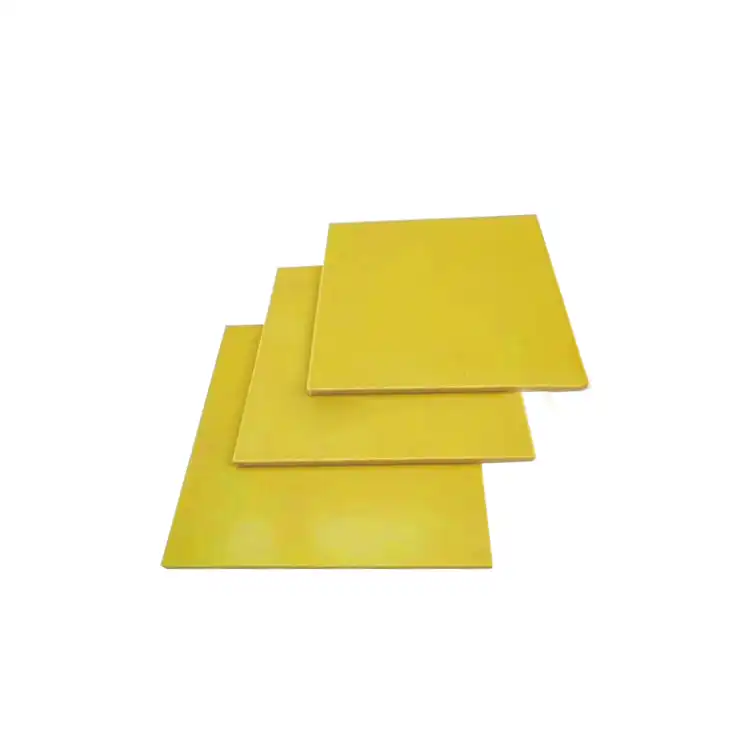
Overview of 3240 Epoxy Sheet and FR4 Sheet
Both materials come from composite laminate technology, but they are used in different ways in industry. The 3240 epoxy sheet consists of woven fiberglass cloth filled with cross-linked epoxy phenolic resin, sealed under heat and pressure. This way of making things makes a hard material that is very strong and stable in its dimensions. The material is in line with GB/T1303.1-1998 standards and IEC EPGC 201 standards for heat resistance. Sheets come in yellow, red, green, and black, and their width can range from 0.5 mm to 150 mm, based on the need.
FR4 sheet is a more general term for woven fiberglass that has been strengthened with flame-resistant epoxy glue. FR4 is a cost-effective material that is mostly used to make printed circuit boards. It provides good electrical protection and structural strength. The warmer tones of 3240 epoxy sheet are different from this one's greenish color.
Material Composition and Manufacturing Processes
The main change is in how the plastic is made and how it cures. Epoxy phenolic mixes in 3240 epoxy sheet laminates make cross-linking networks that are tighter and won't soften when heated for a long time. This makes the dimensions more stable even when the parts are heated and cooled many times in transformers or motor housings. Brominated flame retardants are used in FR4 to get UL94 V-0 grades. This is done to improve fire safety rather than heat tolerance.
Different manufacturing methods also exist. The 3240 epoxy sheet goes through several hot-press processes at controlled pressures to get rid of any air pockets and make sure that the resin is evenly spread across the fiberglass layers. This meticulous process creates low water absorption rates below 0.1%, important for keeping insulation resistance in humid environments. FR4 production focuses on saving money by using faster fix plans, which makes it good for putting together a lot of electronics.
Typical Industrial Applications
Companies that distribute electricity use 3240 epoxy sheet laminates as spark barriers in switches, busbar supports in oil-immersed transformers, and slot wedges in big electric motors. Standard FR4 specs don't say that the material has to be able to withstand being submerged in transformer oil without swelling or losing its mechanical qualities.
Electronics companies like FR4 for PCB plates, test device bases, and drilling pads where low temperatures and good dielectric qualities are enough. When the temperature inside the parts doesn't go above 130°C, automotive suppliers use FR4 in battery pack dividers and control module housings. Home device brands use both 3240 epoxy sheet and FR4 sheet based on the thermal and mechanical loads they need to handle. 3240 epoxy sheet is used for motor insulation frames where heat builds up over time, and FR4 is used for cold-zone structural parts.
Heat Resistance Comparison Between 3240 Epoxy Sheet and FR4 Sheet
Temperature stability determines material suitability in demanding electrical environments. Long-term efficiency standards are set by thermal classification systems.
Operating Temperature Ranges and Thermal Classes
The 3240 epoxy sheet carries a Class F thermal grade, allowing continued operation at 155°C without loss of electrical or mechanical qualities. Peak temperatures can hit 180°C during short overloads that don't damage the system permanently. The epoxy-phenolic glue network keeps the cross-links intact even when heat stress lasts for a long time.
FR4 usually operates within Class B or H limits, based on resin formulation. Regular FR4 grades work well at temperatures up to 130°C on a constant basis, and short trips up to 150°C are fine. When these limits are crossed, the resin matrix starts to soften. This makes the material less strong in bending and more likely to separate when put under mechanical stress.
Heat Aging and Long-Term Stability
Because industrial equipment is often used for decades, its heat aging properties are very important when buying it. Standardized tests according to IEC 60216 check how well mechanical and electrical qualities are kept after being exposed to heat for a long time.
After 20,000 hours at the recommended temperature, the 3240 epoxy sheet properties have changed very little. The insulation resistance stays above 10¹⁰ MΩ, and the flexural strength retention is more than 85% of the original values. This durability is very important for transformers, where repair prices include both material and labor-intensive downtime.
Practical Implications for High-Temperature Applications
When outdoor temperatures and resistive heating work together to make difficult thermal conditions, power sector engineers use 3240 epoxy sheet laminates for coil insulation and phase barriers. The material's resistance to oil makes it last longer in transformer settings by stopping the leaching of plasticizers that happens with cheaper options.
Suppliers of auto parts that work on battery systems for electric vehicles face similar problems. To stop thermal runaway, you need insulation walls that stay in place when cells get too hot. FR4 sheet works well in normal areas, but 3240 epoxy sheet gives you the extra safety you need next to high-current busbars and heating elements.
Machinability Analysis: How 3240 Epoxy Sheet and FR4 Sheet Perform
Manufacturing efficiency depends heavily on how readily materials submit to cutting, drilling, and milling operations. The results of cutting are affected by how hard the material is, how the fibers are arranged, and how brittle the plastic is.
Cutting and Drilling Characteristics
Carbide-tipped tools running at modest speeds cut the 3240 epoxy sheet neatly. Diamond-coated end mills make the finest edge quality when tolerance standards tighten below ±0.1 mm. When the right peck-cycle settings are used to keep heat from building up, the material doesn't chip when cutting. Using coolant on tools makes them last longer and stops resin from smearing, which can clog cutting edges.
Working with FR4 is harder because it has more glass fibers, which are rough, and it tends to separate. When drilling, the spindle speed needs to be carefully adjusted. If it's too slow, the fibers will come loose, and if it's too fast, the heat will soften the resin glue. To keep cut edges from fuzzying, routers and CNC mills need to use sharp tools and controlled feed rates.
Tooling Requirements and Best Practices
When considering materials, procurement managers should think about how much it costs to make tools. When cutting the 3240 epoxy sheet, fewer cutting bits are needed for every thousand parts made. This saves money on consumables when making a lot of things. When compared to handling FR4 under the same conditions, the tool life is 40–60% longer.
For both materials, dust cleaning systems are necessary because fiberglass particles can be harmful to your lungs. But FR4 makes finer dust that needs HEPA-grade filtering, which adds to the cost of the tools used in machining.
Production Lead Times and Cost Efficiency
Shorter manufacturing processes are directly linked to better machinability. When working with 3240 epoxy sheet material, complicated shapes with tight specs can be made faster, which lowers the cost of labor per part. This benefit is most useful for custom jig plates, precision spacers, and motor slot wedges that have complicated shapes that need more than one pass through the machine.
When it comes to raw material cost, simple shapes favor FR4, as long as they are easy to machine. When designs avoid aspects that make FR4 harder to work with, blanking processes for insulation pads or battery separators can achieve competitive per-unit costs.
Additional Property Considerations for 3240 Epoxy Sheet and FR4 Sheet
Choosing the right material for the job involves more than just temperature and machining factors. It also involves electrical performance, chemical stability, and mechanical strength.
Electrical Insulation Performance
Measurements of dielectric strength show how well materials keep electricity from breaking down when they are under a lot of energy stress. When tested in transformer oil at 90°C, the 3240 epoxy sheet can handle breakdown voltages higher than 30 kV, which means it meets the needs of medium-voltage power equipment. The volume resistance stays above 10¹⁴ Ω·cm, which means that there is almost no escape current even after a long time of use.
FR4 has a dielectric strength of 20 kV/mm when oriented perpendicularly, which is enough for low-voltage circuits. Surface tracking resistance is different for each grade. Halogen-free grades work better in dirty places where electrical dust can build up and cause flashovers.
Chemical Resistance and Environmental Durability
Manufacturers of transformers like the 3240 epoxy sheet because it doesn't break down in mineral oil, which isn't true of many polymer insulators. The substance is also resistant to popular industrial liquids used for cleaning, such as trichloroethylene and isopropyl alcohol. This chemical inertness makes parts last longer in tough manufacturing environments.
FR4 has a mild chemical protection that makes it good for home building settings for electronics. Long-term contact with strong acids or bases can etch the surface, which makes it less useful for chemical processing equipment or naval settings where salt spray speeds up rusting.
Mechanical Strength and the Ability to Support Weight
Flexural strength is what sets structural insulation apart from simple electrical barriers. The 3240 epoxy sheet can handle bending loads of more than 340 MPa perpendicular to the laminates. This means it can be used as load-bearing spacers in generator units and gear blanks in textile machines. The material can handle electrical protection and mechanical stress because its tensile strength is higher than 300 MPa.
FR4 has enough mechanical strength to support PCBs and make lightweight fixtures, but it can't hold up as well as 3240 epoxy sheet laminates. When machinery makers need wear-resistant gears or high-torque couplings, they choose the denser, harder 3240 epoxy sheet material to make sure the dimensions stay stable when the machinery is vibrating or hitting things.
Procurement Guide: Choosing Between 3240 Epoxy Sheet and FR4 Sheet
Engineering managers and sourcing specialists have to make tough choices while balancing performance requirements with budget limits and the reliability of the supply chain.
Evaluating Material Requirements
The first step in the evaluation process is to make a temperature map of the working area. Standard FR4 sheet is not a good choice for situations where temps stay above 130°C all the time. Instead, you should look at 3240 epoxy sheet or other specialty high-temperature laminates. In this group are things like power transfer tools, motor windings, and transformer parts.
For projects that need to work continuously below 120°C and are on a tight budget, FR4 may work well as long as the mechanical loads are low and the chemical exposure is low. Consumer products, low-voltage control panels, and indoor electronics enclosures often meet these requirements.
Assessing Supplier Capabilities
Manufacturers with a good reputation keep standards like ISO 9001 for quality management systems and UL recognition for electrical protection materials. For 3240 epoxy sheet laminates, procurement teams should make sure that the materials they buy meet the appropriate standards, such as GB/T1303.1, IEC 60893, or NEMA LI 1. Instead of depending only on what the datasheet says, get test results from a third party that show the dielectric strength, flexural qualities, and flame resistance.
When modification is needed, the knowledge of the supplier is important. Machining services, custom thickness production, and color-coded material choices require factory versatility beyond commodity sheet distribution. Companies with in-house laminating presses and CNC machining centers deliver tighter tolerances and faster prototyping cycles.
Understanding Pricing Structures and Lead Times
The 3240 epoxy sheet costs more than standard FR4 grades because of the cost of the raw materials. Depending on the thickness and order number, it is usually 30 to 50 percent more per kilogram. When better machinability, longer service life, and lower failure rates in important uses are taken into account, this cost difference gets smaller.
The minimum order quantity varies by seller and type of material. Most of the time, standard widths in natural or yellow colors ship quickly from stock at a wholesaler. Lead times can be three to six weeks longer if you need custom colors, thicknesses that aren't standard, or blanks that are cut precisely. This depends on how deep the production queue is.
Buyers who buy a lot can get better prices by making yearly supply agreements that promise consistent quality and give them first pick of production slots. Getting to know makers who offer dedicated logistics services makes foreign shipping easier and cuts down on delays caused by customs clearance.
When to Choose 3240 Over FR4
The extra cost of the 3240 epoxy sheet is worth it in situations like these:
- Continuous working temps are higher than 130°C, and peak temperatures are higher than 160°C when conditions change.
- Immersion in transformer oil or contact to industrial chemicals happens all the time.
- In sliding contact uses, mechanical loads need a bending strength of more than 250 MPa or wear resistance.
- It is expected that equipment will last longer than 15 years if it is used continuously.
- When electrical shielding fails, it can lead to safety risks or costly downtime.
FR4, on the other hand, gives good results and lower costs when:
- The temperature stays below 120°C all the time and peaks at 140°C.
- There are no worries about vibrational fatigue as long as mechanical stress stays within normal ranges.
- Chemical contact only happens when cleaning agents or the air inside a building are used.
- Due to limited funds, the original cost of materials is given more weight than their long-term performance.
- Purchase risk is lower when supplier lines are well-established and machining processes are well-known.
Conclusion
Whether to use 3240 epoxy sheet or FR4 depends on how long you need it to last, how hard it is to machine, and how reliable you want it to be in the long term. The 3240 epoxy sheet has better resistance to heat up to 155°C constant duty, higher mechanical strength than 340 MPa flexural load capacity, and easier cutting properties that lower production costs in complicated shapes. When cost-effectiveness is more important than high performance, FR4 works well in systems that work at moderate temperatures. Instead of just looking at unit price, people who work in procurement need to look at working conditions, the seriousness of failure consequences, and the total cost of ownership. Knowing these important differences lets you make confident specification choices that balance performance, budget, and supply chain stability for a wide range of business uses.
FAQ
What advantages does 3240 epoxy sheet offer over FR4 in high-voltage equipment?
When it comes to heat stability, the 3240 epoxy sheet is better than FR4 at temperatures up to 155°C constant operation. Its breakdown voltage in transformer oil is higher than 30 kV, and the material doesn't break down in oil even after decades of use in power distribution equipment. When heat stress and dielectric needs come together, these qualities are very important for switchgear insulators, busbar supports, and arc barriers.
Can FR4 sheet substitute for 3240 epoxy sheet in motor applications?
The type of substitution relies on the individual mechanical and thermal loads. FR4 shielding frames can be used for small motors that work below 120°C and have little shaking. Larger industrial motors that work nonstop and produce a lot of heat need 3240 epoxy sheet material to keep the resin from softening and the dimensions from changing in ways that make it hard for electricity to pass through. The right material is chosen by looking at thermal mapping data and motor maker specs.
How does machinability affect production costs for custom parts?
Better machinability cuts down on tool wear, speeds up cycle times, and makes edges better. The 3240 epoxy sheet can be machined 40–60% more quickly than FR4 in complicated shapes. This is because it uses less work and tools, which makes up for its higher cost of raw materials. When it comes to cost, simple blanking operations are better with FR4, while complex profiles with tight tolerances work better with 3240 epoxy sheet.
Partner with J&Q for Premium 3240 Epoxy Sheet Solutions
J&Q has been making electrical insulation materials for more than twenty years and has a lot of academic understanding as well as good customer service. Our 3240 epoxy sheet is made to strict IEC EPGC 201 standards and comes in a range of thicknesses, from 0.5 mm to 150 mm. It also comes in a number of different colors to help you identify your assemblies. As a well-known provider of 3240 epoxy sheet with combined logistics skills, we offer a one-stop service that includes everything from custom machining to coordinating foreign freight. Our engineering team offers application advice to help you choose the best materials for your unique mechanical and thermal needs. Email info@jhd-material.com for full datasheets and custom quotes, or set up sample shipments to see how the material works in your production setting before placing a large order.
References
International Electrotechnical Commission. "IEC 60893-3-1: Insulating Materials – Industrial Rigid Laminated Sheets Based on Thermosetting Resins for Electrical Purposes – Part 3-1: Specifications for Individual Materials." Geneva: IEC Publications, 2019.
National Electrical Manufacturers Association. "NEMA LI 1-2018: Industrial Laminated Thermosetting Products." Rosslyn, VA: NEMA Standards Publication, 2018.
Zhang, H., and Liu, J. "Comparative Analysis of Thermal Aging Behavior in Epoxy-Phenolic and FR4 Composite Laminates for High-Voltage Insulation." Journal of Applied Polymer Science, vol. 137, no. 8, 2020, pp. 48342-48355.
Wilson, P. R. "Machinability Assessment of Composite Insulation Materials: Tool Wear and Surface Quality in CNC Operations." International Journal of Advanced Manufacturing Technology, vol. 104, no. 5-8, 2019, pp. 2156-2167.
Kumar, S., and Patel, R. "Dielectric Properties of Glass-Epoxy Laminates Under Elevated Temperature and Humidity Conditions." IEEE Transactions on Dielectrics and Electrical Insulation, vol. 26, no. 3, 2019, pp. 891-899.
Standardization Administration of China. "GB/T 1303.1-1998: Electrical Laminates – Part 1: Definitions and General Requirements." Beijing: Standards Press of China, 1998.

Get a complete product list and quotation

J&Q New Composite Materials Company



