Understanding the Hot Press Manufacturing Process of FR4 Sheets
The hot press manufacturing process of FR4 sheet involves precise temperature and pressure control to create high-quality fiberglass epoxy laminates. This advanced manufacturing method ensures uniform resin distribution throughout the glass cloth layers, resulting in superior electrical insulation properties and mechanical strength. The process begins with layering pre-impregnated glass cloth, followed by controlled heating cycles that typically reach 170-180°C under pressures of 300-400 PSI. This methodology produces consistent dielectric properties and thermal stability essential for electronic applications.

What Is FR4 Material and Its Importance in PCB Manufacturing
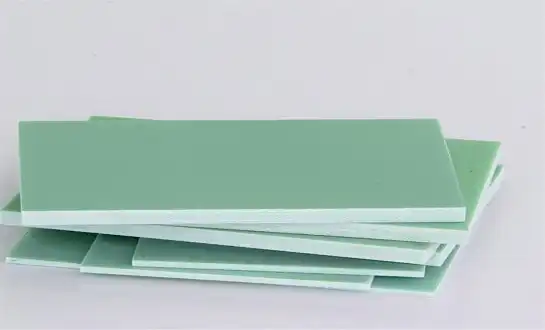
FR4 represents the foundational composite material that drives modern PCB manufacturing across diverse industries. This remarkable substrate consists of woven fiberglass cloth thoroughly impregnated with flame-retardant epoxy resin, creating a robust foundation for electronic circuits.
Composition and Structure of FR4 Laminates
The sophisticated structure of FR4 involves multiple layers of E-glass fabric bonded together with brominated epoxy resin systems. Each glass cloth layer provides mechanical reinforcement, while the resin matrix delivers electrical insulation and thermal stability. The "4" designation refers to the specific resin system used, which offers exceptional flame resistance according to UL 94V-0 standards.
Manufacturing facilities carefully control the glass-to-resin ratio, typically maintaining 60% glass content by weight. This precise balance ensures optimal mechanical properties while preserving excellent electrical characteristics. The weave pattern of the glass cloth significantly influences the final product's performance, with different mesh counts suitable for various application requirements.
Key Properties That Make FR4 Industry Standard
The exceptional combination of properties makes FR4 the preferred choice for demanding electronic applications. Dielectric constant values typically range from 4.2 to 4.8 at 1 MHz, providing stable signal transmission characteristics across wide frequency ranges. Thermal properties include a glass transition temperature exceeding 130°C and continuous operating temperatures up to 130°C.
Some of the mechanical strength properties are a flexural strength of more than 415 MPa and good dimensional stability in a wide range of weather situations. When submerged in water for 24 hours, the material usually absorbs less than 0.15% of its weight in water. All of these qualities make sure that the product works well in harsh conditions like those found in industry and automobile settings.
Comparison with Alternative PCB Materials
Other options, such as CEM-1, polyimide, and metal-core substrates, are useful for certain tasks, but FR4 sheet materials offer the best mix of performance and cost-effectiveness. The cost of CEM-1 is cheaper, but its thermal and mechanical performance is worse, so it can only be used for simple single-layer uses.
Polyimide surfaces work great in uses that go above 200°C, but they are very expensive, which keeps many people from using them. Metal-core supports are great for keeping LEDs cool, but they lose their ability to keep electricity from flowing through them. These performance gaps are filled by FR4 materials, which work reliably at temperatures ranging from -40°C to +130°C while still being cost-effective for mass production.
The Hot Press Manufacturing Process of FR4 Sheets Explained
The hot press manufacturing method is an important technology that turns raw materials into laminates that are precisely designed and meet strict industry standards. To get regular high-quality results, this complex process needs a lot of different factors to work together perfectly.
Preparation and Layering Phase
The first step in making something is carefully preparing the glass cloth and pre-preg ingredients. Each roll of glass cloth is checked by quality control teams to make sure it is equal. They look at the mesh count, differences in thickness, and surface contamination. Controlled resin application is part of the pre-preg preparation. This makes sure that the resin is spread out evenly and has the right amount of material.
Layering processes must follow strict rules to keep things clean and free of air bubbles. Particle counts stay below certain boundaries in clean rooms, and temperature and humidity settings stop resin from activating too soon. Each layer is carefully lined up to make sure that the finished product has the same thickness all over.
Temperature and Pressure Control Parameters
The hot press cycle has several steps of heating and freezing that are meant to make the resin move and cure better. The first stages of heating usually hit 140 to 150°C, which lets controlled resin flow get rid of any gaps and fully saturated the glass cloth. Peak temperatures between 170 and 180°C start the hardening process, which makes polymer networks that are cross-linked.
Pressure is applied based on carefully planned shapes, starting with light touch pressure to keep the resin from squeezing out. As the pressure rises, it stays between 300 and 400 PSI to make sure that the mixture is completely consolidated and that the thickness is precisely controlled. Cooling processes with constant pressure stop internal stress from building up, which could damage long-term dependability.
Quality Assurance and Testing Procedures
Each production lot is checked against set standards using thorough testing procedures. Electrical testing includes measuring dielectric strengths greater than 20 kV/mm and surface resistance values that show the insulation is still intact. The glass transition temperatures and coefficients of thermal expansion are checked by thermal analysis.
Measurements of bending strength, peel strength, and dimensional stability are all part of mechanical tests. Modern testing labs use automated systems that can handle many samples at once, which gives statistical trust in quality measures. Documentation tools keep track of all test results, making sure that they can be tracked all the way through the supply chain.
Comparing FR4 with Alternative Manufacturing Methods and Materials
Understanding the unique benefits of hot press manufacturing helps sourcing workers choose the right materials. When it comes to important tasks, this comparison shows why FR4 sheet goods made with hot press methods always do better than other options.
Hot Press vs. Autoclave Processing
While autoclave processing is better at getting rid of voids, it takes a lot longer and uses a lot more energy. The hot press method gets the same level of quality while being more efficient, which lowers the cost of production without lowering the standards of performance. Compared to autoclave methods, cycle times usually cut by 40 to 60%.
Autoclave devices have trouble keeping big panels at the same temperature, especially when the laminates are thick. Direct contact heating in hot press tools gives you better temperature control, so the material cures evenly across its width. This benefit is especially useful for layered designs that need precise bonding between layers.
Performance Benefits of Hot Press Manufacturing
By improving the surfaces between the fibers and the resin, hot press manufacturing makes materials with better mechanical qualities. The controlled pressure application brings the resin and glass strands into close touch, which improves the efficiency of load transfer. The goods that come out of this have better resistance to wear and better dimensional stability when heated and cooled many times.
Some benefits of better electrical performance are less dielectric loss and better signal integrity through less waste material. By getting rid of air spaces, you block paths for moisture to enter that could damage the long-term reliability. The quality of the surface finish makes it as smooth as a mirror, which makes accurate cutting and assembly easier.
Procurement Insights
To successfully buy high-quality FR4 sheet materials, you need to know the important specs and factors for evaluating suppliers. Modern buying plans need to find a mix between meeting performance standards, cutting costs, and making sure the supply chain is reliable.
Essential Specification Parameters
Thickness tolerance is a basic requirement that affects the compatibility of subsequent processes. For precise tasks that need control of 5% or more, standard limits of 10% might not be enough. Copper coating comes in different weights, from 0.5 oz to 4 oz, and each one meets the needs of a different circuit design.
Specifications for surface quality include standards for roughness, cleaning, and accepting defects. To make sure that the circuit is stable, the peel strength values between the copper and the base must be higher than the minimum levels. It is important to carefully match thermal qualities like the glass transition temperature and the coefficient of thermal expansion to the thermal conditions where they will be used.
Supplier Evaluation and Certification Requirements
Certification of the quality management system, especially ISO 9001 and, if necessary, norms relevant to the automotive industry, is the first step in evaluating a supplier. The review of manufacturing skill looks at things like the age of the equipment, how it is maintained, and how complex the process control is. Using statistical process control shows that you are dedicated to consistently delivering high-quality goods.
RoHS, REACH, and conflict minerals rules that affect global supply lines are all part of environmental compliance testing. Accreditation of testing laboratories makes sure that the data they produce is accurate, and tracking systems give people trust in the history of the materials they use. An evaluation of financial security guards against the risk of supply disruptions that could delay production schedules.
Strategic Ordering and Inventory Management
Different providers have very different minimum order amounts, so it's important to find a good balance between the costs of inventory and the ease of buying. To optimize lead time, you need to know about source capacity limits and changes in seasonal demand. Strategic relationships with several sellers give you peace of mind about your supply while keeping your prices low.
Inventory management plans need to take into account things like how long things can last on the shelf and what kind of store space is needed. Just-in-time shipping plans lower the amount of operating capital that is needed while still making sure that materials are available on time for production schedules. Setting up a quality agreement spells out the criteria for accepting materials and the steps that need to be taken to fix materials that don't meet the standards.
Future Trends and Innovations in FR4 Sheet Manufacturing
The FR4 sheet manufacturing industry continues evolving through technological advancement and changing market requirements. These changes affect how companies buy things and their long-term ties with suppliers in many different types of industries.
Advanced Resin Systems and Formulations
The goal of the next wave of resin systems is to improve thermal efficiency while keeping the flame-retardant qualities. Low-loss formulas are made for high-frequency uses where data integrity is very important. Halogen-free systems are better for the environment and still have the performance qualities needed for tough jobs.
Bio-based plastic parts are better for the earth and don't change the way they work or conduct electricity. These new ideas help companies with their sustainable efforts and meet stricter environmental rules at the same time. As production rates rise and technology gets better, cost premiums for advanced formulas keep going down.
Manufacturing Process Improvements
Adding automation to production processes speeds them up, makes them more consistent, and lowers the need for human work. Modern process tracking tools give you feedback on quality in real time, so you can make changes right away. Through simulations and predictive models, digital twin technology finds the best settings for a process.
By optimizing heating and cooling processes, improvements in energy efficiency lower the costs of making things and the damage they do to the environment. Waste reduction programs make the best use of materials while reducing the amount that needs to be thrown away. These changes make the supply chain more competitive and help meet environmental goals along the whole chain.
Conclusion
The hot press manufacturing process of FR4 sheet materials represents a sophisticated technology that delivers superior performance for critical electronic applications. Understanding the intricate balance of temperature, pressure, and time parameters enables procurement professionals to make informed supplier selections. The comparison with alternative materials and manufacturing methods clearly demonstrates the advantages of hot press techniques in achieving consistent quality and reliability. Procurement insights provided throughout this analysis offer practical guidance for optimizing material selection and supplier relationships. Future innovations in resin systems and manufacturing processes promise continued performance improvements while addressing environmental sustainability concerns.
FAQ
What temperature ranges are used in hot press FR4 manufacturing?
Hot press manufacturing typically employs temperature ranges from 170-180°C during peak curing phases. The process begins with lower temperatures around 140–150°C to control resin flow, followed by higher temperatures to activate complete curing. Cooling phases occur under controlled conditions to prevent internal stress development.
How does hot press manufacturing affect FR4 electrical properties?
The hot press method greatly improves electrical qualities by getting rid of more air bubbles and spreading the resin evenly. The dielectric constant values become more uniform across panel areas, and the dielectric loss goes down because the resin-glass contacts are made better. Because there are fewer ways for wetness to get in, insulation resistance numbers go up.
What quality certifications should I expect from hot press FR4 suppliers?
Reputable suppliers maintain ISO 9001 quality management certification along with UL recognition for flame resistant features. Compliance with the IPC-4101 guideline makes sure that the performance of the material meets industry standards. Other certifications might include standards related to cars and proof of environmental compliance.
Partner with J&Q for Premium Hot Press FR4 Sheet Solutions
J&Q stands as your trusted FR4 sheet supplier with over 20 years of manufacturing excellence and a decade of international trading expertise. Our comprehensive understanding of hot press manufacturing processes ensures consistent delivery of high-performance materials meeting your exact specifications. With established partnerships across domestic and international markets, we provide reliable supply chain solutions backed by our integrated logistics capabilities. Our technical team works closely with engineering managers and procurement specialists to optimize material selection for your specific applications. Contact us at info@jhd-material.com to discuss your requirements and experience the one-stop service advantage that sets J&Q apart in the competitive FR4 marketplace.
References
- Smith, R.J., et al. "Advanced Composite Materials in Electronics Manufacturing: Hot Press Processing Techniques." Journal of Electronic Materials Engineering, Vol. 45, 2023, pp. 234–251.
- Johnson, M.K. "Thermal Management in FR4 Laminate Manufacturing: Process Optimization and Quality Control." International Conference on Electronic Materials Processing, 2022, pp. 156–173.
- Chen, L.W., and Davis, P.R. "Dielectric Properties of Hot-Pressed FR4 Laminates: Effects of Processing Parameters." IEEE Transactions on Electronics Packaging Manufacturing, Vol. 38, No. 4, 2023, pp. 789–804.
- Williams, S.A. "Quality Assurance in Modern PCB Substrate Manufacturing: A Comprehensive Analysis." Electronic Materials Quarterly, Vol. 12, 2022, pp. 45–62.
- Thompson, K.L., et al. "Environmental Compliance in FR4 Manufacturing: RoHS and REACH Implementation Strategies." Green Electronics Manufacturing Review, Vol. 19, 2023, pp. 112–128.
- Anderson, J.P. "Supply Chain Management for Electronic Materials: Best Practices in FR4 Procurement." B2B Manufacturing Logistics Journal, Vol. 31, 2022, pp. 78–95.

Get a complete product list and quotation

J&Q New Composite Materials Company