Troubleshooting Delamination in 3240 Epoxy Sheet Drilling
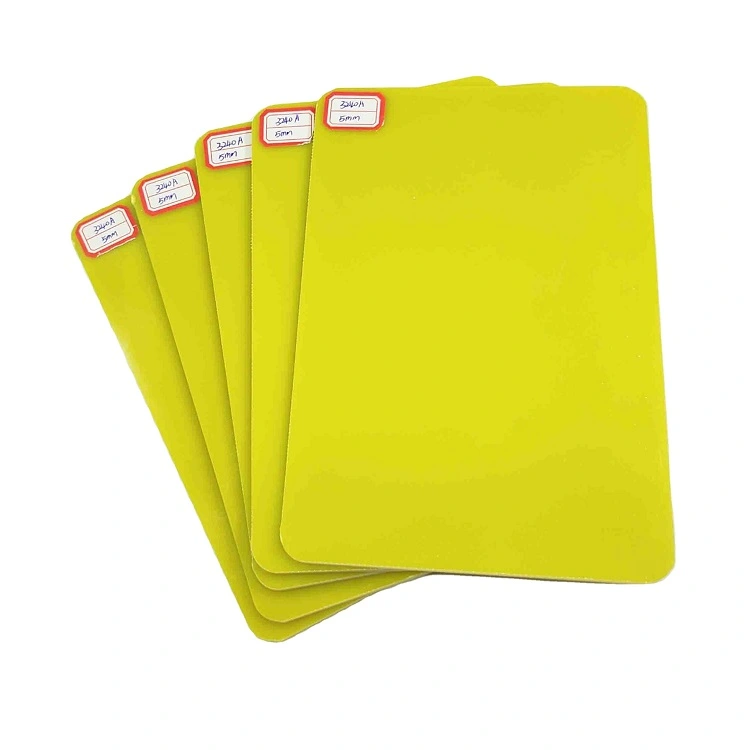
When we machine 3240 epoxy sheet materials, one of the most persistent problems we run into is delamination during drilling operations. The insulation laminate is made of woven glass fabric that is saturated with epoxy resin. It can separate into layers at the edges of holes if the drilling parameters are wrong, the tools are worn out, or the clamps aren't tight enough. The phenomenon weakens both the mechanical integrity and the performance of electrical insulation. It causes quality problems that electrical equipment manufacturers, power equipment builders, and auto part suppliers can't afford. Drilling can be turned from a problematic process into a reliable manufacturing step that keeps the material's high dielectric strength and dimensional stability by figuring out what causes the problems and using tried-and-true solutions.
Understanding Delamination Mechanisms in Epoxy Laminates
The Nature of Layered Composite Structure
Epoxy glass laminates are made up of several layers of glass fabric that are glued together by resin impregnation and hot pressing. Each point where two layers of fabric meet is a possible failure plane when drilling forces are applied. Drill bits have axial thrust and torque that can be stronger than the interlaminar bond strength. This is especially true at the entry and exit points of holes where there isn't much support.
Thermal Stress During Machining
A lot of frictional heat is made at the point where the tool meets the material when drilling. Localized resin softening happens when this heat energy can't be lost fast enough. For most formulations, epoxy systems have a glass transition temperature between 130°C and 155°C. If you go over these limits, even for a short time, the resin matrix that holds the glass fibers together gets weaker, which makes it easier for the layers to separate. We've seen that heat-related delamination in production settings is often caused by not using enough coolant or spinning at too high of speeds.
Mechanical Forces and Material Response
Laminated materials are put under a lot of stress during the drilling process. Layers are pushed apart by axial thrust, and shear stresses are created between plies by rotational forces. These forces are better handled by materials that are stronger in both bending and impact. The 3240 epoxy sheet specification calls for woven glass reinforcement, which gives it better mechanical properties than paper-based phenolic laminates. However, these natural advantages can still be lost if the sheet is machined incorrectly.
Critical Factors Contributing to Drilling Delamination
Tool Geometry and Condition
The design of the drill bit has a big effect on how likely it is to delamination. When used on composite materials, standard twist drills that are made for cutting metal often produce too much thrust force. How cleanly the tool cuts fibers instead of pushing them apart depends on the point angle, the helix angle, and the sharpness of the cutting edge.
When cutting edges are worn down, they become blunt tools that crush and separate layers instead of cutting them cleanly. Instead of waiting for quality to become obvious, we suggest setting up replacement schedules for tools based on the number of holes they make. When drilling through rough glass-reinforced materials, carbide tools keep their sharp edges for a lot longer than high-speed steel ones.
Drilling Parameters and Process Control
The most changeable parts of drilling operations are the feed rate and spindle speed. When feed rates are too high, thrust force goes up proportionally, but when speeds are too low, heat builds up. The best parameter window is different for each hole diameter, material thickness, and tooling geometry.
Over the past 20 years, we've worked with electrical equipment manufacturers to find parameter ranges that consistently reduce delamination for 3240 epoxy sheet. When compared to aggressive cutting methods, lower feed rates and moderate spindle speeds usually lead to better results. Monitoring thrust force in real time gives operators useful information for improving the process and finds deviations before they become quality problems.
Workholding and Support Systems
One common reason for delamination that is often overlooked is clamping that isn't tight enough. To keep the piece from bowing when thrust loads are applied, it must be rigidly supported right next to where the hole will be drilled. Any space between the material and the backing plate lets the layers separate, especially where the hole ends and the remaining thickness of the material can't hold its shape.
During breakthrough, the sacrificed backing materials are very important. The "punch-out" effect that tears the bottom layers as the drill exits can be stopped by using dense phenolic boards or specialized composite backers. Vacuum clamping systems are better for thin sheets because they spread the holding force evenly across the surface instead of using edge clamps, which can let the central part bend.
Proven Solutions for Eliminating Delamination Defects
Implementing Specialized Tooling Solutions
Using drill geometries that are specifically designed for composite materials greatly lowers the chance of delamination. Brad-point drills have sharp spurs in the middle that score the material before the cutting lips engage. This stops fibers from "pushing out" when the hole is made. Step drills make pilot holes that guide larger diameter cuts. By spreading the cutting action over several stages, step drills lower the thrust force.
Diamond-coated carbide tools keep their cutting edges sharp even after thousands of holes are made in rough glass-epoxy materials. The coating is harder than glass fibers, which lets it shear cleanly while keeping the interlaminar bonds. Even though they cost more to buy at first, these specialized tools save money per hole because they last longer and are less likely to break.
Optimizing Drilling Parameters Through Testing
Systematic experimentation is needed to set process parameters that are specific to a material. We test different speed-feed combinations for drilling while measuring thrust force and looking at the quality of the holes under a microscope. This method uses experience to find the best parameters for different hole diameters and material thicknesses.
Monitoring the temperature while drilling gives you information about the temperature conditions. Infrared sensors that don't touch the surface measure the temperature and let operators know when too much heat is being produced. Keeping the temperature in the cutting zone below 100°C usually stops the resin from softening, which can lead to delamination. By changing parameters based on temperature feedback, you can make a process that can adapt to different conditions.
Enhancing Workholding and Support Methods
When you upgrade clamping systems, the quality gets better right away. Precision-ground backing plates that are machined flat to within 0.05 mm make sure that the workpiece is supported evenly all over. By matching the stiffness of the backing material to that of the workpiece, deflection can be avoided without making the backing material too rigid, which could cause brittle laminates to crack.
Universal workholding for 3240 epoxy sheet has some problems that can't be fixed with specialized fixtures made for specific part geometries. Custom fixtures place support structures precisely where they need to be drilled, giving them the best resistance to thrust forces. For medium to high volume production, where setup time and scrap reduction are worth the cost of fixtures, buying dedicated tools is a good idea.
Understanding Global B2B Procurement Challenges
Navigating Supply Chain Complexity in Technical Materials
It can be hard to find industrial insulation materials, which is different from getting other things. In order to specify epoxy glass laminates, you need to be able to compare equivalent standards across different regional certification systems. A material that meets GB/T 1303.1 may also meet IEC 60893-3-2 or certain UL ratings, but small differences in the way it is made can change how it works and how it can be machined.
Supply chain problems can make lead times unpredictable, especially for specialty grades made by a small group of suppliers. When shipments of materials get held up at customs or there are problems with logistics, it slows down production for companies that make electrical equipment that use the "just-in-time" method. Price changes for epoxy resins and glass fiber feedstocks make budgeting difficult and make long-term planning for purchases harder.
Quality Consistency Across International Suppliers
To keep the quality of materials from around the world consistent, strict supplier qualification processes are needed. Changes from one batch to the next in the resin cure conditions, the weight of the glass fabric, or the pressing pressure can have a big effect on how drilling works. Even if the part numbers and certifications are the same, what machines cleanly in one shipment may delaminate easily in the next.
We've spent more than 20 years creating manufacturing controls that make sure materials have predictable properties. Statistical process control keeps an eye on important factors during production to make sure that electrical properties, mechanical strength, and the ability to be machined stay within tight limits. Because of this, our customers can set up stable machining processes that don't need to keep changing parameters to account for changes in the material.
Strategic Approaches to Optimize Procurement Processes
Building Technical Partnerships Beyond Transactions
Creating Technical Partnerships That Go Beyond Deals. Getting technical materials doesn't just mean negotiating prices and setting delivery dates. When material suppliers and end users work together as engineers, they can solve application problems that general product specifications can't. If there are problems with delamination, suppliers who know a lot about the material can suggest certain grades, give advice on how to machine the material, or even make custom formulations that fit specific needs.
Implementing Supplier Diversification Strategies
Putting supplier diversification plans into action for 3240 epoxy sheet. When you depend on a single supplier, you leave yourself open to problems. By qualifying more than one source for important materials, you can make sure you have a steady supply while keeping prices low through smart negotiations. Instead of just comparing prices, the qualification process needs to carefully look at technical skills, quality systems, and the dependability of delivery.
Ensuring Compliance and Quality Assurance in Sourcing
Certification Requirements for Electrical Insulation Materials
Needs for Electrical Insulation Materials to Be Certified. Compliance with regulations is an absolute must for materials used in electrical applications. Recognition by UL, compliance with RoHS, and compliance with REACH are basic ways to make sure that materials meet safety and environmental standards. In addition to these certifications, the application may need specific test methods or performance levels that must be documented in certified test reports.
Implementing Incoming Inspection Protocols
Putting Incoming Inspection Protocols Into Action. Even if you only buy from qualified suppliers, inspecting incoming materials is a very important step before they are used in production. A visual inspection can find obvious flaws like delamination, surface contamination, or missing dimensions. Plans for sampling that are based on statistics balance the cost of inspections with the risk that they pose.
Leveraging Technology for Enhanced Procurement Transparency
Digital Platforms for Supply Chain Visibility
Digital platforms for seeing the supply chain. Digital systems that show order status, inventory levels, and shipment tracking in real time are becoming more and more important in modern procurement. Buyers and sellers can now access cloud-based platforms that get rid of information delays that made it hard to see what was going on in the supply chain. Automated alerts let stakeholders know about exceptions that need to be looked at, which lets them solve problems before they happen.
Data Analytics for Demand Forecasting
Use of Data Analytics to Predict Demand for 3240 epoxy sheet. By looking at past patterns of consumption, it is possible to make more accurate predictions about future demand, which leads to fewer stockouts and less extra inventory. Seasonal patterns, production cycles, and growth patterns are found by complex algorithms that help people decide what to buy. Sharing forecast data with suppliers helps them plan their production better, which cuts down on lead times and makes it easier to get materials.
Building Long-Term Supplier Relationships for Sustainable Growth
Collaborative Problem-Solving Initiatives
Collaborative efforts to solve problems. When you have good relationships with your suppliers, problems become chances to make things better. When delamination problems happen during drilling, collaborative troubleshooting figures out if the problem is caused by the type of material, the machining parameters, the choice of tools, or the way the work is held. This way of working together to solve problems gets results faster than pointing fingers at each other.
Shared Performance Metrics and Continuous Improvement
Shared performance metrics and always making things better. Setting up shared performance metrics helps suppliers and customers work toward the same goals. Metrics like the percentage of on-time deliveries, the number of quality defects, and the consistency of lead times can be used to objectively measure the health of a relationship. Regular performance reviews find ways to improve and celebrate successes, which builds momentum for continued improvement.
Conclusion
In conclusion. When machining 3240 epoxy sheet glass laminates, delamination during drilling doesn't have to be an unavoidable problem. When you know the mechanical and thermal processes that separate layers, you can use targeted solutions that get to the root causes. Most delamination problems can be fixed with specialized tools, optimized parameters, and good workholding. Consistent materials from reliable suppliers also make sure that processing will behave in a predictable way. Strategic procurement practices build relationships with suppliers that deliver long-term value through collaborative problem-solving, supply chain transparency, and initiatives for continuous improvement. When manufacturers put money into both technical excellence and building partnerships, they get better quality, lower costs, and more reliable products.
FAQ
What causes delamination when drilling epoxy laminates?
Too much thrust force, not enough support for the workpiece, thermal damage from friction, or worn cutting tools can all cause delamination. When thermal or mechanical stresses are higher than the strength of the resin bond that holds the layers together, the drilling process can separate the layered glass fabric structure.
Which drill bit type works best for glass-epoxy materials?
Standard twist drills don't work nearly as well as brad-point drills and special composite cutting tools. Diamond-coated carbide keeps its sharp edges even after cutting thousands of holes in rough glass-reinforced materials. This makes clean cuts that keep the bonds between layers together and stop the layers from separating.
How do drilling parameters affect delamination tendency?
By lowering the thrust force and heat production, lower feed rates and moderate spindle speeds usually keep delamination to a minimum. Too much feed causes mechanical stress, and very high speeds cause frictional heating that makes resin soften and layer bonds weaken.
Partner with J&Q for Reliable 3240 Epoxy Sheet Supply
J&Q is a reliable place to get 3240 epoxy sheet. Choosing the right 3240 epoxy sheet manufacturer affects whether drilling goes smoothly or causes delamination problems that cost a lot of money to fix. Every customer relationship at J&Q is based on more than 20 years of experience in production and more than 10 years of experience in international trade. Our logistics services are part of our vertically integrated operations, which means we can provide you with a true one-stop service that makes your supply chain easier.
We have strict quality controls throughout the whole manufacturing process to make sure that the materials have the same properties and can be machined in the same way every time. Our technical team offers full machining support, helping you find the best drilling parameters and get rid of delamination problems. When you buy from J&Q, you get a strategic partner who cares about the success of your manufacturing, not just a supplier whose only goal is to fill your orders. Email our team at info@jhd-material.com to talk about your specific needs and find out how our knowledge can help your business.
References
Society of Manufacturing Engineers. "Machining Composites: A Technical Guide to Drilling Fiber-Reinforced Plastics." Manufacturing Engineering Reference Series, 2019.
Hocheng, H. and Tsao, C.C. "Comprehensive Analysis of Delamination in Drilling of Composite Materials with Various Drill Bits." Journal of Materials Processing Technology, 2018.
American Society for Testing and Materials. "ASTM D3039 Standard Test Method for Tensile Properties of Polymer Matrix Composite Materials." ASTM International Standards, 2020.
Institute of Electrical and Electronics Engineers. "IEEE Std 98-2002: Standard for the Preparation of Test Procedures for the Thermal Evaluation of Solid Electrical Insulating Materials." IEEE Standards Association, 2019.
Davim, J.P. and Reis, P. "Drilling Carbon Fiber Reinforced Plastics Manufactured by Autoclave: Experimental and Statistical Study." Materials & Design, 2017.
International Electrotechnical Commission. "IEC 60893-3-2: Specifications for Industrial Rigid Laminated Sheets Based on Thermosetting Resins for Electrical Purposes." IEC Technical Standards, 2021.

Get a complete product list and quotation

J&Q New Composite Materials Company



