Tolerance Standards in the Fabrication of NEMA Grade Insulation Sheets
When purchasing managers and engineering managers ask for NEMA grade insulation sheets for electrical uses, they're not just buying stuff; they're putting in accuracy that keeps whole systems safe. Tolerance standards in manufacturing spell out the differences in size and regularity of the material that make the difference between reliable electrical insulation and expensive field failures. These standards make sure that over millions of production units, FR4 epoxy sheets, phenolic laminates, and Bakelite boards keep their dielectric strength, temperature stability, and mechanical integrity. These standards can't be ignored anymore; knowing them is the difference between easy integration and costly repair cycles that cause product starts to be pushed back.
Understanding Tolerance Standards in NEMA Grade Insulation Sheets
What Tolerance Standards Actually Mean in Practice?
Tolerance guidelines set clear limits for differences in size and regularity of material properties in electrical insulation goods. These standards tell us how to make NEMA grade insulation sheets like FR4 or phenolic cotton boards. They say how much the width of a sheet can change, how flat the surface must stay, and what electrical properties must stay the same from batch to batch. These standards were made by the National Electrical Manufacturers Association to make sure that insulation materials work the same way whether they are used in motor systems in Michigan or switches in Texas.
After 20 years of making things, J&Q knows that following tolerances starts a long time before the final review. If a final sheet fits the small size requirements for automatic PCB assembly or precision-machined terminal boards, it is directly related to the epoxy resin impregnation process, the curing temperature profiles, and the even cooling rates.
How These Standards Impact Electrical Performance?
Small changes in dimensions can have big effects on how well electrical shielding works. An FR4 sheet's dielectric breakdown voltage can change by several kilovolts if its thickness changes by just 0.005 inches. This could make arc resistance worse in high-voltage situations. Stability at high temperatures relies on the resin being evenly spread across the glass cloth base. If this isn't done, hot spots form that speed up the thermal breakdown.
The problems that mechanical engineers face when they make gear sets from phenolic materials are similar. When margins get out of bounds, the compressive strength drops widely across the surface of the material. This makes stress concentration points that break too soon when the load changes. The woven cotton support in phenolic grades is very good at resisting impacts, but only if the lamination pressure stays the same all over the square inch during manufacturing.
NEMA Versus IEC: Different Standards, Different Expectations
Global buying teams often have to choose between IEC 60893 standards, which are common in European and Asian markets, and NEMA LI-1 standards, which are more common in North America. Both systems look at electrical and mechanical qualities, but the way they define tolerances is very different. For smaller sheets, like those used as PCB substrates, NEMA standards usually call for tighter thickness limits. On the other hand, IEC standards give manufacturers more freedom when it comes to thicker structure laminates.
We've worked with producers of car parts who get materials for assembly plants in both North America and Europe. They need dual approval, which means that each production lot has to meet both sets of standards at the same time. This requires more controls on the manufacturing process than is usual in the business. Our quality systems have gotten better over years of working with other countries to trade.
Dimensional Analysis Approach to NEMA Insulation Sheet Tolerances
Why Thickness Tolerance Matters More Than You Think?
Changing the thickness of NEMA grade insulation sheets has a direct effect on how well they work when they are under electrical stress and mechanical load. Electrical shielding works the other way around—the risk of dielectric breakdown goes up rapidly as material thickness goes down, even by a small amount. Power distribution equipment needs exact arc barrier measurements to stop flashovers, which can damage transformers worth tens of thousands of dollars.
We just finished working with a company that makes equipment, and their assembly line kept refusing insulation panels that were being put in automatically. After looking into it, they found that their old provider kept thickness limits at the loose end of what NEMA says is acceptable. Just 0.010 inches of difference made robotic grippers misalign parts, which led to thousands of units being thrown away before the real problem was found.
Surface Flatness and Dimensional Stability
In addition to width, flatness standards decide how well multi-layer PCBs laminate and whether machined parts fit together correctly in mechanical systems. When epoxy laminates warp during hardening, which is often caused by uneven temperature distribution, electrical contact points become open and pressure-sensitive ties between layers are weakened.
Another problem is keeping the same dimensions when the temperature changes. When working at temperatures between -40°C and 180°C, materials made of high-Tg FR4 must keep their exact sizes. In hydraulic systems, cotton-reinforced phenolic boards need to be just as stable when they come in contact with oils and greases that make cheaper types grow or bend.
Length and Width Tolerance Impacts on CNC Machining
For precision grinding to work, the object must be the same size when it enters the cutting zone. When length and width margins are higher than the normal NEMA limits of ±0.030 inches for smaller sheets, CNC programs need to be constantly adjusted, which greatly slows down production. The braided glass cloth in FR4 sheets keeps its shape better than paper-based phenolics, but only if controls during production keep areas from being too resin-rich or too resin-poor.
Barriers for automotive battery packs are a great example of these needs. To get the most energy efficiency while keeping thermal separation, engineers make complex shapes with tight fit tolerances. When a seller gives you materials that vary in size too much, assembly teams have to sort and match them by hand, which costs time and money and cancels out any price savings you might have gotten from using cheaper materials in the first place.
How Tolerance Standards Affect the Selection and Use of NEMA Grade Insulation Sheets?
Matching Material Grade to Application Requirements
For different electricity uses, different levels of tolerance are needed. When it comes to transformer coil insulation, mechanical flaws are less important than dielectric strength consistency and flame resistance. On the other hand, motor component clamps need to be very stable in terms of size and strength. By understanding this connection, you can avoid selecting too many expensive grades when standard materials would do the job just fine.
FR4 epoxy sheets work great in situations that need a high dielectric breakdown voltage, usually more than 40kV parallel to the laminations. This makes them perfect for high-voltage switchgear and PCB substrates that carry sensitive data. Their UL94 V-0 flame grade gives important safety gaps in enclosed electrical equipment where fire spread must be stopped right away. The glass transition temperature (Tg) tells you whether normal or high-Tg versions will work in your thermal setting. Lead-free soldering processes need materials that can withstand temperatures above 170°C.
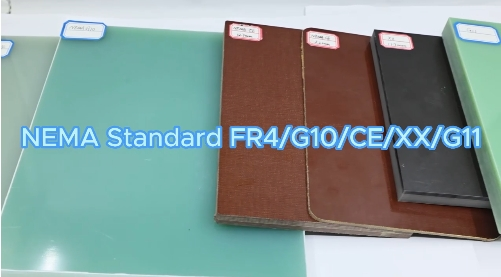
Different types of phenolic cotton boards, called NEMA Grades C, CE, L, and LE, have different benefits. Grade C offers the highest level of impact protection for heavy mechanical uses like bearing surfaces and gears. When it comes to making complicated forms, Grade L is the best. For electrical insulation qualities and better resistance to moisture, Grades CE and LE are the best. For each grade, different safety standards are in place that are appropriate for the way it will be used.
Comparative Analysis: NEMA Materials Versus Alternatives
When buying things, people often compare NEMA grade insulation sheets to mica sheets, fiberglass laminates without flame retardants, and different kinds of polymer insulators. Mica works well in places with very high or low temperatures, but it's not as hard or easy to work with as epoxy laminates. G-10 is not flame-retardant, but it has some of the same qualities as FR4 and costs less. However, it doesn't meet the safety standards needed for most electrical equipment.
When making a lot of things, the advantage of NEMA grade insulation sheets in terms of physical error becomes clear. Bakelite sheets keep their stability better from batch to batch than many thermoplastic options, which means less work needs to be done on sorting and inspecting. This stability is very important for companies that make appliances and use automatic assembly lines, where differences in materials cause jams and rejects.
Procurement Strategy: Established Manufacturers Matter
Finding electrical shielding materials is very different from buying goods in general. Comparing prices is useful, but tolerance compliance relies on the manufacturing skills and quality processes of the provider. We've seen buying teams try to get the lowest price, only to have problems in the field six months later when insulation breaks and leads to warranty claims that are much bigger than any material savings.
Our more than ten years of experience in foreign trade have taught us that partnerships work best when they combine low costs with strict production controls. Certified quality management systems, written testing methods, and clear mill test results are much better ways to find a reliable provider than general marketing claims. When looking for NEMA grade insulation sheets for important uses, the supplier's history of sticking to spec standards across production lots is more important than the price per unit.
Quality Assurance and Testing Methods for Tolerance Verification
Standard Testing Protocols for Dimensional Compliance
Calibrated measuring tools and statistical sampling plans are the first steps in a thorough inspection. These plans find differences before they get worse and cause widespread problems. Micrometer readings taken at set grid points on each sheet's surface show that the thickness is consistent, while laser scanning systems find small distortions that can't be seen by hand. We use multi-point measurement methods to take samples from every output lot. This gives us information that shows the process stays stable over time.
Testing with electricity shows that consistent dimensions lead to expected performance traits. For dielectric breakdown testing, a voltage is applied across a sample that is getting thicker until the insulation breaks. This shows that the material meets the voltage standards that were given. Surface and volume resistivity tests find contamination or an imperfect resin cure that lowers the efficiency of the insulation, even if the measures look right.
In-House Versus Third-Party Verification
Engineering managers often wonder if entering inspection is the same as testing done by the provider or if it really adds value. The answer varies on how important the product is and how mature the supplier relationship is. High-voltage transformer insulation and aircraft parts require a thorough receiving check that includes testing sample pieces destructively. Statistical tests that check source certifications are still correct are more helpful for apps with lower risk.
Third-party testing labs provide impartial confirmation that is useful for vetting suppliers and settling disagreements. Supplier self-reporting is less likely to be biased when thickness tolerance, dielectric strength, and dynamic qualities are measured by someone else. We encourage customers to use this choice when testing new types of material or looking into problems that happened in the field, because objective data speeds up the process of finding the root cause.
Addressing Common Defects and Their Root Causes
Delamination between layers means that the layers did not stick together well during lamination, which is usually caused by not applying enough pressure or using contaminated support cloth. Blisters, places that aren't getting enough resin (shown as white spots), and surface cracks that show thermal stress during hardening can all be seen by looking at the surface. Each flaw points to a specific problem with the process control, which is fixed by skilled makers using statistical process control.
Testing for water absorption shows if the resin fully soaked the support material when it was impregnated. Phenolic grades that absorb more than what is allowed by NEMA grade insulation sheets lose their shape stability in damp places and their electrical properties get worse. This testing is especially important for insulation used in outdoor power tools or marine uses that will be exposed to water.
Procurement Insights: Navigating Tolerance Specifications for Bulk Orders
Balancing Minimum Order Quantities with Tolerance Requirements
When you buy in bulk, you face tolerance problems that you don't have to deal with when you buy in small amounts. When you order hundreds of sheets, random difference across the production run is more important than inspecting each one individually. When manufacturers have strong process controls, their curing ovens, lamination presses, and material handling systems work with less variation, they can keep their tolerance bands tighter across big runs.
Tolerance control gets harder when people ask for custom sizes. Standard sheet sizes benefit from tools that have been fine-tuned over thousands of production runs. On the other hand, special sizes may need setup changes that add to the variation. We help our customers understand these trade-offs by showing them how small changes to the dimensions to make them more like standard sizes can improve both tolerance compliance and lead time performance.
How Tolerance Accuracy Influences Total Cost of Ownership?
People who work in procurement are taught to keep unit costs as low as possible, but sometimes they forget that tolerance variance leads to secret costs throughout the duration of a product. Tighter material tolerances lower the amount of scrap that is created during machining, cut down on mistakes in the assembly line, and stop failures in the field that cause guarantee costs that are much higher than the material savings. A company that makes switchgear found that saving $0.50 per sheet from a low-cost source led to $47,000 in rework costs after the number of mistakes on the production line went up.
Wholesale prices are set shows how hard it is to make something. Higher prices are charged for material types with tighter standards than usual. This is because they need stricter process controls and produce more scrap. When procurement teams understand this connection, they can tell the difference between premium price that really represents value and seller margin padding.
Supplier Partnership Strategies for Tolerance Assurance
When material performance is important, long-term supply deals with makers who promise to keep tolerances consistent are better than buying on the spot. We've set up relationships so that customers are promised tolerance bands that are tighter than NEMA minimums. This is backed up by statistical process control data that is shared every three months. This openness builds trust and makes just-in-time shipping possible, which lowers the cost of keeping goods on hand.
Our ability to combine logistics is another benefit that is often missed when choosing a provider. Taking care of the transfer of materials in-house makes sure they are handled correctly, which keeps damage from changing the tolerances for size. We've seen rivals' materials come with damaged edges and dirty surfaces from bad packaging, which can't be fixed by even the best quality controls in fabrication.
Conclusion
When making NEMA grade insulation sheets, tolerance standards aren't just vague rules; they're real-world safeguards that keep electrical systems and production efficiency safe. The exact measurements and consistent quality of the materials in these standards make sure that FR4 epoxy sheets, phenolic laminates, and Bakelite boards work well for millions of placements and decades of use. As voltages rise and electrical systems get smaller, tolerance compliance is even more important to keep problems from happening that put people and equipment in danger. When engineering managers and procurement experts put confirmed tolerance adherence above lowest unit cost, they make supply chains that can handle the hidden costs of variation.
FAQ
What tolerance ranges should I expect for standard NEMA grade materials?
According to standard NEMA guidelines, thickness limits can be anywhere from ±0.005 inches for sheets less than 0.031 inches thick to ±0.020 inches for materials thicker than 0.500 inches. Tolerances for length and width are usually within ±0.030 inches for smaller sheets and up to ±0.060 inches for panels bigger than 48 inches. These are the bare minimums that are allowed. Companies with more advanced process controls often get even smaller windows. Surface smoothness standards say that warpage can't be more than 0.020 inches per linear foot, but for precision uses, that difference is usually only half that.
How do tolerance standards differ between FR4 and phenolic materials?
Because the glass cloth support makes the laminate more stable while it cures, FR4 epoxy laminates usually keep their dimensions more closely than phenolic grades. Because they are made with natural fibers, phenolic cotton boards have a little more thickness variation, but current production methods make this difference less noticeable. Tolerances for electrical properties stay the same across material groups, and both must meet the strict dielectric strength and insulator resistance requirements set out in NEMA LI-1 standards.
Can tighter-than-standard tolerances be specified for critical applications?
Of course. Manufacturers who have statistical process controls and precision lamination tools can make unique tolerance bands that are much tighter than NEMA grade insulation sheets minimums. Thickness limits of ±0.002 inches are common for applications like aircraft terminal boards and high-frequency PCB platforms. These stricter requirements need more in-depth discussion during the quoting process and could affect wait times and prices, but they are possible with the right manufacturing tools and quality control procedures.
Partner with J&Q for Precision NEMA Grade Insulation Sheet Manufacturing
At J&Q, we've spent more than twenty years improving the ways we make things so that every output lot meets the tolerances exactly. For standard FR4 and phenolic grades, our quality control methods keep thickness tolerances within ±0.005 inches. This is backed up by full mill test records that show the electrical and mechanical properties. As a well-known provider of NEMA grade insulation sheets to electronics, power distribution, and automakers across the United States, we know that changes in materials can't be incorporated into your production plans. Our in-house transportation department handles everything from manufacturing to delivery, making sure that the right steps are taken to keep the dimensions intact. Get in touch with our technical team at info@jhd-material.com to talk about your tolerance needs and find out how our production skills can help your most difficult projects.
References
National Electrical Manufacturers Association. (2018). NEMA Standards Publication LI 1-2018: Industrial Laminating Thermosetting Products. Rosslyn, VA: NEMA.
ASTM International. (2020). ASTM D709-20: Standard Specification for Laminated Thermosetting Materials. West Conshohocken, PA: ASTM International.
Institute of Electrical and Electronics Engineers. (2019). IEEE Standard 1202-2019: Flame Testing of Cables for Use in Cable Tray in Industrial and Commercial Occupancies. Piscataway, NJ: IEEE Press.
Underwriters Laboratories. (2017). UL 94: Standard for Safety of Flammability of Plastic Materials for Parts in Devices and Appliances. Northbrook, IL: UL Standards.
Coombs, Clyde F. (2021). Printed Circuits Handbook: Eighth Edition. New York, NY: McGraw-Hill Education.
Harper, Charles A. (2015). Handbook of Plastics Technologies: The Complete Guide to Properties and Performance. New York, NY: McGraw-Hill Professional.

Get a complete product list and quotation

J&Q New Composite Materials Company