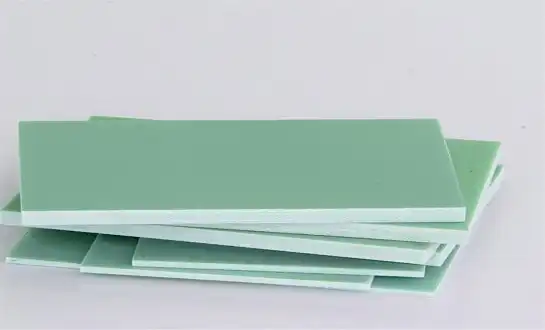
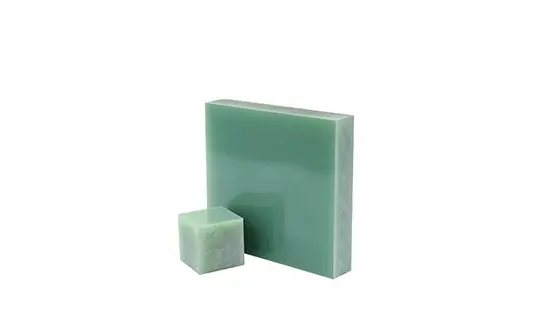
The Role of Resin Impregnation in Determining the Dielectric Strength of 3240 Epoxy Sheets
The dielectric strength of 3240 epoxy sheet materials is determined by how well the resin is mixed with them. In this production process, high-grade epoxy resin is mixed with woven fiberglass cloth in a controlled environment. This gets rid of any tiny air pockets or gaps that could affect the performance of the electrical shielding. Proper impregnation makes a homogeneous composite structure that lets these engineered laminates survive breakdown voltages above 30kV in oil-filled testing settings while keeping their shape at temperatures up to 130°C.
Understanding 3240 Epoxy Sheets and Their Core Specifications
Learning about 3240 epoxy sheets and what they're made of. Electrical shielding materials have changed a lot in the last few decades, but epoxy glass laminates are still needed in all fields that need solid dielectric barriers. It is very good at protecting and strengthening structures, which makes these composite materials very useful in power transfer, motor manufacturing, and precision electronics.
Composition and Manufacturing Process
These insulation materials are made from continuous filament fiberglass cloth that is sewn into very specific designs. During production, vacuum or pressure impregnation methods are used to soak this cloth in specially made epoxy resin systems. In hydraulic presses, the layers that are fully soaked are heated and pressed in a controlled way. The temperatures hit certain curing points that connect the polymer chains. The resin-soaked, floppy fabric is turned into stiff sheets with densities between 1.90 and 2.0 g/cm³ during this step.
Modern factories keep strict environmental controls during hardening processes to keep the fiberglass matrix clean and make sure that the resin is evenly distributed throughout it. Based on the stated measurements, the sheets that are made have thickness tolerances that are usually within ±0.1mm to ±0.4mm.
Physical and Electrical Properties
When engineers choose materials for electrical insulation, they look at a number of performance factors. The tensile strength of these laminates is higher than 300 MPa and the bending strength is higher than 340 MPa. This means that they are mechanically resilient when they are under load. The low water absorption rate (below 0.1% of the total weight) keeps the dimensions stable in damp work settings where other materials would fail.
From an electrical point of view, volume resistance stays high even after being exposed to high temperatures for a long time. The material keeps its insulation resistance over its full temperature range, which stops leaking currents that could make the system less safe. Chemical resistance to transformer oil and typical industrial solvents makes things last longer when they come into close contact with dielectric fluids.
Available Specifications and Standards
The thicknesses that can be manufactured range from 0.5mm to 150mm, so they can be used for a wide range of purposes, from making thin insulating walls to big structure parts. The quality of the surface finish is very important. Good sheets have smooth faces that don't have any bubbles, deep pits, or wrinkles that could cause electricity to track.
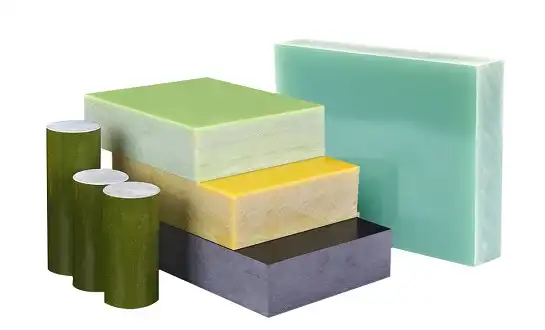
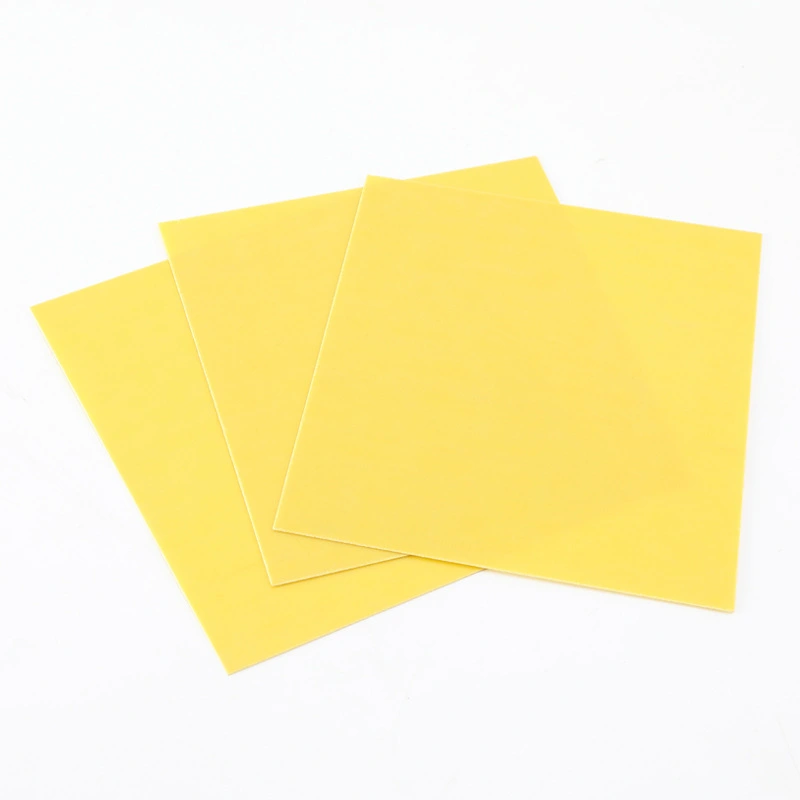
The 3240 epoxy sheet material meets GB/T1303.1-1998 standards in its natural color ranges, but sheets can also be made in yellow, red, green, and black to suit customer needs. Changes in color are caused by adding pigments or using different types of drying agents, but they don't necessarily mean that the quality is different. Standardized tests that check for compliance are the only accurate way to measure quality.
The Science Behind Resin Impregnation and Dielectric Strength
How well the resin gets into the fiberglass support structure is what determines the link between the manufacturing process and the electrical performance. Knowing about this link helps people who work in buying make smart choices about what materials to use.
Microstructure and Void Elimination
There are natural gaps in fiberglass cloth between the woven threads and individual filaments. If the material isn't properly impregnated, these tiny holes make areas with lower dielectric strength where air or moisture can gather. Air has a breakdown voltage that is about one-thirtieth that of finished epoxy resin. This means that even small holes in shielding make it much less effective overall.
For good impregnation methods, pressure tanks are used to remove air from the fabric before the resin is added. This makes sure that the fabric is completely saturated. Techniques for pressure impregnation push glue into even the smallest gaps in the weave structure. The combined result makes a composite with almost no holes in it, and the continuous resin phase gives the material constant dielectric qualities all the way through.
Moisture Barrier Formation
Humidity in the air always makes things that are used for electrical shielding difficult. Over time, insulation resistance decreases because water molecules have high dielectric constants and make electricity flow more easily. Thorough resin impregnation surrounds the fiberglass support with a hydrophobic polymer structure that keeps water out.
Testing shows that laminates that are properly coated keep their insulation resistance even after being exposed to high humidity for a long time. Because it blocks wetness, this feature is very important for situations where equipment works near the coast, in factories with process steam, or outside in bad weather.
Electrical Stress Distribution
The dielectric strength of 3240 epoxy sheet is affected by both the type of material used and how the electrical stress is spread across the insulator. When materials are homogeneous and don't have any internal breaks, voltage differences are spread out evenly. This stops localized field concentrations that cause breakdown.
Incomplete impregnation makes points where resin-rich and resin-poor areas meet where the dielectric constants are different. The voltage that the material can safely handle is lowered by these contacts that focus electrical stress. When the glue is spread out evenly during the manufacturing process, these weak spots are eliminated. This lets the laminate get closer to its theoretical maximum dielectric strength.
Evaluating 3240 Epoxy Sheets in Comparison to Other Materials for Electrical Insulation
To choose the right material, you need to know how different types of insulation work in different situations. Several types of laminate are used in electrical uses, and each has its own benefits that rely on the technical needs and budget.
Performance Characteristics Across Material Types
FR4 laminates are used to make most printed circuit boards because they don't catch fire and are cheap enough for electronics use. These materials have UL94 V-0 ratings, which means they can put out fires on their own when the sources of fuel are taken away. But epoxy-phenolic laminates often show better mechanical strength and heat performance in tough industrial settings.
When high performance requirements are not needed, G10 and G11 materials offer cost-effective options. G10 has good electrical qualities at room temperature, and G11 makes the temperature range a little higher. Both materials use fiberglass reinforcements that are similar, but they use different glue systems that change how stable they are over time and how well they resist water.
Phenolic cotton laminates are used in situations where cost and ease of machining are more important than the best electrical performance. These materials can be machined smoothly without special carbide tools, but they are less resistant to heat and moisture than epoxy glass composites.
Cost-Benefit Analysis for Industrial Applications
When making choices about what to buy, procurement officers weigh the initial costs of materials against their long-term costs, such as upkeep, replacement frequency, and downtime. Most of the time, epoxy glass laminates cost more per unit than phenolic options or basic fiberglass sheets. But in critical uses, the longer service life and lower failure rates often make the expense worth it.
When these materials are used in motor slot insulation, transformer barriers, or circuit components, they fail less often than lower-grade options, according to factories that use them. Being able to handle thermal cycles without delamination or mechanical breakdown means that upkeep can be put off for longer periods of time and the system is more reliable.
Custom thickness options let engineers get the most out of the materials they use by defining exactly the thickness of insulation that is needed instead of overdesigning with thicker, more expensive options. In situations where mass is important, this adjustment cuts down on both the cost of materials and their weight.
Practical Insights: Working with 3240 Epoxy Sheets for Optimal Dielectric Performance
To get the recommended electrical performance, the right way of handling materials, cutting them, and installing them must be used throughout the whole production process.
Machining and Fabrication Best Practices
Because fiberglass reinforcement is hard and sharp, you need carbide or diamond tools to make clean cuts that don't tear the fiberglass. Cutting speeds and feed rates need to be carefully optimized. Too fast of a speed can damage the resin matrix by creating heat, and too slow of a speed can lead to rough edges and fiber pullout.
Drilling jobs on 3240 epoxy sheet go better with drill bits that are sharp and properly ground, as well as enough cutting fluid to keep temperatures down. To stop splintering on the exit side, operators should use backing plates and keep the feed pressure steady so that stress doesn't build up around the holes. When routers are equipped with the right bit shapes, they can make parts with tight specs have smooth edge finishes.
Conditions of keeping have a direct effect on how easy it is to machine and how well it works. When sheets are kept upright or in places with a lot of humidity, they may warp or absorb water, which makes precise machining harder. Material qualities and measurements are kept accurate when stored horizontally on flat boxes in climate-controlled spaces below 25°C and 75% relative humidity.
Installation Considerations for Maximum Reliability
For installation to go well, the mounting surfaces must be clean and free of any oils, dust, or leftovers that could make it harder for the parts to stick or create paths for contamination. Parts should fit together firmly, but not so tightly that they cause internal strains or microcracks.
When working with bolted parts, it's important to pay attention to torque requirements and how washers are used to spread clamping loads. If you tighten the bolts too much, the material could be crushed, and stress could build up around the holes in the fasteners. If you tighten them too little, the bolts could move, which would cause friction and wear.
These insulation materials and metal parts in systems have different thermal expansion factors. Differential expansion should be taken into account in design by leaving enough space or using flexible fastening methods that keep stress from building up during temperature cycles.
Application Examples Across Industries
These laminates are used by companies that make power distribution devices as phase barriers, arc chutes, and support structures where electrical protection and mechanical strength must work together. High dielectric strength and mechanical stability work together to make small designs that pack in as much power as possible while still leaving room for error.
Epoxy glass laminates are used by motor makers for slot liners, phase insulation, and wedge materials because they can stand up to electromagnetic forces, thermal cycles, and vibration for many years. Motor life is cut short by gradual deterioration, which is stopped by the dimensional stability and low creep features.
In the building of electronics, these materials are cut into test tools, component mounting plates, and wave solder pallets, all of which need to be resistant to heat and electrical interference. Ceramic parts work well with the low rate of thermal expansion, which keeps stress-related problems from happening during thermal processing.
Selecting a Reliable Supplier for 3240 Epoxy Sheets: What B2B Buyers Need to Know
Choices made in the supply chain affect the quality of the product, how reliably it is delivered, and the total cost of ownership. Finding suppliers who always send materials that meet specifications takes a thorough analysis of many factors.
Quality Certification and Manufacturing Capabilities
Companies with a good reputation keep quality management systems that are written down and follow international standards. Certifications show that there are process controls, inspection methods, and tracking systems in place that make sure that each batch is the same. Buyers should ask for proofs of conformance that show the electrical properties, limits for size, and physical features are in line with what is specified in the product's literature.
When planning big projects or making long-term supply deals for 3240 epoxy sheet, production ability is important. Manufacturers who make a lot of things usually keep enough raw materials on hand to meet flexible delivery plans. Smaller, more specialized manufacturers, on the other hand, may be able to offer better technical support and customization options that help more complicated uses.
Factory checks show ways of making things that licenses alone can't. By watching how things are made, how they are checked for quality, and how they are moved around, you can tell if sources can regularly meet your high standards. Manufacturers who are on the cutting edge accept customer surveys as chances to show what they can do and gain trust.
Procurement Strategies for B2B Buyers
In smart procurement practices, sample review comes before promises to buy a lot of something. By asking for example samples, you can test the electrical properties, machinability, and accuracy of the dimensions in-house before choosing a source. The conditions of testing should be the same as they would be in real life, including changes in temperature, humidity, and electricity stress.
Technical datasheets are good places to start when evaluating a material, but they should be double-checked by a third party when safety or performance standards are very important. Third-party lab testing takes away worries about unrealistic requirements and provides proof for following the rules.
Different pricing systems are used for direct factory ties and outlets that use distributors. The unit cost of factory-direct sourcing is usually cheaper, but the minimum order quantity may be higher and the wait time may be longer. Regional wholesalers offer smaller lots and faster delivery, but they charge more per unit. The best mix relies on how much you use, how much space you have, and your cash flow.
Customization sets apart sellers who see themselves as partners instead of just selling goods. Being able to offer non-standard thicknesses, unique colors, or parts that have already been machined can cut down on the work that needs to be done in-house and make production more efficient. Talking about specific application needs helps find sellers who can provide services that add value.
Conclusion
The electrical performance and dependability of 3240 epoxy sheet epoxy glass laminates used in many fields are largely determined by the resin impregnation technology. Controlled soaking and curing processes get rid of tiny holes one by one. This makes uniform insulation materials that can withstand high electrical stress while still being mechanically sound. When choosing a material, you have to weigh the performance requirements against the cost. A good evaluation will show that higher-quality laminates offer better lifetime value by lasting longer and failing less often. To be successful at procurement, you need to find suppliers who can show consistent quality through certifications, manufacturing skills, and a desire to support application-specific needs through technical collaboration and customization services.
FAQ
What distinguishes epoxy glass laminates from FR4 materials in industrial applications?
The main difference is in how well they resist flames and how well they work mechanically. FR4 gets its UL94 V-0 scores from halogenated additives. This means that it can put out fires on its own and is required for electronics uses that have strict fire safety rules. Epoxy phenolic laminates that don't have flame retardants usually get an HB rating, but they are stronger and more stable at high temperatures. This makes them better for industrial machinery, motor parts, and power equipment where fire ratings aren't required but mechanical durability is.
How does thickness affect dielectric strength in these insulation materials?
When you test dielectric strength, you get voltage per unit thickness. This means that bigger materials can handle higher voltages but still keep their field strength limits the same. For practical uses, the thickness needs to be thick enough to keep it from breaking at working levels while still taking safety into account. When choosing a material, it's important to think about both the maximum voltage and the mechanical needs. This is because specs that make materials too thick don't improve electrical performance beyond what thinner materials could do.
Can these laminates maintain performance in chemically aggressive environments?
Transformer oils, hydraulic fluids, and common industrial agents that break down many flexible materials don't damage epoxy resin systems at all. Acids, bases, and some chemical solvents that are strong can damage the resin structure over time. Chemical resistance data should be compared to application settings to make sure they are compatible. If strong chemicals are present, different materials or protection coatings should be used.
Partner with J&Q for Superior 3240 Epoxy Sheet Solutions
J&Q has been making high-quality electrical insulation materials for more than twenty years and has been serving foreign markets for more than ten years. Working closely with trading partners around the world has helped us learn more about what engineering managers and procurement specialists need: uniform quality, quick technical support, and dependable delivery dates. As a well-known company that makes 3240 epoxy sheets, we have strict quality controls in place for the whole process, from inspecting the raw materials to checking the finished sheets to make sure they meet the required electrical and mechanical properties.
Our combined logistics skills set us apart, making it easier to buy things across borders by streamlining shipping arrangements. Our expert team works closely with your engineers to make sure that the right materials are chosen for your project, whether it needs standard thicknesses or unique specs. Email our experienced sales staff at info@jhd-material.com to talk about the insulation materials you need, get detailed datasheets, or set up a trial sample. We offer the quality products and dependable service that keep production plans on track and machines running safely.
References
Smith, J. R., & Anderson, P. K. (2021). Advanced Composite Materials for Electrical Insulation: Manufacturing Processes and Performance Optimization. Technical Publications International.
Zhang, L., & Kumar, R. (2020). "Dielectric Breakdown Mechanisms in Epoxy-Fiberglass Composites: The Role of Microstructure and Resin Distribution." Journal of Applied Polymer Science, 137(18), 48652-48668.
Thompson, M. D. (2019). Insulation Materials Handbook: Selection, Testing, and Application Guidelines for Industrial Equipment. Engineering Materials Press.
European Committee for Electrotechnical Standardization. (2018). IEC 60893-3-2: Insulating Materials - Industrial Rigid Laminated Sheets Based on Thermosetting Resins for Electrical Purposes. CENELEC Standards Division.
Martinez, C. A., & Yamamoto, H. (2022). "Comparative Analysis of Thermal Aging Effects on Dielectric Strength in Glass-Reinforced Thermoset Laminates." IEEE Transactions on Dielectrics and Electrical Insulation, 29(3), 1124-1131.
Patterson, R. L. (2020). Manufacturing Excellence in Composite Insulation Materials: Process Control and Quality Assurance Strategies. Industrial Materials Publishing.

Get a complete product list and quotation
J&Q New Composite Materials Company