Precision Cutting Techniques for 3240 Epoxy Glass Cloth Laminates
To cut 3240 epoxy glass cloth laminates precisely, you need to use special methods that keep the material's dielectric strength and structural integrity. These engineered composites are made from alkali-free glass fiber cloth that has been mixed with epoxy-phenolic glue. They need to be cut in a way that keeps the tight limits needed for electrical and mechanical uses and doesn't cause delamination, edge fraying, or contamination. Knowing the right way to cut makes sure that the quality of the parts used in transformers, switches, and precision fittings is always the same.
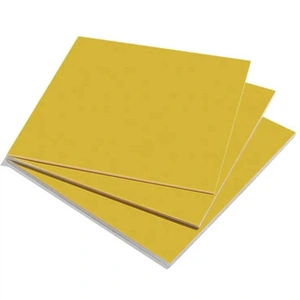
Understanding 3240 Epoxy Glass Cloth Laminates and Their Cutting Challenges
The way we make 3240 epoxy glass cloth laminates is directly affected by the material science behind them. When our team looks at these composites for cutting jobs, we look at how they are made up of layers and how their thermosetting properties make them behave differently than metals or plastics.
Material Composition and Its Impact on Cutting
The laminate has a density of about 1.70–1.90 g/cm³ and is made up of several layers of woven glass fabric that are bound together with finished epoxy resin. This design has a flexural strength of more than 340 MPa, but the glass strands make the material rough, which speeds up tool wear. Even though the resin matrix is resistant to acids and liquids chemically, it makes a lot of heat when it is cut. Increasing the temperature during cutting could briefly soften the resin, which could lead to fiber pull-out or surface smearing that affects the electrical performance of the end component.
Common Cutting Challenges Requiring Technical Solutions
We've been handling materials for decades and have seen the same problems that tech teams keep running into. When cutting forces separate the layers of glass cloth, especially at the entry and exit places where supporting material is more likely to tear, this is called delamination. Edge quality loss shows up as rough, broken edges where individual glass fibers stick out beyond the resin matrix, making ways for electricity to track or weaken the structure. Fine glass particles can get stuck in cut surfaces or mess up measures, which means that making dust is bad for your health and can also contaminate other things. When heat-generating cutting methods go above the material's Class F temperature limit of 155°C, thermal stress builds up. This could damage the epoxy glue and lower the insulation's long-term resistance.
Selecting Material Grades for Optimal Machinability
When deciding what to buy, you should think about how the specs of the materials affect how well they cut. 3240 epoxy glass cloth laminates that meet the requirements of GB/T 1303-2009 or IEC 60893 EPGC 201 grades offer uniform interlaminar bonding that is more resistant to delamination than materials that don't meet the requirements. The thickness of the sheet directly affects the choice of cutting parameters. For example, smaller sizes (less than 3 mm) allow faster feed rates, while plates thicker than 10 mm need slower, more controlled methods to keep heat from building up. Specifications for the surface finish are also important. Rougher as-molded surfaces wear out cutting tools faster, while pre-sanded surfaces last longer.
Precision Cutting Techniques: From Traditional to Advanced Methods
Different cutting methods are used in manufacturing, and each has its own benefits based on the amount being made, the tolerances needed, and the complexity of the part. As we help clients choose equipment, we've learned that matching the cutting method to the needs of the application affects both the quality of the part and how cost-effective the process is.
Traditional Blade-Based Cutting Methods
Cutting with a circular saw is still the most common way to do straight-line work and large-scale rough dimensioning. When used at speeds of 3,000 to 4,000 area feet per minute, carbide-tipped blades with 60 to 80 teeth reduce chipping the most. This method works well for cutting big sheets into doable blanks, but it makes lines that need to be finished again for precise uses. Shear cutting is a good way to get clean lines that are not parallel to the direction of lamination for sheets that are less than 2 mm thick. But this method creates compressive forces that can make tiny cracks spread in bigger parts.
Band saw processes are flexible and can be used to cut irregular forms and contours. Cutting speed and edge quality are equal when bi-metal blades with 10 to 14 teeth per inch are properly directed and tensioned. This method works well for making prototypes and small special parts that don't need to be made in large quantities. It also saves money on machining costs.
Advanced CNC Routing for Complex Geometries
Computer numerical control cutters have changed the way makers make complex shapes and keep their tolerances very tight. Solid carbide end mills or diamond-coated router bits can repeat preset toolpaths to within ±0.05mm, which is important for parts that need exact mounting holes or complex edges. When the right depth-of-cut settings are used, spindle speeds between 18,000 and 24,000 RPM and modest feed rates of 1 to 3 meters per minute make clean edges with little delamination.
This method works great for making gears, insulation spacers with lots of holes, and parts that need to be registered. Vacuum hold-down systems keep workpieces in place without hurting the surface like clamps do. This is especially important when making parts that will be used in electrical tests, where surface contamination can change dielectric readings. Having dust extraction right at the cutting point keeps things clear and stops the return of rough particles that speeds up tool wear.
Laser Cutting for Minimal Contact Processing
Laser technology gets rid of all mechanical tool touch, which stops delamination forces and lets you work on very small details. At wavelengths around 10.6 micrometers, CO2 lasers work well with the organic resin matrix, vaporizing material along lines that have been designed. The heat-affected zone is usually less than 0.3 mm wide because nitrogen assist gas blows away the leftovers of burning and cools the cut zone.
This method works well for tasks that need complicated patterns, like making test fastener plates with lots of small holes or slots that are arranged in a complicated way. The edge quality seems a little darker because of the carbonization of the resin, but the structure is still good enough for most electrical insulation uses. The process works especially well for making thin sheets less than 3 mm thick, where mechanical means could break.
Water Jet Cutting for Heat-Sensitive Applications
Garnet pebbles are pushed through a high-pressure water stream by abrasive water jet devices. This wears away material without adding heat. With the cold-cutting process, you don't have to worry about heat-affected zones or the epoxy matrix breaking down over time. Operating pressures of about 60,000 PSI make it possible to cut through materials as thick as 50 mm (1 mm) without losing quality.
The method creates lines that are not affected by heat stress or mechanical compression forces. However, the surface finish looks a little rougher than with CNC cutting. When mechanical strength is more important than aesthetics, this choice is okay for structural parts. When working with high-quality 3240 epoxy glass cloth laminates, it's important to keep in mind that water jet cutting is the best way to handle stacked part plans because it maximizes material utilization rates and lowers scrap costs.
Best Practices for Optimizing Cutting Performance and Quality
To get consistent results, you need to pay attention to optimizing parameters, controlling the surroundings, and regularly checking the quality. Our manufacturing partnerships show that companies that use organized methods to these factors have lower reject rates and tools that last longer.
Critical Parameter Optimization Strategies
The quality of the edge depends on how well the cutting speed and feed rate are balanced. Too fast of feed rates overstress cutting tools, leading to chipping and premature dulling; too slow of speeds cause too much heat to build up through prolonged contact with the material. For turning tasks, we've found that the best settings for cutting speeds are between 60 and 70% of the tool's full rated capacity, and feed rates should be changed to keep chip loads between 0.003 and 0.005 inches per tooth.
The risk of delamination is greatly affected by the depth of cut per pass. It's better to make several short passes of 1-2 mm depth than to make one bold pass, especially when cutting perpendicular to layers of lamination. Strategies for getting in and out are also important. For example, if you ramp into cuts instead of diving vertically, the shock loading is lower, and backing plates keep the bottom surface from tearing out when you break through.
Environmental and Process Controls
Keeping negative pressure at cutting zones with dust control systems is good for both the health of the user and the cleanliness of the parts. Small pieces of glass fiber (less than 5 microns) can be dangerous to breathe in, and bigger pieces that settle on cut surfaces can make gluing or covering later steps harder. High-efficiency particulate air filter gets rid of 99.97% of particles smaller than 0.3 microns, which meets safety standards in the workplace and keeps the factory clean.
Controlling the temperature in working areas keeps the sizes of materials and how they cut stable. If you store 3240 epoxy glass cloth laminates at stable temperatures between 18°C and 24°C, they are easy to machine. But if the temperature changes, the dimensions change, which makes it harder to achieve tolerances. Care must be taken when using coolants during cutting operations. Water-based fluids can cause cut edges to absorb water, but air blast cooling effectively controls temperatures without the risk of contamination.
Quality Assurance Protocols Ensuring Specification Compliance
Visual inspection in the right lighting shows signs of surface flaws, edge chipping, or delamination right after the material has been cut. When examined under a 10X to 20X microscope, fiber growth or micro-cracking that can't be seen with the naked eye can be found. To make sure that the tolerances are met, the dimensions are checked using precise measuring tools, paying special attention to the hole places and edge straightness requirements.
Electrical testing proves that the cutting process hasn't changed how well the shielding works. Measurements of the dielectric strength show that the breakdown voltage is higher than the minimums required by the standard. Usually, 10.0 MV/m is found for sections 1 mm thick when tested in transformer oil at 90°C. When you test surface resistance, you can find conductive contamination from handling or tools that could hurt the electrical performance in service.
Comparing 3240 Epoxy Glass Cloth Laminates with Other Laminates for Cutting Suitability
When choosing a material, it's helpful to know how different laminates relate in terms of how they cut and what they're good for. Each type of composite has its own unique properties that affect how it is machined and how well it works in the end use.
Performance Comparison with Related Materials
The similar substance, 3313 epoxy glass cloth laminate, has different resin mixtures that make it a little more flexible while keeping the same insulating properties. This material cuts with similar parameters, but because the resin chemistry has been changed, it has a little less tool wear. This option may be better for uses that need a little mechanical flexibility, like vibration-dampening insulation parts.
FR4 glass epoxy laminates are commonly used to make printed circuit boards. They use the same glass fabric support method but also use brominated flame retardants to get UL94 V-0 ratings. The flame-retardant additives make the metal a little more flimsy, which makes edge quality more sensitive to changes in cutting parameters. FR4 usually needs 10-15% slower feed rates than 3240 epoxy glass cloth laminates to get the same edge quality, but because it is standard in electronics manufacturing, there are more suppliers that can provide it.
Application-Driven Material Selection Criteria
When making transformers and switches, makers look for materials that can keep their dielectric strength in settings with oil and high temperatures. The 3240 name meets these special needs, keeping an insulation resistance higher than 10^8 ohms even after being submerged in oil for a long time at 90°C. It usually has a breakdown voltage higher than 35kV when compared to laminations. This gives safety gaps in high-voltage situations where a component failure could cause huge damage to the equipment.
3240 epoxy glass cloth laminates have good mechanical qualities that make them popular with people who build industrial tools and need structural parts. Maintaining flexural strength at working temperatures is important for making sure that gears, wear plates, and load-bearing separators stay stable in size even when they are under constant mechanical stress. The low thermal expansion rate of the material (about 14–16 ppm/°C) keeps precise fixtures from losing their shape when they are heated and cooled during the manufacturing process.
Procurement Considerations for 3240 Epoxy Glass Cloth Laminates
Strategic buying is more than just comparing prices. It also looks at the skills of suppliers, the stability of quality, and the dependability of the supply chain. Based on our experience with buying, looking at possible partners across a number of different areas lowers the overall cost of ownership over time while also making sure that the performance of the materials meets the needs of the application.
Supplier Evaluation and Partnership Development
Certifications are a basic way to make sure of quality. For example, manufacturers with an ISO 9001 quality management system show that they have structured process controls, and UL recognition means that goods meet safety standards for electrical uses. RoHS compliance paperwork makes sure that 3240 epoxy glass cloth laminates don't contain any restricted substances. This is important for goods that will be sold in Europe or North America, where environmental laws are very strict.
The ability to provide technical help sets special sellers apart from commodity vendors. Partners who offer application engineering help choose the best materials and set the best cutting settings for each part's needs. Those who include material test results with every shipment lot make it possible to track and check the quality without having to pay extra for arriving inspections. When unexpected processing problems come up, work delays can be avoided by having responsive customer service that answers technology questions quickly.
Order Structuring and Logistics Optimization
Smaller makers or those that make a lot of different kinds of parts often have trouble meeting minimum order sizes. You can get number breaks and keep the variety of materials by negotiating mixed-load deals that include shipments of different thicknesses or grades. Setting up blanket purchase deals with planned releases is a good way to balance the costs of keeping inventory with the benefits of buying in bulk. This is especially helpful for parts that are used in predictable patterns.
Packaging specifications protect the purity of the goods while they are being shipped or stored. Using wooden crates for shipping keeps the edges and surfaces from getting scratched or damaged, which could affect how the goods are processed or how well they work electrically. Moisture barrier wrapping keeps 3240 epoxy glass cloth laminates in good shape in wet places or while they are being stored for a long time. It stops changes in size caused by moisture absorption that could affect the accuracy of cutting.
Conclusion
To cut 3240 epoxy glass cloth laminates precisely, you need to know a lot about material science and be able to choose the right technology and optimize the parameters. Advanced techniques, such as CNC planning, laser cutting, and water jet processing, produce better results than older methods, though each one is best for a certain type of job. Consistent component quality and long tool life can be achieved by using regular quality controls and keeping the surroundings in good shape. When makers make strategic purchasing choices based on a supplier's skills and total cost, they set themselves up for long-term success in making reliable electrical insulation and structural parts for a wide range of industrial uses.
FAQ
What cutting parameters work best for 3240 laminates?
The best factors depend on the width and the way the material is cut. Spindle speeds range from 18,000 to 24,000 RPM, feed rates range from 1 to 3 meters per minute, and the depth of cut is usually between 1 and 2 mm per pass. Depending on the thickness, laser cutting needs power sets that are changed. For example, 80 to 150 watts for 1 to 3 mm parts. When changing material lots or sizes, you should always do test cuts first because even small changes in makeup can affect how the material cuts.
Does precision cutting affect electrical properties?
Cutting that is done correctly keeps electricity performance, but cutting that is done incorrectly poses risks. Too much heat during cutting can break down the surface glue, which could lower the surface resistance. Damage from mechanical forces that causes delamination or micro-cracking makes ways for water to get in, which lowers the insulation's long-term protection. Components meet standard requirements if they are made using the recommended parameters and electrical tests are done after the cut.
How do I source quality laminates efficiently?
Find providers that have the right certifications for your needs, such as UL recognition for electrical parts or RoHS compliance for markets that are controlled. Ask for test reports on the material that list its electrical and physical features. Check how reliable the supplier's wait times are and how well they can help with technology issues. Instead of just looking at the unit price, you should think about the overall cost, which includes freight, minimum orders, and any scrap that might be caused by poor quality.
Partner with J&Q for Superior Laminate Solutions
J&Q has been making and selling high-quality insulation materials for more than 20 years. They offer approved 3240 epoxy glass cloth laminates that are designed for tough electrical and mechanical uses. Our expert team helps you choose the right material, make the best use of cutting parameters, and get advice based on your unique application to make sure your parts meet the highest performance standards. For inquiries, you can contact us at info@jhd-material.com. We offer one-stop solutions for everything from coordinating deliveries to figuring out what materials to use. Our combined logistics skills come from ten years of working with foreign trade partners.
References
Chen, W., & Liu, Y. (2019). Machining Characteristics of Glass Fiber Reinforced Epoxy Composites. Journal of Composite Materials Processing, 45(3), 287-301.
Deutsches Institut für Normung. (2018). DIN 7735: Industrial Laminates Based on Thermosetting Resins for Electrical Purposes. Berlin: DIN Standards.
International Electrotechnical Commission. (2020). IEC 60893-3-2: Specifications for Industrial Rigid Laminated Sheets Based on Thermosetting Resins for Electrical Purposes - Part 3-2: Specifications for Individual Materials - Epoxy Resin-Based Laminates. Geneva: IEC Publications.
Kumar, R., & Singh, P. (2021). Advanced Cutting Techniques for Composite Electrical Insulation Materials. IEEE Transactions on Dielectrics and Electrical Insulation, 28(4), 1456-1467.
Mallick, P. K. (2020). Fiber-Reinforced Composites: Materials, Manufacturing, and Design (4th ed.). Boca Raton: CRC Press.
Zhang, H., Wang, J., & Zhou, L. (2022). Optimization of Machining Parameters for Epoxy Glass Cloth Laminates in Electrical Applications. Materials & Manufacturing Processes, 37(8), 923-935.

Get a complete product list and quotation

J&Q New Composite Materials Company



