Maximizing Yield: Nesting Strategies for CNC Cutting FR4 Sheets
When it comes to improving CNC processes for making electronics and other things for industry, using materials efficiently can mean the difference between making money and losing money. The problem of material waste that electrical makers face every day can be solved directly by increasing output through strategic nesting for FR4 sheet cutting. If you use the right nesting techniques, you can raise the material usage rate from 65% to over 85%. This can save you a lot of money on one of the most important raw materials used in PCB production and electrical insulation. This detailed guide looks at how advanced nesting techniques change CNC cutting methods for epoxy-resin fiberglass laminates. It helps purchasing managers and production engineers get better results in terms of both speed and bottom line.
Understanding FR4 Sheets in CNC Cutting Applications
Material Composition and Standard Specifications
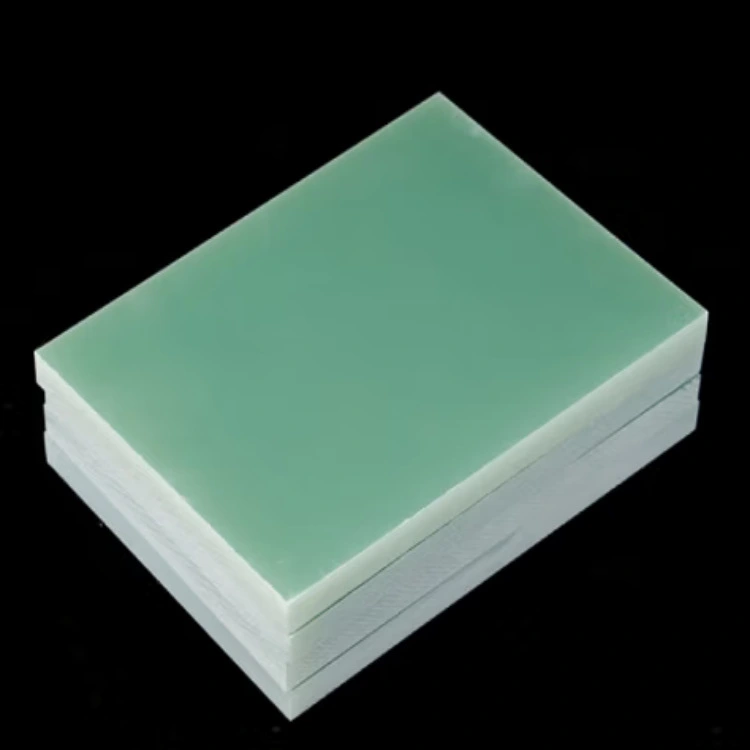
When it comes to electrical insulation and PCB substrates, FR4 sheet is the norm. It is a certain type of epoxy resin-bonded fiberglass composite material. "FR" stands for "flame retardant," which means that it meets the UL94 V-0 flammability standards that are very important for safety-critical gadgets. This thermosetting laminate is made up of several layers of woven fiberglass cloth that have been saturated with epoxy glue. This creates a hybrid structure that is very strong mechanically and reliably insulating electrically.
Manufacturing plants usually use thicknesses between 0.4 mm and 3.2 mm for PCB purposes. However, industrial-grade sheets can be up to 100 mm long for specific mechanical uses. The amber to pale green color of the material comes from the brominated flame retardant chemicals that are mixed in with the resin. When setting up CNC cutting parameters, it's important to understand these physical properties because changes in thickness have a direct effect on tool selection, feed rates, and the tolerances that can be reached.
Why FR4 Dominates Electronics Manufacturing
This epoxy-glass laminate is widely used because it has a reasonable performance profile across a number of important characteristics. The dielectric strength is usually between 20 and 25 kV/mm, and it provides strong electrical insulation that stops current leaks in circuit setups with a lot of connections. The material stays the same size at temperatures ranging from -50°C to +130°C, so it works well in uses like automotive, aircraft, and industrial control where temperatures change often.
Epoxy fiberglass composites have better mechanical qualities than phenolic paper laminates (FR1) or polyimide films, and they are also more affordable. Rogers high-frequency materials offer better signal integrity for specific RF applications, and CEM-1 is cheaper for simple single-layer boards. However, FR4 is the standard choice for about 90% of rigid PCB production around the world because it is easy to machine, doesn't conduct heat, and works well electrically. Because they control so much of the market, they can offer economies of scale that help procurement teams find reliable supply lines and stable pricing systems.
CNC Cutting Requirements and Material Behavior
When these fiberglass composites are put through CNC routing, drilling, or laser cutting processes, they behave in certain ways that affect the growth of nesting strategies. Because glass strands are rough, they wear down tools faster than smoother materials like aluminum or phenolic composites. When you cut something, you create fine dust that contains glass fibers and finished epoxy particles. This needs to be collected by the right devices and workers must follow safety rules.
The stacked structure of the material can cause delamination at the cut edges if feed rates are higher than recommended or if old tools are used. The quality of the edges has a direct effect on the next steps in the assembly process, especially when it comes to precision-fit uses like motor insulation parts or switchgear housings. When planning your nesting, you need to think about the direction of the fibers in the fiberglass weave. This is because cutting parallel to or perpendicular to the main fiber orientation changes the way the edges look and how the tool is loaded.
Challenges in CNC Cutting of FR4 Sheets and Their Root Causes
Common Production Issues in Material Processing
When using CNC tools to handle epoxy fiberglass laminates, manufacturing teams often run into the same problems over and over again. Cracks in materials at corners or narrow features are usually caused by cutting too fast, which creates localized heat stress that is higher than the material's breaking point. Edge roughness happens when dull tools tear the glass fiber bundles instead of cleanly shearing them, making ragged profiles that need extra work to be finished.
The most expensive problem is probably the waste of too much material; plans that aren't optimized well leave 30–40% of the FR4 sheet area as scrap that can't be used again. Metals can be melted down and made again, but thermoset composites can't be reshaped once they're hardened. This means that every square inch of lost material costs money. Different batches of the same product often have different sizes because the material isn't clamped properly or the machine's tuning is off. This is made worse by thermal expansion that happens when continuous cutting operations heat the work area.
Limitations of Traditional Nesting Approaches
Many factories still use manual layout methods where workers place part designs on sheet outlines by hand using drafting software or even paper models. This method isn't as good as it could be because humans have trouble optimizing space—their brains can't handle looking at thousands of different part places and orientations at the same time. When building by hand, only 60–70% of the material is usually used, so there is a lot of room for improvement.
Many older CAM programs that were made for cutting tasks rather than optimizing sheet goods don't have advanced nesting methods. These systems might be able to handle simple rectangular arrangements, but they can't handle complicated shapes with curved curves, internal cutouts, or parts of different sizes. It's possible that the software doesn't take into account rules about the minimum distance between parts, the direction of the grain, or optimizing the tool path to cut down on cutting distance and cycle time.
Outdated methods also have trouble with the fast changes that are needed in modern industrial settings. When technical changes affect part sizes or when order mixes change between production runs, re-nesting by hand takes a long time and is prone to mistakes. Because of this, facilities have to keep bigger stocks of raw materials as safety nets, which uses up working capital and warehouse room.
Root Cause Analysis and Process Correlation
Looking at the physics of CNC processes on composite laminates makes the link between the features of the material and inefficient cutting very clear. Compared to metals, the material has a relatively low thermal conductivity (about 0.3 W/m·K). This means that heat created at the cutting surface dissipates slowly, creating hot spots that soften the epoxy matrix. When used with dull tools that have high cutting forces, this heat softening makes it possible for the glass fibers to pull out instead of split neatly.
The state of the machine is also very important. For example, spindle runout greater than 0.02mm causes vibrations that get stronger as the cutting goes on, especially when working with thin sheets less than 1.6mm thick. When there isn't enough vacuum hold-down or the clamp isn't designed correctly, the material can bend under the cutting forces, which can cause mistakes in the dimensions that build up on large sheets. These mechanical factors affect nesting choices because plans that are very close together make the cutting path longer, which increases cycle times and heat buildup.
Advanced Nesting Strategies for Maximizing FR4 Sheet Yield
Core Principles of Efficient Layout Optimization
Modern stacking methods use algorithms to look at a huge number of possible arrangements for FR4 sheet that humans could never think of. The first step is to set clear optimization goals, such as maximum material use while keeping the minimum scrap skeleton needs for cutting structural integrity in mind. Strategies that work well balance different needs: for example, tight packing increases yield but may also lengthen cycle time if tool paths get too complicated.
When working with anisotropic materials, where fiber direction changes mechanical features, part orientation is very important. Rotating parts in a planned way lets them fit together more snugly while still keeping the right strength levels in the final parts. Advanced algorithms look at rotations in one-degree steps instead of just 90-degree steps, which lets them find complex patterns that can't be done by hand.
When you think about cutting order and common-line cutting, you can get even more speed gains. When two parts next to each other have straight edges, setting the CNC to cut along that edge only once instead of twice cuts down on tool trip distance and cycle time. For this method to work, you need to carefully plan your cuts so that the material stays stable during the whole process and no loose parts move before the job is finished.
Software Integration and CAD/CAM Workflow
Setting up smooth data flow from design systems to nesting platforms is the first step in implementation. Modern solutions can work with native CAD file types like DXF, DWG, or straight STEP/IGES imports. This gets rid of the translation mistakes that happen when files are changed from one format to another. Part libraries should have not only shape but also info that tells you the type of material, thickness, amount needed, and any special handling or grain direction needs.
The software engine for building uses constraint-based optimization and follows rules set by the user, like minimum edge lengths, maximum parts per sheet, or specific areas for labeling. Real-time representation lets operators look over suggested plans before putting them into production. If engineering judgment shows problems that the algorithm can't predict, changes can be made by hand. When software is connected to inventory management systems, it can choose the right sheet sizes from the stock that is available. This cuts down on the amount of material that needs to be moved and the number of incomplete sheets that build up.
Post-processing creates CNC programs that are designed for the material and machine setup, including tool paths, feed rates, and spindle speeds that are right for those conditions. When you connect stacking outputs straight to CNC controls, you don't have to enter programs by hand. This cuts down on setup time and the chance of making mistakes that could damage material or tools.
Measurable Benefits Through Case Study Evidence
A company in North America that makes electrical parts and uses epoxy laminates for switchgear protection switched from doing hand layouts to using advanced nesting software. During the six-month review time, they saw an increase in the use of materials from 68% to 84%, which saved more than $127,000 a year just on material costs. By planning the tool paths more efficiently, the cutting cycle time per sheet went down by 18%, and the machine's capacity went up without having to buy any new equipment.
By mixing nesting optimization with lean production principles, a car supplier that makes battery insulation barriers got even better results. Their organized method cut the time it took to make parts from 5.3 days to 3.1 days, while also cutting the amount of raw materials they used by 22%. When they cut down on their work-in-progress inventory, they were able to use 340 square feet of floor space that had been used to stage materials for later use in value-added assembly processes.
These results show that stacking optimization is useful for a lot more than just saving material. Shorter turnaround times make it easier to meet customer needs, less waste is better for the environment, and uniform quality builds trust with customers. For businesses that produce more than 100 sheets per month, the money spent on the right tools and training usually pays for itself in 6 to 12 months.
Comparative Analysis: FR4 Nesting vs Other PCB Materials Nesting
Material Property Influences on Cutting Strategy
Different types of laminate and base materials pose different problems that need specific building methods. Standard FR4 sheet composites behave in a pretty predictable way, with mild cutting forces and uniform patterns of tool wear. Polyimide flexible circuits, on the other hand, need special fixtures to keep the material from warping while it's being cut. This makes it hard to nest parts tightly because there have to be clamping zones around each feature.
It is easier to machine high-frequency materials like Rogers laminates or PTFE-based bases than glass-reinforced epoxies, but they cost more, which makes it even more important to optimize the materials. These special media usually come in smaller sheets, so nesting methods need to be designed to make the best use of the space they have. The thickness of CEM-3 composite materials made of woven glass layers on top and cellulose paper cores changes their mechanical properties, which affects the best cutting parameters and the smallest feature spacing.
When metal-core PCBs are used in LED and power electronics applications, thermal conductivity needs to be thought about. The aluminum or copper base layer moves heat away from the cutting zone better than pure composite materials. Because of this thermal behavior, stacking can be tighter and feed rates can be faster, but different tooling techniques are needed. When sourcing and engineering teams know about these material-specific traits, they can choose materials that meet performance needs while also being efficient in production.
Procurement Considerations for Global Supply Chains
When choosing the right providers, you need to look at more than just the unit price. Quality standards, such as ISO 9001, UL recognition, and RoHS compliance documents, give you a basic idea of how consistently your products are made. Established providers keep a close eye on the raw materials that come in and the processes that go on. This ensures that the sheets are all the same, which is very important when nesting programs made for one batch need to work regularly across multiple orders that happen over months or years.
Reliability of lead times affects plans for inventory and the ability of just-in-time manufacturing methods to make money. Suppliers who keep a lot of finished goods in stock can fill urgent orders quickly, but they may charge more. Those that make things to order are cheaper, but they need more time to plan ahead. Geographic factors weigh freight costs against the reliability of the supply chain. For example, domestic suppliers offer faster lead times and easier handling, while foreign sources may offer lower costs for large-volume projects.
When processing problems come up, providers that offer technical help set themselves apart. Responsive providers give out material data sheets with full lists of their mechanical and electrical properties, offer application engineering help for unique needs, and keep up quality tracking systems that let you figure out why a defect happened in the first place. These service parts add value that goes beyond the material itself and help the production organization's efforts to keep getting better.
Implementing Lean Processes to Optimize CNC Cutting of FR4 Sheets
Continuous Improvement Through Data-Driven Analysis
Setting up baseline performance measures is the first step in using the lean method for FR4 sheet nesting and cutting processes. Keep track of the percentage of material that is used, the average cycle time per sheet, the value of scrap as a portion of the cost of the material, and the cutting tool's life, which is shown in linear feet cut. These numerical measurements give clear proof of how well improvement efforts are working and help figure out which factors have the biggest effect on general performance.
Nesting plans for finished jobs should be looked at regularly during production reviews, with real results compared to theorized best arrangements. Modern stacking software often has post-production research tools that figure out how efficient the software is and show where parameters can be improved. When trends show up, like certain part geometries regularly leaving extra scrap or certain sheet sizes not being used well, these insights lead to targeted process changes.
Using feedback loops makes sure that information from the field gets sent back to the planning stages. When workers see problems with edge quality or dimensions with certain nesting arrangements, they record that information so that the same problems don't happen again. Digital work instruction systems can point out bad patterns and suggest new ways of doing things, which builds institutional knowledge that stays even after employees leave.
Operator Training and Skill Development
Nesting software that is very complex has a lot of useful features, but to get the most out of it, you need trained workers who understand both the technology and how things are made. Material properties and how they affect cutting behavior should be covered in training classes. So should how to use software, including setting constraints and evaluating layouts, and how to fix problems when results don't meet standards.
Cross-functional training helps people who work in engineering, writing, and production do their jobs better. When design engineers know about nesting limits, they can make part forms that make the best use of material during the design phase instead of shapes that will always result in too much scrap. If production workers understand how automated nesting decisions are made, they can make smart human changes when special situations call for it.
Continuous skill development keeps up with how software changes and how best practices come up. Training from suppliers, industry workshops, and professional groups where people share what they know all help to make an organization more competent. Facilities that put money into training their employees gain a competitive edge that technology alone can't provide.
Long-Term Economic and Environmental Benefits
Optimized nesting has effects that go beyond instant cost savings and change how a business positions itself strategically. The carbon footprint of production processes goes down when less material is used. This is something that customers are becoming more concerned about as they look at how environmentally responsible their suppliers are. Some businesses now need suppliers to give sustainable data, which means that material efficiency is now a requirement for bids.
Less trash is made, which lowers the cost of getting rid of it and makes following the rules easier in places with strict rules about industrial waste. After optimizing nesting, the small scrap pieces that are left can often be recycled in ways that recover the glass fiber content for use in other composite uses. This can bring in a small amount of money while keeping materials out of landfills.
Operating excellence in the use of materials boosts customer trust and backs up strategies for charging higher prices. When companies show constant quality, on-time delivery, and helpful customer service made possible by running their businesses efficiently, they stand out in markets where price alone affects too many buying choices. Strong supply relationships based on mutual success create stable streams of income that help with long-term planning for the business and investing in improving its capabilities all the time.
Conclusion
In conclusion, by strategically nesting FR4 sheet parts to get the most out of them, CNC cutting processes can go from being cost centers to competitive benefits. When you combine advanced software tools with a deep understanding of materials and lean production concepts, you can see improvements in how well materials are used, how quickly cycles are completed, and how consistent the quality is. The methods described here can be used to improve operating quality whether you are working with epoxy laminates for PCBs, electrical insulation components, or mechanical parts. Every part of production needs to be optimized more and more for manufacturers to be successful, and material efficiency is one of the easiest ways to make more money and be more competitive in the market.
FAQ
How can I verify authentic FR4 material from suppliers?
Ask for proof of material certification, such as test records from the maker that show the FR4 sheet meets the requirements set out in IPC-4101 for glass-reinforced epoxy laminates. Clear identification markings on the sides of protective film or sheets that show the grade, thickness, and production date codes are signs of real material. Independent labs can test samples physically to confirm their dielectric strength, bending strength, and flame resistance properties when working with new sources or for important tasks that need complete certainty.
What lead times should I expect for bulk orders?
Standard-grade epoxy fiberglass sheets in common thicknesses (0.8mm to 3.2mm) usually ship within two to three weeks for domestic providers who keep stock. Custom thicknesses or specialty grades, on the other hand, may take four to eight weeks for manufacturing runs. International providers usually add 3–4 weeks for ocean freight or 1 week for plane shipping, but this depends on how much space is available on ships around the world. Setting up blanket buy orders with planned releases helps suppliers plan their production more efficiently, which often leads to faster lead times and better priority allocation.
Can nesting software handle complex shapes with internal cutouts?
Modern stacking algorithms are very good at working with complicated shapes that have curves, internal gaps, and different feature sizes within the same part. The software uses math to check for collisions between all part borders while following minimum spacing rules and rotating and placing parts to get the most out of each sheet. Advanced systems use AI methods that get better at optimization over time by learning from past nesting solutions. This is especially helpful when working with part families that repeat and have well-known patterns.
Partner With J&Q for Superior FR4 Material Solutions
It has been over twenty years since J&Q has been making and selling high-quality FR4 sheet laminates that are designed to work with CNC machines. Our technical team knows how important it is for material quality to be consistent and for nesting to work well. They make sure that your optimized nesting programs give you consistent results batch after batch by closely monitoring thickness limits and making sure that glue is evenly distributed across all sheets. We keep a large collection of standard thicknesses ranging from 0.5 mm to 6.0 mm, and our combined logistics skills mean that we can really help you with everything, from choosing the materials to delivering them to your building. As a well-known company that makes sheets for the electrical, automobile, and industrial equipment markets across North America, we offer sample evaluation programs that let your team check how well the material works before committing to large-scale production. Get in touch with our purchasing agents at info@jhd-material.com to talk about your unique needs and find out how our high-quality materials, expert technical support, and reliable supply chain can help your business run more smoothly.
References
National Electrical Manufacturers Association. "NEMA LI 1-2020: Industrial Laminating Thermosetting Products." NEMA Standards Publication, 2020.
Institute of Printed Circuits. "IPC-4101D: Specification for Base Materials for Rigid and Multilayer Printed Boards." IPC International Standards, 2019.
Society of Manufacturing Engineers. "Advanced Nesting Algorithms for Sheet Material Optimization." SME Technical Paper Series, 2021.
American Society for Testing and Materials. "ASTM D3039: Standard Test Method for Tensile Properties of Polymer Matrix Composite Materials." ASTM International Standards, 2017.
Womack, James P., and Daniel T. Jones. "Lean Thinking: Banish Waste and Create Wealth in Your Corporation." Free Press Business Edition, 2003.
Zhang, Wei, and Kumar Rajesh. "CNC Machining Optimization of Composite Materials: A Comprehensive Review." Journal of Manufacturing Processes, Vol. 45, 2022, pp. 287-304.

Get a complete product list and quotation

J&Q New Composite Materials Company



