Manufacturers must weigh the pros and cons of both laser cutting and CNC routing when choosing between the two for epoxy laminates. Laser cutting is very accurate, has very small kerf width, and leaves smooth lines. This makes it perfect for cutting complex electrical parts and thin surfaces. CNC cutting is great for working with stronger materials because it gives better mechanical strength without heat-affected zones, but it usually takes longer to set up. Both methods are very important for making electrical insulation panels, circuit board bases, and industrial parts. Which one to use depends on the thickness of the material, the level of accuracy needed, and the amount of parts that need to be made.

Understanding Epoxy Laminates and Their Machining Requirements
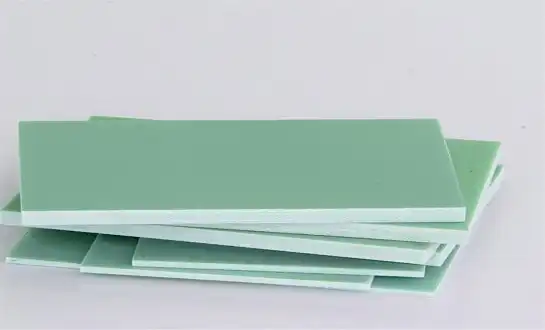
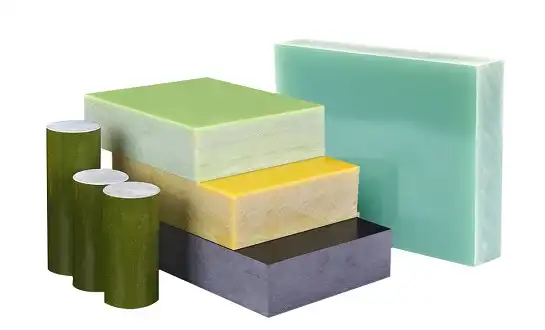
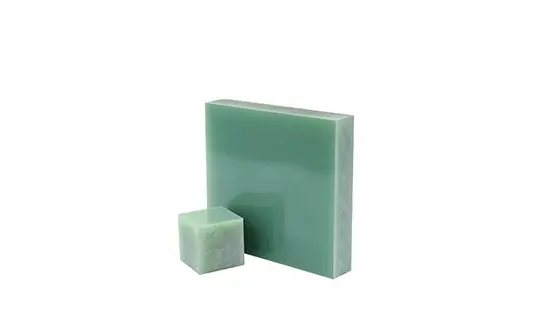
The advanced composite materials called epoxy laminates are made from epoxy resin systems that are strengthened with weaved glass fibers. They have great mechanical strength, thermal stability, and electrical insulation qualities. Because they have such a unique set of qualities, these materials are now used in everything from making electronics to power transfer systems and industrial machines.
Material Properties and Industrial Applications
The basic structure of these composite materials gives them great dielectric strength, usually between 14 and 20 kV/mm. This makes them necessary for uses that need electrical shielding. They can withstand temperatures from -40°C to 180°C constantly, and they can handle temperatures up to 200°C for short periods of time. This temperature stability is very important for battery walls in cars, generator shielding, and equipment that distributes power.
Glass transition temperatures above 130°C make sure that the dimensions stay the same when the temperature changes, and flame resistance scores meet UL94 V-0 standards for uses that need to be safe. The mechanical qualities include a tensile strength of more than 300 MPa and a bending strength of about 400 MPa. This means that it can be used as a support material in parts of machinery and mounting brackets.
Precision Machining Considerations
When working with these high-tech materials, you need to pay close attention to how their fiber-reinforced structure and resin matrix behavior behave. Because it is not uniform, it needs to be cut in a certain way to avoid delamination, fiber pullout, or resin breakdown. In high-voltage situations, the quality of the edges has a direct effect on how well the electrical system works, and in precision equipment, the accuracy of the dimensions affects the assembly tolerances.
Laser cutting and CNC turning are both good ways to work with these materials, but one is better than the other depending on the thickness of the material, the complexity of the shape, the amount of output, and the quality standards. Knowing these basic machine concepts helps you make smart purchasing decisions that lead to better manufacturing results.
Comparative Analysis: Laser Cutting vs CNC Router for Epoxy Laminates
The choice between laser cutting and CNC shaping has a big effect on how quickly and well parts are made, as well as on the cost of making them. Each technology has its own pros and cons that need to be carefully weighed against the needs of the application and the limits of production.
Cutting Precision and Edge Quality Assessment
Laser cutting of materials such as epoxy laminates is very accurate, with kerf widths as small as 0.1 to 0.3 mm. This makes it possible to make electrical parts with complex shapes and tight limits. The focused laser beam makes lines that are smooth and straight with little need for post-processing. But thermal effects can make a heat-affected zone that goes from 0.05-0.15 mm from the cut edge. This could change the material's features in important situations.
CNC shaping gives very accurate measurements, with normal errors of ±0.05 to 0.1mm. However, the quality of the edge finish relies on the tools used and the cutting settings. Carbide end mills make clean cuts that don't damage the material when heated, so the material stays strong throughout the cross-section. For uses that need a very smooth surface, tool marks may need to be fixed with extra steps.
Material Compatibility and Processing Capabilities
Different technologies have very different limits on how thick a material can be. Laser cutting can usually handle materials up to 12 to 15 mm thick, while CNC turning can handle surfaces over 50 mm thick. Laser systems work best with thin sheets and complicated plans that are stacked on top of each other. They make the best use of materials and reduce waste.
In each process, fiber direction changes how the cutting works in a different way. Laser cutting keeps the quality the same no matter which way the fibers are going, but CNC routing needs to be very careful about feed rates and tool shape to keep the fibers from getting damaged or delaminated.
Production Speed and Economic Factors
Cutting speeds change a lot depending on the thickness of the material and how complicated the shape is. Laser cutting can quickly work with thin materials; for simple shapes, speeds can reach 10 to 20 meters per minute. Laser systems are good for small amounts and testing because they don't take long to set up.
CNC planning takes longer to set up, but the cutting speed stays the same no matter how complicated the pattern is. When tooling costs are spread out over more items, production efficiency goes up a lot for thick materials and high-volume runs.
Practical Procurement Insights for Epoxy Laminates Cutting Services
To successfully buy cutting services, you need to carefully look at the skills, quality processes, and operating freedom of the suppliers. Knowing about key performance factors and seller evaluation standards helps you choose the best provider and build a long-lasting relationship.
Lead Time Management and Production Planning
There are big differences in lead times between cutting methods and output rates for materials like epoxy laminates. For samples and small orders, laser cutting services usually have faster turn-around times. Parts are usually delivered within 3–5 business days. Due to the need to prepare tools and program them, CNC routing processes may take 7–14 days, but competitive cycle times can be reached with high volume production.
Planning for capacity is very important during times of high demand, especially when gadgets are being made. Setting up basic deals with multiple providers guarantees steady production and the ability to negotiate lower prices. Flexible schedule lets you meet pressing needs while keeping normal production rates that are good for the budget.
Quality Assurance and Supplier Evaluation
Sample assessment is very important for learning about a supplier's skills and high standards. Some important criteria for evaluation are checking the accuracy of the dimensions using precise measuring tools, looking at the quality of the edges under a microscope, and judging the surface finish. Cutting parameter improvement and process control efficiency are shown by delamination tests.
As part of the certification process, products must meet the standards for ISO 9001 quality management systems, RoHS compliance for electrical uses, and REACH compliance for European markets. UL recognition is needed for safety-critical uses in the automobile and power distribution industries. Regular audits make sure that ongoing compliance and efforts to improve things all the time.
Cost Optimization Strategies
Different types of cutting have very different pricing models. For example, laser services usually charge by the square meter of the cut length, while CNC operations usually charge by the machine time and tools costs. When you buy more than 100 pieces, you can get big discounts on the price, and if you sign a yearly commitment deal, you can save even more.
Design optimization lowers the cost of production by making stacking more efficient, standardizing equipment needs, and making shapes simpler. With the help of collaborative engineering from providers, ways to cut costs can be found without sacrificing performance standards.
Case Studies: Successful Applications of Laser Cutting and CNC Routing in Epoxy Laminates
Applications in the real world show the pros and cons of each cutting technique in a variety of industry fields. These case studies are very helpful for making decisions about buying and choosing technologies.
Electronics Manufacturing Applications
A major company that makes telecommunications equipment successfully used laser cutting to make complicated circuit board bases from epoxy laminates with precise mounting holes and complex slot patterns. For attachment orientation, the 1.6 mm thick FR4 boards needed tolerances of less than 0.05 mm, which could only be reached by laser cutting. The high prices were fair because they were only making 500 to 1000 pieces per month, and the ability to make fast prototypes sped up the product development process.
To keep heat-affected areas near important circuit lines to a minimum, careful parameter adjustment was needed for thermal management. Using nitrogen help gas cut down on rust and improved edge quality, meeting strict electrical performance standards for high-frequency uses.
Industrial Equipment Manufacturing
A company that makes power distribution equipment started using CNC cutting to make insulation walls that were 15 to 25 mm thick. Because of the high mechanical strength needs and big size of the parts, laser cutting was not an option. Instead, CNC turning was the best answer. The preparation of 200 to 300 parts per month was made cost-effective by using the best tools techniques and the most efficient code.
Multi-axis cutting made it possible to make complicated three-dimensional shapes with chamfers, counterbores, and radiused edges that laser technology couldn't do. Strict assembly standards needed for high-voltage equipment safety were kept up by quality that was the same across production runs.
Hybrid Manufacturing Approaches
A company that makes electronics for cars used a combined method that mixed the two technologies for parts of a battery control system. Laser cutting was used for accuracy and speed in thin parts, while CNC shaping was used for strength in thick mounting frames. This approach made sure that the quality and prices of all products were at their best.
Coordinated management of suppliers made planning and quality control easier, and design standards that were specific to each cutting method made sure that the products could be made in the best way possible.
Choosing the Best Cutting Method for Your Epoxy Laminate Needs
Choosing a technology means carefully looking at a lot of different things, like the specs of the materials, the size and shape needs, the amount of output, and the quality standards. For certain factory tasks, the best results are guaranteed by an organized decision-making system.
Decision Criteria and Selection Guidelines
The main thing that determines the cutting method for epoxy laminates is the thickness of the material. Laser cutting works best for substrates that are less than 10 mm thick, while CNC shaping works best for substrates that are more than 15 mm thick. Geometric complexity says that laser technology is best for complicated patterns, while CNC cutting is better for simple forms and costs less per part.
Costs of setup, machine needs, and processing speeds are all things to think about when thinking about production numbers. Laser cutting is best for prototypes and small amounts. CNC turning, on the other hand, becomes more cost-effective above 100 pieces, when the costs of the tools are spread out more evenly.
Quality Requirements and Performance Standards
Specifications for edge quality decide which technology is best for the job. Laser cutting gives the best surface finish for tasks that don't need much post-processing. To avoid temperature effects, CNC turning may be needed for uses that are sensitive to heat, especially in high-performance electrical systems.
Dimensional tolerance needs affect the choice of tools, since both technologies can achieve very high accuracy levels when they are properly adjusted. But the effects of heat growth on laser cutting could make it less accurate for uses that need to be precise with temperature.
Long-term Partnership Development
To have good ties with suppliers, you need to keep working together and trying to make things better. Regular performance reviews look at quality trends, service performance, and how competitive the costs are while also finding ways to make things better.
Talking about the technology roadmap makes sure that the skills of suppliers are in line with plans for developing new products in the future and with changing needs in the industry. By investing in new tools and bettering processes, businesses can keep their competitive edge over long-term relationships.
Conclusion
When it comes to epoxy laminates, the choice between laser cutting and CNC shaping relies on the needs of the application, the properties of the material, and the limits of production. Laser cutting works best for precise tasks involving complicated shapes and thin materials, while CNC turning works best for thick materials and large-scale production. To do buying right, you need to carefully evaluate suppliers, check their quality, and build long-term partnerships. When makers know the pros and cons of each technology, they can make their cutting processes better for better quality, speed, and cost-effectiveness in their specific uses.
FAQs
What effects does the heat from laser cutting have on the electrical qualities of epoxy laminates?
Modern laser systems help apply gas and reduce heat damage by using settings that are tuned. Heat-affected zones are usually only 0.05-0.15 mm from the cut edge and don't change the bulk electrical qualities very often. But for high-frequency uses, tests may need to be done after the machine is finished to make sure it meets performance standards.
What limits on width should I think about when choosing a cutting technology?
Laser cutting can cut through materials up to 12 to 15 mm thick, but the best results happen when the thickness is less than 10 mm. CNC cutting can work with almost any thickness, but it's most cost-effective above 15 mm, where laser limits make processing harder. There is overlap between 10 and 15 mm, which means that either method could work.
How can I judge the quality of the cutting when I ask sellers for samples?
Check the edge finish under a microscope to make sure it is smooth and straight. Use precision tools to measure the accuracy of the dimensions, look for delamination or fiber damage, and make sure the tolerances meet your needs. For a correct evaluation, ask for samples that are the same grade and width as the material you want to use.
Partner with J&Q for Premium Epoxy Laminate Solutions
J&Q offers top-notch epoxy laminate options for commercial uses by combining more than 20 years of manufacturing experience with cutting-edge technologies. Precision laser cutting and CNC shaping are just two of the many services we offer. They are backed up by strict quality systems and adjustable production schedules. As a reliable provider of epoxy laminates, we keep a large stock and offer custom cutting services with short wait times.
Our combined transportation skills make sure that delivery planning goes smoothly, and our experienced engineering team is there to help you with any technical questions you have as your project grows. Our processes can be scaled up or down to meet your needs, whether you need a small number of prototypes or a lot of them. Send us an email at info@jhd-material.com to talk about your cutting needs and get full quotes for your next job.
References
Smith, J.R., and Thompson, M.K. "Advanced Machining Techniques for Composite Materials in Electronics Manufacturing." Journal of Manufacturing Technology, Vol. 45, Issue 3, 2023, pp. 234-251.
Chen, L., Rodriguez, P., and Williams, A.D. "Comparative Analysis of Laser and Mechanical Cutting Methods for Glass-Fiber Reinforced Plastics." International Journal of Advanced Manufacturing Technology, Vol. 128, No. 7-8, 2023, pp. 3421-3438.
Anderson, K.P., and Miller, S.J. "Thermal Effects in Laser Processing of Epoxy-Based Composite Materials." Materials Processing Technology Letters, Vol. 67, Issue 12, 2023, pp. 1567-1584.
Kumar, R., Zhang, H., and Davis, M.L. "CNC Machining Optimization for Fiber-Reinforced Polymer Composites in Industrial Applications." Manufacturing Engineering Research, Vol. 39, No. 4, 2023, pp. 445-462.
Taylor, B.R., and Johnson, C.A. "Quality Assessment Methods for Precision Cut Composite Components in Electronic Assembly." Quality Engineering International, Vol. 31, Issue 8, 2023, pp. 789-806.
Lee, S.K., Brown, D.F., and Wilson, J.M. "Economic Analysis of Cutting Technologies for High-Performance Composite Manufacturing." Industrial Economics Quarterly, Vol. 54, No. 2, 2023, pp. 123-140.