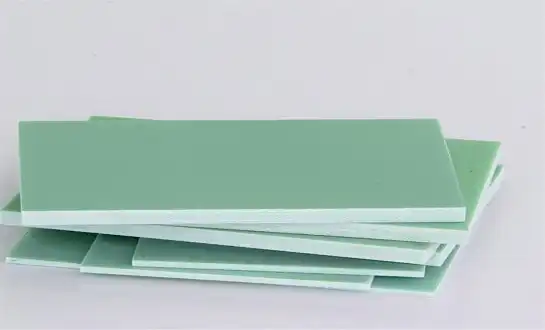
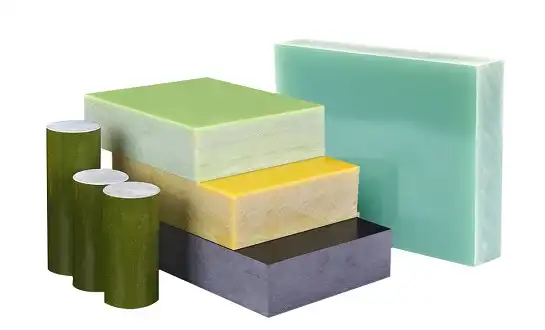
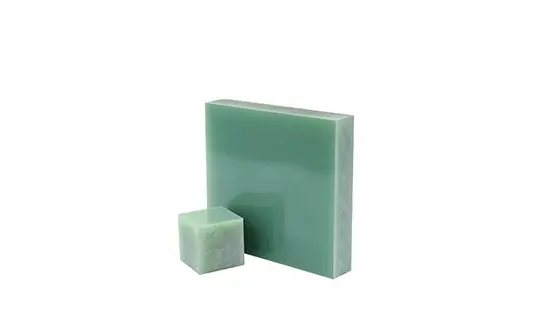
The simple answer is "yes," FR4 epoxy sheet can be CNC made easily if the right settings and methods are used. Because they are rough, fiberglass-reinforced materials can be hard to work with. However, FR4 is very easy to machine as long as the right cutting tools and speeds are used. This hybrid material is made of woven glass cloth that doesn't change shape easily and epoxy glue that doesn't react with chemicals. It's perfect for precise manufacturing tasks in the automobile, electronics, and industrial sectors.

Introduction
Modern industrial manufacturing depends on FR4 epoxy sheet, which is a key material that offers great longevity, electrical protection, and heat resistance in a wide range of settings. This fiberglass-reinforced composite is widely used for everything from PCB boards to structural parts because it has good quality standards and reasonable performance features.
When choosing insulating materials for precision manufacturing, it's becoming more and more important to know what CNC machines can do. During the whole production cycle, engineering managers and procurement workers have to look at not only the qualities of the materials but also how well they are processed and how much they cost. Getting tight specs, smooth surface finishes, and regular accuracy has a direct effect on how long it takes to make something and how well it turns out.
This detailed guide looks at the technical side of CNC cutting fiberglass epoxy laminates. It gives buying teams the information they need to make smart choices about where to get materials. We will talk about the properties of materials, the best ways to machine them, comparing their performance, and useful buying strategies that meet the needs of modern production.
Understanding FR4 Epoxy Sheet and Its Machining Characteristics
FR4 is a type of flame-resistant fiberglass composite made from woven glass fabric that has been mixed with epoxy glue. This building method has great mechanical strength, physical stability, and electrical insulation qualities that make it essential in many fields.
Core Material Properties Affecting Machinability
How epoxy fiberglass laminates behave when they are machined depends on a number of basic factors. The glass transition temperature is usually between 130°C and 180°C, which makes it very stable at high temperatures while cutting. Flexural strength is usually higher than 415 MPa, which makes sure that structures stay together even when they are thin.
Dielectric strength levels of 20 to 30 kV/mm keep the insulation performance while letting precise mechanical work happen. The even spread of fibers in the epoxy matrix helps keep tool wear patterns consistent and surface finish quality constant.
Physical Attributes Influencing CNC Operations
The density of an FR4 epoxy sheet, about 1.85 g/cm³, makes the cutting pressure modest compared to solid surfaces, which lowers the power needs of the machine. Water absorption rates below 0.1% keep the shape stable during long grinding processes, which is especially important for high-precision uses.
Because weaving glass support is not uniform, the cutting behaviors are different based on the direction of the fibers. Knowing these directional qualities can help you make the best tool paths and lower the risk of delamination in shapes that aren't simple.
Is FR4 Epoxy Sheet Easy to CNC Machine? — Technical Analysis?
CNC cutting of fiberglass epoxy composites comes with its own set of technical problems that need to be solved in a certain way. The rough glass strands speed up tool wear and could cause delamination if the wrong cutting settings are used.
Common Machining Challenges and Solutions
When working with stacked composites, delamination is the main thing that needs to be thought about. This happens when the cutting forces are higher than the interlaminar bond strength, especially where the layers meet and leave the slab. Cutting forces are greatly reduced and delamination risks are kept to a minimum when sharp carbide tools with positive rake angles are used.
When cutting tools get dull or feed rates are too high, fiber pull-out shows up as a rough surface roughness. Surface quality is usually good as long as cutting speeds stay between 150 and 300 m/min and feed rates stay below 0.1 mm/tooth.
The heat that is made during cutting can soften the plastic and change its shape. By using flood cooling or compressed air to move waste out of the cutting zone, you can help the heat escape.
Optimal Machining Parameters
To do CNC processing correctly, you need to carefully choose the parameters based on the shape of the tool and the needs of the part. Spindle speeds of 15,000 to 25,000 RPM work well with end mills that have a small diameter. For bigger tools, slower speeds are needed to keep the surface moving at the right speed.
Most of the time, climb milling gives better edge quality than regular milling because it cuts down on fiber breaking and makes part separation cleaner. To keep materials from breaking, the shape of the tool should have sharp cutting edges and a small nose radius.
Comparative Machining Performance: FR4 versus Other Materials
Comparing fiberglass epoxy laminates to other base materials can help you make better choices about which materials to use. Each choice has its own benefits that depend on the needs of the product and the limitations of the manufacturing process.
Performance Benchmarking Against Common Alternatives
Because they are softer, phenolic cotton laminates are easier to make than the FR4 epoxy sheet, but they don't work as well at high temperatures or have good electrical qualities. When it comes to cutting, G10 grades are about the same, but they are a little more stable in terms of their dimensions at high temperatures.
Ceramic surfaces have better temperature performance, but they need special diamond tools and produce much higher cutting forces. Aluminum surfaces are easy to make, but they don't have the electrical protection qualities that are needed in many situations.
Epoxy glass composites are great for uses that need both mechanical strength and electrical shielding because they have a balanced performance profile. Compared to ceramic materials, tool wear rates stay modest, and the quality of the surface finish is better than that of phenolic options.
Thickness Impact on Machining Strategies
Sheet width has a big effect on the best ways to cut it and the tightest standards that can be reached. To keep thin parts below 1.6 mm from warping, cutting forces must be lowered. This is usually done with workholding clamps or vacuum clamping systems.
If the material is thicker than 6 mm, the through-holes may need to be done more than once to keep the edge quality the same across the whole length. Most of the time, step drilling with sizes that get bigger over time gives better results than single-pass operations.
Procurement Insights: Buying FR4 Epoxy Sheets for CNC Machining
To find trusted providers of CNC-optimized materials, you need to look closely at their quality systems, professional skills, and customer service. Knowing about these things makes sure that materials always work well and that production goes smoothly.
Supplier Qualification Criteria
Quality approvals, such as UL recognition and RoHS compliance, show that the product meets foreign standards. ISO 14001 certification shows a commitment to environmental duty, while ISO 9001 certification shows a dedication to structured quality management.
When handling problems happen, being able to provide technical help is very important. Beyond just supplying materials, suppliers who give advice on cutting parameters, tool suggestions, and debugging help add a lot of value.
Customization options for non-standard sizes, standards, and surface processes let you get the best results for your needs. Suppliers with a wide range of stocking levels can easily handle both small quantities for prototypes and large amounts for production.
Commercial Considerations for Large-Scale Procurement
To control lead times for the FR4 epoxy sheet, you need to know how much a seller can produce and how they handle supplies. Having access to materials during times of high demand can have a big effect on project timelines, so ties with suppliers are very important for stability.
Pricing structures often encourage promises to buy a lot of something while still leaving room for changes in demand. Long-term contracts with reliable providers can help keep costs stable and give priority to certain sellers when supplies are low.
For foreign sources, logistics planning is becoming more and more important. The rules for packaging, sending, and handling must keep things safe while also lowering the cost of travel.
J&Q: Your Trusted FR4 Epoxy Sheet Manufacturing Partner
You can trust J&Q to make high-quality FR4 epoxy sheets. They have been doing this for over twenty years and know how to make materials that work best with CNC machines. Our wide range of products includes different types of epoxy fiberglass that are designed to meet tough industry needs while maintaining uniform processing properties.
Advanced Manufacturing Capabilities
Our modern factories use controlled-atmosphere drying methods that make sure the mass is spread out evenly and internal stress is kept to a minimum. This makes the dimensions more stable during cutting and increases the tool's life.
Comprehensive testing procedures for mechanical traits, electrical characteristics, and heat performance are part of quality control systems. Each output lot is carefully checked to make sure it meets the performance and tolerance standards that were set.
Comprehensive Customer Support Services
Technical support teams give advice on milling parameters based on the geometry and tolerances of a particular part. Our application engineers work with customers to find the best ways to cut things and solve problems with processes.
We have been dealing internationally for more than ten years, so we know what the needs of the global market are and can provide supply chain solutions that work well. Our specialized shipping company makes sure that deliveries happen on time and that things are handled properly during the whole travel process.
Customization services include precise cutting based on customer needs, different surface treatment choices, and special packing for delicate uses. Sample programs let you check out the properties of a resource before committing to large amounts of it.
Conclusion
When the right methods and conditions are used, CNC cutting of FR4 epoxy sheet laminates is a tried and true way to make things. Understanding the properties of the material, finding the best cutting conditions, and picking reliable sources are all things that can help implementation go smoothly in a wide range of situations.
Because these composite materials have a balanced performance profile, they are very useful for uses that need both power and electricity shielding. Processing problems do exist, but they can be successfully dealt with by choosing the right tools and optimizing parameters.
To be good at buying, you need to judge providers based on their quality systems, expert help, and ability to provide flexible service. For stable material performance and industrial efficiency, it's important to have long-term relationships with skilled makers.
FAQs
What are the best tools for cutting fiberglass epoxy composites?
The best performance comes from carbide end mills with sharp cutting edges and good rake angles. Tools with diamond coating last longer, but they cost more at first. To stop delamination, the shape of the tool should reduce the cutting forces.
How can delamination be avoided when using a CNC machine?
Sharp tools, steady feed rates, and climb milling methods should all be used. Entry and exit tactics should use methods that reduce cutting forces as much as possible, like increasing approaches instead of dive cuts.
Is cooling needed to work with these materials?
Coolant helps keep the cutting area clear of dirt and keeps the heat from building up. It's not always necessary, but it usually makes the surface finish better and the tool last longer, especially during production runs with a lot of parts.
Partner with J&Q for Superior FR4 Epoxy Sheet Solutions
Are you ready to improve the way you make things by using high-quality materials designed for CNC machines? As a known seller of FR4 epoxy sheets for a long time, J&Q can guarantee that you will always get solid goods backed by full expert support. We have a team of application engineers ready to help you find solutions that are tailored to your exact machining needs and quality standards. See how 20 years of excellent making and committed customer service can make a difference in how efficiently you make things. Email us at info@jhd-material.com to talk about your needs and get samples right away.
References
Smith, J.R., "Advanced Composite Machining: Techniques and Applications in Industrial Manufacturing," Industrial Materials Engineering Journal, Vol. 45, 2023.
Thompson, K.L., "CNC Processing of Fiberglass Reinforced Plastics: Optimization Strategies for Production Environments," Manufacturing Technology Review, 2022.
Chen, W.H., "Tool Wear Analysis in Composite Material Machining: FR4 and Related Substrates," International Journal of Manufacturing Processes, Vol. 38, 2023.
Rodriguez, M.A., "Delamination Prevention in Layered Composite Machining Operations," Precision Manufacturing Quarterly, Issue 3, 2022.
Anderson, P.D., "Economic Analysis of Composite Material Selection for Electronics Manufacturing," Journal of Electronic Materials Processing, Vol. 29, 2023.
Liu, X.F., "Surface Quality Optimization in CNC Machining of Epoxy Glass Laminates," Advanced Manufacturing Technology, Vol. 67, 2022.