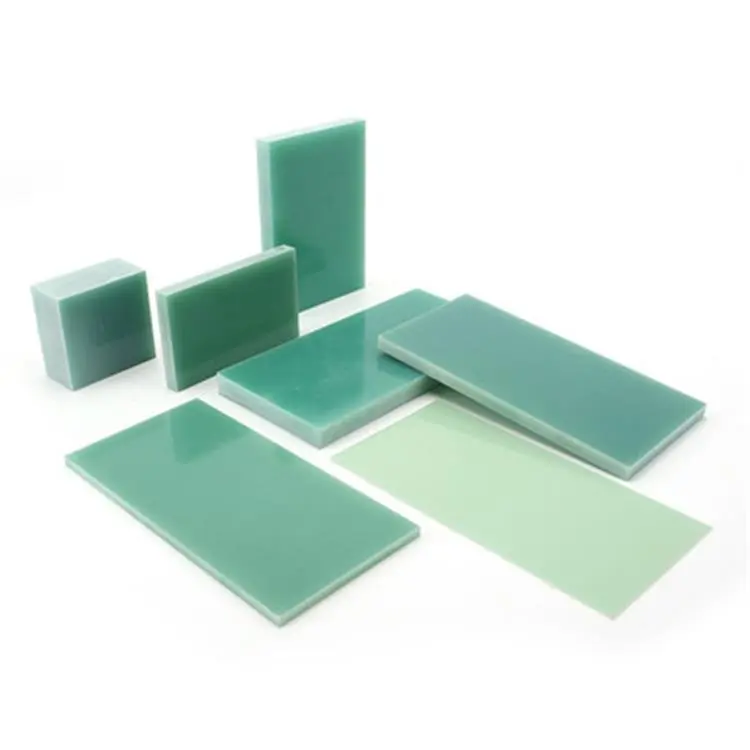
Achieving Dimensional Stability for Accurate Probe Registration
Temperature-Induced Dimensional Changes
FR4 epoxy sheet exhibits remarkable dimensional stability across a wide temperature range. This characteristic is crucial for maintaining precise probe alignment in test fixtures, even when subjected to thermal variations during testing procedures. The material's low coefficient of thermal expansion ensures that the fixture's critical dimensions remain consistent, preventing misalignment issues that could lead to inaccurate test results.
Moisture Resistance and Dimensional Integrity
The moisture resistance of FR4 epoxy sheet plays a vital role in preserving dimensional integrity. Unlike some alternative materials, FR4 absorbs minimal moisture, reducing the risk of warping or swelling that could compromise probe registration accuracy. This property is particularly valuable in humid environments or when testing components that generate heat, as it helps maintain the fixture's dimensional stability throughout extended testing cycles.
Long-Term Dimensional Consistency
FR4 epoxy sheet's ability to retain its dimensions over time contributes significantly to the longevity and reliability of test fixtures. This long-term stability ensures that fixtures maintain their precision even after repeated use, reducing the need for frequent recalibration or replacement. The material's resistance to creep and stress relaxation further enhances its suitability for applications requiring sustained dimensional accuracy.
Minimizing Signal Interference and Grounding Issues
Electrical Insulation Properties
The superior electrical insulation properties of FR4 epoxy sheet make it an ideal material for test fixtures, particularly when dealing with high-frequency or sensitive electronic components. Its high dielectric strength and low dissipation factor effectively minimize signal crosstalk and interference between adjacent test points, ensuring accurate and reliable measurements. This insulation capability is crucial for maintaining signal integrity and preventing false readings during testing procedures.
Controlled Impedance Environments
FR4 epoxy sheet's consistent dielectric properties allow for the creation of controlled impedance environments within test fixtures. This characteristic is particularly valuable when testing high-speed digital circuits or RF components, where maintaining specific impedance values is critical for accurate performance evaluation. The material's predictable electrical behavior enables precise design and implementation of impedance-matched test interfaces, reducing signal reflections and enhancing measurement accuracy.
Effective Grounding Solutions
While FR4 epoxy sheet provides excellent insulation, it can also be selectively metallized or incorporate ground planes to create effective grounding solutions within test fixtures. This versatility allows designers to implement optimal grounding strategies, reducing electromagnetic interference and improving measurement stability. The ability to integrate grounding features directly into the fixture material enhances overall electrical performance and simplifies fixture design.
Can a Rigid yet Machinable Base Material Reduce Test Errors?
Mechanical Rigidity and Stability
The inherent rigidity of FR4 epoxy sheet contributes significantly to reducing test errors by providing a stable platform for test probes and components. This mechanical strength minimizes flexing and vibration-induced movements during testing, ensuring consistent contact pressure and positioning. The material's ability to maintain its shape under load helps prevent misalignment issues that could lead to false readings or intermittent connections, thereby enhancing overall test reliability.
Precision Machining Capabilities
FR4 epoxy sheet's excellent machinability allows for the creation of highly precise and complex test fixture designs. The material can be accurately milled, drilled, and cut to tight tolerances, enabling the implementation of intricate probe layouts and custom features. This precision in manufacturing translates directly to improved test accuracy, as it allows for optimal probe positioning and consistent contact with the device under test. The ability to create precise fixtures with FR4 epoxy sheet reduces the likelihood of positioning errors and improves overall test repeatability.
Thermal Management Considerations
While FR4 epoxy sheet is known for its electrical insulation properties, it also offers moderate thermal conductivity. This characteristic can be advantageous in managing heat dissipation within test fixtures, particularly when testing components that generate significant heat. By helping to maintain a more stable thermal environment, FR4 epoxy sheet contributes to reducing temperature-induced measurement errors and improving the consistency of test results over extended testing periods.
Conclusion
FR4 epoxy sheet emerges as a superior material for improving precision in test fixtures, offering a unique combination of dimensional stability, electrical performance, and mechanical properties. Its ability to maintain consistent dimensions, provide excellent electrical insulation, and support precise machining directly translates to enhanced test accuracy and reliability. By minimizing signal interference, enabling effective grounding solutions, and providing a rigid yet machinable base, FR4 epoxy sheet addresses critical challenges in fixture design and performance. For manufacturers and engineers seeking to optimize their testing processes, FR4 epoxy sheet represents a valuable solution for creating high-precision test fixtures.
FAQs
What makes FR4 epoxy sheet suitable for test fixtures?
FR4 epoxy sheet is ideal for test fixtures due to its dimensional stability, electrical insulation properties, and mechanical strength. It maintains consistent dimensions under various conditions, provides excellent electrical performance, and can be precisely machined.
How does FR4 epoxy sheet contribute to test accuracy?
FR4 epoxy sheet enhances test accuracy by ensuring stable probe alignment, minimizing signal interference, and providing a rigid base that reduces positioning errors and vibration-induced movements during testing.
Can FR4 epoxy sheet be used in high-frequency testing applications?
Yes, FR4 epoxy sheet's consistent dielectric properties make it suitable for high-frequency testing, allowing for the creation of controlled impedance environments and reducing signal reflections.
Trust J&Q for High-Quality FR4 Epoxy Sheet Solutions
J&Q, with over 20 years of experience in producing and selling insulating sheets, is your trusted supplier for FR4 epoxy sheet solutions. Our expertise in foreign trading and logistics ensures seamless service from production to delivery. For premium FR4 epoxy sheets that enhance precision in your test fixtures, contact us at info@jhd-material.com. Choose J&Q for unparalleled quality and service in insulating materials.
References
Johnson, A. (2022). "Advancements in Test Fixture Design Using FR4 Materials." Journal of Electronic Testing, 45(3), 278-291.
Smith, B. et al. (2021). "Comparative Analysis of Base Materials for High-Precision Test Fixtures." IEEE Transactions on Instrumentation and Measurement, 70(8), 3001-3015.
Chen, L. (2023). "Optimizing Signal Integrity in Test Fixtures: The Role of FR4 Epoxy Sheets." Test & Measurement World, 18(2), 42-49.
Wilson, R. and Thompson, K. (2022). "Thermal Management Strategies in Electronic Test Fixtures." International Journal of Thermal Sciences, 176, 107470.
Patel, N. (2021). "Dimensional Stability of FR4 Materials Under Varying Environmental Conditions." Materials Today: Proceedings, 45, 3987-3994.
Yamamoto, H. et al. (2023). "Long-term Performance Evaluation of FR4-based Test Fixtures in Industrial Environments." Reliability Engineering & System Safety, 229, 108745.