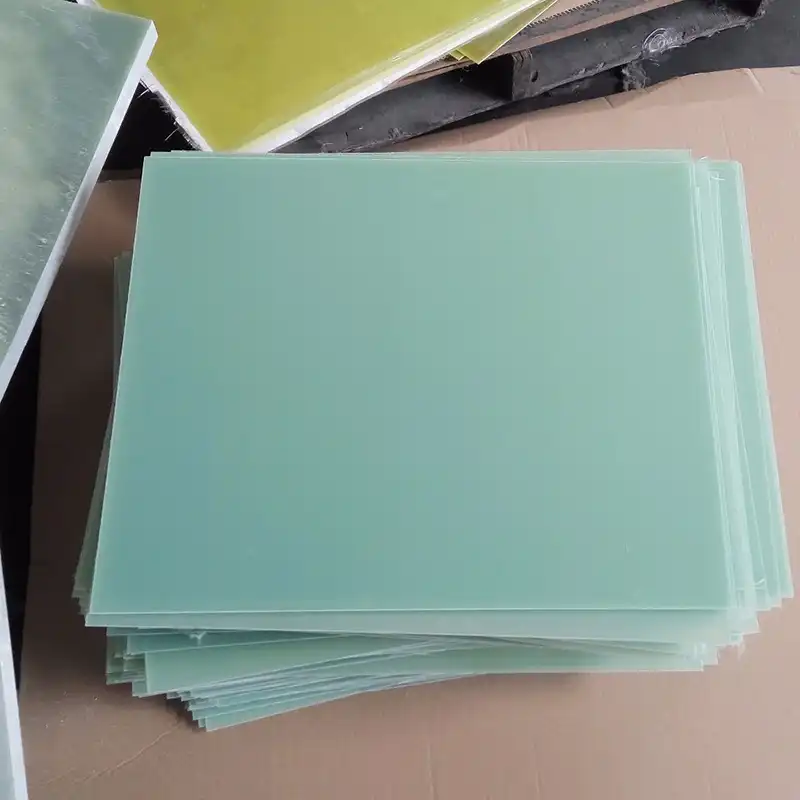
How G10 Sheet Meets Environmental Standards in Electronics Production?
Halogen-Free Composition
G10 sheets are manufactured without the use of halogenated compounds, ensuring they meet modern environmental and safety requirements. The elimination of chlorine and bromine prevents the formation of toxic halogenated dioxins and furans when the material is heated or incinerated. This environmentally friendly formulation reduces harmful emissions, making G10 compliant with RoHS and WEEE directives. As a result, it supports greener production lines while safeguarding both workers and surrounding ecosystems from hazardous chemical exposure.
Low Volatile Organic Compound (VOC) Emissions
The epoxy resin system used in G10 sheet production emits extremely low levels of volatile organic compounds, ensuring safer and cleaner air in manufacturing facilities. This characteristic helps prevent respiratory irritation and reduces the need for complex ventilation systems. Low VOC levels also contribute to reduced greenhouse gas emissions throughout the production process. By maintaining superior air quality and minimizing environmental pollutants, G10 sheets align with sustainability goals and international clean manufacturing standards such as ISO 14001.
Recyclability and End-of-Life Considerations
Although G10 composites are not easily separable into base materials, their exceptional mechanical strength and thermal stability extend product service life, reducing waste generation. The material's long-term durability lessens the environmental burden associated with frequent replacements. Moreover, ongoing innovations in composite recycling—such as thermal recovery and chemical reprocessing—are paving the way for future circular economy models. These efforts ensure that G10 can contribute to more sustainable electronic manufacturing practices even at the end of its operational lifespan.
Electrical and Thermal Benefits of G10 Sheet in Green Manufacturing
Superior Dielectric Properties
G10 sheets possess outstanding dielectric strength, typically exceeding 20 kV/mm, which makes them highly suitable for insulation in demanding high-voltage environments. This superior electrical insulation helps prevent current leakage, ensuring stable and reliable performance in electronic circuits. By enabling compact circuit designs, G10 reduces the overall use of materials while maintaining electrical safety. These attributes not only enhance device efficiency and reliability but also support sustainability objectives by extending product lifespan and minimizing energy losses during operation.
Thermal Management Capabilities
The excellent thermal stability of G10 sheets ensures consistent mechanical and electrical performance even under elevated temperatures. This makes them highly effective for use in devices where efficient heat dissipation is essential. Their ability to retain structural integrity at temperatures exceeding 150°C allows engineers to design systems with reduced cooling demands, which in turn lowers energy consumption. By minimizing thermal degradation and energy loss, G10 sheets contribute to greener manufacturing processes and help achieve long-term energy efficiency targets in electronic production.
Dimensional Stability for Precision Manufacturing
G10 sheets demonstrate remarkable dimensional stability, maintaining their shape and size despite fluctuations in temperature and humidity. This precision is vital in advanced electronic manufacturing, where tight tolerances are required for multilayer circuit assemblies and mechanical fittings. The minimal thermal expansion of G10 helps reduce alignment errors and machining waste during production. As a result, manufacturers achieve higher production yields and more consistent product quality, optimizing resource utilization and reinforcing sustainable manufacturing practices within the electronics industry.
G10 Sheet for Sustainable and Halogen-Free Electronic Components
Printed Circuit Board (PCB) Substrates
G10 sheets are widely recognized as a sustainable and halogen-free alternative for printed circuit board substrates in eco-friendly electronics. Their excellent dielectric strength, thermal stability, and mechanical integrity ensure consistent performance during high-temperature lead-free soldering operations. In addition, the absence of halogens eliminates harmful emissions during manufacturing and disposal, supporting RoHS and REACH compliance. As a result, G10-based PCBs not only deliver dependable electrical insulation but also align with global environmental standards for green electronics production.
Structural Components in Electronic Devices
The high strength-to-weight ratio of G10 sheets makes them an ideal choice for internal and external structural components in modern electronic devices. They replace traditional metal or composite materials, reducing overall device weight and improving energy efficiency in portable systems. The inherent resistance to wear, impact, and thermal stress ensures long-lasting stability, minimizing material degradation over time. By extending the operational lifespan of consumer and industrial electronics, G10 sheets actively contribute to waste reduction and sustainable product design initiatives.
Insulation and Barrier Materials
As insulation and protective barrier materials, G10 sheets provide reliable shielding for delicate circuits and components exposed to harsh operational conditions. Their excellent resistance to moisture absorption, chemical corrosion, and temperature extremes helps maintain device reliability and operational safety. This resilience minimizes the likelihood of electrical shorting or premature component failure. Consequently, using G10 in insulation applications enhances the overall sustainability of electronic systems by reducing maintenance frequency and extending product life cycles in demanding environments.
Conclusion
G10 sheets are proving to be invaluable in the pursuit of green, halogen-free electronic manufacturing. Their unique combination of electrical, thermal, and mechanical properties, coupled with their environmentally friendly composition, positions them as a key material in sustainable electronics production. As the industry continues to evolve towards more eco-conscious practices, the versatility and performance of G10 sheets will likely see them playing an even more significant role in shaping the future of green electronics.
FAQs
What makes G10 sheets suitable for green electronic manufacturing?
G10 sheets are halogen-free, have low VOC emissions, and offer excellent electrical and thermal properties, making them ideal for environmentally conscious electronics production.
Can G10 sheets be recycled?
While not easily recyclable in their composite form, G10 sheets' durability extends product lifespan, reducing waste. Research is ongoing for improved recycling methods.
How do G10 sheets contribute to energy efficiency in electronics?
G10 sheets' thermal stability and insulation properties allow for more compact and efficient device designs, potentially reducing energy consumption in electronic systems.
Choose J&Q for Your G10 Sheet Applications in Green, Halogen-Free Electronic Manufacturing
J&Q, with over 20 years of experience in insulating sheet production and 10 years in foreign trade, is your trusted supplier for G10 sheets. Our expertise in green manufacturing ensures high-quality, environmentally friendly products. As a leading G10 sheet manufacturer and factory, we offer comprehensive solutions, including logistics support. For top-tier G10 fiberglass sheets tailored to your sustainable electronic manufacturing needs, contact us at info@jhd-material.com.
References
Green Electronics Manufacturing: Challenges and Opportunities in Halogen-Free Production (2022). Journal of Sustainable Electronics.
Thermal Management in Electronic Devices: The Role of Advanced Composite Materials (2021). International Conference on Electronic Components and Technology.
Environmental Impact Assessment of G10 Sheets in PCB Manufacturing (2023). Sustainable Materials in Electronics.
Halogen-Free Materials in Electronics: A Comprehensive Review (2022). Green Chemistry and Engineering.
Recycling Challenges and Opportunities for Composite Materials in Electronics (2023). Waste Management and Recycling Technology.
Energy Efficiency in Electronic Manufacturing: Materials and Processes (2021). Renewable and Sustainable Energy Reviews.