CNC Machining FR4 Stiffeners for the Flexible Circuit Industry: A Guide
Engineers always have to deal with the same problem when they're making effective flexible circuits: keeping the structure strong without losing flexibility. FR4 sheet stiffeners that are CNC-machined solve this engineering puzzle by adding localized stiffness right where circuits need it during operation and assembly. FR4 is a flame-resistant glass-epoxy composite that has great dimensional stability and proven electrical insulation properties. It is the standard for strengthening connector areas, component zones, and stress-prone areas in flex circuits used in consumer electronics, automotive systems, and industrial equipment.
Understanding FR4 Material and Its Role in Flexible Circuits
What Makes FR4 the Preferred Stiffener Material
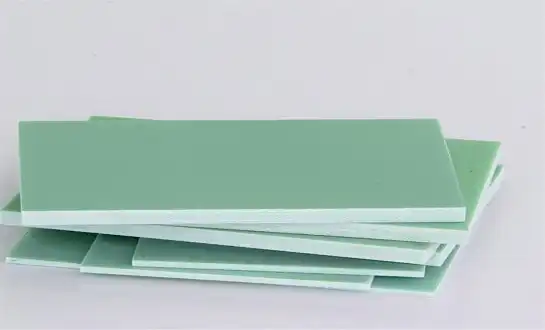
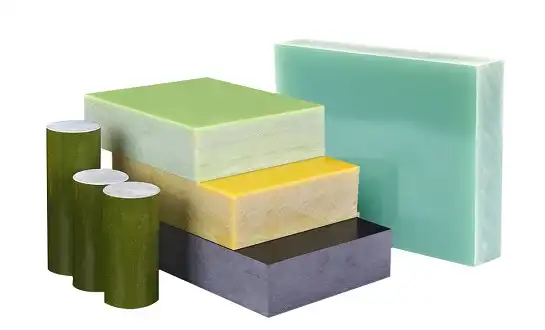
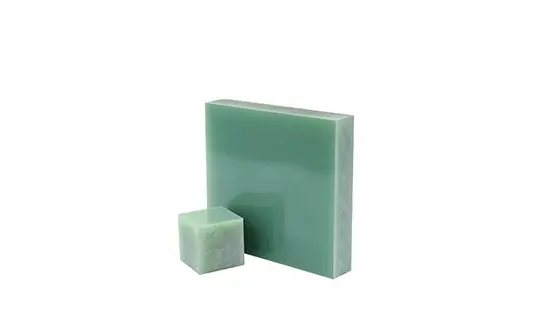
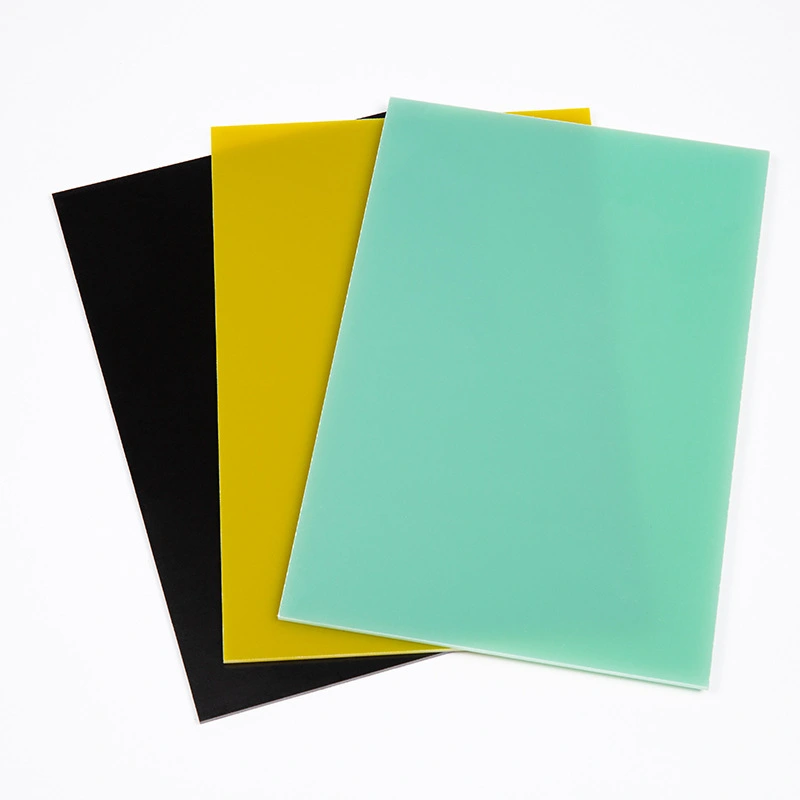
FR4 is a high-pressure thermosetting laminate made of continuous filament glass cloth that is bound together with epoxy glue and flame retardants that are based on bromine. The letters "FR" stand for "Flame Retardant," and the numbers show that the mixture is glass-reinforced epoxy. This material gets UL94 V-0 approval, which is the strictest classification for vertical burns. This means that on vertical examples, combustion stops within ten seconds with no flaming drips.
Stiffeners are used for more than one technical purpose in flexible circuit systems. They support the parts while they are being soldered, keep stress from building up at the connection points, and make flat mounting areas where flexible circuits meet hard boards. Epoxy-glass laminates stay the same size at temperatures ranging from -40°C to 130°C in normal grades, while purely bendable materials can change shape when heated or stressed mechanically or thermally.
Key Properties Driving Specification Decisions
When FR4 sheet is mixed with different types of resin, the glass transition temperature (Tg) can be anywhere from 130°C to 180°C. Standard grades work constantly at around 130°C, which is fine for most consumer tech uses. High-Tg versions raise this limit to 170°C to 180°C, making them suitable for places like under-the-hood of cars and power systems that need higher temperatures than usual.
The dielectric strength is about 20 kV/mm, which keeps the circuit layers from touching the active elements next to them. In high-density connection systems, where space constraints make insulation materials work too hard, this trait is very important. The material doesn't absorb much water (less than 0.1% over 24 hours), so it doesn't change size or lose its insulating properties in damp places.
Glass-epoxy laminates are different from polymer options because of their mechanical strength. Flexural strength is higher than 400 MPa, and tensile strength is usually around 350 MPa. These are strong enough to keep the structure intact when it is subjected to vibration, shock, and repeated bending cycles that are common in portable electronics and transportation.
Industry Standards Governing Material Selection
Norms set by the National Electrical Manufacturers Association (NEMA) describe grade levels and performance norms. The number G10 stands for the basic technical grade, and the number FR4 for the flame-retardant change. Both names are often used in procurement standards to make sure that suppliers understand both the mechanical performance and fire safety requirements.
UL recognition under the 94V standard confirms that the product is not flammable, but professional buyers also check that it meets ROHS guidelines that limit the use of dangerous materials. Today's formulas replace some halogenated chemicals with safer ones that still meet UL94 V-0 standards for flame retardancy and the environment.
Knowing these basic facts about the material helps engineering managers choose the right types for their uses. For example, a medical device that needs biocompatibility certifications needs different paperwork than an industrial control panel, even if both use glass-epoxy laminates as supporting elements that are physically similar.
Challenges in Machining FR4 Stiffeners for Flexible Circuits
Material Characteristics Creating Machining Complications
The glass support gives the structure tensile strength, but it also makes the surface rough, which means that regular cutting tools wear out quickly. The glass threads in the epoxy matrix work like tiny cutting edges, wearing down high-speed steel tools after just a few minutes of steady use. Because it is rough, carbide or diamond-coated cutting tools are needed, which raises the cost of the tools compared to working with metals or plastics that aren't strengthened.
Another constant worry during routing, cutting, and profiling processes is delamination. When cutting forces are higher than the bond strength between layers, the stacked structure of glass cloth and resin can come apart at the edges. This flaw weakens both the mechanical strength and the electrical insulation. If the stiffeners crack or split under operational stress, it could lead to field breakdowns.
The quality of the edges has a direct effect on the yield rates of the assemblies. When pressure-sensitive or thermal-cure adhesives are used to join stiffeners to bendable circuits, rough or chipped edges make it impossible for the adhesives to stick properly. Fiberglass splinters that stick out from cut edges can break through the layers of a circuit, causing short circuits or lowering the insulation resistance below acceptable levels.
Precision Requirements in Flexible Circuit Applications
In many cases, rigid PCB uses such as FR4 sheet require wider limits for size than flexible circuit assemblies. Stiffeners need to be perfectly lined up with the shapes of components, the locations of connectors, and the bonding zones—often to within ±0.05 mm of where they should be. To keep these standards during large-scale production, you need CNC machines with low backlash, stable temperature performance, and complex fixturing systems.
Consistency in thickness affects both how well machines work and how they are put together. Changes bigger than ±0.1 mm can stop components from fitting properly during surface-mount assembly or make gaps in stacked systems where multiple flex circuits connect through the same stiffening plates. Material sources give thickness tolerances, but machining processes have to stick to these limits without adding any more difference.
When burrs grow at the entry and exit places, they need to be removed, which takes more time and costs more money. If you don't remove enough dust during cutting, conductive glass bits can get stuck in circuit surfaces and stop working properly during testing or in the field.
Real-World Production Experience
A company that makes consumer electronics, specifically smartphone flex circuits, said that after using specific CNC route methods, their scrap rate dropped from 8% to 1.2%. Spindle speeds were sped up to 24,000 RPM, feed rates were slowed down to 1.5 meters per minute, and compression-style cutter bits were used to cut material smoothly instead of tearing fiber bundles.
When an automobile tier-one provider switched from uncoated carbide spiral flute end mills to diamond-coated ones, tool life went up by 300% for battery management system stiffeners. Even though the cost of tools went up by 150%, the longer tool life and shorter setup time for tool changes cut the cost of making each piece by 35% for runs of more than 50,000 units.
These case studies show that to successfully machine FR4 sheet, you need to understand how hybrid the material is and change the process settings to match. When used on glass-reinforced thermosets, generic CNC programs made for metals or plastics that aren't strengthened don't work well and cause a lot of defects.
Step-by-Step CNC Machining Process for FR4 Stiffeners
Design Optimization for Manufacturability
The planning part is where effective stiffener production starts. This is where engineering teams balance functional needs with manufacturing limitations. Minimum feature sizes should be limited by the width of the tool, which is usually 0.8 mm for routing and 0.3 mm for precise drilling. Internal corners need radius features that match the shape of the cutter; sharp 90-degree corners are physically impossible with spinning cutting tools, and trying to make them causes stress to build up.
The direction of the layers changes both the strength and the way the material cuts. Flexural strength is highest when the main stress direction is set to the warp direction (which is parallel to the length of the original sheet). Cutting edges that are perpendicular to the direction of the fibers makes them smoother than cutting edges that are parallel to the fibers.
Designers should account for grinding processes that will be done after the initial design. If the specs say that the edges should be deburred or the curves should be chamfered, the CAD model should show these features instead of thinking of them as extra steps that are added during production. This method makes sure that the cost estimates are correct and that there are no problems with dimensions during production.
Critical CNC Parameters Affecting Quality
The most important process choice is which tools to use. Compression routers use both upcut and downcut spiral shapes, pressing the top and bottom sides of the material toward the center line at the same time while cutting. This arrangement reduces the two most common flaws in through-cutting operations: chipping on the entry side and delamination on the exit side.
Spindle speed and feed rate need to be just right to get the job done quickly and well. When spindle speeds are high (18,000 to 28,000 RPM) and feed rates are low (1.0 to 2.0 meters per minute), chip loads per tooth are low. This means that cutting forces that might separate laminate layers are low. When you use aggressive settings that work for metal or acrylic, they cause glass-epoxy materials to get too hot, which could damage the epoxy matrix and lead to thermal stress cracks.
Cutting settings and dust clearance should both be taken into account. Fine particles made by glass-epoxy grinding can be harmful to health and can also spread germs. Negative pressure should be kept at the cutting zone by industrial vacuum systems. This will catch waste before it falls on work surfaces or spreads through the air in the production area.
Quality Control During Production
Dimensional checking happens at several steps of the process. Before cutting starts, the width, flatness, and quality of the surface of the incoming material are checked. In-process checks make sure that CNC programs make features that are within certain limits. This way, mistakes in the code or tool wear can be found before a lot of them are made. During the final review, coordinate measuring machines or optical comparators are used to compare important measurements to engineering plans.
Visual analysis can find flaws on the surface that machines might miss. Inspectors check the sides for delamination, the surface for scratches or contamination, and the holes inside to make sure that all the material is gone without leaving any stringy residue. When edges are made correctly, they have a uniform color and don't have any visible fiber bundles or resin-rich areas that show uneven cutting.
Insulation resistance must be checked electrically. This is especially important when stiffeners will be put between circuit layers or close to high-voltage lines. If you use a megohm meter with 500V DC, the resistance between any conductive parts and possible contact points on the stiffener surface should be more than 1000 megohms.
Post-Machining Enhancement Techniques
Edge sealing takes care of the visible fiber structure that is present at all cut edges of glass-epoxy laminates. Using thin layers of epoxy glue or acrylic sealants to cover jutting fibers stops water from getting in and gets rid of sharp edges that could damage layers of flexible circuitry next to them. This process works especially well in damp places, where moisture absorption along sides that are left open could change the size of the item.
Cleaning gets rid of cutting oils, glass dust, and other dirt that comes from handling before stiffeners are put together. Surfaces are ready for glue bonding when they are cleaned with alkaline solutions or liquid wipes that work with epoxy resins. Ultrasonic cleaning gets rid of all the particles that might be hiding in complicated shapes or small holes that wiping alone might miss.
For some uses, FR4 sheet surfaces need to be treated in other ways to make it stick better. When you laminate stiffeners to bendable polyimide or polyester circuit boards, plasma treatment or chemical etching raises the surface energy, which makes the bond stronger. When pressure-sensitive adhesives are used in construction processes that depend on surface chemistry instead of mechanical interlocking, these methods become very important.
Selecting the Right FR4 Stiffener Solution for Your Flexible Circuit Needs
Comparing Material Alternatives
Compared to glass-epoxy laminates, polyimide films are more flexible and can handle higher constant working temperatures (up to 260°C). However, they don't have the compressive strength needed when parts are mounted directly to the stiffener. A polyimide stiffener might bend when a connection is inserted, but a glass-epoxy option that is the right size stays rigidly dimensionally stable.
Stainless steel stiffeners are the most rigid and have the shortest profiles for a given strength need. However, because they are electrical, they can cause electromagnetic interference and make grounding more difficult. Because glass-epoxy laminates are electrically isolated, these design limitations are not needed. This makes circuit planning easier and assembly simpler.
Coverlay materials, which are adhesive-coated bendable films, do something different. They insulate the surface instead of making the structure stronger. Engineers get these groups mixed up sometimes, but they don't usually use the same things. Coverlays guard the whole circuit surface from damage from the outside world, while stiffeners make certain areas more hard.
Thickness and Thermal Considerations
When choosing the width of a stiffener, mechanical needs are weighed against assembly limitations. While thicker parts make the structure less likely to bend, they also raise the z-height of the assembly and make it harder for the glue to flow during lamination. Thicknesses usually run from 0.2 mm for small, light electronics to 1.6 mm for heavy industrial equipment that is under a lot of mechanical stress.
Matching the coefficient of thermal expansion (CTE) of the stiffeners to the base bendable circuits stops stress from building up during temperature cycles. In the x-y plane, glass-epoxy laminates have CTE values of about 14–17 ppm/°C, which is about the same as polyimide flex circuits (12–16 ppm/°C) but very different from polyester substrates (30–60 ppm/°C). When you bond or heat-age something, materials that don't match can twist or separate.
When lead-free soldering is used in the assembly process (peak temperatures near 260°C) or when the end-use setting is over 130°C all the time, high-Tg formulations are needed. The extra cost of high-temperature grades is a good technical investment for uses in aircraft, automobile, and industrial settings where heat stress causes regular materials to fail early.
Customization Capabilities for Complex Requirements
With precision CNC machining, you can make shapes that are too complicated to be possible with standard die-cutting. Cutouts on the inside of the flex circuit allow parts to fit on both sides, and complicated shapes around the edges perfectly match the circuit's outline. This customization cuts down on waste and makes it possible for circuits to fold around stiffeners in three-dimensional systems.
Multi-thickness designs use both thin and thick parts in the same part to give different parts of the circuit different amounts of support. For example, a connector area might need a thickness of 1 mm to resist entry force, while a fold zone next to it might only need a thickness of 0.3 mm to stay flexible. With CNC cutting, these changes are made easily within a single piece of work.
During the same machining process that makes the exterior and internal cutouts, surface features like countersunk holes, edge chamfers, and identification marks can be added. This merging gets rid of unnecessary steps and makes sure that the quality of all the parts is the same.
Conclusion
CNC-machined glass-epoxy stiffeners such as FR4 sheet are an important technology for making flexible circuit parts that work well in many different businesses. When engineering teams know about the properties of materials, problems that come up during machining, and ways to make the process run more smoothly, they can come up with the best answers for their unique needs. Advanced materials, precise CNC skills, and changing industry needs are all coming together to make flexible electronics work better and better. When businesses work with providers that have been around for a while, have a lot of technical know-how, and have a track record of making things, they can take advantage of these chances without having to deal with expensive quality problems or production delays.
FAQ
Why does FR4 remain the preferred stiffening material for flexible circuits?
Competitive materials have a hard time matching the perfect mix of mechanical strength, electrical insulation, temperature stability, and low cost that glass-epoxy laminates offer. While polyimide is better at withstanding high temperatures and metals are the 가장 stiffest, FR4 meets a lot of different performance needs without the problems that come with electrical conductivity or the higher costs of rare industrial plastics. Its dependability has been proven over decades of making gadgets, which gives procurement teams trust when they choose materials for new designs.
Can CNC processes reliably handle complex designs in mass production?
Modern CNC machines can make complex shapes with positional accuracy of within ±0.05 mm over production runs of more than a hundred thousand pieces. Wear is taken into account by automated tool measurement systems, and physical stability is kept an eye on by statistical process control throughout production. The key is to work with makers whose processes have been fine-tuned to work best with glass-epoxy materials, rather than using general cutting methods made for metals or plastics that aren't reinforced.
How do manufacturers ensure thermal and mechanical compliance?
To start a complete quality system, certified materials must be bought from sources who provide mill test results that show the glass transition temperature, flammability ratings, and mechanical properties. In-process testing proves that machining processes keep the purity of the material without delaminating it or damaging it with heat. As part of the final review, the dimensions are checked, the item is looked at visually, and it is tested electrically if the specs call for it to be tested for insulation resistance or dielectric strength.
Partner with J&Q for Your FR4 Sheet Stiffener Requirements
J&Q can help you with your flexible circuit stiffener problems because they have been in business for ten years and have been making things for over twenty years. Because our businesses are vertically merged, we have CNC machines in-house that are especially set up to work with glass-epoxy laminates. This makes sure that the dimensions and quality of the surface meet the high standards of electronics assembly. As a complete provider of FR4 sheets, we keep a large stock of different grades and sizes, which lets us make prototypes quickly and keep up a steady supply of production sheets.
Our technical team works directly with your engineering staff to make ideas as easy to make as possible by offering changes that raise quality and lower costs. Our specialized logistics company offers combined shipping options, and we'll help you with the whole project, from the initial quote to the final delivery. Email our application experts at info@jhd-material.com to talk about your specific needs and get thorough technical ideas backed by material certifications and process capability papers that show how committed we are to quality excellence.
References
Chen, W., & Liu, Y. (2022). "Advanced Machining Techniques for Composite Laminates in Electronics Manufacturing." Journal of Manufacturing Processes, 76, 245-261.
National Electrical Manufacturers Association. (2021). "NEMA Standards Publication LI 1-2021: Industrial Laminating Thermosetting Products." National Electrical Manufacturers Association, Rosslyn, VA.
Peterson, R. S. (2023). "Flexible Circuit Technology: Materials, Processes, and Reliability." Electronics Manufacturing Press, Boston, MA.
Underwriters Laboratories. (2020). "UL 94: Tests for Flammability of Plastic Materials for Parts in Devices and Appliances." Underwriters Laboratories Inc., Northbrook, IL.
Zhang, H., Kumar, S., & Thompson, D. (2023). "CNC Machining Parameter Optimization for FR4 Composites Using Response Surface Methodology." International Journal of Advanced Manufacturing Technology, 124(3), 1187-1204.
Williams, J. A., & Martinez, C. (2022). "Stiffener Design and Integration Strategies for High-Reliability Flexible Circuits." Proceedings of the International Electronics Packaging Conference, San Diego, CA, pp. 312-328.

Get a complete product list and quotation
J&Q New Composite Materials Company