Best CNC Tools for Machining G10 Epoxy Sheet Without Delamination
To make clean, exact cuts in G10 epoxy sheet without delamination, you need to choose the right tools and keep the cutting settings under control. When used with the right spinning speeds and work-holding methods, diamond-coated carbide end mills with sharp cutting edges give the best results. Figuring out the features of the material and making sure that the tools you use are right for the roughness of fibreglass epoxy laminates can turn difficult cutting processes into dependable, repeatable production routines that meet strict requirements for size and surface quality.
Understanding G10 Epoxy Sheet and Machining Challenges
What Makes G10 Different from Other Laminates?
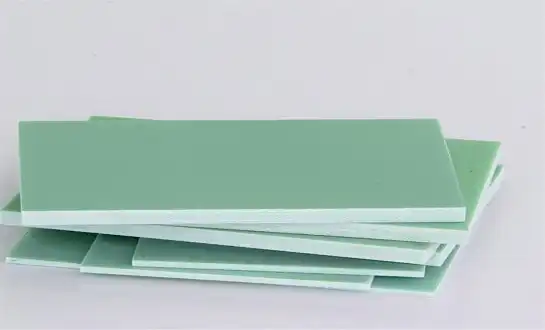
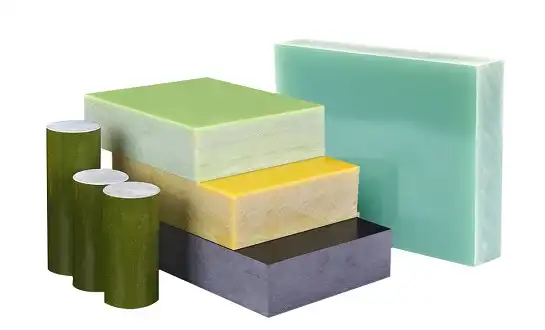
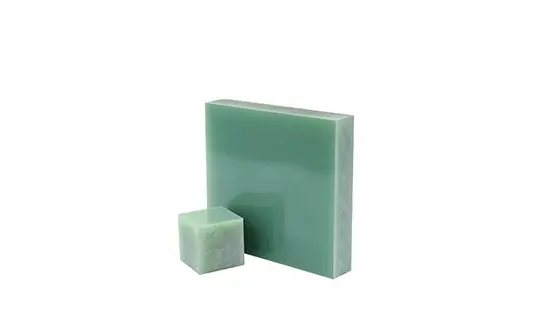
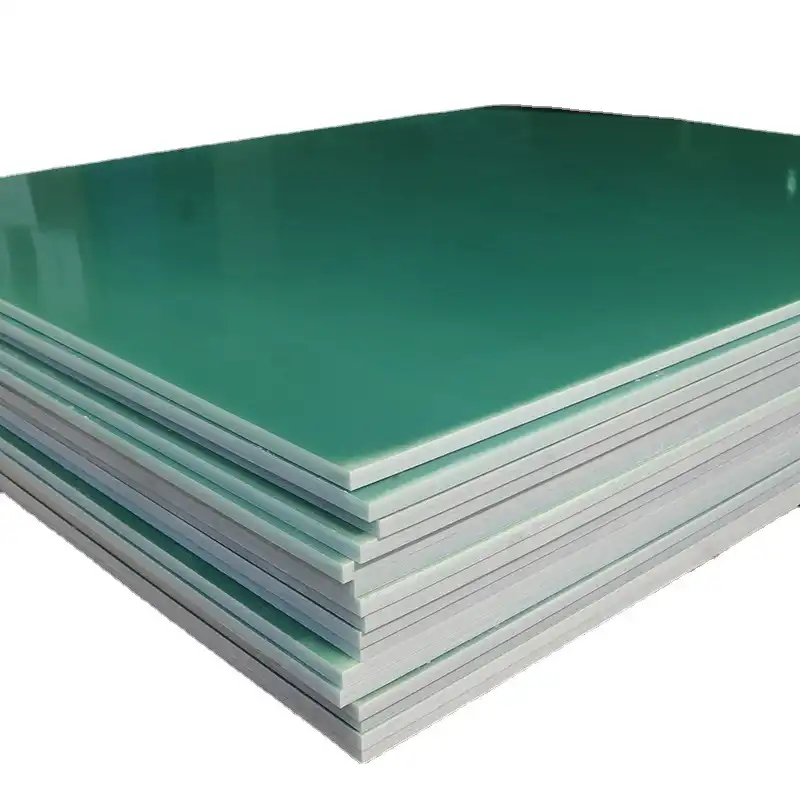
G10 epoxy sheet is made from continuous filament-woven glass cloth that is mixed with an epoxy resin binder and is made according to NEMA standards. Unlike phenolic paper laminates, this material doesn't absorb much water and keeps its shape even in places with a lot of humidity. Its tensile strength is around 40,000 psi and its compression strength is over 65,000 psi. This makes it a strong material that doesn't break when mechanical stress is applied. The structure that is strengthened with glass has great dielectric qualities, which means it can be used to insulate electrical parts in switches, transformers, and PCB support structures.
The Delamination Challenge
When mechanical forces during cutting are stronger than the bond strength between the layers of a material, they separate. This is called delamination. The rough fibreglass reinforcement creates strong cutting forces and heat buildup, which can weaken the epoxy matrix if it is not handled correctly. When you cut G10, it has directional qualities. For example, cutting perpendicular to the glass weave pattern causes different pressures than cutting parallel to it. This is not the case with metals or unreinforced plastics. Because of this uneven behaviour, the cutting settings and feed direction need to be carefully thought out.
The production of heat is a major issue because high temperatures can soften the epoxy glue, making it less likely for layers to stick together and more likely for them to separate. This problem is made worse by dull tools that create friction instead of cutting smoothly through fibres. Also, if you don't give the cloth enough support while you cut it, it will bend, which creates strain that pulls the layers apart. Because of these things, choosing the right tools and a good cutting plan are very important to your success.
Material Properties Affecting Machinability
G10 has a specific gravity of about 1.8, which means it is only slightly heavier than metal options while still being stiff. It can work continuously at a temperature of up to 140°C (284°F), which keeps the temperature stable while it's being machined. Over 24 hours, the amount of water absorbed stays below 0.11%, so the dimensions don't change because of the moisture. The Izod impact strength of 14.00 shows that it is tough, but because glass fibres are flimsy, cutting them makes chips instead of continuous swarf. This means that chips need to be able to escape quickly so that the material doesn't have to be cut again and more heat is produced.
Key Criteria for Selecting CNC Tools to Machine G10 Epoxy Sheets
Tool Material and Coating Selection
Because it is hard and doesn't break down easily, carbide tools are the standard for cutting G10 epoxy sheet glass-reinforced epoxy laminates. Standard high-speed steel tools get dull very quickly when they come into contact with rough glass fibres, which means they can't be used for production runs. Diamond-coated carbide tools last a lot longer because they have a very hard cutting surface that doesn't wear down easily and keeps the edges sharp. This layer cuts down on friction and heat production, and it keeps cutting performance stable over long production runs.
Polycrystalline diamond (PCD) tools work better for large-scale tasks, but they are more expensive at first, so you need to do a cost-benefit study before buying them. PCD stays sharp for a lot longer than polished carbide, which cuts down on downtime for changing tools and keeps standards tighter throughout production runs. When deciding between PCD and polished carbide, batch numbers, the level of accuracy needed, and total cost of ownership estimates that weigh tool life against cost per piece are all things that must be taken into account.
Cutting Edge Geometry
When working with fibreglass epoxy composites, you have to make sure that the cutting edges are very sharp. Edges that are dull or rounded tear and crush fibres instead of cutting them neatly, which creates too much heat and speeds up delamination. Specifically made tools for composite cutting have sharp rake angles that cut through material quickly. The clearance angle needs to be big enough to keep the material from rubbing against the cut surface and making friction and heat without taking any material away.
The shape of the flute has a direct effect on how well chips are evacuated. When cutting glass-reinforced materials, the brittle chips that are made can be moved around more easily when the flute sizes are bigger. When chips move along a polished flute surface, they don't rub against it as much, which keeps heat from transferring back into the object. Cutting forces and finish quality are affected by helix angles. Higher helix angles usually result in smoother surfaces but need stronger tool shanks to keep them from deflecting.
Tool Diameter and Length Considerations
When you match the width of the tool to the grinding process, you get the best mix of cutting speed and stiffness. Tools with a bigger width are stiffer, so they don't bend or shake as much, which can lead to uneven cutting forces and delamination. Smaller features, on the other hand, need tools that are also smaller. The length-to-diameter ratio has a big effect on how stable a tool is. Shorter tools are less likely to bend than longer ones, so choosing the right tool is very important when access is limited.
To keep the tool stable and avoid too much side loading, the cutting depth should usually not be more than three times the width. When larger cuts are needed, it's better to make several passes at controlled levels than to try full-depth cuts, which put too much stress on the tool and make it too hot. This method keeps the chip load per tooth constant and stops the fast buildup of heat that weakens laminates.
Best CNC Tool Types and Machining Techniques for G10 Epoxy Sheet
Compression End Mills for Clean Entry and Exit
Compression router bits have both upcut and downcut shapes in one tool. They create opposite forces that squeeze the material while it's being cut. This design solves the usual issue of fibres breaking off at the top when they enter the cloth and delaminating at the bottom when they leave. At the tip of the tool, the upcut section pulls chips up and out of the cut, while the downcut section close to the base pushes material down. This makes both sides compressed.
When cutting through G10 epoxy sheet, these tools work great because they leave clean lines on both sides without the need for backing support material. For the best results, the point where the upcut and downcut shapes meet should be in the middle of the material's thickness. Compression end mills are more expensive than regular tools, but in industrial settings, the savings in scrap and time spent deburring often make up for the extra cost.
Single vs. Multi-Flute Configurations
Single-flute end mills have the highest chip clearance capacity and are the best way to get rid of the broken pieces that are made when cutting glass-reinforced materials. The big flute volume stops chips from packing together, which can lead to more cutting, higher temperatures, and broken tools. When cutting bigger sheets, where the chip number gets big, these tools work especially well for fitting tasks. Because single-flute tools cut quickly, they need the right spinning speeds and feed rates to keep the chip load at the right level.
Multi-flute tools (usually with two or three flutes) can make better surface finishes while also allowing for faster feed rates. With more cutting edges, wear is spread out over more areas, which could make the tool last longer in some situations. The smaller flute volume, on the other hand, means that chips need to be carefully pushed out, especially when making deeper holes or pockets. Choosing between designs relies on how well the surface finish needs to be, how fast the production needs to go, and the shapes that are being made.
Optimal Spindle Speeds and Feed Rates
To control heat production, spindle speed and feed rate must be balanced to keep the right chip load per tooth. If the feed rate is too slow, the tool will rub against the workpiece instead of cutting it. This creates friction heat that doesn't get rid of material efficiently. Too fast of feed rates stress the cutting edges too much, which can dull them too quickly or even break the tool. When cutting G10, spindle speeds for diamond-coated carbide tools are usually between 12,000 and 24,000 RPM, but the best choices rely on the width of the tool and the thickness of the object being cut.
For glass epoxy laminates, the chip load, or how much material each cutting edge removes per turn, should be between 0.002 and 0.006 inches. This number strikes a mix between good material removal and cutting forces that are easy to handle. To find the feed rate, multiply the spinning speed (RPM) by the number of flutes and the chip load that you want to use. This gives you a logical way to set standard settings that you can then fine-tune based on what you see.
When cutting composites, climb milling (where the cutting edge goes in the same direction as the feed) usually works better than regular milling. Instead of trying to lift the material, this method sends cutting forces downward into the system that holds the work, which lowers shaking and the chance of delamination. To fight these forces without warping the fairly thin sheet material, it is necessary to have the right work support and clamps in place.
Work-Holding and Support Strategies
When cutting, having enough support stops the bending that causes tension forces that can pull layers apart. Under the object, protective backing boards act as support at the exit point, keeping the bottom surface from delaminating as the tool finishes its cut. The backing materials should be stiff enough to keep the panels from bending but soft enough that they won't damage tools if they touch them by mistake. A lot of the time, medium-density fibreboard or phenolic sheet products work well for this.
Vacuum hold-down systems for G10 epoxy sheet spread the binding forces evenly across big sheet areas. They don't create stress points in one place like mechanical clamps do. When using mechanical clamping, put the clamps close to the areas that will be cut to cut down on the length of the unstable span. Don't tighten too much because that can put too much stress on the material before cutting, which can cause it to crack or delaminate.
Cooling and Dust Management
In metal machining, liquid coolants are usually used, but in glass-reinforced epoxy machining, compressed air is usually used to cool the workpiece and get rid of chips. A blast of air aimed at the cutting area gets rid of the heat and chips before they can be cut again. This way of doing things doesn't add water, which some types of laminate may soak up, and it also doesn't make a mess or cause problems with removal like liquid coolants do.
Glass fibre dust is dangerous to breathe in, so collecting it is important for both keeping things visible and keeping workers healthy. Effective filtration systems catch flying particles where they start, making the working environment better and keeping dust from building up on precision machine parts. This is something that should be thought about when buying tools because it affects the general costs of running the business.
Comparing CNC Tools and Alternative Solutions for G10 Epoxy Sheet Machining
G10 Versus Other Composite Laminates
The main difference between G10 epoxy sheet and FR-4 is the amount of flame-retardant additives in G10. Traditional G10 has slightly better mechanical qualities and resistance to moisture. Because it has bromine-based flame retardants, FR-4 has to be used in situations that need special flammability grades. When it comes to milling, both materials react similarly to the tools and settings used, though the extra chemicals in FR-4 can make it a little rougher.
G10 epoxy sheet has a higher-temperature version called G11 that uses a different epoxy recipe to raise the maximum working temperature to around 180°C. This heating power makes the material denser and harder, so the tools need to be stronger and the cutting speed might have to be slower. Because they are reinforced with paper, phenolic cotton laminates (like Grade CE phenolic) are easier to make. However, they are not as strong or resistant to water, so they can't be used in difficult electrical or mechanical uses.
Carbide vs. Diamond-Coated vs. PCD Tooling
Standard carbide end mills are the least expensive at first, but they wear out quickly when cutting glass-reinforced materials, so they need to be replaced more often, which raises the cost of doing business. When measuring tool life in straight cutting feet, it may only last a few hundred feet before it needs to be resharpened. This means that carbide is mostly useful for prototypes or very small amounts of production.
Diamond-coated carbide tools cut five to ten times farther than untreated versions, which lowers the cost of each tool by a large amount even though they cost more to buy. The coating keeps the edge sharp longer, so the quality of the cuts stays the same over the life of the tool. When it comes to combining speed and cost, these tools are the best choice for most production cutting tasks.
Cutting lengths with polycrystalline diamond tools can be measured in thousands of square feet. This makes them cost-effective when production rates are high enough to support the high initial cost. PCD tools keep the same dimensions over long runs, which lowers the need for quality checks and difference. The trade-off analysis should look at the total number of parts made, the limits that need to be met, the cost of labour for changing tools, and how machine downtime affects the general speed of production.
In-House Machining vs. Outsourcing
Setting up in-house CNC cutting involves spending money on equipment, tools, and training for operators, but it gives you the most control over quality, wait times, and protecting your intellectual property. This method works well when there are enough units to support using the tools and when the machining needs are similar to what the company normally does. Keeping the best cutting settings and teaching more people about composite machining gives you a competitive edge.
By hiring specialised composite machining service providers, you can get rid of the need for cash and use their knowledge and better processes. This choice is good for smaller quantities or when cutting is not the main thing that needs to be done. But it adds variables to the supply chain, which could mean longer lead times, and extra work for communication. Some makers use a mix of methods, doing routine tasks in-house while sending complicated or low-volume parts to experts.
Conclusion
To successfully machine G10 epoxy sheet without delamination, you need to choose the right tools, make sure the cutting settings are optimised, and make sure the work is supported properly. Diamond-coated carbide compression end mills work well in most production situations and offer a good balance between tool life and investment costs. Keeping the cutting edges sharp, managing the spinning speeds and feed rates to control heat production, and holding the work rigidly stop the mechanical forces that separate the layers. When engineering teams know about the features of materials and how they affect cutting, they can set up reliable methods that make precision parts that meet strict quality standards while keeping costs low and output high.
FAQ
What makes the G10 epoxy sheet delaminate when it is being machined?
When too much mechanical force or heat breaks down the link between layers of glass cloth, delamination happens. When cutting tools are dull, they cause friction instead of neatly cutting fibres, which heats up the epoxy resin matrix and makes it easier to work with. If the work support isn't strong enough, the material can bend, which causes tension forces that pull the layers apart. The problem is made worse by feed rates that are too fast, which overloads the cutting edges, or too slow, which causes them to rub against each other. When you use tools made for metals instead of composites, you usually get bad results because the edge shapes aren't right.
Which finish on a tool works best for mass machining?
Diamond-coated carbide tools are the best mix for most production settings. They last five to ten times longer than bare carbide tools and keep their sharp cutting edges. When it comes to high-volume uses, PCD tooling lasts longer but costs more at first. The decision is based on the amount of work that needs to be done, the needed limits, and a total cost analysis that takes into account tool life, switching labour, and quality uniformity.
How can I check the quality of G10 sheet material before I machine it?
Ask for proof papers that show the material meets NEMA LI-1 standards and list important qualities like electrical strength, bending strength, water absorption, and bond strength. Reliable providers offer test results from a third party that confirm the specs. A visual check should show that the colour is uniform and there are no holes or resin-filled areas. A measurement of the width should prove that the tolerances are within acceptable limits. By cutting test coupons before production runs, problems can be found before full amounts of materials are committed.
Partner with J&Q for Your G10 Epoxy Sheet Requirements
J&Q can help you with your production needs because they have more than 20 years of experience making things and more than 10 years of experience trading internationally. As a well-known manufacturer and seller of G10 epoxy sheet, we know how important it is to have high-quality materials for successful cutting. Our precision-grade insulation materials are made to strict NEMA standards and go through a lot of quality checks to make sure they always have the same electrical, mechanical, and thermal properties.
We can custom-size sheets for you, which cuts down on trash and cutting time and makes your business more profitable. Our in-house transportation services offer a seamless one-stop service from order placement to delivery, making your supply chain simpler and more efficient. Technical support teams work directly with your engineering staff to solve problems that are unique to each application and find the best cutting settings for your production environment.
Get in touch with our experts at info@jhd-material.com to talk about your needs for G10 glass epoxy laminate. We support your success through a trustworthy relationship by giving you examples of the materials, thorough specs, and competitive quotes that are based on your number and customisation needs.
References
National Electrical Manufacturers Association. "Industrial Laminating Thermosetting Products: NEMA Standards Publication LI 1-1998." National Electrical Manufacturers Association, Rosslyn, 1998.
Teti, Roberto. "Machining of Composite Materials." CIRP Annals - Manufacturing Technology, Vol. 51, No. 2, 2002, pp. 611-634.
Sheikh-Ahmad, Jamal Y. "Machining of Polymer Composites." Springer Science & Business Media, New York, 2009.
Koplev, A., et al. "The Cutting Process, Chips, and Cutting Forces in Machining CFRP." Composites, Vol. 14, No. 4, 1983, pp. 371-376.
Hocheng, Hong, and C.C. Tsao. "Comprehensive Analysis of Delamination in Drilling of Composite Materials with Various Drill Bits." Journal of Materials Processing Technology, Vol. 140, No. 1-3, 2003, pp. 335-339.
Davim, J. Paulo, and Pedro Reis. "Study of Delamination in Drilling Carbon Fiber Reinforced Plastics (CFRP) Using Design Experiments." Composite Structures, Vol. 59, No. 4, 2003, pp. 481-487.

Get a complete product list and quotation

J&Q New Composite Materials Company