Best CNC Machining Practices for FR4 Epoxy Sheets
To be precise when cutting FR4 epoxy sheet, you need to know both how the material is structured and the specific ways to avoid common mistakes. FR4 epoxy sheet is made of woven fiberglass cloth that has been mixed with flame-resistant epoxy resin. It has great electrical protection and strong mechanical qualities. When using CNC to make things, it's important to pay close attention to the tools you choose, the spindle settings, the cooling methods, and the quality checks. When these parts are lined up correctly, makers in the automobile, industrial, electronics, and power distribution sectors can make parts that meet strict tolerances for size while reducing waste and rework.
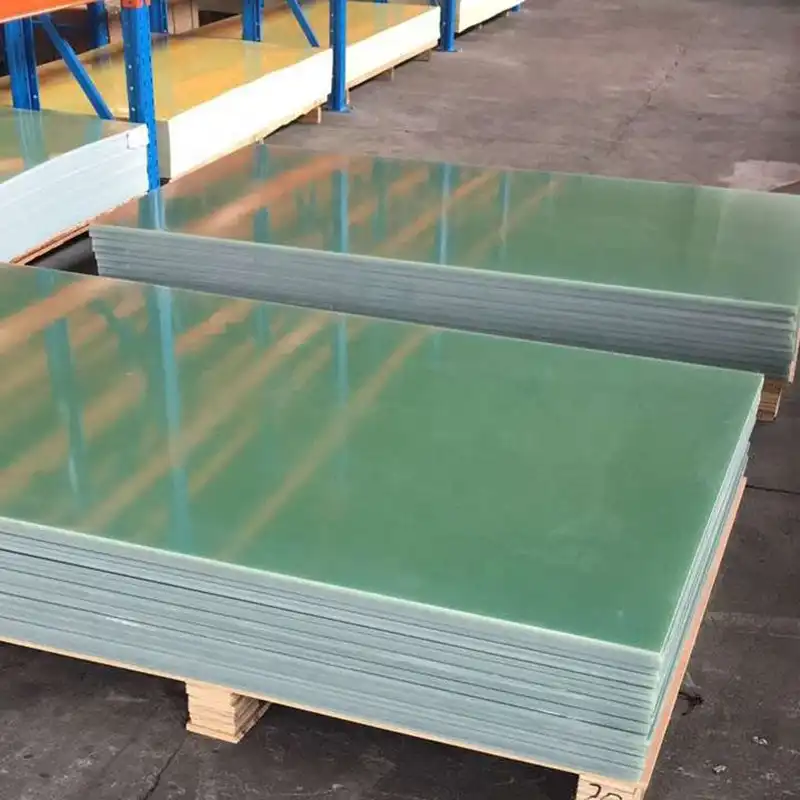
Understanding FR4 Epoxy Sheets: Properties and Applications
The NEMA LI-1 standard describes FR4 epoxy sheet as a high-pressure thermosetting laminate. It is an important material in current electrical and mechanical engineering. The "FR" label means that the material is flame-retardant and meets UL 94 V-0 standards. This means that the material puts out fires on its own and doesn't let them spread, which is a major safety improvement over older glass-reinforced composites. The material has an electrical insulation resistance of more than 500 MΩ, even when it's wet. This makes it essential for uses that need stable insulating performance.
Material Composition and Structural Advantages
The first step in making it is melting glass in kilns to make continuous thread fibers. These fibers are then made into cloth, treated with coupling agents like organosilane, and filled with epoxy resin that has curing agents, flame retardants, and fillers mixed in. Multiple prepreg layers are cured in an autoclave at a controlled temperature and pressure, creating laminates with few gaps and better shape stability. This controlled fabrication produces uniform thickness limits from 0.2 mm to 50 mm. Standard sheet sizes include 1020x2040 mm and 1020x1200 mm, which can be used for a variety of machining tasks.
Industrial Applications Across Sectors
FR4 epoxy sheet is the standard material for printed circuit boards used by electronics companies. Its heat stability and dielectric strength make it ideal for PCB support structures, switchgear components, and motor insulation frames. Builders of industrial machinery use these laminates for wear-resistant parts like mechanical gaps, gears, and pieces that need to be strong against compression and hold a lot of weight. Power distribution companies use FR4 epoxy sheet to insulate generator coils and make arc barriers. Automotive makers use it to make battery pack barriers and heat-resistant fixtures. Home device makers like how cheap the material is for making motor brackets and heat separation elements that are used in large quantities.
By knowing these basic qualities, engineering managers and procurement experts can choose the right grades—usually B-grade (130°C) or A-grade (200–250°C)—based on thermal needs. This makes sure that the materials will work with CNC processes and meet the performance standards of the end use.
Common Challenges in CNC Machining of FR4 Epoxy Sheets
When working with fiberglass-reinforced epoxy composites, things get more complicated than when working with metals or uniform plastics. The roughness of the glass strands speeds up the wear on tools, and the heat from the resin matrix can damage the material. Being aware of these problems lets you come up with effective ways to deal with them.
Delamination and Fiber Pull-Out
Delamination happens when cutting forces separate different layers of laminate, leaving weak spots in the structure and flaws in the way it looks. When tools aren't sharp enough, they tear through reinforcing threads instead of cutting them neatly. This problem is especially noticeable when drilling or forceful milling is being done. Fiber pull-out shows up as free filaments sticking out from polished edges. This damages the surface finish and could make electrical discharge paths in high-voltage situations. Both flaws make it more likely that a product will be rejected and require expensive repair processes.
Heat Accumulation and Thermal Degradation
Above its glass transition temperature, which for normal grades is usually around 130°C, epoxy glue starts to soften. Too much heat from wrong cutting settings leads to resin charring, shape distortion, and lower mechanical strength. Heat-affected areas may show darkening from brown to black, which means molecules are breaking down and the dielectric qualities are being lost. Not getting rid of chips properly makes this problem worse by trapping heat near the cutting contact.
Inconsistent Surface Quality
Changes in surface roughness have an effect on processes that happen after, like adhesion, sealing, and component assembly. Different feed rates, dull tools, or wrong cutting shapes can all cause finishes that aren't uniform. When surface specs aren't within acceptable tolerance areas, it takes longer for engineering teams to check the quality of a product and the assembly could fail.
When it comes to cutting, these problems have a direct effect on production output, the efficient use of materials, and, in the end, profits. When procurement experts work with experienced providers who understand these subtleties, they gain big competitive benefits through lower scrap rates and reliable delivery performance.
Best Practices for CNC Machining FR4 Epoxy Sheets
When tried-and-true methods are used, FR4 epoxy sheet cutting goes from being a difficult process to a controlled, regular one that gives the same results every time.
Tooling Selection and Geometry
As a minimum, carbide tools are required, and diamond-coated bits last longer when handling large amounts of data. The shape of the tool is also very important. For example, compression router bits with upcut and downcut swirls remove chips at the same time and keep the top and bottom surfaces from delaminating. Cutting forces and heat production are reduced by replacing and inspecting cutting edges on a regular basis to keep them sharp. Point angles on drill bits should be between 90° and 118°, and the edges should be cleaned to reduce friction.
Standard metals cuts don't have some of the features that tools made just for composite materials do. When these special shapes are cut, they reduce fibers instead of compressing them, which makes edges that are cleaner and less likely to break. We've seen that buying high-quality tools lowers overall cutting costs, even though they cost more at first. This is because the longer tool life and lower scrap value make the investment worthwhile.
Optimized Process Parameters
When you mix spindle speed and feed rate, you have to find a balance between efficiency and temperature limits. When it comes to routing tasks, higher spindle speeds (between 18,000 and 24,000 RPM) and modest feed rates usually work best. Cutting forces and heat building are kept to a minimum by cutting only a thin layer per pass, typically no more than half the diameter of the cutter. For finishing passes, chip load, which is the feed per tooth, should be between 0.003 and 0.006 inches. This should be changed based on the width of the material and the diameter of the tool.
Entry and exit tactics need extra attention during drilling activities. Backing boards keep the bottom surface from blowing out when drills break through, and peck drilling cycles let heat escape and chips fall out during deep holes. When the equipment allows it, delivering coolant through the wheel or tooling greatly increases the life of the tools and makes the measurements more accurate.
Cooling and Dust Management
By directing air blast cooling at the cutting zone, heat and chips are removed at the same time without adding moisture that could affect the next steps in the bonding process. It is possible to better control temperature with mist cooling systems in some situations. Industrial dust extraction systems keep the workplace clean so that workers don't get sick from breathing in glass fibers and so that good work can be done. When a vacuum is placed near the cutting points, it picks up particles at their source before they spread.
Managing dust well also keeps glue and fibers from building up on machine paths and linear guides, which lowers the need for upkeep and increases the time between equipment service intervals. We've set up full extraction systems that keep the air clean while keeping up with the constant production plans that high-volume industrial settings need.
Quality Assurance Protocols
Statistical process control is used for in-process tracking to find patterns in dimensional difference before errors happen. After the part has been machined, it should be inspected to make sure that the important measurements, surface finish factors, and edge quality meet the technical requirements. Coordinate measuring machines can check complex shapes objectively, and optical comparators can quickly check the quality of edges. Keeping detailed records of output helps efforts to make things better all the time and gives customers in the automotive and aerospace industries who have strict quality system standards important proof that things can be tracked.
These quality checks are built into the production process to find problems quickly and stop nonconforming materials from moving on to the next step or being sent to the customer. When engineering managers use these methods, the number of rejections goes down by more than 70% compared to when operations don't have official quality controls.
Comparing FR4 Epoxy Sheets with Alternative Materials for CNC Machining
Many things are taken into account when choosing a material, such as its electrical qualities, mechanical strength, heat performance, ability to be machined, and cost. The best specs are based on how FR4 epoxy sheets compare to other options.
Performance Characteristics
Phenolic laminates have lower material prices and good electrical protection, but they aren't as strong or resistant to temperature changes as FR4 epoxy sheet. Polyethylene is easy to work with and doesn't react badly with chemicals, but it can't handle the temperature changes or voltage stresses that are needed in power circuits. G10 epoxy laminates have the same great mechanical qualities as FR4 epoxy sheet, but they don't have any flame-retardant chemicals, so they can't be used in places with strict fire safety rules.
Application-Specific Things to Think About
Because of its physical stability, dielectric strength, and flame protection, FR4 epoxy sheet is the only material that can be used to make PCBs. Other materials, even ones that might be cheaper, are not acceptable. Phenolic materials can be used in industrial machines where thermal loads are low and choices are based on minimizing costs. More and more, automotive battery systems use FR4 epoxy sheet as a thermal shield because it works well at high temperatures and with mechanical vibrations.
Along with technical standards, practical factors include the availability of materials and the trustworthiness of the provider. Established supply lines for FR4 epoxy sheet provide stability that is necessary for planning production, while other materials may be harder to find or vary from batch to batch, which could affect the quality of the final product.
Procurement Insights: Ordering FR4 Epoxy Sheets for CNC Machining
From the first prototype to full-scale production, strategic choices about where to get materials affect the success of the project. When procurement experts optimize the FR4 epoxy sheet purchase processes, they save a lot of money and keep the supply chain stable.
Specification Development
Detailed material specifications keep mistakes from costing a lot of money and make sure that the materials you receive meet the needs of your application. Thickness tolerances (usually ±10% for standard grades), sheet sizes, color preferences (if appropriate), and thermal grade designations should all be clearly stated in the documentation. Applications that involve chemical contact after cutting need to make sure that the resin system is compatible with the settings that will be used.
Custom thickness options are useful for specific uses where standard choices don't work well enough. Buyers should find out about the minimum order quantities for custom specs, since these have a big effect on the prices per unit. Before making big purchases, trying sample testing guards against problems with incompatibility and confirms the supplier's abilities.
Supplier Evaluation and Partnerships
Supplier selection extends beyond unit price comparisons. Total cost of ownership is affected by production capacity, quality certifications (ISO 9001, UL recognition), technical support available, and delivery reliability. Geographic considerations affect lead times and logistics costs, but global sourcing networks are becoming more and more competitive. Long-term partnerships with responsive providers who know the needs of a particular application bring value by solving problems before they happen and making the supply chain flexible when demand changes.
Buyers are putting more and more value on sellers who show they care about the environment by having waste reduction programs and making sure material traceability can be tracked. FR4 epoxy sheet versions that are good for the environment and use halogen-free flame retardants meet changing government standards and help companies with their green efforts.
Pricing Optimization
Most of the time, volume commitments open up tiered pricing structures that save you a lot of money. Blanket purchase orders with planned releases keep the costs of keeping inventory in check and bulk discounts in mind. You can improve cash flow and keep materials available by negotiating payment terms and looking into vendor-managed inventory programs. By getting quotes from several approved providers, you can get a good idea of the going rate on the market, which will help you negotiate more effectively.
Understanding the cost drivers, such as changes in the prices of raw material price fluctuations, the transportation expenses, and the processing complexity, helps you have productive conversations with your suppliers. Buyers who show they know the market and have the ability to buy a lot of goods in the future get better prices and first pick when supplies are limited.
Conclusion
To get good at CNC machining of FR4 epoxy sheet, you need to pay attention to the features of the material, the choice of tools, the improvement of the process, and quality control. Manufacturers in the electronics, industrial, power, car, and appliance sectors can get precise results while keeping costs low by using the techniques described here, such as custom cutting geometries and heat management strategies. When you make strategic choices about what to buy, you can make sure that the quality of the materials you use and the reliability of your supply meet your tight production plans. By improving product quality, lowering production costs, and making customers happier, companies that follow these all-encompassing best practices will have a competitive edge.
FAQ
What spindle speeds work best for machining FR4 materials?
For cutting tasks, the best spindle speeds are usually between 18,000 and 24,000 RPM, with modest feed rates to keep the spindle from getting too hot. Certain factors should be changed based on the width of the tool, the thickness of the material, and the surface finish that is wanted. thinner sheets can handle higher speeds if they are properly supported, while heavier sheets may work better with slower speeds.
How can delamination be prevented during drilling operations?
To keep delamination from happening, you need sharp drill bits with the right point angles, backing boards to support the exit surfaces, and limited feed rates that keep breakout forces from being too high. For bigger holes, peck drilling processes let heat escape and chips fall out. When compared to regular mechanical bits, specialized compression tools made for composites greatly lower the risk of delamination.
Can thickness be customized for specific project requirements?
Customization of thickness is easy to do with experienced suppliers; choices range from 0.2 mm to 50 mm, based on how the product can be made. When compared to regular offerings, custom specifications may have minimum order quantities and longer wait times. Getting providers involved early in the planning process makes sure that the project is a good fit for both technical and financial goals.
Partner with J&Q for Superior FR4 Epoxy Sheet Solutions
J&Q has been a great manufacturer for over 20 years and has been involved in foreign trade for 10 years. They can help you be successful with CNC milling. As a well-known provider of FR4 epoxy sheets for sale, we know how important it is for engineering managers and procurement experts to find the right mix between material quality, exact measurements, and delivery reliability. Our many industry partnerships and in-house transportation skills allow us to offer full one-stop service, from helping you with your specifications to delivering the finished product.
You can see the difference at J&Q by evaluating a free sample, which lets you see for yourself how well our materials work and how they are machined. Our expert team is ready to talk with you about your unique application needs, suggest the best grades and sizes of FR4 epoxy sheet, and give you competitive quotes that will help you meet your project deadlines. Get in touch with us at info@jhd-material.com to start a relationship based on quality, dependability, and quick service that will improve the efficiency of your production.
References
NEMA Standards Publication LI 1-1998, Industrial Laminating Thermosetting Products, National Electrical Manufacturers Association, 1998.
Harper, C.A., Electronic Materials and Processes Handbook, Third Edition, McGraw-Hill Professional, 2004.
Kobayashi, T., Strength and Toughness of Materials, Springer-Verlag Tokyo, 2004.
Tschopp, M.A., et al., "Influence of Machining Parameters on Surface Quality in CNC Machining of Fiber-Reinforced Composites," Journal of Manufacturing Processes, Vol. 28, 2017.
Society of Manufacturing Engineers, Fundamentals of Tool Design, Sixth Edition, SME Publications, 2014.
ASM International Handbook Committee, Composites: Engineered Materials Handbook, Volume 1, ASM International, 1987.

Get a complete product list and quotation

J&Q New Composite Materials Company



