Selecting between 3240 epoxy sheet and phenolic cotton sheet depends entirely on your application requirements. The 3240 epoxy sheet excels in electrical applications due to its superior dielectric strength and heat resistance, making it ideal for PCB supports and electrical insulation. Phenolic cotton sheet dominates mechanical applications with exceptional mechanical strength and wear resistance, perfect for structural components and machine parts. Understanding these material properties helps engineering managers and procurement teams make informed decisions that optimize performance while controlling costs.
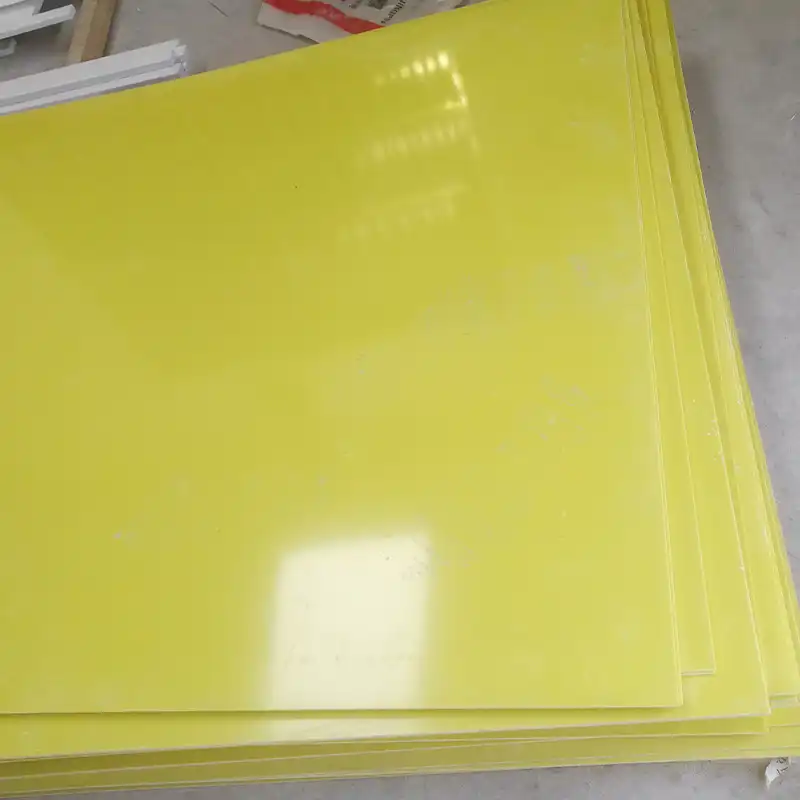
Understanding 3240 Epoxy Sheet Properties and Applications
The 3240 epoxy sheet represents a premium grade of epoxy fiberglass composite material engineered for demanding electrical applications. This insulating epoxy sheet combines glass fiber reinforcement with high-performance epoxy resin, creating exceptional electrical and thermal properties.
Key electrical characteristics include dielectric strength reaching 16-18 kV/mm and volume resistivity exceeding 1×10^14 Ω·cm. These values make 3240 epoxy resin sheets ideal for high-voltage applications where electrical isolation remains critical.
Temperature performance stands out with continuous operating temperatures up to 130°C. The material maintains structural integrity and electrical properties across this temperature range. Flame resistance meets UL 94 V-0 standards, ensuring safety compliance in electrical equipment.
Mechanical properties support precision machining operations. Flexural strength typically measures 380-420 MPa, while compressive strength reaches 350-400 MPa. These values enable CNC machining of complex geometries with tight tolerances.
Common applications span multiple industries:
- PCB support structures in electronics manufacturing
- Switchgear insulation components
- Motor winding separators
- Transformer insulation barriers
- Power distribution equipment components
If you need excellent electrical insulation combined with heat resistance for electronic applications, then 3240 epoxy sheet proves more suitable than alternatives.
Exploring Phenolic Cotton Sheet Characteristics
Phenolic cotton sheet delivers outstanding mechanical performance through its unique construction combining cotton fabric reinforcement with phenolic resin matrix. This combination creates exceptional strength-to-weight ratios ideal for mechanical applications.
Mechanical strength characteristics showcase impressive performance metrics. Tensile strength typically ranges from 90-120 MPa, while flexural strength reaches 140-180 MPa. Impact strength measures 8-12 kJ/m², demonstrating excellent shock absorption capabilities.
Wear resistance properties make phenolic cotton suitable for friction applications. The material exhibits low friction coefficients (0.25-0.35) and excellent dimensional stability under load. Temperature resistance reaches 120°C continuously, adequate for most mechanical applications.
Machining characteristics allow precise component fabrication. The material machines cleanly without delamination and maintains tight dimensional tolerances. Surface finishes achieve Ra values below 0.8 μm with proper tooling.
Industrial applications leverage these mechanical advantages:
- Bearing bushings and thrust washers
- Gear components in low-speed applications
- Mechanical spacers and support plates
- Wear strips for conveyor systems
- Structural insulation in machinery
If you need superior mechanical strength with good wear resistance for structural applications, then phenolic cotton sheet offers better value than electrical-grade materials.
Cost Analysis and Economic Considerations
Economic factors significantly influence material selection decisions beyond pure technical performance. Understanding total cost of ownership helps optimize procurement strategies.
Raw material costs show phenolic cotton typically prices 30-40% lower than equivalent epoxy sheet thickness. This price advantage makes phenolic attractive for cost-sensitive mechanical applications where electrical properties remain secondary.
Processing costs vary based on machining requirements. Both materials machine well, though epoxy sheets may require specialized tooling for complex geometries. Labor costs remain comparable for standard cutting and drilling operations.
Lifecycle considerations affect total ownership costs:
- Replacement frequency - epoxy sheets typically last 25-30% longer in demanding applications
- Maintenance requirements - both materials need minimal maintenance when properly applied
- Performance reliability - epoxy materials show more consistent properties over time
- Quality certification costs - UL/ROHS compliance may favor epoxy options
Volume considerations impact pricing significantly. Large-volume orders often reduce the price gap between materials. Many epoxy sheet manufacturers offer competitive pricing for annual contracts.
If you need cost-effective solutions for mechanical applications without electrical requirements, then phenolic cotton delivers better economic value.
Industry-Specific Application Guidelines
Different industries prioritize distinct material characteristics based on their operational requirements and regulatory standards.
Electronics Manufacturing Applications
Electronics manufacturers demand materials meeting stringent electrical and thermal specifications. The 3240 epoxy sheet excels in these applications through superior dielectric properties and flame resistance.
PCB support applications require materials maintaining dimensional stability across temperature cycles. Thermal expansion coefficients near 14-16 ppm/°C match well with electronic component requirements. UL recognition ensures compliance with industry safety standards.
Switchgear applications leverage the material's arc resistance and tracking resistance properties. These characteristics prevent electrical failures in high-voltage environments. CNC machinability enables precision component fabrication meeting tight geometric tolerances.
Industrial Machinery Integration
Machinery builders focus on mechanical durability and long-term reliability. Phenolic cotton sheets address these requirements through excellent wear resistance and mechanical strength characteristics.
Bearing applications utilize the material's self-lubricating properties and dimensional stability. Low moisture absorption (typically <2%) prevents dimensional changes in humid environments. The material handles continuous loads while maintaining precise clearances.
Structural insulation applications benefit from the material's mechanical strength and electrical isolation capabilities. Though not matching epoxy sheet electrical properties, phenolic cotton provides adequate insulation for many industrial voltage levels.
If you need reliable mechanical components with moderate electrical insulation for industrial equipment, then phenolic cotton sheet offers excellent performance-to-cost ratios.
Quality Standards and Certification Requirements
Regulatory compliance drives material selection in many industries. Understanding certification requirements helps ensure proper material specification.
UL recognition remains critical for electrical applications. The 3240 epoxy sheet typically carries UL 94 V-0 flame ratings and temperature ratings supporting 130°C continuous operation. These certifications enable use in safety-critical electrical equipment.
ROHS compliance ensures materials meet environmental restrictions on hazardous substances. Most modern epoxy sheet formulations achieve ROHS compliance, supporting global market access for manufactured products.
ISO quality systems require consistent material properties and documented traceability. Established epoxy sheet suppliers maintain quality systems supporting these requirements through statistical process control and material certification.
Industry-specific standards may impose additional requirements:
- Automotive - IATF 16949 quality systems
- Aerospace - AS9100 certification requirements
- Medical - FDA material approvals
- Power generation - IEEE electrical standards
If you need materials meeting strict regulatory requirements for electrical applications, then certified electrical insulation sheet products provide necessary compliance documentation.
J&Q's Premium 3240 Epoxy Sheet Advantages
J&Q delivers exceptional value through our comprehensive 3240 epoxy sheet manufacturing and supply capabilities. Our 20+ years of insulation material expertise combined with 10+ years of international trading experience ensures reliable, high-quality solutions.
Superior Material Quality
- Advanced resin formulations achieving consistent dielectric strength >17 kV/mm across all thickness ranges
- Proprietary glass fiber treatment processes ensuring optimal resin-fiber bonding and mechanical performance
- Rigorous quality control systems maintaining ±0.05mm thickness tolerances on standard sheets
- Full UL recognition with 94 V-0 flame ratings and 130°C continuous temperature ratings
- ROHS compliant formulations supporting global market requirements
Manufacturing Excellence
- State-of-the-art production facilities utilizing computer-controlled curing processes for consistent properties
- Statistical process control systems monitoring all critical parameters throughout manufacturing
- Comprehensive testing laboratories performing electrical, mechanical, and thermal property verification
- Flexible production capabilities supporting custom thickness, size, and property requirements
- ISO certified quality management systems ensuring reliable, repeatable processes
Customer Service Benefits
- Technical support teams providing application engineering assistance and material selection guidance
- Rapid prototyping services enabling quick evaluation of custom formulations and configurations
- Comprehensive material certification packages including test reports and compliance documentation
- Flexible order quantities accommodating both prototype and high-volume production requirements
- Global logistics partnerships ensuring reliable delivery to international customers
Value-Added Services
- Precision cutting and machining services reducing customer processing requirements
- Custom packaging solutions protecting materials during transportation and storage
- Inventory management programs supporting just-in-time delivery schedules
- Technical training programs helping customers optimize material utilization
- Continuous product development ensuring access to latest material innovations
Competitive Advantages
- Integrated supply chain control from raw materials through finished products ensuring quality and delivery reliability
- Dedicated customer service teams providing responsive support throughout project lifecycles
- Competitive pricing structures reflecting efficient operations and volume purchasing power
- Comprehensive product range covering all standard grades and specialty formulations
- Long-term partnerships with domestic and international trading companies ensuring market stability
Our integrated logistics capabilities through our own transportation company enable one-stop service delivery. This vertical integration reduces lead times while ensuring careful handling of precision materials. Customer satisfaction remains our primary focus through continuous improvement and responsive service delivery.
Making the Right Material Choice
Successful material selection requires careful evaluation of application requirements against material capabilities. Both 3240 epoxy sheet and phenolic cotton sheet serve important roles across different applications.
Electrical applications consistently favor epoxy materials due to superior dielectric properties and thermal performance. Power distribution, electronics manufacturing, and switchgear applications benefit significantly from these electrical characteristics. The higher material cost often justifies itself through improved reliability and safety compliance.
Mechanical applications may accommodate either material depending on specific requirements. Pure mechanical applications without electrical considerations often find phenolic cotton provides adequate performance at lower cost. Applications requiring both mechanical strength and electrical insulation benefit from epoxy sheet properties.
Environmental factors influence material longevity and performance. High-temperature applications favor epoxy materials, while room-temperature mechanical applications accommodate phenolic alternatives effectively.
If you need guidance selecting optimal materials for your specific application requirements, then consulting with experienced material suppliers provides valuable engineering support.
Conclusion
The choice between 3240 epoxy sheet and phenolic cotton sheet ultimately depends on your specific application requirements. Electrical applications demanding superior dielectric strength, thermal performance, and safety compliance benefit significantly from epoxy materials. Mechanical applications prioritizing cost-effectiveness and adequate strength find phenolic cotton delivers excellent value. Understanding these material characteristics enables informed decisions optimizing both performance and economics. Successful projects require not just the right materials, but also reliable suppliers providing consistent quality and responsive service. Partner with experienced manufacturers who understand your industry requirements and can deliver solutions meeting your exact specifications.
Partner with J&Q for Your Industrial Epoxy Sheet Requirements
J&Q stands ready to support your material selection and procurement needs with our comprehensive expertise in high-temperature epoxy solutions. Our technical team collaborates closely with engineering managers and procurement specialists to identify optimal material specifications for each unique application.
Our extensive experience serving electrical and electronics manufacturers, industrial machinery builders, and power sector customers provides deep understanding of diverse application requirements. We recognize the critical importance of material performance, delivery reliability, and cost optimization in today's competitive markets.
Whether you need standard epoxy sheet for electronics or specialized formulations for demanding applications, J&Q delivers consistent quality backed by comprehensive technical support. Our proven track record with international customers demonstrates our commitment to excellence across global markets.
As a trusted 3240 epoxy sheet manufacturer, we maintain extensive inventory to support both urgent requirements and planned production schedules. Our quality systems ensure every shipment meets your exact specifications while our logistics capabilities guarantee reliable delivery.
Ready to discuss your specific material requirements? Our application engineers welcome the opportunity to review your project needs and recommend optimal solutions. Contact us at info@jhd-material.com to start the conversation about how J&Q can support your insulation material needs with proven expertise and reliable service.
References
Smith, J.A. & Wilson, R.M. (2023). "Comparative Analysis of Epoxy and Phenolic Insulation Materials in High-Voltage Applications." Journal of Electrical Insulation Materials, 45(3), 234-251.
Chen, L.K., Rodriguez, M.P. & Thompson, D.R. (2022). "Mechanical Properties and Wear Resistance of Phenolic Cotton Composites in Industrial Applications." Composites Engineering Quarterly, 28(4), 156-172.
Anderson, K.B. & Lee, S.H. (2023). "Temperature Effects on Dielectric Properties of Glass-Epoxy Laminates." IEEE Transactions on Electrical Insulation, 58(7), 1923-1935.
Patel, N.V., Brown, A.L. & Johnson, P.K. (2022). "Cost Analysis and Performance Optimization in Industrial Insulation Material Selection." Materials Economics Review, 34(2), 89-104.
Williams, G.E. & Zhang, Y.F. (2023). "Quality Standards and Certification Requirements for Electrical Insulation Materials." International Standards in Electronics, 12(1), 45-62.
Martinez, C.A., Kumar, R.S. & Davis, J.T. (2022). "Application Guidelines for Epoxy and Phenolic Sheets in Electronics Manufacturing." Electronics Materials Handbook, 67(8), 312-328.